David Skelton

The forgotten towns that will decide Boris Johnson’s fate

From our UK edition

If Boris Johnson does call a snap election this year, his fortune will be decided in the same places that swung the referendum for Brexit. Britain's forgotten towns, places like my home town of Consett, perched high in the hills of north-west Durham, will determine the Prime Minister's fate. In Consett, there is little sign now that this was a place once home to one of the world’s biggest steelworks. Steel from here was used to build great structures, bridges and battleships for the whole Empire, from Blackpool Tower and bridges in far-flung places to Britain’s fleet of nuclear submarines. But Consett went from being a symbol of industrial might to an emblem of industrial decline.

Britain must realise George Osborne’s vision of a northern powerhouse

From our UK edition

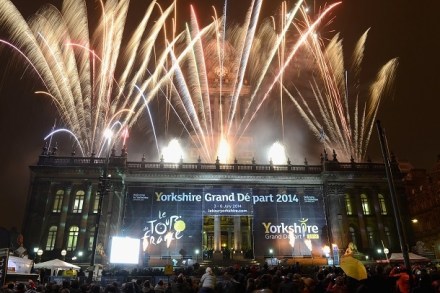
If you walk around our great northern cities, you’ll see stunning examples of civic pride. Albert Square in Manchester and Leeds Town Hall reflect resurgent local confidence. Old narratives of northern decline are out of date. When Guardian writer Andy Beckett launched a hatchet job on the north-east a few weeks ago, claiming that the region was the ‘next Detroit’, the response was visceral and immediate. Beckett managed to write an entire article about the north-east without mentioning Nissan – the most productive car plant in Europe. The North is home to new tech hubs, advanced manufacturing, superb universities and world-leading culture, from sport to music to art. The north-east was the fastest growing economic region in the Lloyds index last month.

A minimum wage rise will show the Conservatives are a party for all working people

From our UK edition

The Chancellor’s announcement that he’s recommending an above average increase in the minimum wage is very welcome news. It’s something Renewal has been campaigning for since our launch in July. Wages have fallen behind prices for almost a decade now. The prosperity of Blair’s boom didn’t reach the low paid and it was the working poor who were hardest hit by the recession, meaning that the minimum wage is worth £1,000 less now than it was in 2008. Now that the economy is firmly on the road to recovery it’s the right time to raise the minimum wage. We have to ensure that prosperity and the benefits of the free market reach everybody in society and this increase is an important step towards that goal.

Margaret Thatcher: friend of the unions?

From our UK edition

When Margaret Thatcher won the 1979 election, she was helped into Downing Street by what many of today’s politicians would regard as an unlikely group of Tory voters. The votes of trade unionists were crucial to Margaret Thatcher beating Jim Callaghan in 1979. And this didn’t happen by accident – Mrs Thatcher, the one-time President of the Dartford branch of Conservative Trade Unionists had made active efforts to appeal to those moderate trade unionists who felt let down by their leaders. After becoming leader in 1975, she set out to revive Conservative Trade Unionists. By the 1979 election, the organisation had 250 branches and was able to hold a pre-election rally at Wembley. Of course, this wasn’t the first time that Conservatives courted trade unionists.

Conservative MPs should think twice before voting against equal marriage

From our UK edition

Equal marriage has provoked anguished internal discussions in the Tory Party. Twenty  Association Chairmen have asked the Prime Minister to backtrack on the proposals and up to 180 MPs are rumoured to be considering voting against the proposals today. But opponents of the Bill should rethink their position, given that our research and international evidence shows that gay marriage would be good for gay people and good for the institution of marriage, as well as being firmly based in conservative thinking. The conservative tradition isn’t that of stern, unbending reaction that its critics often caricature it as.

Don’t set different parts of the UK against each other

From our UK edition

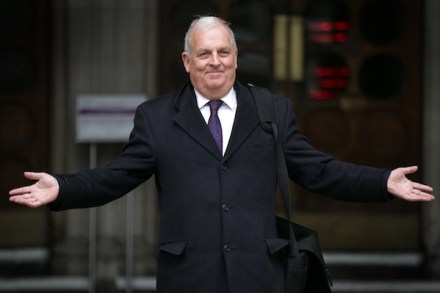
Kelvin MacKenzie made what I assume is a tongue-in-cheek plea for the formation of a ‘Southern party' in the Telegraph yesterday. In the piece, he consistently resorts to crude caricature about anybody from North of the Watford Gap. According to MacKenzie, only people in the South East are 'hard-working clever and creative, Glasgow has 'unhealthy habits', which are subsidised by the 'people of Guildford' and if you took the South East out of the economy, 'it would be called Ethiopia'. MacKenzie's article is divisive, simplistic and wrong - ignoring the economic dynamism on display in many parts of the North and the fact that narrowing the North-South divide is necessary for the long term prosperity of the whole of the UK.

How state schools can boost their Olympic chances

From our UK edition

Lord Moynihan's comments about the dominance of private school athletes in Team GB have caused a stir.  He suggests that  the fact that half of our medals in Beijing were won by athletes who attended fee paying schools is 'one of the worst statistics in sport'. He's right and it's worrying.  But rather than hand-wringing and suggesting the imposition of quotas, we should be asking what independent schools are doing well and what state schools aren't.  We should be celebrating our medallist and their incredible achievements, whilst also asking what state schools can do to improve the statistics that Lord Moynihan found so shocking.