Uk politics

The good, bad and ugly of Boris Johnson’s Brexit letter to the EU

Boris Johnson has written to European Council president Donald Tusk, setting out key aspects of his government’s approach to Brexit. The four-page letter has a number of positive points but also some worrying ones. The good bits: The letter condemns the Irish backstop as undemocratic and inconsistent with both UK sovereignty and the Good Friday Agreement. It also rightly notes that the backstop would lock the UK into a customs union with the EU indefinitely with no means of escape. The letter also states that the UK government cannot continue to endorse the commitment its predecessor made in the Joint Report of December 2017 to ‘full alignment’ with wide areas of the single market and customs union.
Boris Johnson and Angela Merkel’s optimistic press conference

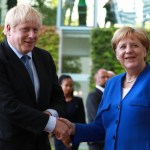
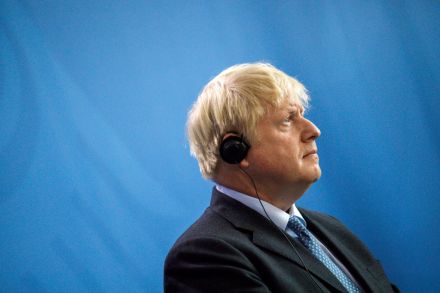
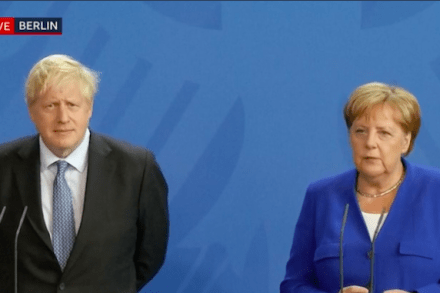
When Theresa May held press conferences with European leaders over Brexit, they were often a painful affair – with her counterpart quick to suggest little progress had been made. This afternoon Boris Johnson opted for an optimistic approach in his first outing on the world stage. The Prime Minister met with Angela Merkel this afternoon in Berlin for talks ahead of the G7 summit this weekend. In the press conference, Johnson joked that the pair had many things to discuss including the 'small matter of Brexit'. With figures in Brussels – including EU council leader Donald Tusk – rejecting the demand in Johnson's letter to ditch the backstop from the Withdrawal Agreement, an undeterred Johnson used the press conference to make the same point.

France says no deal now the most likely Brexit outcome. But why now?

Why would French government officials brief that they think it most likely Britain will leave the European Union without a deal? Boris Johnson hasn't even made it as far as his meeting with French President Emmanuel Macron, and is only just being welcomed by German Chancellor Angela Merkel. So why brief that out now, before the leaders have even spoken? The comments appear to be part of the briefing war between European leaders and the British government, with neither side wanting to take the blame for any fallout from a no-deal Brexit.

Boris Johnson’s Brexit opponents are playing into his hands

There is arguably the most important conflict raging in the Tory party since Churchill replaced Chamberlain as PM in 1940. Although we are living through 1940 in reverse, because Johnson is already the self-defined "war-time" PM, the wannabe Churchill, when some of his colleagues want something and perhaps someone else. Forget the battle between government and opposition, what matters most right now is the fight between Boris Johnson and his consigliere Dominic Cummings on one hand against a minority of senior Conservative MPs led by Philip Hammond, David Gauke and Greg Clark – the so-called Gaukeward Squad – over whether a no-deal Brexit is preferable to a Brexit delay.

No. 10 hits back in the backstop blame game

The stand-off between Downing Street and the European Union over Boris Johnson's latest proposal for the backstop boils down to a disagreement over whether the British government really cares about getting a Brexit deal at all. When Donald Tusk rejected Johnson's plan today, he all but accused him of being set on a no-deal exit, saying: 'The backstop is an insurance to avoid a hard border on the island of Ireland unless and until an alternative is found. Those against the backstop and not proposing realistic alternatives in fact support re-establishing a border. Even if they do not admit it.

Jo Swinson riles up Corbynistas again

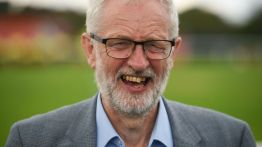
Corbynistas are out to get Jo Swinson again after the Lib Dem leader accused Jeremy Corbyn of being a Brexiteer. 'Jeremy Corbyn didn't fight to remain in 2016, and he won't fight for remain now', said Swinson. It wasn't long before the usual suspects leapt to the Labour leader's defence. Step forward, Owen Jones: 'This is a direct lie. It's a matter of public record that Jeremy Corbyn campaigned for Remain,' according to the Guardian columnist. But Mr S isn't so sure. In the weeks before the 2016 referendum, Corbyn was asked 'how passionate are you about staying in the EU?'. Corbyn's response? 'Oh I’d put myself in the upper half of the ten, so we’re looking at seven, seven-and-a-half. Maybe seven...' Hardly a ringing endorsement.

No. 10’s media strategy – ‘The focus is the country rather than the Westminster bubble’

What is Boris Johnson's strategy for engaging with the media? Over the weekend reports emerged that the Johnson government's media strategy would omit Radio 4's flagship current affairs programme. No. 10 director of communications Lee Cain is said to have told aides that the Today programme is a 'total waste of time'. He’s not alone. Johnson’s most senior adviser Dominic Cummings also appears to feel little in the way of warmth towards the show – reportedly telling colleagues that he didn’t listen to it once during the EU referendum campaign when he was campaign director for Vote Leave. So is the government at war with the BBC already? It's a little more complicated than that.

Telling anti-vaxxers they’re idiots won’t work

Boris Johnson declaring war on anti-vaxxers is the sort of thing that no-one will disagree with unless, of course, they are the ones peddling dangerous myths about the effects of these preventative treatments on children. The Prime Minister today announced a crackdown on misleading claims about vaccinations, with plans for a summit with social media firms on how to stop vaccine myths spreading on their networks, and a push for GPs to promote catch-up vaccinations for children who've missed out. The phenomenon of parents refusing to allow their children to be inoculated against deadly diseases has unfortunately become so widespread that the UK is now no longer measles-free. But how can the government change this?

‘Shame!’: Journalist heckled at Corbyn speech

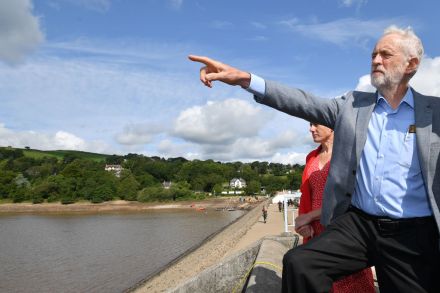
Jeremy Corbyn has just given a speech attacking Boris Johnson as 'Britain's Trump'. But while the Labour leader is happy to dish out criticism, it seems his supporters don't like it when the tables are turned. A journalist found that out the hard way when he told Corbyn: 'It's clear that you do not have the cross-party support in Parliament to be a caretaker prime minister..' His comment was met with cries of 'Shame!' from those in the audience. It seems that for some Corbynistas, the truth hurts...

Jeremy Corbyn’s no-deal plan is unusually smart politics

On the surface, Jeremy Corbyn's pitch to become caretaker prime minister of a government of national unity after overthrowing Boris Johnson looks like a messy failure. The Liberal Democrats have said they won't back him, two of the Tories who he wrote to have backed away too, and the Independent Group for Change (which he didn't write to) have said this evening that they will 'not support nor facilitate any government led by Jeremy Corbyn'. Instead, everyone is talking about the possibility of a government led by Ken Clarke. The former Tory chancellor today said he wouldn't object to taking over if it was 'the only way' to stop a no-deal Brexit.

How to make sense of Jeremy Corbyn’s pitch to Remainers

What is Jeremy Corbyn up to? The appeal in his letter to Remainers in the Commons to turf Boris Johnson out, and magically transform the Leader of the Opposition into an 'interim' Prime Minister – one who would block not just a no-deal Brexit but any Brexit at all, looks like something out of a Bulgakov novel. But there is a sensible – at least from Corbyn's point of view – purpose behind it. Few of the various ex-Labour and ex-Conservative independent MPs are likely to support the appeal. Many Corbyn-despising Labour MPs will not back it. A couple of Tories might decide to end their parliamentary careers endorsing it. But Corbyn's appeal will effectively dissuade most moderate Tory Remainers from voting against their own Government.

Tory MP: PM Corbyn better than no-deal Brexit

When Jeremy Corbyn put forward his proposal to MPs to help him become prime minister in order to block a no-deal Brexit, the response from the Lib Dems was clear: no. But the Labour leader's plan has had a warmer reception in an unlikely place – on the Tory backbenches. Guto Bebb told his fellow MPs that if they wanted to stop Britain leaving the EU without a deal, they should take Corbyn's idea seriously: 'I certainly take the view that a short-term Jeremy Corbyn government is less damaging than the generational damage that would be caused by a no-deal Brexit' Mr S thinks Bebb might have some difficulty persuading his Tory colleagues about that...

Corbyn’s Brexit offer puts Jo Swinson under pressure

The recurring story of the summer recess is the plot to form a government of national unity in order to thwart any No. 10 plans for a no-deal Brexit. Anti no-deal MPs have discussed voting down Boris Johnson's government when Parliament returns in September and then using the two week grace period that follows to form a government of national unity. There are several catches to this plan – one potentially big flaw is that people in No. 10 believe Johnson can simply refuse to stand down, wait the two weeks out and then decide the date of the election that would follow. However, the biggest problem is that to even get to that point, anti no-deal MPs need to find a leader that a majority of MPs can rally around. Today Jeremy Corbyn attempted to pitch himself as that person.

If Boris is Pericles, does that make Rees-Mogg Cato the Younger?

Who is Boris Johnson’s political hero? ‘Obviously Winston Churchill,’ said the Prime Minister yesterday. But Boris also named another figure from antiquity who has inspired him: Pericles of Athens. ‘He believed in the importance of the many, not the few,’ said Boris, helping himself to Labour's slogan. Boris and Pericles have a few things in common, notes Mr S. Not least a love of speaking and having a younger girlfriend: Pericles’s partner was 25 years his junior, while Carrie and Boris Johnson have a 25-year age gap. So if Boris is Pericles, which other Greco-Roman figures are today’s politicians following in the footsteps of?

Alexander Waugh is the Brexit party’s most illustrious candidate

At the next General Election, the lucky constituents of Bridgwater and West Somerset will find an illustrious name on their ballot papers. The Brexit party have unveiled their latest prospective parliamentary candidates, and the candidate they’ve chosen to contest this seat is Alexander Waugh. Alexander Waugh is a first-rate writer – a shrewd critic, an astute biographer and an occasional contributor to The Spectator. He’s also the grandson of one of England’s greatest novelists, Evelyn Waugh, and the son of one of England’s finest journalists – the late, great Spectator columnist Auberon Waugh. Alexander’s writing invites comparison with his father’s writing, and his grandfather’s.

The real reason Corbynites turned on Caroline Lucas and the Greens

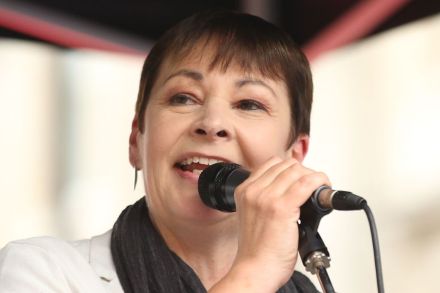
Caroline Lucas's plan for an all-female emergency Cabinet to stop a no-deal Brexit is a fantasy, with no prospect of success. But if the plan is daft, it has provoked a revealing reaction from Jeremy Corbyn’s loyal outriders. Instead of laughing it off, many have taken it deadly seriously. Most have focused their attack on the ethnicity of the women Lucas chose to enlist: they were all white. Reasonably enough, they asked why shadow home secretary Diane Abbott, was overlooked. Recognising her mistake, Lucas apologised. But instead of giving Lucas – probably the most politically correct member of the Commons – the benefit of the doubt, the Corbynite response has been nasty and vituperative.

Jeremy Corbyn’s mystifying Brexit stance continues

A Labour party that goes into the looming general election campaigning for a new Brexit referendum, which Jeremy Corbyn says it will do, will delight Boris Johnson and fill EU leaders with despair. Because Johnson will think millions of British people will recoil at the idea of a general election followed by a referendum in quick succession. And Johnson will also be delighted that he would face a warring opposition, since Lib Dems, Greens, SNP and Plaid Cymru are clear the UK must stay in the EU, whereas Corbyn’s Labour isn’t sure. Also EU leaders will be despondent that the UK under Corbyn’s plan may still not have made up its mind whether to stay or go by next spring, when the EU has to set its new budget.

Why Philip Hammond could just be making things easier for Boris Johnson

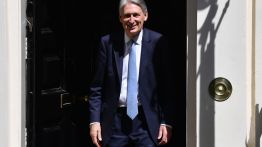
Is Philip Hammond's intervention today really a problem for Boris Johnson? The former Chancellor comment piece in the Times declares that he's kept quiet for all of three weeks, but that 'now it is time' to speak out and warn the new Prime Minister that he risks betraying the British people if he goes for a no-deal Brexit. There has been a sufficiently energetic response from Number 10 sources to suggest that they are rattled by Hammond. But those sources insist that everyone in Westminster had already priced in such a complaint, and that the public will see Hammond and his acolytes bickering over process and trying to stop Brexit, which will just make voters more enraged with the Remainers in parliament.

Who is Philip Hammond to lecture Boris Johnson on Brexit?

There is a role in British public life known as the Elder Statesman – a former cabinet minister who dispenses wisdom to those currently in office based on their own experiences and observations. There are two qualifications for such a position: firstly, that you leave a decent period between leaving office and setting yourself up in the role, so that it is clear you are not simply trying to settle old scores; and secondly that you are prepared to take an objective approach to your own time in office, admitting to mistakes, saying how you would now approach the problems that you faced in office, with the benefit of hindsight. Philip Hammond fails on both grounds.