Travel

All the fun of the feria: why August is the time to visit Málaga

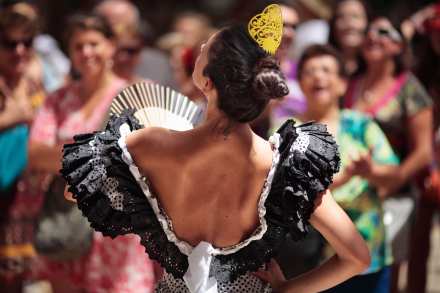
If I were a doctor specialising in alternative treatments, and someone came to me feeling depressed, I wouldn’t send them off with a herb-based elixir or a bunch of St John’s Wort. I wouldn’t cleanse their chakras or refer them to an acupuncturist. I’d send them off to Málaga’s annual fair, which this year runs from 16 to 23 August. Summer in Andalusia is feria season – the best cure that I know of for a bout of the blues. Usually lasting three or four days, or an entire week in the regional capitals, ferias are occasions of pure alegria (joy) and inclusivity.

Snowshoeing with septuagenarians

From our US edition

Wading through breakup grief, I’d hit the haziest stage of recovery, somewhere between lying horizontal in dark rooms, and shaving my head. Short of purchasing clippers, I’d resolved to write about wellness travel. Clad in regulation white cotton pajamas in the Western Ghats of India, my lifestyle habits had been judged (hard) and my thoughts about aging, recalibrated. A vigorous wellbeing regimen had revealed my 34-year-old body to be pushing 40, metabolically. Confronting? Yes. Salvageable? Also yes. (More mindfulness, fewer cigarettes, and – my addition – no men). Next stop: I’d pull on my hiking boots for a flight out of sweltering Mumbai, to icy Tokyo.  Post-Covid, Japan dominates algorithms and bucket lists.

Why truck stop cafés trump motorway service stations

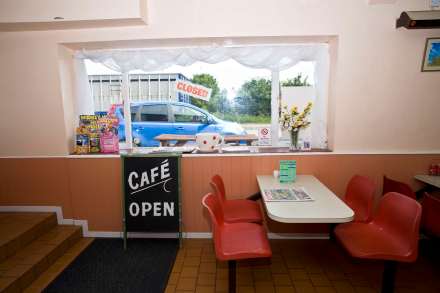
There’s something about motorway service stations that seems to encourage the very worst in human behaviour. They’re places where no doubt usually responsible members of society have long decided that it’s permissible to drop semi-industrial amounts of litter on to the verges, urinate all over the toilet floor and belch with impunity while queuing up for a Whopper at Burger King. For me, it was the full-to-the-brim child’s nappy that someone had left on a chair in the revolting ‘sit down café’ at a services near Preston that made me decide that I would never set foot in a Welcome Break, Moto or Roadchef ever again. I’m lucky; I have a bladder that can tolerate journeys of four or five hours by car. My fiancée, however, is not equipped with such sturdiness.

How Cowes found the secret of a successful seaside resort

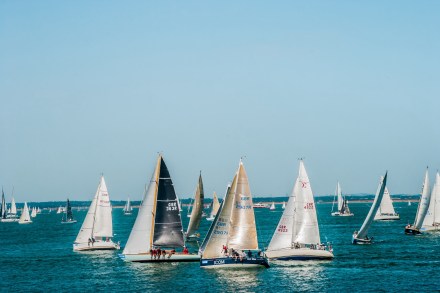
These days, most English seaside towns are sites of national mourning. You pay your respects by walking up some deathtrap pier, dropping two pence in an arcade coin pusher and whispering, your flower now on the grave: ‘Ashes to ashes, dust to dust.’ But Cowes, on the Isle of Wight, has managed to stave off this sorry end. Its secret is Cowes Week. Cowes Week, which starts today, is an annual sailing regatta. It has earned its place as a respected event in Britain’s sporting calendar – always in August, between Glorious Goodwood and the Glorious Twelfth – but its beginnings were unambitious.

Admit it: no one really likes eating fish

As I sit under the sole tree on a Spanish beach, watching my fellow Brits shudder at the writhing horror show contained in the restaurant’s seafood display, it strikes me the middle classes don’t actually much like the dead-eyed edibles under the waves – we’re just conditioned to pretend to because eating them is supposedly chic. Sure, we extol fish as a sustainable and sophisticated source of high-quality protein, vitamin D and what sounds like K-pop’s next girlband, omega-3. It’s the well-informed, thinking man’s dinner, akin to choosing a Tesla before Elon Musk’s meltdown phase. But let’s be honest: the glassy stare (I’m still talking about the fish), the slimy skin (still fish) and the teeth that could make a dentist cry (fish) do not scream yum.

How not to behave at a London gentleman’s club

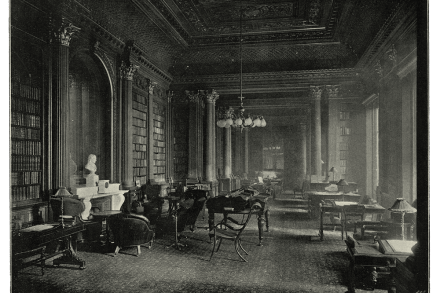
After a 5 a.m. start, I arrived at the departure gate in Nice airport to discover there was an air traffic control strike and my flight had been delayed by two hours. Annoyance gave way to relief when the board turned red and all later flights were cancelled. This was the week of the Spectator summer party and, because of work commitments and for reasons of economy, I was flying back at 5 p.m. the following day. I was packing a lot into those hours: on arrival a late lunch in Pimlico, where I was staying in a flat belonging to a friend, Kate, who was away; the party; a hungover breakfast with Will, The Spectator’s features editor, the following morning; a solitary wander round the National Gallery and lunch with Martin Vander Weyer, before a dash back to the airport.

The other side of Yemen

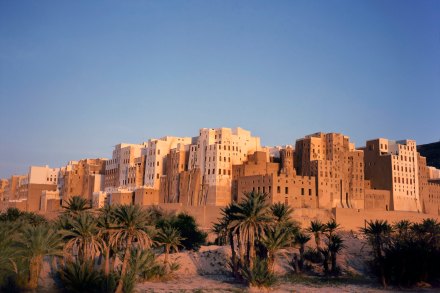
In the western imagination, Yemen exists as a byword for terrorism and death. Its appearances in international headlines are flattened into a trilogy of suffering: Houthis, hunger, hopelessness. The civil war has dragged on for over a decade, leaving much of the nation in ruins. Life is punishing for the millions who navigate daily existence amid chronic instability. The Houthis – entrenched in the capital, Sana’a – continue to tighten their grip on power in the northwest. Their attacks on Red Sea shipping have drawn international reprisals and fuelled regional tensions. The Foreign, Commonwealth and Development Office still advises British nationals against travelling to the country. Yemen is not therefore your conventional holiday destination.

The remote Spanish wine region that rivals Rioja

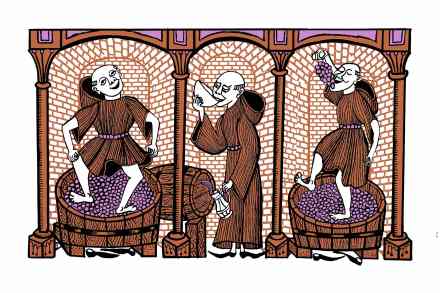
A.E. Housman once wrote that the English villages of Clunton and Clunbury, Clungunford and Clun ‘are the quietest places under the sun’. He’s almost right. I grew up in Clunton and the only place I’ve felt a deeper sense of quiet is Escaladei, a village high up in the mountainous Priorat region of Spain, which is home to the Cellers de Scala Dei vineyard. Getting there from Barcelona isn’t for the faint of heart, as the roads weave erratically along the hillsides. Driving there, I gripped the steering wheel tightly and drowned out my fears with music from a local reggaeton station. Once safely at the vineyard, Roger, our guide, impressed on us the importance of two things in Priorat: Garnacha and monks.

With glee to the silvery sea

Was it more profitable for an early-20th-century seaside railway poster to promise the undeliverable or to be slightly less enticing but at least tell the truth? In his charming and unashamedly train-spotterish book about how the British travelled to the seaside in the great days of rail, Andrew Martin quotes slogans from posters. The Great North of Scotland Railway described the Moray Firth as ‘the Scottish Riviera’. The Furness Railway named Grange-over-Sands ‘the Naples of the North!’ (The exclamation mark injected a smidgeon of doubt, Martin feels). More realistic companies toned down their boasts. The LNER decided it should go no further than claim it took passengers to ‘The Drier Side of Britain’. A North Eastern Railway poster proclaimed: ‘Scarborough Braces You Up.

Could a secretive Swiss clinic cure my bad habits?

Having just turned 65, I enjoyed a week of firsts. My first ever facial and my first ever yoga class progressed to my first ever impedancemetry session, my first ever photobiomodulation session, my first ever hyberbaric chamber session, my first ever cryotherapy session, my first ever sensory deprivation session, my first ever neurofeedback session and my first ever revitalising wave session. I was at the Nescens Clinic Centre for Aesthetic and Regenerative Medicine near Geneva, marking my milestone birthday by attempting to defy age. It was Mrs Ray’s idea. Concerned that I was beginning to look and act like the old soak that I am, she wanted them to break my bad habits and help me shed ten years.

Why you should never trust a travel writer

After one of Jeffrey Archer’s minor tangles with the absolute truth, his friend the late Barry Humphries remarked: ‘We all invent ourselves to some degree. It’s just that Jeffrey has taken it a little further than most.’ The remark came to mind last week as the media storm over the veracity (or otherwise) of the Winns’ account in The Salt Path reached its peak. As Dame Edna might have said, all travel writing is invented to some degree. It’s just that Raynor and Moth may have taken it a little further than most. ‘In Patagonia?’ Bruce Chatwin’s lodger is said to have remarked of the eponymous book. ‘I doubt Bruce even went downstairs.’ That’s unfair. Chatwin undoubtedly visited Patagonia.

Britain fought on the wrong side of the first world war

It’s more than two months since I returned from Dublin, and at last the hangover is beginning to fade. I flew out with our team at The Rest is History to record a series about the Irish War of Independence and Civil War. Our guests were Paul Rouse, a professor at University College Dublin and former manager of Offaly’s Gaelic football team, and Ronan McGreevy, an Irish Times journalist and author of a terrific book about the murder of Sir Henry Wilson. On the first night Ronan took us for an excellent curry; on the second, Paul organised a pub crawl. Well, I say a crawl, but in truth we barely got beyond the first pub, the Gravediggers, which is just a few hundred yards from the graves of Michael Collins and Eamon de Valera.

Exploring Edinburgh, from Princes Street to Pitlochry

From our US edition

I’m blinking through floor-to-ceiling windows that perfectly frame a pristine view of Edinburgh Castle, standing magnificent against an improbably cloudless Scottish sky. The elegant writing desk in the Archibald Signature Suite at 100 Princes Street hotel has all the makings of an elevated “work-from-home” set up, but the scenery – and the collection of aged single malt I know to be upstairs – make concentration an uphill battle. This luxury townhouse right on, you guessed it, iconic Princes Street was made for luxuriating, not hunching over laptops. Ducking into the entrance on Princes Street feels exclusive, like knowing a secret.

pitlochry

An epic journey on horseback through Kyrgyzstan’s mountains

From our US edition

If you tell friends you are going to Kyrgyzstan, they look blank, or think you are talking about Kurdistan, although the two are 2,000 miles apart. If you get the choice, choose Kyrgyzstan. Like so many, I first learned of the place because of Alexandra Tolstoy: writer, adventurer, horsewoman and cousin of the author of War and Peace. She discovered the romance and beauty of the place for herself when she rode 5,000 miles of the Silk Road by horse and camel in 1999. Since then, she has ridden in Kyrgyzstan most years, taking parties of 12 or so into the lower slopes of the vast Tian Shan mountains, the highest range west of the Himalayas. Blonde, fearless and always elegantly turned out, she leads. We follow.

Kyrgyzstan

Plastic-free paradise

From our US edition

“Welcome to Wayanad. From here, all plastic is banned.” Prasanth was on a mission, belly pressed to the carpet of his car, legs sticking out on the roadside. He emerged triumphant, brandishing a forgotten Coca-Cola bottle and carrier bag before starting the ignition. Crossing into the high-altitude, hilly state of Kerala, he pulled up at a designated recycling spot.  Ephemera rained out of my upturned tote bag upon strict instruction to hand over any plastics. At Wayanad’s border, two impassive security guards eyed my friend and me as we instinctively sank back in our seats. A regular driver for tourists, Prasanth shrugged off the routine check, pointing to a sign as we were waved on.  “1,000 rupees fine! See?

india

On holiday with Goya

From our US edition

When I’m first invited to a sojourn in Madrid to learn about the life and work of Francisco Goya and the conservation work of Factum Arte, I’m thrilled but also a little apprehensive. While art-themed travel is right up my street and I live a mere train trip from the Spanish capital, Goya’s work is known for being a little, well, dark – particularly during his later years. As a fan of the Botticellis of this world, spending a few days with the artist famous for his "black paintings" was not something I was sure I’d enjoy.  And yet, three days later, as I stand in front of Goya’s grave in La Ermita de San Antonio de la Florida, I find myself moved in a way I never could’ve anticipated.

Goya

The slow delights of an OAP coach tour

Early on Monday mornings, in service stations across the country, armies of the elderly are mustering. These are the OAPs about to embark on motor coach tours to the Norfolk Broads, Cornish fishing villages, the Yorkshire Moors and Welsh ghost towns, organised by men in blazers consulting clipboards, like Kenneth Williams in Carry On Abroad. There will be cream teas, along with river cruises, coastal excursions, scenic drives and jaunts on steam railways.

The wolf as symbol of European anxieties

On 19 December 2011, at around 3.30 a.m., a young wolf in the mountains of southern Slovenia trots away from his pack and never looks back. For the next 90 days or so, Slavc (after Slavnik, the mountain of his home) lopes onwards, hardly stopping, fording fast rivers and traversing high passes, until at last, having cut a horseshoe loop through Austria, he crosses into Italy and stops in the picturesque Alpine plateau of Lessinia. More than a decade later, Adam Weymouth follows in the same wolf’s padded footsteps. For Slavc, this is a journey into a landscape of confusing novelties, full of motorways and noise and anti-wolf country folk. Head down, a passing shadow in the night, he moves forwards, like ‘a ship sailing off the world’s edge’.

Beware taking up running in your fifties

Over a hotel breakfast in Brisbane, I showed Sir Alan Hollinghurst my injuries. We’d met the previous week at the Auckland Writers’ Festival and would meet again, post-Brisbane, at the Sydney Writers’ Festival. A book tour of Australia and New Zealand is a bit like being in a David Lodge novel – writers are more likely to travel halfway round the world if a few potentially sizeable crowds are waiting for them. A.C. Grayling, who I broke bread with in Auckland and saw again in Sydney, seemed to have scored the most palpable hit by being invited to be philosopher-in-residence at a festival in Margaret River, centre of Australia’s most prestigious wine region.

Church teaching on homosexuality can be revised

Studies of Christianity’s problems and prospects often entail a distinction between the singer and the song. At an institutional level, the world’s largest faith is in deep trouble throughout much of western Europe – and increasingly in North America, too. Widely rehearsed elsewhere, the reasons for this steep decline include the spread of individualism along with an allied flouting of deference, mistrust of agencies said to lie beyond the tangible, and self-inflicted wounds such as the abuse crisis. Yet many who mourn the spread of secularisation remind us that for all its flaws, the Church has a good story to tell overall. How so? Two answers stand out. First, Christian outreach still forms the largest single source of social capital on Earth.