Travel

The Anthony Bourdain Reader leaves a reader hungry

From our US edition

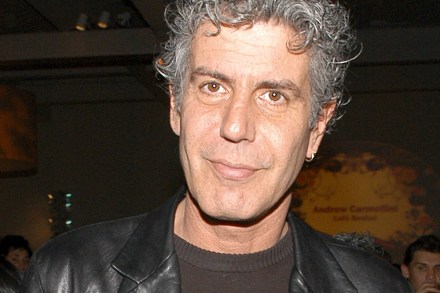
Charismatic, handsome and with a great white shark’s feral cool, Anthony Bourdain was someone that everyone wanted to be. The chef, writer and TV presenter described the premise of his award-winning shows, No Reservations and Parts Unknown, as “I travel around the world, eat a lot of shit and basically do whatever the fuck I want.” They cemented his image as a gadabouting, kamikaze gourmand. Bourdain scarfed down andouillette and warthog anus, drank sun-bear bile and polished off the still-beating heart of a cobra, plonked into a shooter of Vietnamese firewater. He showed Barack Obama the correct way to slurp bún chả noodles on a steamy Hanoi side street, and he and his team watched from their hotel pool as Israeli jets strafed downtown Beirut during the 2006 invasion.

anthony bourdain

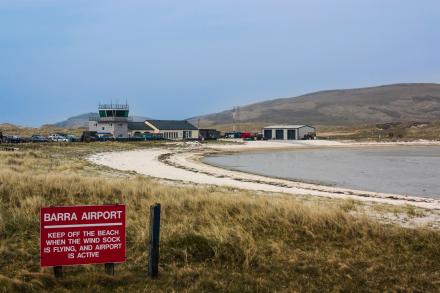
The joy of small airports

There’s a saying – the kind seen on ‘inspirational’ posters on the walls of HR departments – that claims: ‘It’s about the journey, not the destination.’ Clearly it was dreamed up by someone who has never flown from Stansted and found themselves jostling through crowds of stag and hen parties, newly arrived Polish workers (there’s even been an Essex-based Polish taxi service to pick them up) and the hordes descending on Burger King as soon as they come through arrivals like John Mills and co. supping their first lagers after trekking through the desert in Ice Cold In Alex. It’s not just Stansted, of course. Gatwick – or ‘Chavwick’, as I’ve heard it called – is just as bad.

How Trader Joe’s became a way of life

From our US edition

A young woman recently approached me as I stood outside Trader Joe’s on the corner of 93rd Street and Columbus Avenue in Manhattan. “Excuse me,” she said, “I’m visiting from the UK and I’m just wondering if there’s anything worth seeing around here.” This is not an unusual occurrence. It’s always tourist season in New York. People come for the cherry blossoms in Central Park, for the magic of the Rockefeller Center Christmas tree and for the vague hope of running into Timothée Chalamet at a downtown brunch place. They even come in the sweltering heat of summer when I, personally, would rather be anywhere else – ideally somewhere without the pungent smell of hot garbage and misplaced ambition.

trader joe's

Franco Zeffirelli’s slice of paradise in Positano

From our US edition

If you say the name Franco Zeffirelli to anyone under about 40, you’re likely to be met with bemusement. Find any opera or film lover over that age, however, and you will be greeted with a warm exclamation – “Ah!” – followed by a recitation of the Italian director’s greatest achievements. From his emergence in international culture in the 1960s with his seminal film of Romeo and Juliet to his legendary work on stage with such operatic titans as Maria Callas and Plácido Domingo, Zeffirelli became synonymous with tasteful, intelligent productions of the classics, all of which made him, for a time, the best-known cultural figure in Italy. It is fair to say that Zeffirelli, who died in 2019, didn’t always get it right, personally or politically.

Hotels are still hopeless at accommodating disabled guests

I was sitting in a hotel restaurant in Cheshire a while back: one of those rambling country manors, full of mock Jacobean wood panelling and fake Tiffany lamps, beloved of football-and-property enriched couples with gravy hued fake tans, sports cars parked outside and more signet rings than GCSEs. I was hungry and alone, aside from, as always, travelling with my own disability in the form of severe visual impairment, aka ocular albinism and nystagmus – or the Rolls-Royce Silver Shadow of very bad eyesight, as I prefer to call it. I’d asked in advance for an accessible room which, predictably, was ‘not yet ready’ for me to check into when I arrived.

In Cuba, a revolution is over

From our US edition

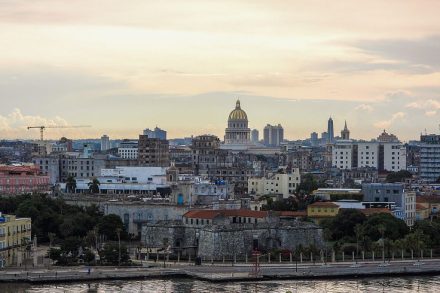
If you’ve ever thought of visiting the crocodile-shaped island of Cuba, or run into someone recently returned from sultry nights in the country’s salsa halls, there’s a good chance you’ll have heard the phrase “See it before it changes.” And I don’t mean because of Hurricane Melissa. The idea is that the centrally planned communist state, one of the last on Earth, will soon morph into America and a balmy Brigadoon full of people unencumbered by money, modern cars or Alexa will evaporate. I think most people, if they knew what Cubans have endured, wouldn’t use that phrase, which is up there in its lack of tact with “they’re poor but they’re happy.

cuba havana

Uzbekistan by high-speed rail

From our US edition

I am in Tashkent, the capital of Uzbekistan. I am standing in a historic complex of madrasas and mosques, courtyards and dusty roses and I am staring at the “oldest Quran in the world.” It is a strange and enormous thing: written in bold Kufic script on deerskin parchment; it was supposedly compiled by Uthman ibn Affan, the third Caliph of Islam, who was murdered while reading it. And so it is, as I linger here and reverently regard the Book, while scrolling my phone for more fascinating info, that I discover the world’s oldest Quran is actually in Birmingham. Yes, that’s right, Birmingham, England. It’s probably in some obscure library, lodged between a thesis on post-colonial emojis and a flyer for Falafel Night.

chinese banquet

How to survive a Chinese banquet

From our US edition

When heading to China on a business trip, I was somewhat bemused to be warned about the banquets I would be attending. Do not sit next to the host, I was told. I was to find out why. Learning the rituals of banquets is an essential part of doing business in China. I was treated to at least one every day on a ten-day trip around the country – and sometimes two or three. There is no such thing as a casual business lunch. Any meal will turn into a semiformal event held in a private room and hosted by the most senior person in the organization. The meal starts slowly, with a few rather unappealing cold dishes laid out on a lazy Susan that sits on a round table, though initially no one sits down.

Give Baltimore a chance

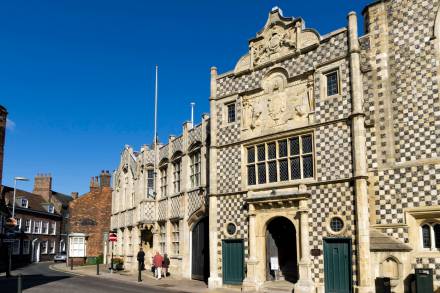
You saw Homicide: Life on the Street, right? You know, that gritty TV police drama set in Baltimore. What? Ah, no, you’re thinking of The Wire, that other gritty TV police drama set in Baltimore, the one with Idris Elba and Dominic West. Homicide predates The Wire and was filmed largely around Fells Point and along Baltimore’s historic waterfront. The former City Recreation Pier, which stood in for the police department, is now a swanky hotel, the Sagamore Pendry Baltimore, in whose comfortable embrace I have just wallowed. Baltimore doesn’t have a great reputation. Whenever I tell American friends I’ve been there they affect horror and ask what on earth I was thinking. Couldn’t I have gone to Boston, New Orleans, New York, Washington D.C.

The dangerous charm of Peter Matthiessen

In 1951, the American author Peter Matthiessen moved to Paris. The scion of a wealthy Wasp family, he had studied at Yale and served in the navy, narrowly missing the second world war. He was then recruited to the CIA by James Jesus Angleton and sent to Paris, where he kept tabs on left-wing French intellectuals and expat Americans. As he later explained in a letter to a friend: When you’re 23, it seems pretty romantic to go to Paris with your beautiful young wife to serve as an intelligence agent and write the Great American Novel into the bargain. Weren’t you ever as young and dumb as that? While in Paris, Matthiessen helped to found the Paris Review with funding from CIA sources.

Fuji

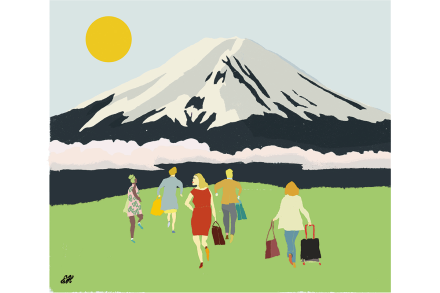
In awe of Fuji-san

From our US edition

My personal version of hell? Shibuya station, Tokyo. Shibuya Scramble is one thing: the busiest pedestrian intersection on the planet, it sees two million people elbow each other, every day. But the train station that thousands of them are trying to get to? That’s where my hopes go to die. A place where you’ll find me near tears, wondering if I’ll ever see my loved ones again. It’s almost impossible to navigate, spread across a dizzying number of floors and stuffed with throngs of human beings speaking a dozen languages. New platforms spring up all the time, often at the top of an unassuming escalator, or via a tiny hidden exit of the Hikarie shopping mall. There are (one or two) signposts, sure, but my Japanese leaves much to be desired.

I left my heart – and my dignity – in Belfast

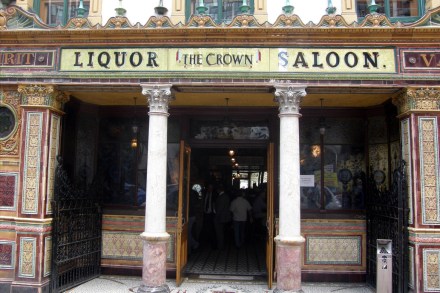
Call me crazy, but I’ve always loved Belfast. Even when it was grim, scary and unlovable, I loved Belfast. It doubtless helped that when I came to know it, I was courting a local girl. I loved it because she loved it and, well, I loved it even after she chucked me. The people, the bars, the craic – gosh, the very air – invariably get under my skin. I’ve always felt at home in the city’s embrace. And now that Belfast is no longer grim, scary and unlovable – and long since my Colleen came to love another and long since I came to love another too – I love Belfast even more. The craic is just as hilarious as that in Cork, Dublin or Galway. And today it’s even more so thanks to a swank and a pride (and a peace) that was absent before.

The theater of the Galápagos Islands

From our US edition

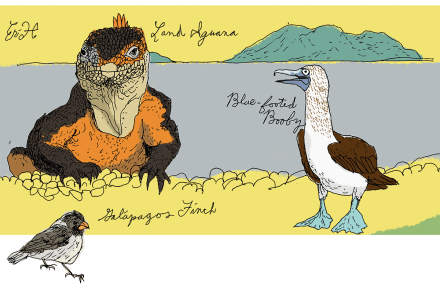
It was stiflingly hot in the middle of the Pacific Ocean. I was exploring the eastern Galápagos Islands, living cheek-by-jowl on a former casino ship with a cast of characters plucked straight from a murder mystery novel: a former British supermodel, an Ecuadorian presidential candidate, the ex-drummer of a band who once supported the Who and an influencer couple who looked like they had stumbled off the set of Triangle of Sadness. The stars of the show – and boy did they know it –were the sea lions While the trip had all the ingredients to cook up an irresistible whodunit, I was not just there to inspect the wildlife on board but to observe the wildlife off it.

Hell is other tourists in Antarctica

My first love was a penguin. Pengwee was an adorable brown and white emperor chick who had my heart and broke it the day he dived into the bath. After a week in the airing cupboard he smelled of fish – surprising in a soft toy. But then penguins are surprising. Towards the end of the Cretaceous period, 65 million years ago in Zealandia, a fragment of the Gondwana supercontinent, penguins waddled off along their own evolutionary path. Other birds flew through air; penguins flew through water. Natural selection pi-pi-pimped up the penguin (sorry) to astonishing specialisation. Hunting in black oceanic deeps, many species can see in ultraviolet.

Cigarettes and currywurst in Big Berlin

I’m standing at a bar in a car park on the rooftop of a shopping centre. I ask the bartender if the beer on draught is big or small. ‘That depends on your definition,’ he says. ‘What is big? What is small?’ The oonce-oonce of German trance music makes it hard to hear, and I’m distracted by the solitary figure on the dance floor wearing all black and contorting her body into the shape of a pretzel. ‘Is the beer groß or klein?’ I shout. The bartender – who is well over 50 and has the fashion sense of a Green Day groupie from 2005 – just smirks and says, ‘That’s for you to decide.’ I order the beer anyway. It is small (klein). I don’t tip. This is Berlin. Berlin is big.

How to survive Florence with your family

There are many destinations which spring to mind when considering the options for a weekend away with a young family. There are beaches by the dozen, theme parks and glamping opportunities galore. But there is only one Florence. And I cannot say this strongly enough: when it comes to the kids, the Center Parcs of the Renaissance will not let you down. It begins with Tuscany itself, a place so beautiful that you can get Stendhal syndrome on the bus on the way from the airport. And even if your children are glued to their screens, eventually motion sickness will force them to look up and they may glimpse its dreamy vistas, too.

The Mediterranean summer holiday is broken

For more than 60 years it has been an annual fixture for thousands of us, a birthright enjoyed and embraced by the children of modern, pleasure-seeking, throw-away Britain. Precisely when it happened, I couldn’t say, but at some point in the 1950s or 1960s, the trains radiating from the metropolis to the coastal resorts of Clacton-on-Sea, Southend-on-Sea, Bournemouth, Frinton, Brighton and beyond stopped heaving with Londoners. In their place a whole series of new, hitherto unfamiliar resorts zoomed into the national consciousness, heralded by the tang of aviation fuel and the promise of neverending heat and chilled cerveza.

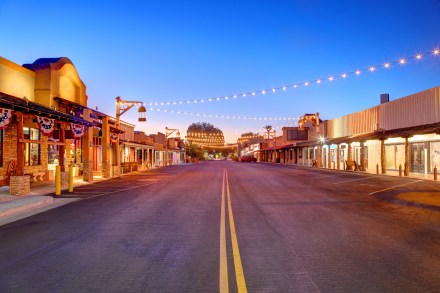
The stress-busting powers of the Arizona desert

‘Sit up straight, heels down, lean forward, lean back, tighten the reins, loosen the reins.’ Joe's instructions replay in my head as I scan the canyon floor for rattlesnakes. I gently push my heels into the sides of my horse, Rio, and he sets off across the rocky terrain. Joe is my guide and a real-life cowboy. Guiding tourists like me through Arizona’s Sonoran Desert is his side hustle. I've signed up for a two-hour sunset trail ride, but Joe tells me he often takes groups into the desert for days. They sleep under the stars, catch fish for supper and eat fruit from barrel cacti. Joe can tell I'm anxious. I'm pretty sure Rio can too. I've been unusually stressed for a while, and no amount of London wellness treatments seem to help. I needed something more radical.

Fresh tracks in ancient territories

From our US edition

By complete fluke, my delayed shuttle bus rose through the Coast Mountains at dusk. I pressed against the window, outing myself as a tourist amid seasonaires snoozing through another spectacular sunset. Hot pinks and deep purples streaked between towering pines, transforming the outline of snow-capped peaks. I’d crash with local friends for a month, with support from Vail Resorts to explore stories beyond the slopes. Tales of Whistler Kids ski school were already family lore – I’d once visited as a 10-year-old, buzzing to see snow. Stuck at Vancouver International, I’d pulled up a chair at Salmon n’ Bannock on the Fly – Canada’s only Indigenous restaurant in an airport. As travelers, how often do we pause to ask whose land we’re actually on?

The politics of nudity

A recent, rather beautiful piece published here told of how the writer, Druin Burch, initially somewhat alarmed by the variety of naked bodies he unexpectedly encounters while swimming in the Med (‘I wouldn’t mind if it was only young women,’ he says to his wife) comes to appreciate the loveable imperfection of the human form. I can’t say I’m with him on this. I totally understand fit women wanting to take their tops off in public as an expression of sheer high spirits; as a teenager, I used occasionally to do it. But humanity generally? Put it away, puh-leeze! As a resident of the fair city of Brighton and Hove, I’ve got skin in the game, metaphorically.