Travel

Why there’s never been a better time to see Venice

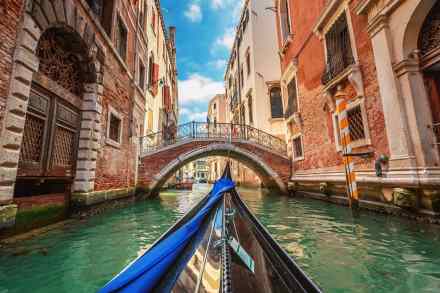
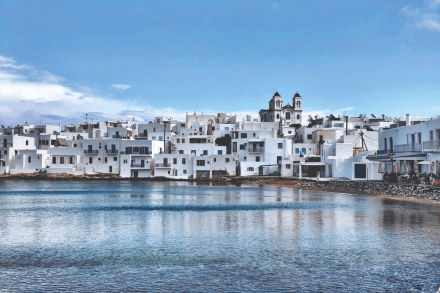
You’re never going to see Venice quite like this again. Usually swarming with tourists – not to mention the enormous cruise ships that dock in its waters ­– the city has been given a serious breather by the coronavirus pandemic. Those lengthy queues to get into its most famous hotspots have disappeared; the picturesque back streets lie empty and a dramatic fall in water traffic has seen the sediment in its 150 canals settle, allowing their vibrant colour to return. La Serenissima – much to many of the locals’ relief – has become serene once more.

Hot vax summer

From our US edition

Remember spring 2021? COVID cases dropped as the days lengthened, every balmy, breezy morning bringing happy news of America’s three-vaccine rollout. By the end of the season, vaccination wasn’t just for hospital workers and overweight asthmatics. As temperatures rose into the 70s in the Northeast, where I live, we heralded the arrival of ‘hot vax summer’: the triumphant return of fun to the 20- and 30-somethings whose social lives had been shut down tighter than last year’s Democratic National Convention. After a long, dark winter, hope sprang. Now it looks like hot vax summer didn’t quite pan out for many in our sex-recessed country.

summer

Samurai nights in Aizu

From our US edition

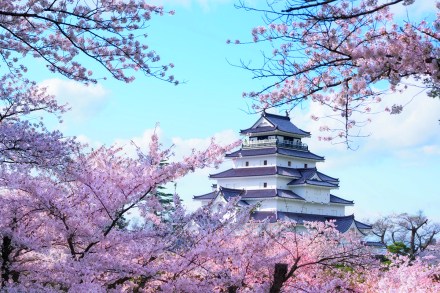
I started my visit to Japan’s north country deep in the mountains, in hot water in a bath the size of a swimming pool. Quietly simmering, I was intrigued to notice that the glass which formed the outside wall was not misted up, though the water was steaming. Through the darkness I could make out trees, bushes and the glint of the lake below. I waded over and reached out my hand, only to discover that there was no wall. One side of the bath was entirely open to the air. For the Japanese no journey, particularly to the north, is complete without soaking in as many hot springs as possible. The mineral-rich waters are the upside of the geological turbulence that brought about the devastating tsunami of March 2011. Today everyone knows the name ‘Fukushima’.

aizu

Paying the ferryman in Greece

From our US edition

It was not an auspicious start. Arriving at JFK the specified three hours before my departure to Athens I was met with a check-in line stretching out the door. The man behind me, in traditional dress and with a shocking amount of luggage for a single traveler, kept shouting ‘Senegal!’ Two hours later, check-in for my flight was closing. I was still at least half an hour away from the desk and so I shamelessly cut the line, earning myself a tongue-lashing from a dyspeptic German but also a boarding document one minute before the flight closed.

greece

The great holiday Covid test rip-off

I holidayed in Malta last month with my partner, having chosen it because it was on the ‘green list’. Foolishly, I assumed this would mean we could waltz back to the UK without any hassle. I was wrong. We needed a test before departing Malta. Within a few minutes of looking on the Malta airport website, I found a provider, headed to their test centre, and €30 later, was given the all clear. But that wasn’t all. To complete my pre-flight passenger form, I needed a ‘Day 2’ test for when I was home. For this, the UK government has a website pointing holidaymakers towards a slew of private firms — 315 catering for the Greater London area alone. Costs range from £20 to £400 and you can filter the site to view the cheapest firms first.

High on the hog: The Pig at Bridge Place reviewed

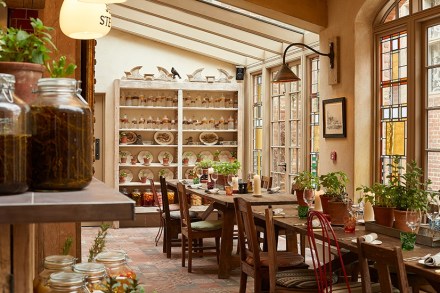
The Pig at Bridge Place is not a pig in possession of a country house, but I would be for it. You cannot have enough pigs, or any edible fauna. It is, rather, a hotel inside a Jacobean mansion — or, rather, part of a Jacobean mansion, the rest burnt down, and is all the better for it — in a pleasingly unkempt part of Kent, just beyond Canterbury. There are ten Pigs, dotted across the south coast as if in homage to Armada beacons. They are the successor to the Soho House brand, which is looking increasingly dusty, and in velvet. My main objection to Babington House is that it is for people with Peter Pan Syndrome: children who cannot grow up. They served fish-finger sandwiches and I think I saw a giant inflatable unicorn in the pool, but I have may have imagined it.

In praise of flight attendants

From our US edition

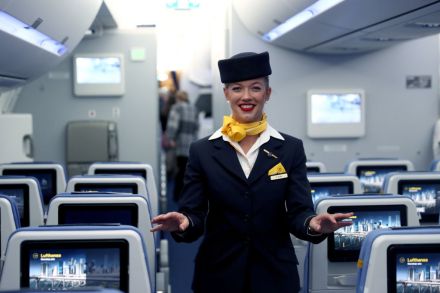
Well past the golden age of flying they remain magnetic. With impeccable hair, orderly posture and chipper uniform, they breeze by you through security, march in little flocks down the terminal, gaze into computer screens in which no one has ever seen the other side and always greet you with suspicion and a smile. Their authority is daubed in mystery, intrigue and just a little bit of sex. Where are they going? Where have they been? No matter how many times you might ask, you can never quite grasp, exactly, what their lives are like. Where do they sleep? What do they do when they’re not here? How do they cope with this, that, or the other?

flight attendants

Is the airline ‘booking surge’ a load of hot air?

Be glad you’re not in Dr Mike Lynch’s shoes. A London judge has ruled that the founder of the Cambridge-based software venture Autonomy can be extradited to the US to face multiple fraud charges in relation to the takeover of Autonomy in 2011 by Hewlett-Packard of California. This was, undoubtedly, a disastrous purchase: HP paid a huge premium over Autonomy’s market value, swiftly found all was not as expected, wrote off most of the $11 billion price and accused Lynch of having artificially inflated the company’s numbers. His fate now hangs in the legal balance. The Serious Fraud Office looked at the file but dropped it on grounds of insufficient evidence; meanwhile, judgment in a £3.8 billion civil action against Lynch is not due until September.

The case for travelling abroad

I’m off. In the week when you may read this, my partner and I will be winging our way to the European mainland, exploring, visiting friends, and immersing ourselves in new places, among new people who speak languages other than our own. Even as I write this, I can anticipate a sour response from some who read it. Over the past year I’ve learned that any mention of travelling abroad draws from certain quarters three types of disgruntlement. Three, in fact, of the Seven Deadly Sins. The first is Envy. ‘Oh, bully for you!’, ‘It’s all right for some’, etc. This I disregard.

The true cost of my week in Wales

Rather miraculously, my daughter managed to leave the country last week to go on holiday with a group of friends. To celebrate finishing their A-levels, they had bought tickets to a music festival in Croatia, but it was cancelled at the last minute due to a surge in Covid cases. Having been denied every other rite of passage in the past year, they decided to press ahead with the trip anyway, which left me having to sort out the PCR testing logistics. In order to be allowed into Croatia, she had to produce evidence of a negative test, then, once there, she had to test negative again in order to be allowed back into the UK, as well as produce evidence that she’d booked a third PCR test for two days after her return.

Calm down about the Delta variant

From our US edition

The great thing about COVID, I like to quip, is that has abolished death from old age. Also the flu. That malady typically claims 30,000 to 40,000 scalps per annum in the US, many more in a bad year. How many flu deaths were there last season? According to the Scientific American, 700. Find yourself in a motorcycle accident suffering the inconvenience of losing your cerebellum and all that other gooey stuff spread like jam over the interstate? Don’t worry. The medics will find an intact nostril and will determine that you tested 'positive for COVID’. What remains of you will be transported to a hospital where management will file a claim and get 15 percent more on their government reimbursement because you 'died from’, or at least with COVID. There are exceptions, of course.

delta variant

Down Santiago way

From our US edition

Hiking toward the Spanish border on my second day after setting off from Bayonne, I set down my backpack on a grassy patch beside a beach. It was bloody hot — August in the southwest of France — and the sight of beachgoers taking a shower had a cooling appeal. I stripped to my underwear and enjoyed the bracing shower burst. Then I looked down. Water was cascading over what looked like leprosy, breaking out over the right side of my chest. Feeling self-conscious, I got dressed and plodded on. Twenty-five miles later, at the sparkling city of San Sebastián, the pain proved too much. I lifted my shirt to two Portuguese pharmacists — and they pointed me toward the nearest hospital. I had herpes zoster, commonly known as shingles.

Camino

The Isles of Scilly, a botanist’s paradise

From our US edition

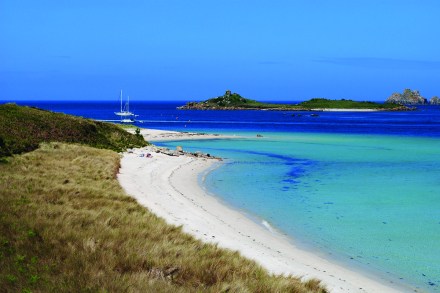
'You can get away from everything,’ said Harold Wilson of the Isles of Scilly, ‘not only in distance but also in time’. During the parliamentary recess, Wilson would frequently catch the sleeper from Paddington to Penzance before making the notoriously choppy crossing to Britain’s most westerly archipelago. There he would unwind in his cottage on St Mary’s. This family of five islands 28 miles off the nose of Land’s End has always enjoyed a somewhat secretive coterie of admirers — Jude Law and Michael Morpurgo to name but two. Deserted beaches with a Caribbean palette are surely part of the draw, as are hedgerows festooned with wild garlic, pink bells and exotic aeoniums.

scilly

Could hydrogen power turn air travel green?

Have you been scanning airline websites for exotic destinations to which your double-jabbed status might allow you to slip away in August? I certainly have, but I’ve ruled out the parts of Canada and the United States that are stricken by record-breaking heatwaves and forest fires — and I’m wondering what impact such extreme climate events will have on the aviation industry as it struggles back to life after the pandemic. Having survived a year of near-total shutdown, I suspect it will now face an onslaught of green rhetoric to which governments — positioning for November’s COP26 climate conference in Glasgow — will be forced to respond.

Travel quarantine scrapped for double-jabbed

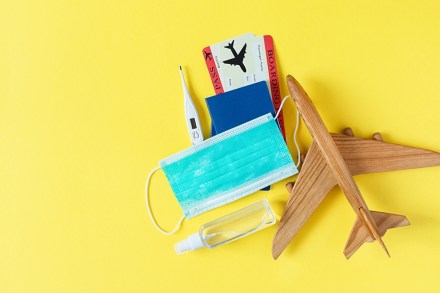
International travel rules will be relaxed on 19 June as part of the wider scrapping of social distancing rules and masks. Transport secretary Grant Shapps told the House of Commons that those entering England from green and amber nations will not be expected to self-isolate — provided they are fully vaccinated. In practice, what this means is that British summer holidays have been given the go ahead. France, Spain, Portugal and Italy are all on the amber travel list. Currently, the rules state that returning travellers must isolate for ten days, as well as complete a day two and day eight test. That second test has also been scrapped.  The crucial point is that the relaxation is only for those that have been fully vaccinated.

How WhatsApp mums saved Kenya’s castaway children

Kenya In March, Global Britain signed a new, post-Brexit trade deal with Kenya. This was a welcome agreement for my homeland, where the pandemic has caused tremendous economic suffering, but where comparatively few deaths have occurred among the fit, young population. Weeks later, on 9 April, the UK condemned its former colony to the red list of countries. Non-citizens were banned from travelling to the UK from Kenya, while arriving UK passport holders faced a £1,750, ten-day incarceration in a quarantine hotel. Such extreme measures were imposed on the excuse that a ‘significant’ number of passengers arriving from Nairobi tested positive for a variant of concern.

The strangest landscapes are close to home

This pleasant volume, the author announces in the introduction, is ‘not a nature book, or even a travel book, so much as a book of fantasy: four small pilgrimages into imagination’. In its pages Nick Hunt unfurls his sleeping bag under a pink moon, breakfasts on a raw white onion and meditates both on what remains and on what we have lost. Outlandish is divided into four parts, each covering a short walk through a uniquely unusual landscape: Arctic tundra in the Cairngorms; a remnant of primeval forest straddling Poland and Belarus (‘the closest thing that Europe has to a true jungle’); the continent’s ‘only true desert’, in Spain’s south-eastern Andalucía; and the grassland steppes of Hungary. What unites the four?

The Covid divide: there’s one rule for the elite, another for us

This week was meant to be the moment when we could celebrate the return of freedom. Instead, we’re left still navigating a maze of rules. Couples are working out what a ‘Covid-secure wedding’ means (spoiler: no dancing or hugging). Family reunions — once planned for Christmas, then delayed to Easter — are being pushed back into the autumn. Birthday parties have been axed again. No one wants to break the law, or risk asking others to do so. Ministers make a great show of obeying the rules. The weekend before Boris Johnson announced the delay to ‘freedom day’, he was bumping elbows with Joe Biden and Justin Trudeau at the G7 in Cornwall, posing for socially distanced photos. It was the picture of Covid security.

In defense of Spirit Airlines

From our US edition

What is the greatest American airline? Some might argue United, though chances are they’re the ones who haven’t been dragged off after a seating mix-up. Others appreciate Delta for their posturing over Georgia’s voting law — because there’s nothing like being hectored about The Literal End of Democracy from 30,000 feet. If you’re nails-down-a-chalkboard irritating, you might just love Southwest for the cabin crew’s open-mic-night-at-the-Comedy-Cellar patter. All of you are plane wrong. The correct answer is Spirit Airlines. For too long has Spirit been the punchline of hastily written Saturday Night Live jokes. This airline is unapologetically true to itself. With its yellow and black hazard-tape branding, Spirit is for flyers who like to live dangerously.

spirit

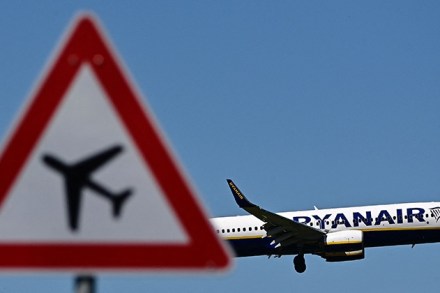
Air travel is in terminal danger

During the political car crash of 2019, I couldn’t imagine ever agreeing with Theresa May. Yet last week she exhibited both principle and pragmatism — qualities sorely lacking in her capitulation to the conniving EU paradigm whereby Northern Ireland made Brexit supposedly insoluble. The legacy of that surrender, Ulster’s disastrously unworkable trade protocol, will wait for another day. I come to praise May, not to bury her. The previous prime minister stressed to the Commons that ‘chaotic’ and ‘incomprehensible’ international travel restrictions, more oppressive this summer than last, send the message that Britain is ‘shut for business’.