Torture

Process of elimination: the horrors of Ravensbrück revealed

Concentration camps in Nazi Germany were originally set up in 1933 to terrorise Hitler’s political enemies; as war drew near, their function expanded to gratify his obsession (and that of Reichsführer Himmler, as head of the SS which administered them) with ‘purifying the race’ by getting rid of gypsies, Jews, ‘asocials’ — prostitutes, criminals, vagabonds — as well as the mentally ill and handicapped. An all-female camp at Ravensbrück, set up in 1938, soon afforded the prison doctors a steady supply of women — the ‘rabbits’, as these prisoners became known — for medical experiments .

Is torture acceptable if it helps save thousands of lives?

This week’s Senate Report on the CIA hasn’t settled the question of torture once and for all, as Bruce Anderson has pointed out. When we talk about the heroes of the Resistance, our deepest admiration is reserved for the fighters who didn’t give away their secrets under torture, so the claim that the CIA’s enhanced interrogation techniques did not result in any useful intelligence is rather surprising: it’s too morally neat.

‘Torture is torture’ ignores the complex nature of intelligence gathering

On Thursday I was on the BBC’s ‘This Week’ to talk about the CIA and torture. It is, for many reasons, perhaps the most gruesome subject possible. And not just because of the hideous allegations involved, but also because it is one of those subjects which people wantonly lose their reason over. Like a small number of other subjects in our society at the moment, it is one which people try wilfully to simplify, usually in order to show the world what a moral person they are and, by contrast, what immoral people their opponents are. I will use this post to set out some of my own views and certain objections to what seems to be the status quo debate on all this. Didn’t this week’s report showed the CIA to be torturing on an industrial scale?

The CIA’s torture regime shames the United States. It will not be forgotten

We knew and we knew years ago. Anyone who has been paying attention has known for a long time that the CIA committed appalling acts of brutality in the years after 9/11. Anyone who paid attention has also long known that the agency's torture regime - not too strong a way of putting it - produced very little in the way of useful intelligence. It was sadism masquerading as detective work; depravity disguising impotence and, in the end, the kind of programme that shames a nation. There are still some people who think it fine and dandy, still some people who think it's a lot of fuss over not very much. Still too many people who lack the courage to confront the truth. But we know better than that. We know the truth.

Yes, torture can be justified. Here’s why

Torture is repulsive. Even on the scaffold or in front of a firing squad, a man can meet death with dignity. The torturer sets out to strip his victim of dignity, to break him, to violate not only his body but also his soul. In England, torture was outlawed in 1660, and for most of the past 350 years, that seemed to be a final verdict. Torture had been a barbarous relic of the dark ages. Anyone who suggested that it might still have a role would have been laughed to scorn; no doubt he would also have been in favour of burning witches. If only it were still that simple. But the dark ages are not over. In the Middle East, there are fanatics who seem to despise death as much as they despise the West.

The Tudor sleuth who’s cracked the secret of suspense

Some reviewers are slick and quick. Rapid readers, they remember everything, take no notes, quote at will. I’m the plodding sort, making more notes than I can ever use and underlining so many quotes that, if I put them all in, it would constitute a republication of the book. But I’ve not done this with Lamentation, the sixth novel in C.J. Sansom’s Tudor crime series featuring his credible and likeable hero, the lawyer Matthew Shardlake. I intended to proceed as normal, but so engrossing is the tale that I didn’t pause long enough to take a note. Even when judged by the high standards of the earlier Shardlake novels, this one stands out — not least because it successfully maintains suspense for over 600 pages, which is going it a bit.

Press five to report a funny man on your doorstep with strange tales of dog torture

Strangely enough, I was in the middle of writing an article about the tactics used by the RSPCA when another animal charity knocked on my door. A young man holding a clipboard was standing on the doorstep, grinning enthusiastically: ‘Hello! I’m from Battersea Dogs Home.’ ‘Hello,’ I said, ‘I’m a bit busy.’ Exposing animal welfare charities for preying on innocent people. I didn’t say that last bit out loud. ‘I just need to tell you,’ he said, ‘that we’ve got a big fundraising drive because a lot of dogs are being abandoned at the moment. And...’, he paused for dramatic effect, ‘...a lot of them have been tortured.’ ‘Tortured?

British jihadists in Syria cannot be compared to George Orwell and Laurie Lee

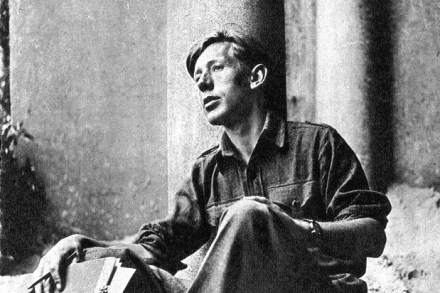
George Monbiot had a moving piece in yesterday’s Guardian in which he reflected on the UK government’s efforts to arrest and charge returning British subjects who have gone to fight the Assad regime in Syria. As Monbiot said in his very opening: ‘If George Orwell and Laurie Lee were to return from the Spanish civil war today, they would be arrested under section five of the Terrorism Act 2006. If convicted of fighting abroad with a "political, ideological, religious or racial motive" – a charge they would find hard to contest – they would face a maximum sentence of life in prison. That they were fighting to defend an elected government against a fascist rebellion would have no bearing on the case. They would go down as terrorists.

How to avoid bankers in your nativity scene

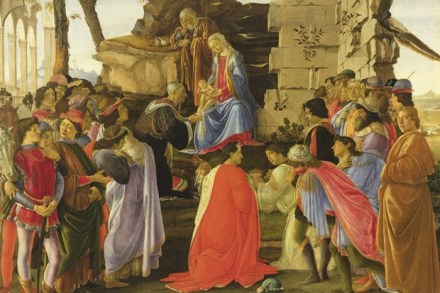
In the vast Benedictine monastery of Monte Oliveto Maggiore between Siena and Rome, the cycle of frescoes depicting the life of St Benedict by Giovanni Anionio Bazzi includes a charming self-portrait of the artist standing with a couple of pets at his feet, for all the world a 16th-century Italian Dorothy with a brace of Totos. (A detail of the painting is reproduced overleaf.) Bazzi did not earn his popular soubriquet of ‘Sodoma’ for nothing — though Vasari is not always reliable — but if his life was the scandalously licentious and dishonourable thing that Vasari would have us believe, then this only places him in the mainstream of the world described in Alexander Lee’s fascinating new book.

The Free Syrian Army is being taken over by groups of jihadist thugs

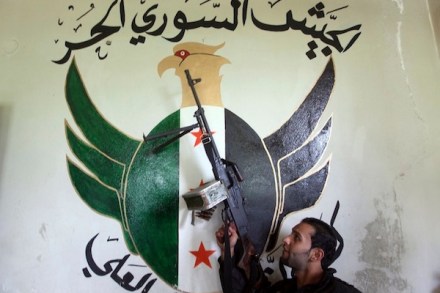
Ghadi had spent the past two years on the run from the Syrian regime but it was the rebels fighting against the government, the so-called Free Syrian Army (FSA) who finally caused him to abandon the revolution and flee Damascus. He had made the mistake of speaking out against one of the big FSA brigades running the Yarmouk district of the capital. ‘They are thieves and gangsters,’ he told me. ‘One Facebook post about what they’re doing will get you killed.’ I met Ghadi in a Beirut café, after he had made the long trek over the mountains from Syria to Beirut. Other activists joined us, all bitterly disillusioned by the corruption, looting and kidnapping that has consumed the uprising.

Abu Qatada and the problem of freedom-stomping friends – Spectator Blogs

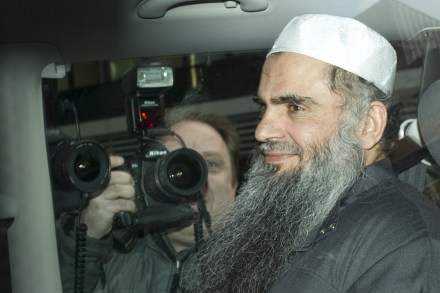
And so, once again, the judges are in the dock for insisting that due process be followed even when, as in the case of Abu Qatada, it is inconvenient to do so. On the face of it, the decision to thwart Qatada's deportation to Jordan seems unreasonable. But the truth is that few of us are in any position to judge the worth of the Jordanian government's assurances that none of the evidence used against Qatada will have been tainted by torture. It may be that, as the ECHR ruled, those assurances are credible (and if so, that's in part thanks to the work of bodies such as the ECHR) or it may be that, as the Special Immigration Appeals Commission has determined, they are not.

Abu Qatada Should Stay in Britain

I am sure Dan Hodges is correct: Abu Qatada is not a great poster boy for civil liberties. He is not a British citizen and seems to have abused the privileges afforded him when he was granted asylum in this country. Deporting him to Jordan, where he is wanted on terrorism charges, must be a popular move. Nevertheless, the European Court of Human Rights has a strong case: sending Qatada to a country in which the evidence against him may well depend upon torture compromises Qatada's hopes of a fair trial. Even if this were not the case you might think the fact he would be put on trial in Jordan is enough to compromise his prospects for a decent trial. Jordan may not be Saudi Arabia or Iran but it is not Canada or Finland either.

The Good John McCain Surfaces

Every so often the good John McCain reappears. His recent Senate speech on torture and the hunt for Osama bin Laden is the best thing I've seen from him in lord knows how long. It deserves to be read in full but some of the highlights include: [There has been a] debate over whether the so-called, ‘enhanced interrogation techniques’ of enemy prisoners, including waterboarding, were instrumental in locating bin Laden, and whether they are necessary and justifiable means for securing valuable information that might help prevent future terrorist attacks against us and our allies and lead to the capture or killing of those who would perpetrate them.  Or are they, and should they be, prohibited by our conscience and laws as torture or cruel, inhuman and degrading treatment.

A landmark judgment for the security services on torture

The Court of Appeal made a momentous judgment this afternoon. It was hearing the appeal of Rangzieb Ahmed, the first man to be convicted on terror-related charges in this country, for which he is serving 10 years. Ahmed’s appeal was based on the allegation that British security services had been complicit in his torture and that the evidence for his conviction, gained by Pakistan’s ISI, was obtained by a series of extreme measures culminating in the slow removal of his finger nails. The appeal judges rejected Ahmed’s suit, saying that there was no evidence that his nails had been pulled out or that British officers ordered beatings. Ahmed’s claims had been proved ‘not to have occurred’.

Laughing Mohammad Larijani, the Comical Ali of Iran

In the week when the Iranian regime forced Sakineh Mohammadi Ashtiani to goulishly re-enact the murder of her husband on TV, it is worth reading Newsweek's interview with Mohammad Javad Larijani, a regime insider. His answers call to mind Comical Ali, whose delusional denials of the US advance in Iraq made everyone realise how detached from reality Saddam Hussein's regime really was. First on the matter of torture, routinely said by the UN, former prisoners and defectors to be used by Iranian officials: "Torture is forbidden by the Constitution. Any law officer who tortures civilians will meet a very harsh punishment." Of course, he admits, the Iranian system could "need refinements," but over-all it is full of checks and balances.

Trickle-Down Torture

Yes, it's from the Daily Record but if there's one thing the Record does well it's cover gangland Glasgow: Scots gangsters are using "waterboarding" terror tactics to torture rivals. Hardened crooks have copied the CIA-style interrogation technique where water is poured on to a cloth covering the victim's mouth and nose to simulate drowning. We can reveal that a leading member of one of Scotland's most notorious crime clans was tortured by a rival gang using the shock tactics last week. Drug dealer John Fox was terrorised after being snatched off the street by four thugs during a row over stolen drugs. Associates of Fox said he was taken to a flat in Glasgow's east end, strapped to a scaffolding board, his head covered and water poured over his nose and mouth.

Bush: Damn Right, We Torture

And so here it is: the final confirmation of something we've long known - the Bush administration's apparently enthusiastic embrace of torture. George W Bush's memoir (£) is merely the final confirmation of this. No-one need trouble themselves pretending that the United States does not torture (at least some of) its prisoners. Nor is there any need to dance daintily around the question of what is and what is not torture. Not when the former President of the United States boasts about it.  Should Khalid Sheikh Mohammed be waterboarded? "Damn right" says President George W Bush. They knew they were torturing prisoners and they didn't care. Indeed, that was the point of the exercise.

Ten highlights from the Bush serialisation

Number 43 is back. And judging by his interview (£) with the Times editor James Harding – and that paper's serialisation (£) of his memoirs – he is standing defiant. As Bush himself puts it to his critics, "I ask those people to read the book. I understand that the filter can be harsh. But I think people will see someone who deliberated carefully on key issues, someone who did not sell his soul for politics, that he was willing to stand on principle and people can draw their own conclusions." "The book" is out tomorrow, so we will be able to draw our own conclusions then. But, in the meantime, here's a selection of extracts from the first part of the Times serialisation. The second part will come tomorrow, and cover 9/11, Blair and Katrina.

Bush’s Indian legacy

It is appropriate that the US president will be in India on the day that President Bush’s memoirs are published. For President Bush transformed the relations between these two countries, making a strategic alliance possible. This will turn out to be one of Bush’s most important legacies. A strong US-India relationship is vital if this century is going to be one that sees democracy advance. An alliance between the US and India would act as an effective check on China’s attempts to assert its power in Asia. However, I suspect that, for obvious and understandable reasons, most of the coverage of Bush’s memoirs will focus on his comments on 9/11 and its aftermath.

Blair’s Blindness on Torture

There's lots of interesting stuff in Martin Kettle's Guardian interview with the Maximum Tone but this struck me as a telling, revealing moment: One thing I want to say before the Guardian readership particularly is that this notion that I have ever condoned or would ever condone torture in any circumstances is complete rubbish. I totally disagree with it and I would never condone it, not in any set of circumstances. I think it is not just morally wrong. I think it is an extremely foolish and stupid way to try to gather information. I don't know where this has all come from. I don't know whether people in other countries, like the US, were doing these things. I honestly don't know. And therefore when people say "Will you condemn it?