Tony blair

Time to bury the hatchet?

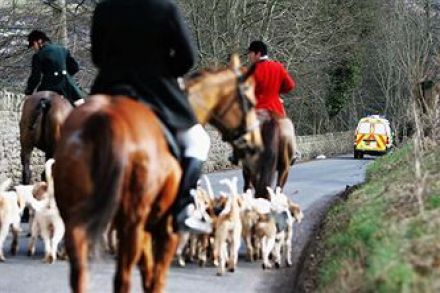
Who says irony is dead? The Four Barrow Hunt and the Countryside Alliance are holding a fundraising auction in April. The lots are largely predictable: a subscription to the Telegraph, a French holiday home and a cured fox pelt. More surprising is the signed copy of Tony Blair’s A Journey, with its comparatively brief account of the 700 hours of parliamentary time he devoted to banning fox hunting. What, you may ask, would the good folk of the Four Barrow want with that memoir? Time to bury the hatchet? Perhaps. But, equally, Blackadder’s assessment of the magazine ‘King and Country’ is recalled: 'Ah, yes, without question my favourite magazine; soft, strong and thoroughly absorbent.

The emergence of a Cameron doctrine

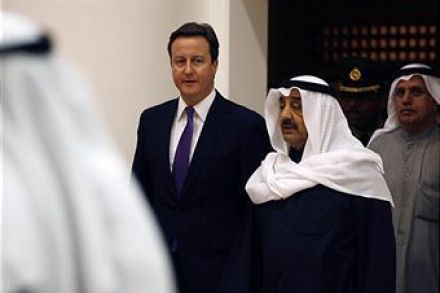
Daniel Finkelstein makes a simple but important point in the Times today (£): a Prime Minister’s foreign policy is determined by events more than by instincts. The revolts in the Middle East are defining David Cameron’s diplomacy. The emerging policy is a realistic expression of Britain’s current domestic and international capabilities. Cameron’s speech to the Kuwaiti parliament did not match Harold Macmillan’s ‘winds of change’ speech because Britain no longer disposes of continents. Likewise, Tony Blair’s messianic tendencies belong to a past era. Colonel Gaddafi’s murderous stream of conscious could have given cause to evoke the moral certainty of an 'ethical foreign policy'.

A new dawn for Dubya?

Who is the unsung hero of the Egyptian revolution? Why, the 43rd President of the United States of course. (And, presumably, Tony Blair as well.) Reuel Marc Gerecht leapt to praise Bush in the pages of The New York Times. ‘President George W. Bush’s decision to build democracy in Iraq seemed so lame to many people because it appeared, at best, to be another example of American idealism run amok — the forceful implantation of a complex Western idea into infertile authoritarian soil. But Mr.

Why the government is right to look beyond ASBOs

We shouldn't have believed the hype. For all of Tony Blair's earnest focus on Anti-Social Behaviour Orders, this flagship policy was barely in effect at all. By the latest figures, only 18,670 ASBOs were issued between April 1999 and the start of 2010. According to this Policy Exchange report – the best on the subject that I've come across – that accounts for around 0.009 per cent of all incidences of anti-social behaviour. So let's not pretend that the coalition is upending the criminal justice system by shifting away from ASBOs today. Neither, on the evidence at hand, is it doing away with an effective policy. Here's a graph that I've put together from the latest Home Office statistics.

General Hague, attack

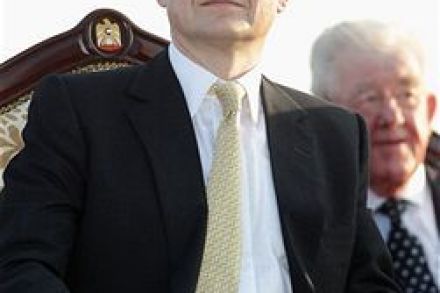
William Hague must be feeling that the incoming rounds are coming closer and closer. The Spectator, The Daily Telegraph and now The Times (£) have each allowed their pages to be used as Forward Operating Bases from which to launch attacks against the coalition's foreign policy. Even in the coalition's own ranks, dissatisfied foot-soldiers (and a even a few senior officers) think that General Hague has lost his appetite for the fight. Tories talk about a man whose defeat in 2001left a permanent wound, and how the Christopher Myers fiasco left another gash. The government's equivocal response to events in Egypt has provoked fresh criticism, while the army of eurosceptics, once Hague's Praetorian Guard, no longer trust their commander.

Much more than a networking event

What's the point of Davos? This is a question seldom addressed in the reports filed from the five-day "World Economic Forum" which ended on Sunday. Many speeches are made, many issues debated, but it is not a place where decisions are taken. It is not a G20. Manifestos are not launched there. It exists to serve a very particular function: every year for a short period of time it becomes the temporary capital of the globalised world. Top business and political leaders, distinguished academics and journalists - all committed to improving the state of the world - flock there to meet each other, swap ideas and then go home. This year, I went along for my first visit - and I promised to file my own report for CoffeeHouse on what I made of it.

Palace intrigue

Plunging into the second volume of Alastair Campbell’s diaries is like opening a Samuel Richardson novel. Plunging into the second volume of Alastair Campbell’s diaries is like opening a Samuel Richardson novel. The tone is breathless and excitable and the dramatic world of backstabbing, tittle-tattle and palace intrigue is instantly captivating. Historians will scour the book for valuable new information. Practitioners of media management will regard it as a classic. Downing Street rivalries dominate from the start. The impression that ‘the TB-GB riftology’ developed after 1997 is inaccurate.

The dangers of CameronCare

A consensus has formed in the commentariat that besides George Osborne's stewardship of the economy, Andrew Lansley's healthcare reforms could become the government's vote-loser. The political facts are as simple as the forms are complex. One, David Cameron ran a campaign based on a promise to protect the NHS. Many people thought that meant from cuts and culls alike. The Health Secretary's reforms look, whatever the truth may be, like they are going back on the PM's promise. Second, the reforms can only be successful if a range of stakeholders - voters, practitioners, analysts - have been brought along, and had a chance to debate the issues. What Michael Gove has done so brilliantly is to pick up a debate Tony Blair began.

The Big Society in 1997

Titter ye might. The Big Society? In 1997? If the idea was of, erm, limited electoral worth in our last general election, then it was certainly of little use when Tony Blair hurtled into power all those years ago. Yet there is was, mostly speaking, in the "Civic Conservatism" espoused chiefly by David Willetts. Danny Finkelstein, writing for the pre-paywall incarnation of Comment Central, has already alluded to the intellectual debt that Steve Hilton et al owe to Willetts' thinking back in the 1990s. Fraser did likewise in an interview with Willetts from four-and-a-half years ago. I mention this now for two conjoined reasons.

How do you snare a spin doctor?

So, who’s next after Andy Coulson? This question is oddly important, and will certainly influence the direction of his government. It shouldn’t, but you have to understand the way the Cameron operation works – and of how life looked before George Osborne persuaded Coulson to come on board (hoodie hugging, husky-riding, etc). Coulson was an advocate of fundamental conservative values (crime, tax cuts, Europe) and emphasised their mass appeal. Tim Montgomerie has a list of possibles for this job. But how to persuade them? Whoever does it can kiss goodbye to their life (and family) for the duration. No.10 is a pressure oven, and there’s a horribly large chance that you’ll turn out like Alastair Campbell.

The Coulson story won’t be buried – but will it matter?

There's not much chance that the Andy Coulson story will be buried in tomorrow's newspapers. Blair's appearance at the Chilcot Inquiry will scatter a handful of earth across it, as will AJ's travails. But it's not as though people outside the Westminster bubble will fail to notice all this. Watching the 24 hour news channels now, it's all Coulson, Coulson, Coulson. In which case, this is bound to inflict some damage on the government in the short term. The public is not inclined towards liking, or trusting, spin doctors. And Andy Coulson leaving Downing Street through a fug of phone-hacking allegations will not do anything to change that. Questions will be asked about David Cameron's judgement in appointing Coulson in the first place.

Déjà vu | 21 January 2011

Tony Blair is beguiling the Chilcot Inquiry once again. He was majestic last time – quick witted, sincere and convinced. There was nothing in that benign hearing room to alter, as he might have put it, the ‘calculus of risk’. His ease was sufficient to crack subtle jokes at Gordon Brown’s expense, and most emerged from the hearing believing that Britain had actually been at war with Iran. He is already ploughing those same furrows, albeit with a barely audible note of impatience, irritated that these banal proceedings continue. Iran is the new Iraq, Blair says, and he publicly takes a ‘hard line’ against Tehran, just as his government, in its entirety, had done with Saddam Hussein.

How things are different now that Balls is shadow chancellor

The timing could hardly have been more resonant. On the day that Tony Blair is paraded, once again, in front of the Iraq Inquiry, Team Brown is firmly back in charge of the Labour party. For, I'm sure you've noticed CoffeeHousers, three of the four great shadow offices of state are occupied by former members of the Brown coterie: Ed Miliband, Ed Balls and Yvette Cooper. The fourth belongs to someone who doesn't sit easily in either half of the TB-GB divide: Douglas Alexander. The question, of course, is what this means for Labour's economic policy. And the answer according to Miliband is "nothing much". The Labour leader has been keen to stress that his party's fiscal plans remain largely unchanged by Balls' ascension.

The return of Chilcot

The Chilcot Inquiry is back, and with bang not a whimper. In his opening statement, Sir John said: ‘There is one area where, I am sorry to say, it has not been possible to reach agreement with the government. The papers we hold include the notes which Prime Minister Blair sent to President Bush and the records of their discussions. The Inquiry recognises the privileged nature of those exchanges but, exceptionally, we sought disclosure of key extracts which illuminate Prime Minister Blair’s positions at critical points. The Cabinet Office did not agree this disclosure. On 10 December last year, in accordance with the Protocol, I asked the Cabinet Secretary to review that decision.

Stability versus freedom? 

Since the Iraq War, there has been a protracted silence about whether or not the West should promote democracy and human rights in the Middle East. Predominantly, we have looked away as venal but seemingly stable regimes abuse their citizens, but events in Tunisia have reignited the debate. Writing in the International Herald Tribune, Roger Cohen argues that the West's support for stability in the Middle East proved in the end a recipe for radicalisation:   "Arab regimes, many of them U.S. allies, have lost touch with young populations. Their ossified, repressive, nepotistic, corrupt systems have proved blind to the awakening stirred by satellite TV networks, Facebook posts, tweets, Web videos and bloggers.

Cameron’s public service reforms are still stuck in New Labour’s intellectual territory

The man known to the Cameroons as ‘The Master’ casts a long shadow. David Cameron has re-launched his public service reform agenda and there was more of a whiff of Blair in the air. His speech was understated. He eschewed references to radicalism and appealed to continuity instead. The favoured phrase of the moment is ‘evolution not revolution’, and Cameron traced the lineage of his reforms to those of the thwarted Blair administration (and the market reforms of the Thatcher and Major years). He was so deep in New Labour’s intellectual territory that he was at pains to stress that the ‘spending taps have not been turned off’.

Unpicking Miliband’s deceits

Ed Miliband has penned a combative but incredible piece in today’s Times (£). He makes two substantial points. First, that the coalition is deceiving people: Labour was not to blame for the deficit. And second, the coalition’s cuts package (in its entirety) is unnecessary. Oh what a tangled web he's weaved. His argument is a maze of conceits, sleights of hand and subterfuge, and he interchanges between debt and deficit at his convenience. But, occasionally, his position is exposed. As this Coffee House graph recalls, Labour built a substantial structural deficit prior to the economic collapse.

Gove’s school reforms approach a tipping point

Today marks something of a milestone for Michael Gove’s school reform agenda. Free schools – i.e. ‘Academies’ which are independently run, yet within the state sector – now account for more than 10 percent of British secondaries. This is what I have always thought of as a tipping point – where independent schools offer real competition to council schools (i.e. those run by their local authority). One hesitates to sound too confident, but the genie of choice seems to have been yanked out of the bottle, and a few facts are worth nothing: 1. There are now 407 Academies open, twice the amount in May 2010. The 400 mark was, for Tony Blair, totemic - a goal that he made Gordon Brown sign up to as a condition of the handover.

Nothing makes me feel as Scottish as an English New Year’s Eve

I actually did read Tony Blair’s memoirs in 2010, despite having sworn on these pages, quite petulantly, that I would not. I actually did read Tony Blair’s memoirs in 2010, despite having sworn on these pages, quite petulantly, that I would not. The bit that sticks in the mind is his description of Millennium Eve. You’ll have heard about it, because it’s already the only bit of the book that anybody seems to remember or ever mentions, because it’s funny, because he hated it.

Time for an Afghan Inquiry

The Iraq Inquiry had been conspicuously silent, but now John Chilcot's team has called Tony Blair to give evidence again. It's expected that our former PM will make the trip to the Queen Elizabeth II centre early next year. That would push the expected deadline for the inquiry's work finishing – at the end of this year – into 2011. Few people, however, expect the inquiry to say anything novel or get Tony Blair to say anything different than before. Its well-phrased final report may change policy in the margins – but in the security establishment there is little question of what needs doing.