Tony blair

Doing things right, but in the wrong way

In today’s spending review, George Osborne was absolutely right to hold the line on eliminating the structural deficit within one parliamentary term. In the Emergency Budget released earlier this year the coalition won fiscal credibility (and breathing space from international financial markets) by setting that goal. Failing to follow through on this goal at the first sign of difficulty would have damaged the government’s credibility and reputation in the eyes of international markets.   The Chancellor was also absolutely right to highlight the need for public service reform and to look to the welfare budget to provide some large and early savings.
Labour’s historic mistake

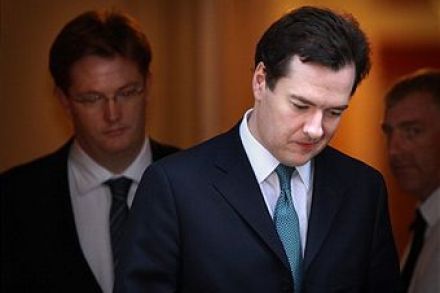
I’ve already mentioned George Osborne’s interview with the Telegraph, but it certainly merits another. As Ben Brogan says, Osborne is in a rich vein of ‘election that never was’ form. As befits the inveterate schemer, Osborne’s tactical grasp is impressive. He is quietly vociferous about Labour’s ‘historic mistake’ in electing Ed Miliband. Revealing senior Tories’ continued respect for the electoral tenets of Blairism, he says: "They have chosen to move off the historic centre ground of British politics. I've seen more pictures of Neil Kinnock on television in the past week than I've seen in 20 years. That's old politics.

Why Cameron’s conference speech is vital

Forget Ed Miliband’s promise of ‘optimism’ - a mantra that became so repetitive it had me reaching for the Scotch and revolver. Philip Collins has delivered a far more cutting verdict on David Cameron’s obsession with austerity. He writes (£): ‘Conservatives such David Cameron are not philosophers. The question to ask of Mr Cameron is not: what does he believe? It is: what problems does he inherit? Mr Cameron really does just want to fix the roof. The reason he wants to fix the roof is because it’s broken. The value he brings to this task is the insight that it is better to be dry than wet. He’s simple like that.

When Brown beat Blair in an election

With the merry dance of shadow cabinet elections upon us, it's a good time to look back on the last time Labour went through all this. There's a useful list of all the results from the 1992 Parliament here, but here's my summary of some of the more eyecatching outcomes: 1) Gordon Brown, from hero to zero (to Chancellor). In 1992, Gordon Brown came top of the shadow Cabinet rankings. By 1996, he had dropped to 14th. And bear in mind that the number of MPs standing fell from 53 to 26 over the same time. As we all know, though, he still made it to the Chancellorship.   2) Blair less popular than Prescott.

The penny drops

David Miliband is a tease. The speech he just gave was one of his best: it was self-deprecating, had gravitas, humour, and he spoke down to the Tories, telling William Hague what statesmanship was about. A monstrous conceit, CoffeeHousers may argue, but a Labour leader needs a bit of that; to make out that he's the real leader-in-waiting, up against lightweights. There was his trademark little bit of grit in the speech: he praised the troops, the Afghan mission and criticised Cameron for reducing British diplomacy to trade missions (Con Coughlin made the same point in a Spectator cover piece recently). My point: that this was a measurably better speech than the one his little brother made on Saturday. And I'll bet it's better than the speech Red Ed will make tomorrow.

From the archives: Labour election special

A double hit from the Spectator archives, this week, in recognition of events in Labour land. The first is a recent piece, by Andrew Gilligan, on why the battle between Ken and Oona – now resolved, of course – is the real battle for Labour’s soul. And the second is Boris’s take on Blair’s election to the Labour leadership back in 1994. Enjoy, as they say. The real battle for Labour’s soul, Andrew Gilligan, The Spectator, 11 September 2010 This summer’s election to choose a new deputy regional sales manager of the Co-op, sorry, a new leader of the Labour party, has rather obviously failed to set the nation on fire.

A tale of two statesmen and a wary industry

The only readable part of Tony Blair’s Lawrentian romp of a memoir, is the epilogue. He explains why the state must be trimmed in the future and how globalisation is affecting global polities, and all expressed with languid charm and an air of self-deprecation which he has acquired on the road to riches. No wonder he’s the toast of Washington, the UN and Beijing – he’s the model of the Modern English Gentleman, a real pukka sahib. Gordon Brown, meanwhile, has travelled to the UN to attend a meeting on tackling poverty. After a decade of enduring Bono at his most self-righteous, poverty is not yet history. Aid agencies and campaigners, wary of aid fatigue, are asking what went wrong. It seems that humanity could not realise its expectations.

A charismatic narcissist

In equal measure, this book is fascinating and irritating. The ‘Hi, guys!’ style grates throughout. From this, it is tempting to conclude that Tony Blair is incorrigibly insincere. But that is not the whole story. Although Blair is no friend to truth or self-knowledge, this is an involuntary study in self-revelation. The most revealing sentence is a throwaway line, in which he tells us that we are all psychological vagrants. That is the clue to his character. It is certainly impossible to read this book without wanting to psychoanalyse the author. So here goes. He comes across as a potent mixture of insecurity and certitude. Always prone to self-doubt, he also became aware that he could play the pipes of Pan, and bewitch man, woman or beast.

We are not amused

Let’s face it. This wasn’t a classic. Today’s PMQs featured a duel of the deputies. Nick Clegg, who leads part of the government, faced Jack Straw who’s so far from leading anything that he isn’t even a candidate in the race to head his currently driverless party. Unfortunately, Mr Straw had left all his good questions at home. He had to improvise at the last moment. Andy Coulson was all he could think of. He asked if Nick Clegg ‘was entirely satisfied’ that Coulson knew nothing about phone-tapping while he was editor of the News of the World. The only thing Nick Clegg is entirely satisfied with is himself and he fended off Straw’s feeble attacks by saying, effectively, ‘oh we’ve phoned the police so just shut up.

Blair pulls out of book launch

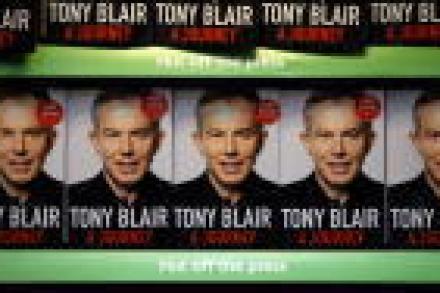
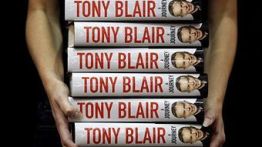
It is profoundly depressing that Tony Blair has had to pull out of his London book signing. Whatever you think of Blair, he is a man who led his party to three general elections victories and is the second longest serving Prime Minister of the post-war era. There is something very wrong if he feels he has to cancel an appearance at a book shop because of the threat of disruption from protesters whose intentions do not appear to be entirely peaceful. One other thing that should be noted is that the polling suggests that Blair is nowhere near as unpopular in this country as much of the coverage of his book suggests. A YouGov poll, timed to coincide with the book’s launch, found that a plurality, albeit narrow, of voters believe Blair was a good Prime Minister.

The coalition’s vulnerability on crime

Parliament has that beginning of term feel today, lots of people discussing what they did on their summer holidays. After the holidays, the main topic of conversation is this whole phone tapping business. Everyone is wondering how long the BBC will keep playing it as the top story; it even devoted two thirds of the One O’Clock news to it. Given how reluctant the papers are to touch it, the story will burn out if the BBC stops fanning the flames. But one thing that I feel is being overlooked is Tony Blair’s attack on the coalition as soft on crime. If David Miliband wins the Labour leadership, I expect the Labour party will hammer the coalition on crime. There’s a real danger that the coalition’s policies could create a whole bunch of Willie Hortons.

First free schools will open next September

Tomorrow’s Guardian front page says Michael Gove dealt fresh blow as only 20 'free schools' approved. But this is actually not a bad rate of progress. The 20 refers only to the new schools that will open in September 2011, more will open in 2012 and 2013 and so on. One would expect the numbers to increase as momentum behind the programme builds. As soon as parents see what these schools can do, there’ll be greater demand for them. Ed Balls is out tonight with a typically pugnacious statement claiming that this proves that parents don’t want free schools. But it is worth remembering that Tony Blair, a man who knows a thing or two about what the public want, goes out of his way to praise Tory school plans in his autobiography.

Balls turns on the man he called Labour’s ‘greatest ever leader’

The ever-pugnacious Ed Balls was on the Today Programme this morning denouncing Tony Blair for saying that the coalition was, broadly, right in its deficit reduction plans. As Balls warmed to his task, he started reeling off Blair’s failings—his advocacy of entry into the euro, his one-sided account of things in his autobiography and the like— and I wondered: if this is his opinion of the man he called Labour’s greatest ever-leader, what on earth does he think of the other men who have led the party?   But in all seriousness, the coalition needs to start hitting back at the ‘growth denier’ charge that Balls keeps hurling at them.

Brown’s plan for the future

Mr Blair’s former breathless lover will form the fully staffed Gordon and Sarah Brown Foundation, paid for by lucrative speaking engagements, which the Spectator revealed some weeks ago. He has accepted three pro-bono appointments - joining Queen Rania of Jordan’s Global Campaign for Education, working on a new programme to bring the internet to Africa and joining the board of Tim Berners Lee's World Wide Web Foundation. He will also continue to write on the plight of the world’s poor. Presumably, he won’t now be seeking a spot at the Shadow Cabinet table. Like Blair, Brown’s ambitions are global. I can’t criticise Brown for any of this – they are all worthy causes close to Brown’s heart.

“The worst-written memoir ever twittered by a serious politician”

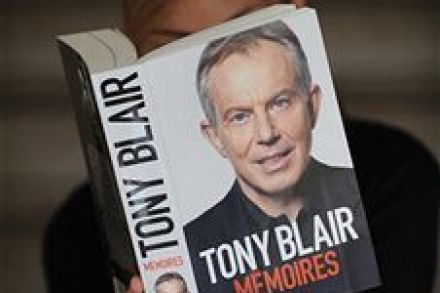
That's how Bruce Anderson sums up Tony Blair's book in a caustic piece for the magazine. Here's the whole review for the benefit of CoffeeHousers: 'It is bizarre. As he often demonstrated in the House of Commons, Tony Blair knows how to use words. He could also have mobilised a team to help him write his memoirs. Instead, it is all his own work, and the words mutinied. This book is not just badly written. it is atrociously written. For almost 700 pages, Tony Blair stumbles between mawkishness and banality. Prime ministers send soldiers into combat. Some of those soldiers are killed. That is a subject which would lead the least sensitive of men to reach into their souls and craft language out of emotional depth. This is Mr Blair's version.

Tony Blair, freelance statesman

Say what you like about Blair, but he is something of a political entrepreneur. He detects a gap in the market and fills it: he did with New Labour in the mid-1990s. And he detects a trend in the globalised world: a system where governments don't matter so much and power is held by a global elite. This, CoffeeHousers, is what he's up to with his memoirs. He is presenting himself in new incarnation, a statesman without a state, able to move without being tied down to an electorate. There's a very revealing passage in his book where he talks about Condi Rice: “She is a classic example of the absurdity of people with experience and capacity at the highest level not having big political jobs after retirement from office,” he writes.

The education battle opens

Michael Gove has announced that 32 schools will open as Academies at the start of the new term. More schools are set to open over the next academic year, but it is a disappointing figure. However, it could’ve been worse – I’ve heard rumours that as few as 10 schools would adopt Gove’s reforms. The figure of 32 is at the upper limit of recent estimates knocking around Westminster. Disappointing it may be, but slow progress is unsurprising. These are radical steps and teachers are hesitant in the face of change. Blair’s original academy reforms were frustrated in part by teachers and governors eager to preserve the status quo. However, first Blair and now Gove are committed to an attritional struggle with the recalcitrant Educational Establishment.

Blair: the sex scenes

Not just a Prime Minister, not just a global statesman, in A Journey Tony Blair also demonstrates he knows how to treat a girl: CHERIE: "I DEVOURED HER LOVE" "…that night she cradled me in her arms and soothed me; told me what I needed to be told; strengthened me; made me feel that I was about to do was right … On that night of the 12th May, 1994, I needed that love Cherie gave me, selfishly. I devoured it to give me strength. I was an animal following my instinct, knowing I would need every ounce of emotional power to cope with what lay ahead. I was exhilarated, afraid and determined in roughly equal quantities." ANJI HUNTER: "SEXY - WITH DEVASTATING EFFECT" "Anji was my best friend.

The Mirror backs ‘The Special One’

The ballot has opened and the Mirror has joined the mounting chorus in favour of David Miliband. They say of Miliband: ‘We believe he has the intellect, talent and experience to take on the Tories - and eventually become PM.’ Their timing is odd, given that Fleet Street and Westminster are currently captivated by Tony Blair’s memoir. But it is also a neat coincidence that Blair’s journey ends on the day that his apparent heir’s begins. As Tim Montgomerie notes in today’s Times (£), the Tories fear David Miliband because he is the only Labour leadership candidate who asks: ‘What would Tony do?’ It goes deeper than that.