Tony blair

Does Boris Johnson really want to see Tony Blair tried for war crimes?

What are we supposed to make of Boris Johnson? I mean, are we supposed to pay attention to what Boris actually says? Or is he permitted to play the game of politics by different rules? That is, the sort of stuff that applies to other politicians does not apply to Boris because the Mayor of London is a great entertainer and thus granted some kind of relief from the usual rules of responsibility. Just asking, you know. Consider his recent remarks about Tony Blair and the Iraq War. During an appearance on LBC last week, the Mayor appeared to endorse the fashionable daft idea that Mr Blair should be tried as a War Criminal. At the very least, Boris suggested, this is what Blair deserves.

Tony Blair spoke the truth about Islamism. But not the whole truth

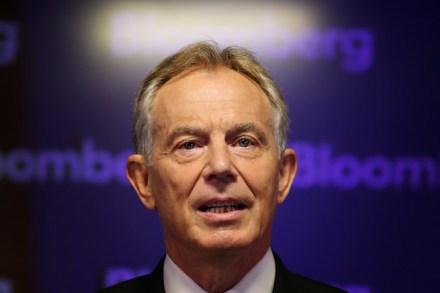
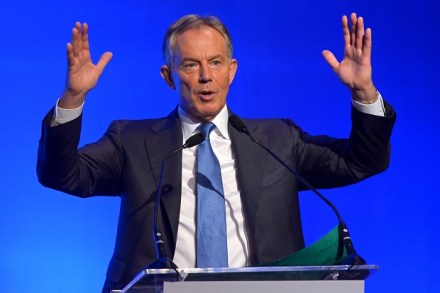
As so often (in my opinion) Tony Blair is almost right. In a wide-ranging speech at Bloomberg this morning he roamed over Syria, Libya, the Middle East and the West’s withdrawal of interest, let alone engagement, in the region. But it is Blair’s comments on Islam that are most interesting, are already garnering headlines and merit most attention. Referring to the problems across the Middle East he said: ‘At the root of the crisis lies a radicalised and politicised view of Islam, an ideology that distorts and warps Islam’s true message. The threat of this radical Islam is not abating. It is growing. It is spreading across the world. It is de-stabilising communities and even nations.

Full text: Tony Blair’s speech on why the Middle East matters

It is unsurprising that public opinion in the UK and elsewhere, resents the notion that we should engage with the politics of the Middle East and beyond. We have been through painful engagements in Afghanistan and Iraq. After 2008, we have had our own domestic anxieties following the financial crisis. And besides if we want to engage, people reasonably ask: where, how and to what purpose? More recently, Ukraine has served to push the Middle East to the inside pages, with the carnage of Syria featuring somewhat, but the chaos of Libya, whose Government we intervened to change, hardly meriting a mention. However the Middle East matters. What is presently happening there, still represents the biggest threat to global security of the early 21st C.

Evangelically wishy-washy

David Cameron has said Christians should be more evangelical “about a faith that compels us to get out there and make a difference to people's lives”. In an article for The Church Times he said he wanted to infuse politics with Christian values such as responsibility, hard work, charity, compassion, humility and love. In recent years politicians have often been shy about talking about religion, reluctant perhaps to invoke the authority of God to score a political point. William Ewart Gladstone had no such anxiety, saying in 1832: “Restrict the sphere of politics to earth, and it becomes a secondary science”.

New Labour’s greatest failure

My friend and critic Jonathan Portes obviously took exception to my remarks about Keynesianism having been disproven. His entertaining rebuttal claims to have exposed my misreading of data. That's not quite how I see it. I agree with him that the appalling build-up of out-of-work benefits happened before 1997. The Tories badly miscalculated incapacity benefit; thinking it would be a one-off way to help those affected by deindustrialization. But, in fact, it created a welfare dependency trap, and the 1992 recession caught too many people in it. John Major had an excuse: a recession. Tony Blair had no such excuse. I wasn't joking about a quarter of Liverpool and Glasgow being on the dole at the height of the Labour boom.

The Irish Question, as recorded by The Spectator

As the Irish president is making the first visit to the United Kingdom by an Irish head of state, some people have asked what’s taken him so long. The Spectator’s archive offers some insights into the two countries’ rocky relationship. The British government has often been criticised for not doing more to mitigate the effects of the Irish potato blight in the 1840s. The Spectator agreed the government could have done more, but also voiced suspicions about one of Ireland’s national champions, Daniel O’Connell. He’s known as The Liberator in Ireland and was one of the early campaigners for the repeal of the Act of Union.

Rebekah Brooks’s ‘Hutton style’ email

People pay Tony Blair handsomely for his PR advice; but, today, thanks to the hacking trial at the Old Bailey, we allegedly get to see a glimpse of the Great Man in action for free. The court was shown this email sent by Rebekah Brooks on the day after the last ever edition of the News of the Screws went to press; it is an account of a conversation she claims to have had with Tony Blair: Only got 10 minutes before I see Charlie for confiscation! I had an hour on the phone to Tony Blair. He said: 1. Form an independent unit that has an outside junior counsel, Ken Macdonald, a great and good type, a serious forensic criminal barrister, internal counsel, proper fact checkers etc in it. Get them to investigate me and others and publish a Hutton style report. 2.

My battle with Michael Gove’s Blob

Michael Gove has been under fire this week for ‘sacking’ Sally Morgan as chair of Ofsted. You’d think he’d be within his rights not to re-appoint her, given that she’s a former aid of Tony Blair’s and her three-year term has come to an end. But no. This has become Exhibit A in the latest case for the prosecution against the Education Secretary, namely, that he’s too partisan, too ideological. He’s abandoned the ‘big tent’ approach that characterised the honeymoon period of the coalition and reverted to type. He’s a Tory Rottweiler. All complete balls, of course. When it comes to education reform, supporters and opponents don’t divide along party lines.

The strange tale of Wendi and Tone

Have you ever harboured affection for Tony Blair's arse? According to reports, you may not be alone. Wendi Deng, Rupert Murdoch's former missus, apparently yearned for Tony's piercing blue eyes, sexy legs and, indeed, 'butt'. I assume that means his arse, rather than some device perhaps situated in his garden and utilised for the capture of rainwater. She could always have bought her own one of those, maybe from B&Q. Wendi and Tone, Wendi and Tone. The more unlikely a pairing reported at first sotto voce in the papers, the more probable it is that it's true. Who'd have banked on the visually impaired Home Secretary David Blunkett and the Spectator publisher Kimberley Fortier? Not me. People told me about it and I said: 'Pish'. Well, or something like 'pish'.

Tony Blair’s cultural revolution has won, at least in the Conservative Party

As Rod pointed out the other day, Arthur Scargill’s purchase of his council flat illustrated the triumph of Thatcherism over its opponents; like any winning ideology it created the conditions for its followers to flourish and increase in number, and so securing the revolution. That’s one of many things that Tony Blair had in common with the Conservative leader; New Labour created the conditions, through an expanded and often highly-politicised public sector, for Blairites to flourish and therefore for Blairism to triumph, not just at the ballot box but culturally too.

Alexander Chancellor: This Christmas it’s nice to be able to pity the stinking rich for a change

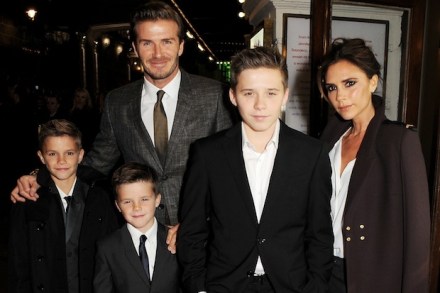
This is the season of goodwill when one should think about people less fortunate than oneself and wish them better luck. It’s easy to forget to do this when one is having a wonderful time with one’s family and friends, playing charades, getting drunk, and so on. But it would be heartless not to spare one little thought for David and Victoria Beckham, who are planning at this joyous time to squander millions of pounds on turning a nice, cosy Victorian family house in Kensington into some kind of grim Californian spa hotel, equipped with massage beds and powder rooms and a catwalk on which Posh Spice can walk up and down, parading her new clothes. According to Posh’s plans, even her young children will have their own ‘en suite’ bathrooms.

Gerry Adams: still a revolting man and still trying to steal Irish history.

I know this is not exactly breaking news but Gerry Adams is a vile man. Since no-one devotes much attention to Northern Ireland these days it is easy to forget this. Easy to file Adams and his Sinn Fein comrades into a musty drawer marked Ancient History. But the past is not another country. In Dublin this week the Smithwick Tribunal's report into alleged Garda collusion with the IRA in the murders of RUC officers Harry Breen and Robert Buchanan in 1989 was finally published. The report confirmed long-held suspicions that the IRA had a mole or, less dramatically, a simple informant inside the Garda station in Dundalk, County Louth.

G without T

G and T, the favoured cure for gyppy tummy in Himalayan hill-stations, bubbled home from the Raj to the English suburbs to become the aperitif of choice in Betjemanic golf clubs and panelled bars from Altrincham to Carshalton. There is a particular pleasure in being in a London pub at the end of an office day, and hearing the clink of ice in glass, as barmaids ask ‘Do you want lemon in that?’ and office workers, happy that the tedium of toil is done, say, ‘Yes, and make those doubles.’ Larkin wrote about the pleasure of making G and T, but it was never my drink.

How the warring ghosts of Blair and Brown still haunt their successors

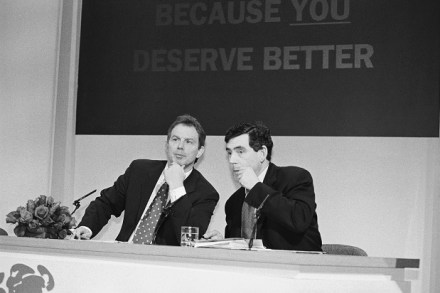
Six and a half years after Gordon Brown finally badgered Tony Blair out of Downing Street, the relationship between these two men still dominates British politics. Why? Because David Cameron and George Osborne, and Ed Miliband and Ed Balls are, in their different ways, doing what they can to prevent history repeating itself. Their relationships are both informed by the Blair-Brown breakdown. Cameron and Osborne have quite deliberately structured their working lives to avoid replicating the tensions within New Labour. The pair shared a set of offices in opposition with their aides sitting in the same room. This was meant to prevent the emergence of two separate, competing power centres. If it had not been for coalition, the pair would have carried this set up into government.

Chaps, if we want grandchildren, we need to stop the skinny jeans fad

Are you a man? Do you have legs wider than the average pipe cleaner? Then this article is for you. You’ll need something to read as you sit at home, unable to go out because you’ve got no trousers. British clothes shops, you see, no longer sell ones that fit you. At first I thought the problem was me. Every pair of jeans I tried on in Gap hugged me like clingfilm. Had I put on that much weight? I tried the only other place I ever buy jeans: Fat Face. Same story. As indeed it was with their trousers, even the combats. God help the soldier sent into action wearing those things: he wouldn’t be able to bend at the knee.

Guido Fawkes to Damian McBride: Who’s spinning now?

When Gordon Brown eventually became aware that his Downing Street was about to be engulfed in the Smeargate scandal, he called Damian McBride to try to get to the bottom of the story. The latter recounts the conversation verbatim in Power Trip, his tell-all book dedicated ‘to Gordon, the greatest man I ever met’. Brown says: ‘OK, Damian, I need your word that you will tell me the truth. If the years we’ve worked together mean anything, I need your absolute word.’ ‘Yep, of course,’ McBride replies solemnly, ‘I give you my word, I promise I’ll tell the truth.’ ‘Right,’ says Brown, ‘firstly, is there anyone else in No. 10 or in the government or in the Labour party who is involved in these emails or this website?

Rod Liddle: Under New Labour, it really was the loony left

There is a little vignette in the first volume of Alastair Campbell’s diaries that makes it abundantly clear that, at the time, we were being governed by people who were mentally ill. It is yet another furious, bitter, gut-churning row involving Campbell, Tony Blair and Peter Mandelson and concludes with Mandelson stamping his little feet and screaming: ‘I am sick of being rubbished and undermined! I hate it! And I want out.’ The cause of this dispute was not whether or not Labour should nationalise the top 200 companies and secure for the workers by hand or by brain the full fruits of their industry. Don’t be silly. It was about whether Blair should wear a suit and tie to deliver a speech or if, instead, he should put on a nice pair of cords.

Damian McBride shatters the Labour peace

If you want to know just how much anger Damian McBride’s book has created in the Labour party—and particularly its Blairite wing, just watch Alastair Campbell’s interview with Andrew Neil on The Sunday Politics. Campbell doesn’t scream or shout but the anger in his voice as he discusses McBride’s antics is palpable. He did not sound like a man inclined to forgive and forget. This whole row is, obviously, a massive conference distraction. Those close to Ed Miliband had hoped that this year, the Labour leader would get a free run at conference now that his brother has quite politics. But as one of his colleagues said to me late last week, ‘it used to be all about David, now it’ll be all about Damian.

David Cameron attacks Blair’s ghost in Syria debate

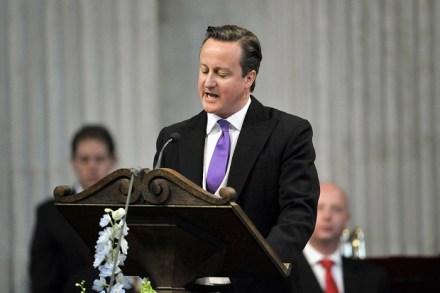
Tony Blair would have had less of a presence in today's Commons debate on Syria if he'd actually turned up to it. The former Prime Minister was threaded throughout the speeches, and no more so than in David Cameron's address to MPs. Cameron was keen to emphasise at every opportunity the difference between the government's response to the current situation and the Blair government's handling of the Iraq war. He was quick to refer to it, saying 'I am deeply mindful of the lessons of previous conflicts', and later said that Iraq 'poisoned the well' of public trust on military intervention.

David Cameron’s wars: How the PM learned to love precision bombing

What is the one consolation for an MP who has beaten all their colleagues to the top job? It can hardly be the luxury of having your life, circle and income open to alternate snorts of envy and derision. Nor can it be the quagmire into which nearly all attempts to solve the nation’s domestic problems now fall.  Only one thing allows prime ministers of a country such as Britain to feel they have power. That is exercising it. And nothing exercises power more than deciding which wars to fight. In opposition, David Cameron did not much like the idea of war, and derided his colleagues for their admiration of Tony Blair. Yet in office — as Syria is revealing — he is treading a very similar path.