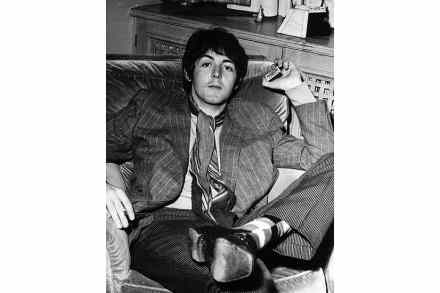
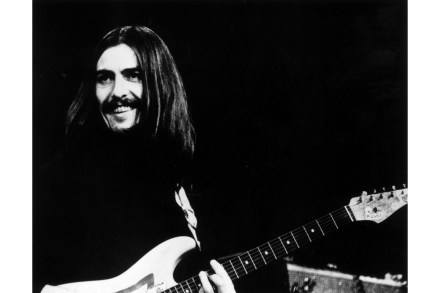
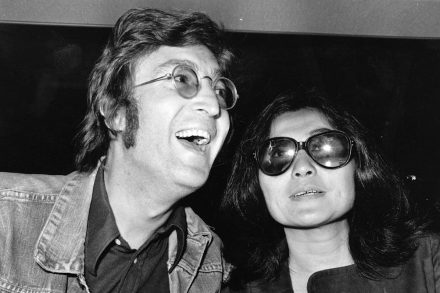
The beatles

At last, a private education that wasn’t unmitigated misery

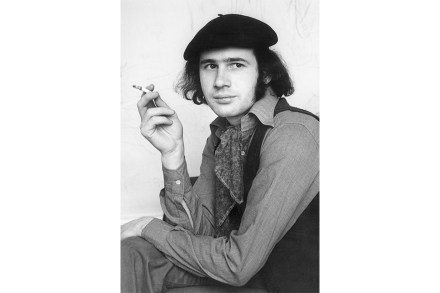
There has been a spate of books recently about private education, ranging from academic denouncements of their malign effects on society, such as Francis Green and David Kynaston’s Engines of Privilege, to Charles Spencer’s grim chronicle of neglect and abuse, A Very Private School. Though technically falling within this genre, 1967, the singer-songwriter Robyn Hitchcock’s diverting account of his formative spell at Winchester College, seems to hail from a rosier era. It is one where matron’s buttered crumpets rather than bullying were the chief topics of Billy Bunter-esque reminiscences that proclaimed schooldays the happiest of one’s life.

Nowhere near as miserable as I remember it: The Beatles – Let It Be reviewed

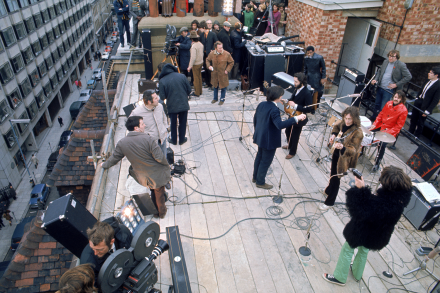
Beatles lore has long held that the film Let It Be was a depressing portrait of the band falling apart. According to the same lore, that’s why Peter Jackson’s Get Back was such a revelation. Revisiting Michael Lindsay-Hogg’s footage of the group at work in January 1969, Jackson discovered there was far more joy around than anyone suspected – including the surviving Beatles. Yoko remains a darkly brooding presence (the revisionism that sees her as benign needs its own revision) All of which, it now turns out, only goes to prove the ever-reliable power of suggestion. I vaguely remember seeing Let It Be on TV in the 1970s, before it disappeared until last week – and finding it as miserable as I already knew everybody said it was. Except that it really isn’t.

How Liverpool soon outgrew the Beatles

‘If any journalist asks you about the Beatles because you’re from Liverpool, say you hate them and you don’t listen to that old crap.’ Such was the advice that the DJ Roger Eagle, promoter and founder of the legendary (and there really is no other word for it) Merseyside punk club Eric’s, dispensed to a young Ian Broudie in the late 1970s. Little could either have imagined that almost simultaneously John Lennon, over in New York in the Dakota Building, was busy demo-ing ‘Now and Then’. It was a song which would resurface as the final Beatles single and top the charts some 40-odd years later, aided by a form of AI technology that possibly only members of Dalek I, the Wirral’s wackier answer to Kraftwerk, could have dreamt of back then.

The Spectator’s Music of the Year 2023

From our US edition

Teresa Mull, assistant editor A Cat in the Rain by the Turnpike Troubadours The Turnpike Troubadours are back with a new album that sounds a lot like their old ones, which is why I like it so much. A Cat in the Rain has been heralded as “a triumphant comeback,” and indeed, as a fan who’s followed (or tried to, anyway) the Red Dirt band’s ongoing drama, I was surprised and delighted to welcome the return of Evan Felker’s rustic voice singing some fresh, but still familiar-feeling, songs. The lyrics have a gentler, humbler feel to them — overcoming alcoholism by laboring on a cattle ranch and rekindling with the wife you divorced to produce two kids will do that to a man, apparently.

turnpike troubadours music

In the dark early 1960s, at least we had the Beatles

‘These things start on my birthday – like the Warsaw Uprising – and spoil my day,’ wrote the understandably self-pitying Barking housewife Pat Scott in her diary on the first day of the Cuban Missile Crisis in October 1962. ‘And then to spoil it more, Ted [her husband] took his driving test for the second time and failed.’ It is clashes like these, of the personal and humdrum against the political and global, that make David Kynaston’s close surveys of Britain in the second half of the 20th century such fascinating and lively documents. Yes, the world might be about to end, but that was no excuse to spoil Pat’s 37th birthday.

‘Now and Then’: the Beatles are back

From our US edition

In the Sixties, the rivalry between the Beatles and the Rolling Stones  — even if it was more of a hype battle dreamt up by their respective publicity departments — meant that whenever one band released an album or single, the other was never too far behind. Sometimes, they even explicitly referenced their competitor’s work; the Stones’s 1967 album Their Satanic Majesties Request was “inspired” by the Beatles’s LP Sgt. Pepper’s Lonely Hearts Club Band, released earlier that year. Yet after the Beatles split up in 1970, the rivalry seemed to be at an end, and the deaths of John Lennon in 1980 and George Harrison in 2001 apparently put paid to any possibility of the Liverpudlian band continuing in any form. Oh, how wrong we were.

beatles

George Harrison at eighty

From our US edition

All I got to do is to, to love youAll I got to be is, be happyAll it’s got to take is some warmth to make it blow away That’s the chorus of George Harrison’s bubbly 1979 single “Blow Away,” an update of sorts to his Beatles hit “Here Comes the Sun.” At the close of the 1970s, the respite from the “long, cold, lonely winter” had become less assured. There is a pleading tone in Harrison’s voice as he sings “be happy” that infuses “Blow Away” with pathos. That, plus his cavernous stare in the otherwise goofy video, indicates that summiting Mount Everest might have been easier than the chorus’s stated goal.

Harrison

What happened to the supermodels of the 1990s?

‘What advice would you give to your younger self?’ has become a popular question in interviews in recent years. It’s meant to generate something profound but, musing privately, I always find it a puzzler. Sometimes I think that maybe I shouldn’t have wasted so much of my twenties talking nonsense in pubs, but on the other hand I really enjoyed it. So I usually settle on: ‘Don’t buy a sofa bed, especially not the kind with a concealed metal frame that you pull out.’ Unbelievably, I’ve done this twice. These vast, unwieldy contraptions cost a bomb, weigh a ton, make a terrible sofa and an uncomfortable bed. If you’re 16 and reading this, be warned.

The phoney mystics who fooled the West

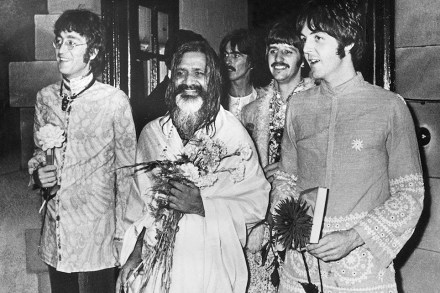
In recent years when we’ve talked about the relations between India and the West, we’ve gone back to stressing the impossibility of interchange. A hundred years ago, E.M. Forster ended A Passage to India with the certainty that Aziz and Fielding could not be friends. Forster thought things would be different after Indian independence, but the spectres of cultural appropriation and the assertion of ongoing imperialist guilt have discouraged equal exchange.  Meher’s spiritual energy was soon devoted to persuading Hollywood to make a massive movie about his life That may explain why the excellent story Mick Brown tells in The Nirvana Express has hardly been covered in the past.

Jenny Boyd goes beyond the muse

From our US edition

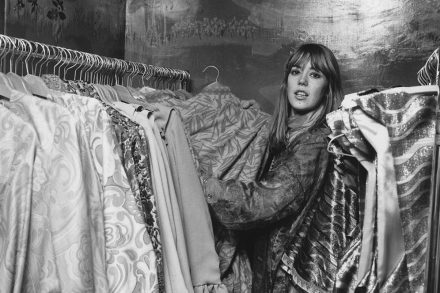
The beautiful muse to great male artists is a tricky figure, omnipresent in history but a bad fit for our fussy time. From Edie Sedgwick to Zelda Fitzgerald, and even some male ones, such as Neal Cassady, they’ve always been part of artistic scenes. In the scene of great Sixties rock, one of the most important was Jenny Boyd. She may not be as well-known as Yoko Ono, or her sister Pattie, who was married to George Harrison. But she may have been as influential. She was in the backstages, the bedrooms and the jam sessions with some of the most iconic musicians of all time. Shortly after traveling around India with the Beatles, she married (then divorced and remarried) Mick Fleetwood. Later, Donovan would write a love-sick song about her, "Jennifer Jupiter." So would Mick Jagger.

Jenny Boyd

My childhood Cold War fears are back

On the day before my seventh birthday, which I spent at my grandma’s in Yorkshire, a young man named Raymond Jones walked into North End Music Stores in Liverpool and asked the guy behind the counter for a record on which an obscure local group called the Beatles provided the backing track for a song titled ‘My Bonnie’. The guy behind the counter was the shop’s manager and the son of its owner. His name was Brian Epstein, and as a restless budding entrepreneur he felt he should be alert to what was going on around him. Because of young Raymond’s evident enthusiasm, Brian made a note on a piece of paper saying: ‘The Beatles? Check on Monday.’ Which he did. Intrigued by what he saw, he wondered if he should become their manager.

Richard Lester at ninety

From our US edition

No matter how many years have passed since they first hit American airwaves, or how many of its members have died, or how aged its surviving members have become, the Beatles will always be, in our minds, forever young. To a large extent, the public perception of John, Paul, George and Ringo as personifications of youth, zest and zeal was a byproduct of their classic faux-documentary musical comedy, A Hard Day’s Night, released in the summer of 1964, just months after their appearance on The Ed Sullivan Show. It comes, then, as something of a shock to note the ninetieth birthday this month of the film’s prodigious and gifted director, Richard Lester. The maker of the Beatles movies (he also directed 1965’s Help!) a nonagenarian? It can’t be! But so it is.

lester

More mesmerising than it should be – Disney+’s The Beatles: Get Back reviewed

My late friend Alexander Nekrassov loathed the Beatles, which I used to think was a wantonly contrary position akin to hating kittens or blue skies or Christmas carols. What could there possibly be not to like, love and admire about the band that gave us ‘Eleanor Rigby’, ‘A Day In the Life’ and ‘Strawberry Fields Forever’? Since then I’ve encountered so many Beatles sceptics that it has given me pause for thought.

It’s amazing how little insight Paul McCartney has into the Beatles’ genius

The Paul people are out in force these days. A New Yorker profile, a book and a new documentary have put the Beatles, and particularly Paul, back in the papers. Not that they, or he, ever left. I should admit a bias. I have the same first name as John, and being a man of straightforward loyalties I took him as my favourite early on. Even now I find him the most interesting of the four: vain, sardonic, nasty, boyish, thoughtful, wounded; bright-eyed and pugilistic and blessed with an undermining cleverness that left him bored by whatever he came across. The even-tempered Paul just doesn’t entrance me in quite the same way.

Sounds of Christmas past

From our US edition

Remember when you were so nonchalant about the inevitability of Christmas privilege? Time off work for the holiday season, a few messy coke sessions with colleagues, maybe a boozy catch up with an old friend? Going out and about, buying your bourgeois real (dead) Christmas tree? Remember how you hated all that cornball Christmas muzak piped into the department stores: Slade, Wizard, Macca’s “Wonderful Christmastime,” The Waitresses’ “Christmas Wrapping,” Nat King Cole’s “Christmas Song”? Then along came Covid and Christmas was gone. You, my friend, were in lockdown. As each post-2020 festive season rolls into town, so will the new variants of Covid. The smart set decrees that it’s best we all hole up for the holidays and hide from disease and death.

christmas

The nearest thing to Paul McCartney’s autobiography: his guide to the Beatles’ songbook

Whatever your favourite theory of creativity, Paul McCartney has a cheery thumbs-up to offer. You think the secret is putting in the hours? ‘We played nearly 300 times in Hamburg between 1960 and 1962.’ Or could it be a wide range of cultural inputs to assimilate and remix? The Arty Beatle hoovered up Shakespeare, Dryden, not just Desmond but Thomas Dekker, Berio and Cage and rock’n’roll and light jazz, and sublimated them all. In one of the great missed opportunities, when it came to arranging ‘Yesterday’, his first thought was Delia Derbyshire. Some people credit childhood trauma: McCartney recalls how his father Jim would weep alone in a neighbouring room after Paul’s mother died. The sexual drive?

James Bond and the Beatles herald a new Britain

The word ‘magisterial’ consistently attaches itself to the work of David Kynaston. His eye-wateringly exhaustive four-volume history of the Old Lady of Threadneedle Street established him as a historian with a confident command of a huge body of information, as bloodless and dry as the subject was. Embarking on Tales of a New Jerusalem, a history of Britain from 1945 to 1979, he has undertaken another marathon and earned magisterial rank. Yet, from the first, Kynaston has shown that he is prepared to leave the bench to sweep the Ealing and Islington Local History Centres, Wandsworth Library, the East Riding Archives and especially that extraordinary resource, the Mass Observation Archive, kept in The Keep at the University of Sussex.

The rising cost of remembering the Fab Four

From our US edition

If you’re a diehard Beatles fan, it’s been a pricy year. And it’s going to get much worse. Within the last 12 months, those of us unable to resist new or repackaged product from John, Paul, George and Ringo have wrestled with sense and reason over whether to splash out on one of the numerous limited-edition, pre-release colored vinyl copies of McCartney III, the mega-box set reissue of Lennon’s Plastic Ono Band from 1970 or even, dear old Ringo’s recent EP, ‘Zoom In’. And there’s more to come; expect a cascade of marketing hoopla around August’s Get Back, the Lord Of The Rings director Peter Jackson’s reworking of the band’s 1969 misery-memoir movie Let It Be, as well as a lavish tome of McCartney lyrics and memoirs in November.

beatles george harrison

Fifty years of ‘Imagine’

From our US edition

How should we measure the value of a work of art or, failing that, a pop song? Take for example John Lennon’s ‘Imagine’, which was recorded exactly 50 years ago. It certainly scores on the sales front, having shifted about 21 million copies worldwide according to the Chartmasters service. That’s a healthy revenue stream in anyone’s book, particularly for a tune whose lyric urges us to envision a world without possessions. The ‘ubiquitous’ box gets ticked, too, because ‘Imagine’ has been covered by more than 200 other artists. It’s the unifying song we all seem to turn to at moments of crisis, as when the pianist David Martello performed it in front of the Paris Bataclan the morning after the November 2015 terrorist attacks there.

imagine

As pretty as anything he’s written in four decades: McCartney III reviewed

Grade: A- The greatest songwriter of the 20th century, or just one of the top two or three? Who else would you have up there? Kern, Gershwin, Ray Charles, maybe. Dylan for the words along with the music. But not, I think, John Lennon. It’s McCartney’s melodic imagination that captivates and sometimes staggers — ‘Here, There and Everywhere’, ‘Maybe I’m Amazed’. The Beatle it was not OK to like, and yet who, today, would prefer to hear the overwrought ‘Strawberry Fields’ to the easy, loping chime of ‘Penny Lane’? Yes, Wings were the naffest band imaginable. But even then I would take their worst album (Red Rose Speedway) over Lennon’s solo best (Some Time in New York City).