Taliban

Joe Biden’s victory lap around Afghan defeat

From our US edition

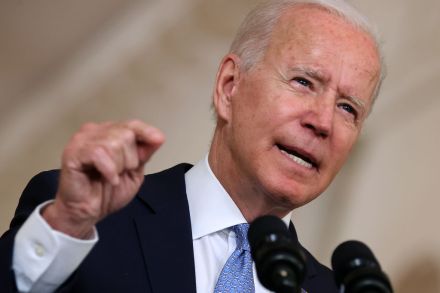
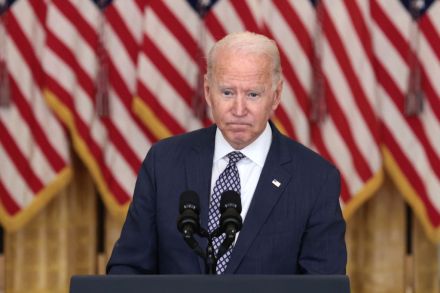
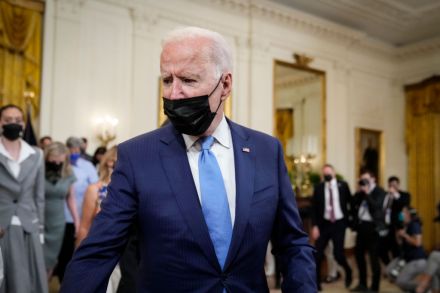
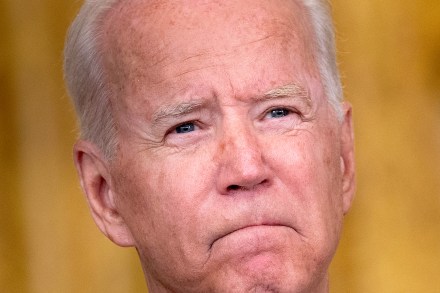
President Biden walked to the White House podium on Tuesday and proclaimed the US withdrawal from Afghanistan an ‘extraordinary success’. He relied on the unanimous advice of military leaders and strategic advisers for these wise decisions. If there were any failures, they were due to Donald Trump. Never in history, he said, had there been such a successful airlift. Of the Americans who wanted to leave, we got out an amazing 90 percent. Surely that’s a success all around, despite the collapse of the Afghan army, which nobody expected. Of course, as a far-sighted leader, Biden said he had ordered plans for that, too.

biden

Who lost Afghanistan?

From our US edition

America's longest war draws to a bloody end. As the pullout deadline approaches, the probability of more atrocities like the suicide bombing last Thursday that killed 13 of our troops, and more than 90 Afghans, remains nauseatingly high. The American public was ready for us to leave Afghanistan. It was not prepared for just how ugly leaving could be. President Biden bears responsibility for the lives lost, just as he bears responsibility for those lost throughout the course of this conflict and the similarly ill-premised Iraq War — both of which he helped to launch while he was in the United States Senate. He has made grave mistakes. One mistake he has not made, however, is to waver from the decision to withdraw. He has not let terrorists change our timetable.

press

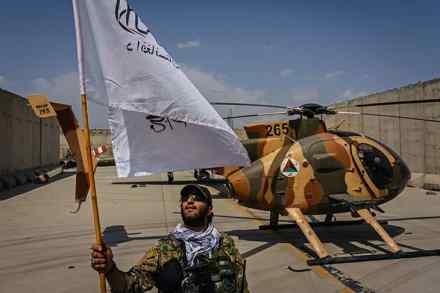
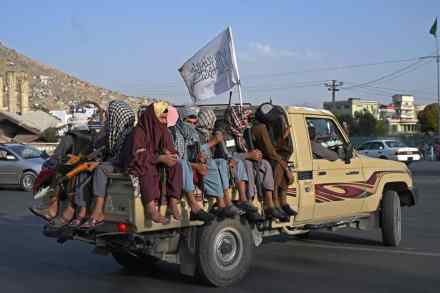
How the Taliban will govern Afghanistan

When the Taliban ruled Afghanistan for five years in the late 1990s, the key power lay in a modest room in a house in Kandahar. There was just a simple iron bedstead and a box as furniture, and no door but a curtain separating it from the rest of the house. Sitting on rugs on the floor the Taliban founder Mullah Omar issued orders, made appointments and took money from the box. The ministries in Kabul operated on fiats issued from this room. His successor as Emir, Haibatullah Akhunzada, does not enjoy the same unquestioning authority. He was known as a scholar and ideologue not a fighter, and emerged as a compromise leader in 2017 after Omar’s successor Mullah Mansour was killed by an American drone strike. Akhunzada has since promoted extreme violence.

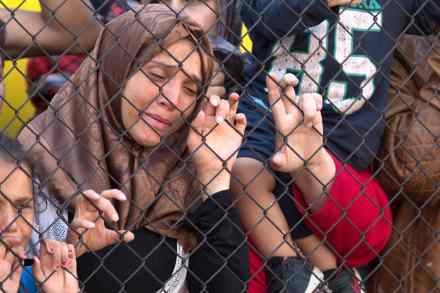
How will Europe respond to a wave of Afghan refugees?

On Tuesday, Franek Sterczewski made a break for the border. Wearing a long trench coat and carrying a blue plastic bag, he managed to outrun one armed soldier before being stopped by a line of officers. Sterczewski, however, wasn't fleeing his native Poland — he was trying to help those who desperately want to get in. https://twitter.com/jakwojtanowski/status/1430213700464545792?ref_src=twsrc%5Etfw August 24, 2021 Brussels has accused the Belarusian government of actively shipping in would-be refugees The rebellious 33-year old MP had planned to hand out medicine and water to the line of asylum seekers camped out on the eastern frontier with Belarus.

The descent of Afghanistan

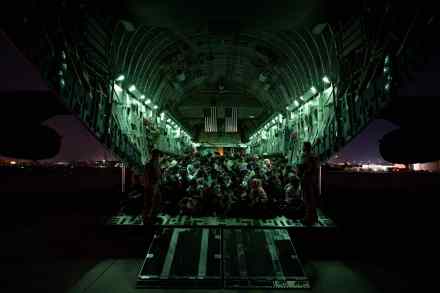
The bomb attacks at Kabul airport were what US and allied commanders overseeing the mass evacuation had most feared. In so far as they could be, they were prepared. They had, it appears, received very specific intelligence — perhaps based on a trial run by the bombers — that such attacks were in the offing. They warned people to stay away from the airport. Guards were doubtless on extra-high alert. And yet the perpetrators got through. More than 60 civilians were killed along with 13 US marines. Dozens more were injured and taken to already overburdened hospitals in Kabul. The carnage of 26 August was the costliest day in the last stages of the West’s Afghan war.

Stephen Miller: here comes the Afghan refugee crisis

From our US edition

The rapid takeover of Afghanistan by the Taliban has potentially dire consequences for Afghan women and children. The Islamist group was able to commandeer sophisticated US weaponry and other military equipment during our poorly-planned troop withdrawal. And so Americans have been primed to cheer the arrival of planes carrying thousands of Afghan refugees, who we are told would otherwise be executed by the Taliban, into the United States. But what are the long-term consequences of rapid refugee resettlement? Could this present a risk to national security? How will this effect Americans economically or culturally?

Former White House Senior Advisor Stephen Miller (Getty Images)

The terrible cost of the tragedy at Kabul airport

America’s frantic, confused exit from Afghanistan was a humiliating shambles even before Thursday's terrorist attack. Now, it is something much worse. It is a deadly tragedy, leaving victims dead and injured and trapping thousands of Americans and friendly Afghans in a lethal environment, where terrorists roam free. There will be a huge political price to pay for this disaster, and President Biden will pay it. This deadly fiasco didn’t just happen on his watch. It happened because of his decisions, a series of fundamentally bad ones, taken by the President himself.

Will the Taliban’s victory lead to attacks on British soil?

The security services in Britain have been concerned about the rise of the Taliban for many months. In government briefings they have been telling ministers that it was almost inevitable the Taliban would gain some role in the government of Afghanistan once Western forces withdrew – it was just a question of how much. It is easy to ignore, after the sudden collapse of Afghan forces, the fact that the national army had been losing ground to the Taliban over several years and bloody attacks have remained a constant in the centre of major cities in the country. The Taliban killed 16 people and injured 119 in a suicide bomb attack on a residential compound in the capital just days before the leadership was due to meet President Trump at Camp David in September 2019.

pompeo

Exclusive: ‘The Taliban smelled weakness’, says Mike Pompeo

From our US edition

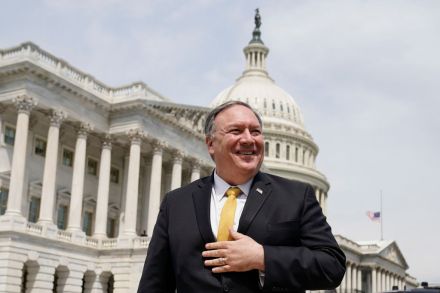
President Biden blames Donald Trump and his former secretary of state Mike Pompeo for the debacle of the Afghanistan withdrawal. Mike Pompeo vehemently disagrees. In this exclusive interview with Urs Gehriger of the Swiss weekly Die Weltwoche, Pompeo sees America's failure in Afghanistan and its loss of credibility as direct results of Biden’s policies of ‘weakness’ and warns that ‘if the Taliban decide that they're going to become violent in a full-on assault, the US should use every element of its military power to protect American interests.’   Lausanne, Switzerland  Urs Gehriger: President Biden announced that he would withdraw all US military forces by August 31. It looks highly unlikely that this can be accomplished.

What will happen to those left in Kabul?

The Afghan evacuation is feared to be entering its final hours, and with it a new desperation is building among people trying to get out of the country and those helping them. On the ground, troops are warning that Kabul airport could be overrun by people who are ineligible to leave but desperate to do so nonetheless. Embassy workers are trying to process visas, ministers are being bombarded with requests to look at cases where vulnerable Afghans have been overlooked or cannot make it to the airport safely.

The failed assumption of Biden’s withdrawal

This week, the media pressure was on the British government to extend the deadline for the evacuations from Kabul airport. The government had no power to do this unilaterally: it duly asked the United States, and was duly turned down. The issue was almost beside the point. It is doubtful, given the burning desire of so many to leave the country, whether a few more days of rescue flights would have done much to shorten the suffering queue of hopefuls.  Each day is dangerous, so more days are more dangerous. Preoccupation with extension deflected attention from the key point, which is that all evacuation planning assumed that Kabul and its airport would be controlled by the (now former) Afghan government, thereby ensuring an orderly exit.

biden ice cream

President Ice Cream’s Afghan meltdown

From our US edition

You have to hand it to the Taliban (or, if you are Joe Biden, the ‘Tally-bahn’): they are both a persistent and an infernally clever lot. As to their persistence, recall that George W. Bush assured us that, ‘thanks to our military, our allies, and the brave fighters of Afghanistan...the Taliban regime is coming to an end.’ That was in December 2001. As of August 2021, they control the country and are as I write issuing ultimatums to the President of the United States: everybody out by September 11, no, make that August 31 — otherwise, there will be ‘consequences’. Oh, and by ‘everybody out’, we don’t mean Afghans who may have worked for the US: they have to stay. There does seem to be a communications breakdown about radical elements in Afghanistan.

Pakistan’s masochistic support for the Taliban

Taliban flags are already flying in Islamabad. Among those hoisting the white flag of the group is the women’s madrassa Jamia Hafsa, affiliated with the adjoining Lal Masjid (Red Mosque), which has also released a song celebrating the Taliban as ‘the symbol of Islam’. Lal Masjid, a few miles from Pakistan’s military headquarters and parliament, has been an emblem of terror and factory of jihad in Pakistan since its formation in the 1960s. The Lal Masjid cleric Abdul Aziz has in the past pledged allegiance to Isis and appeared to defend the 2014 Peshawar school attack which killed 141, mostly schoolchildren. When the army moved against Lal Masjid in 2007 it led to a nationwide explosion of terror attacks.

joe biden popularity

Is Afghanistan to blame for Biden’s sinking popularity — or is COVID?

From our US edition

‘How many more generations of America’s daughters and sons would you have me send to fight Afghanistan’s civil war when Afghan troops will not?’ Biden asked last week. ‘How many more lives, American lives, is it worth, how many endless rows of headstones at Arlington National Cemetery? I’m clear on my answer: I will not repeat the mistakes we’ve made in the past.’ They were the words of a man who knew from what he spoke and knew to whom he was speaking. It was not to the national news media, an elite that has abandoned its working-class roots and audience, and have nothing but censure and contempt for Biden’s brave decision.

The buck stops with Biden

Joe Biden is unfit to be President of the United States. It was obvious when he was running for office that he lacks the physical stamina and mental acuity for the job. It has become increasingly obvious since January that the part-time President has either hidden from the media or stumbled through the kind of scripted press conferences that Americans rightly used to deride as the hallmark of banana republics. The handling of the withdrawal from Afghanistan has exposed Biden's incapacity. The painful truth is now undeniable. He must go — even if that means Kamala Harris, who has been similarly wrong about Afghanistan and much else besides, taking over. They say success has many fathers, but failure is an orphan. This failure is a two-parent family.

China’s Great Game in Afghanistan

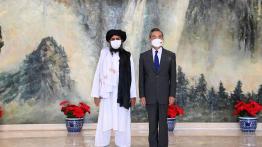
China greeted America’s chaotic retreat from Afghanistan and the Taliban seizure of power with a mixture of glee and trepidation. Its well-oiled propaganda machine has revelled in the fall of Kabul, but Beijing is fretting over the threat of instability on its doorstep – and there is a very real possibility that China will become next power sucked into the ‘graveyard of empires’. The humbling of the United States in Afghanistan fits nicely into the Chinese narrative of American decline, but Beijing has also used the withdrawal to pile pressure on Taiwan, warning the self-governing democratic island that Washington is an unreliable ally. ‘Afghanistan today, Taiwan tomorrow,’ ran a headline in the Global Times, a communist party tabloid.

My love for old Kabul

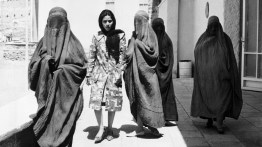
They say the city you most fondly remember is the one you grew up in. In my case that’s Kabul. I spent my formative years in the Afghan capital in the mid-1960s. It was a very different time and Afghanistan a very different country. But the Kabul that’s imprinted on my mind belongs to that decade. It was a happy city. No other description does it justice. Of course, it was poor, conservative and hierarchical but people were always smiling. They were warm, welcoming, courteous and generous. This was most obvious in their attitude to children. Everyone called me ‘bacho’. When Mummy took me out, shopkeepers would slip Hershey’s chocolates or spearmint gum into my hands and then seal my lips with their fingers.

Panjshir valley and the last resistance to the Taliban

The Panjshir valley, about three hours’ drive north of Kabul, has a mythical hold on the Afghan imagination. It is a natural fortress, a long lemon-shaped valley surrounded on three sides by 13,000-foot-high mountain ridges, with the only entrance a narrow road in a deep winding gorge to the south, cut by the Panjshir river. It is a place of stunning beauty, with green fields either side of the river laden with apple blossom in the spring, irrigated by ingenious canals. The walls between the fields, and sometimes the houses themselves, are buttressed with rusting metal war remains – the wheels of a tracked vehicle, armour plating, bridges formed of shell cases.

Defence contractors were the real winners in Afghanistan

The fall of Kabul, like the fall of Saigon, will be taught in classrooms for decades to come. But the dramatic images coming out of Afghanistan don’t necessarily hail the beginning of a post-American world. If America learns the right lessons, it has the chance to pursue a more sustainable foreign policy. One lesson it could learn is to stop outsourcing its war-making and foreign policy to overpaid private firms. In a less politically correct era, these groups would be called what they really are: mercenaries. The corruption and graft expended on contracts of dubious value is legendary. In one episode, some £20 million was spent on forest camouflage for the now-collapsed Afghan National Army.

Afghanistan and the end of the American hegemony

We used to sneer at the way the Russians were chased out of Afghanistan by a ragtag of mujaheddin armed only with Kalashnikovs and American Stinger rockets. No longer.  The last superpower to be defeated in Afghanistan withdrew in good order, having negotiated the arrangements with Kabul and the mujaheddin. They left behind a competent government, and an Afghan army capable of fighting the mujaheddin to a standstill. That government survived as long as the Russians went on supplying food and ammunition. Then the Russian government, close to meltdown, stopped deliveries. The mujaheddin swept to victory and fell straight into a bloody civil war. Many Afghans were relieved when the Taliban restored order.