Taliban

Could an uprising succeed against the Taliban?

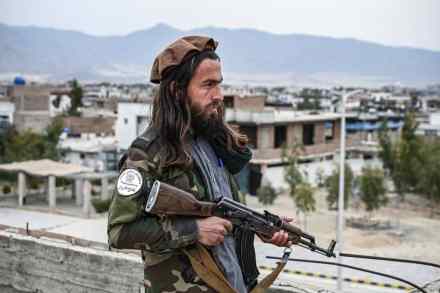
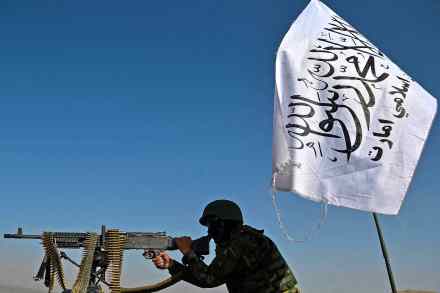
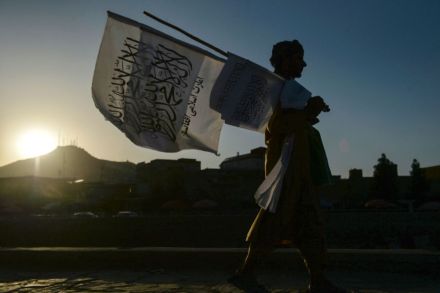
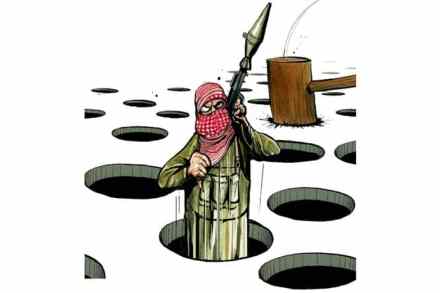
The social media accounts of the new so-called ‘National Resistance Front’ (NRF) in Afghanistan give the impression of a raging insurgency already taking place against the Taliban. The talk is of ‘intense clashes’, with the Taliban suffering ‘heavy casualties.’ There are exaggerated accounts of running battles and successful ambushes against the Taliban across the north and east of the country, in particular in the Panjshir Valley, a long narrow region surrounded by mountains on all sides, not far north of Kabul. It was here that the NRF first raised its flag last summer as the country collapsed in the face of a Taliban assault. That flag is one of the problems facing those trying to organise effective military opposition to the Taliban.

Afghanistan is starving to death and there is nothing the West can do

The scale of the human tragedy unfolding in Afghanistan is hard to comprehend. The economy has collapsed, some 20 million people face death by starvation and international agencies like the World Food Programme have already doubled their estimate of what they will need just to keep people alive. They are appealing now for a staggering $2.4 billion (£1.8 billion) to get food stocks into position and keep a pipeline of supplies into the country through the winter. There have been reports of parents selling their babies and there are scenes of daily humiliation as people pile up household goods in the street to try to sell for scraps of food. The banks have hardly any cash to circulate and the Taliban have added to an acute liquidity crisis by banning the use of foreign currency.

Can Beijing buy the Taliban?

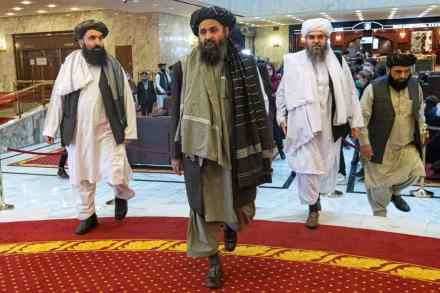
China is seeking a grand bargain from the Taliban: eliminate the groups Beijing says are stirring up trouble among its Muslim Uighurs in exchange for massive aid to rebuild Afghanistan. It sounds enticing for both sides as they sit down in Doha this week, but there are numerous questions about whether either can deliver, and a good chance that China will become the next imperial power sucked into the ‘graveyard of empires’. Mullah Abdul Ghani Baradar, the Taliban’s deputy prime minister, and Wang Li, China’s foreign minister, are reportedly meeting in the capital of Qatar just as the Taliban faces a growing number of attacks from Isis-K, a provincial affiliate of Islamic State. Baradar is insisting that the security situation is ‘under control’.

Biden’s State Department is a laughingstock

From our US edition

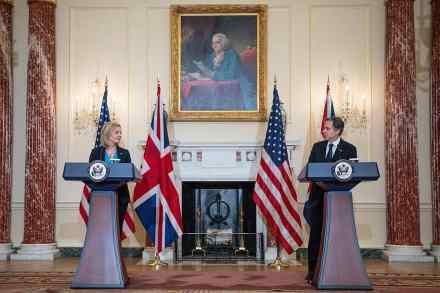
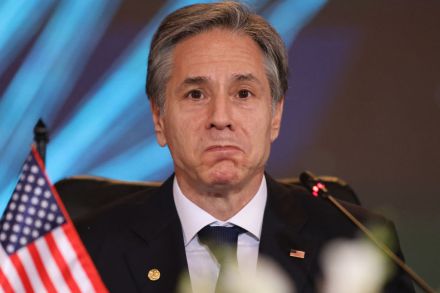
Last week, the State Department learned that twice this summer China had tested a new hypersonic missile weapon with nuclear capabilities. According to the Financial Times, the rocket employed a “fractional orbital bombardment” that also had the guidance ability to “glide” around the earth in orbit. The test reportedly stunned the Biden administration, and comes on the heels of a string of embarrassing global events for the US, including the fall of Afghanistan and Russia opting not to raise natural gas supplies to Europe after the completion of the Nord Stream 2 pipeline. Secretary of State Tony Blinken reacted with a series of “deeply concerned” letters. The State Department had once again been caught flat-footed. But fear not: Blinken has his priorities straight.

state department

The Taliban learn just how hard governing Afghanistan is

From our US edition

For the first time in two decades, and arguably for the first time since the late 1970s, there is a semblance of calm in Afghanistan’s countryside. The US troop withdrawal last August, ending Washington’s 20-year misadventure in the country, has ushered in a period when airstrikes, IEDs, and Taliban-orchestrated bombings are no longer daily facts of life. Afghans who haven’t seen their relatives for years are now able to travel the roads without worrying about getting menaced by Taliban gunmen or fleeced by corrupt Afghan army troops. At the same time, Afghanistan is at a perilous moment in its history.

taliban

Punch-up at the palace: why the Taliban is tearing itself apart

The office of the Afghan president, the Arg, sits in more than 80 acres of parkland, quadruple the size of the White House estate, and more than twice the size of Buckingham Palace grounds. Since it was built in the late eighteenth century, most of its occupants have died violently in one of the elegant buildings, built inside a large square compound of thick stone walls as a copy of an ancient fortress. But there has rarely been a scene like the one earlier this month, following the visit to Kabul of the head of Pakistan’s intelligence service, the ISI, Lieutenant General Faiz Hameed. He had come to Kabul to impose Pakistan’s will on the shape of the new Taliban government.

History returns for Putin and Erdogan

From our US edition

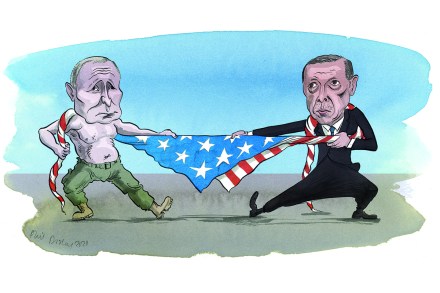
Washington’s allies are deploring the Biden administration’s mismanaged withdrawal from Afghanistan, and they’re worrying publicly about its implications for Nato. Russian leaders, resisting the urge to gloat, express well-founded concerns over the spread of jihadist terrorism northward into Central Asia. And China is moving in, cutting deals with the Taliban to mine lithium and other critical minerals. The reaction in Turkey has been more ambiguous, but also more interesting. Early in the evacuation, Turkey sent soldiers to Kabul to secure the airport. It is already clear that Turkey’s Islamist government is ready to recognize and work with the Taliban — while also loudly discouraging Afghan refugees from trying to enter Turkey.

turkey

Should we listen to Shamima Begum’s verdict on the hijab?

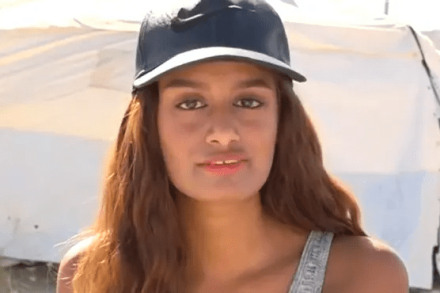
What should one make of Shamima Begum's appearance on Good Morning Britain? The London schoolgirl left the UK in 2015 to join Isis in Syria, but it appears she's converted to common sense in recent times. Dressed in a sleeveless top and a baseball cap, Begum made a number of frank admissions, including how she 'felt very constricted in the hijab. I felt like I was not myself.' The cynic will suggest it is an act in an attempt to be allowed back to Britain. Perhaps. Or maybe we should give Begum the benefit of the doubt. She was young and naive at the time. Now she understands how an enforced dress code demeans women – a reality that woman in Afghanistan are now living through.

Will Biden deal with the Taliban?

From our US edition

When President Joe Biden tapped longtime aide Antony Blinken to be his secretary of state last November, Blinken landed his dream job. Here he was, a man widely respected in foreign policy circles, continuing the family business (his father and uncle were both ambassadors and his stepfather was an adviser to John F. Kennedy). What Blinken could have lived without, however, was the grandstanding, bravado and livid speeches from lawmakers responsible for overseeing his work. Unfortunately, fielding self-righteous questions is a part of the job description.

taliban

How stable is the Taliban government?

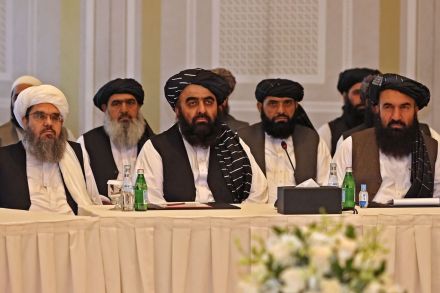
Some western governments and media have been involved in a collective act of wishful thinking in recent months over the Taliban—believing them somehow to be ‘moderate’ and on the way to forming an inclusive government. The idea began with their elevation of status as a partner in negotiations with the US in Doha. They were legitimised, so some believed they had changed. The last remnants of that belief must have been burnt out by the appointment of the Taliban cabinet this week, which was not inclusive in any sense, but was the result of three weeks of bartering between different Taliban factions, only resolved by the intervention of the head of Pakistani intelligence, the ISI, General Faiz Hameed.

The rise of Taliban Twitter

The Taliban takeover of Afghanistan was swift, but this victory wasn't won overnight. For years, the Taliban has been waging a softer fight: one on social media. Since it was removed from power, the Taliban has dedicated enormous resources to developing its presence online.  As it successfully recaptured Afghanistan, the propaganda opportunities which it put to use on Twitter as the eyes of the world watched suggested these efforts have paid off. Images and videos of Taliban forces easily gaining ground and advancing into Afghanistan’s cities – picking up military hardware left by the Americans along the way – spread like wildfire online. Islamists around the world were delighted.

The 9/11 anniversary marks a painful moment for squaddies

The sweet salvation of the summer recess over, we returned to Sandhurst for our final term of officer training. It was 11 September, 2001 – a day that started with a hike in the sunshine and which came to define my time in the British Army. The events of 9/11 would lead to my own deployment in Afghanistan and Iraq, and the loss of dear friends and comrades. Of course, on that September morning none of us knew how events 3,000 miles away – and the political decisions taken in the aftermath of those terrible attacks – would have such a momentous impact on our lives. After the buses dropped us off, the hike started jollily.

Life under the Taliban’s charm offensive

The Taliban Cultural Commission sounds a contradiction in terms but for all foreign journalists it’s the first stop in the new Afghanistan. There, in a dusty office on the first floor of the old Ministry of Information, I was handed a letter which allowed me to go anywhere in the country, except Kabul airport or military installations. In a neighbouring office I met Anamullah Samangani, a Taliban commander from the northern province of Samangan. He’s an Uzbek, resplendent in crisp white shalwar kameez, black waistcoat and black and white silk turban. He told me he has read one of my books. ‘Do you feel safe in Kabul, have you had any difficulties?’ he asked. He assured me that the new Taliban just want to be friends.

How the fight against terror in Afghanistan will change

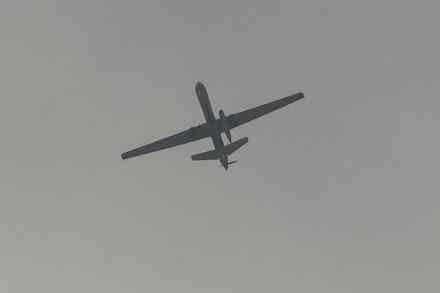
In the aftermath of the 9/11 attacks, the West entered a new age: it was the era of the 'shadow war', in which American – and Western – might was ranged at preventing the export of terrorism from the Middle East. That was, of course, before the futile exercise of 'nation building' in Afghanistan and Iraq. Twenty years on, we are back where we started: Afghanistan is in the grip of a radical Islamist regime. Again it is likely to become a launch pad for Al Qaeda (and Isis) attacks in Europe and America. So how can the West defend itself from the threat? Amidst the debacle of the hasty American withdrawal from Afghanistan, there is some good news: weapons technology has moved on considerably.

The West is being played by the Taliban

There have been some curious juxtapositions in Afghanistan this week. On the one hand, the under-19 Afghan cricket team was allowed to leave for a planned tournament in Bangladesh, as if things were normal, while on the other there was a sinister military parade taking place in Kandahar this week. After the lines of horsemen in flowing white robes, a deliberate image of Islamic warrior superiority, came the fleets of captured Humvees. And at the side of the procession lay a car packed with a bomb, suicide vest, and large plastic bottles of explosives from a roadside bomb. This is a government-in-waiting promoting terrorist weapons that indiscriminately kill civilians.

Don’t be fooled: the Taliban hasn’t changed its spots

Has the Taliban really changed its spots? Those who advocate talking to the Taliban make the case that they have. The organisation, they say, has recognised the mistakes it made in the years culminating in 9/11. Others claim that the organisation is now committed to local and national aims, not international terrorism, and that the Taliban have – or can be moderated – via the tool of engagement. All of these approaches seem to share the view there is a disconnect between the west’s reaction to events in Afghanistan, and the reality. But is this really the case?  Pakistan's national security adviser, Dr Moeed W Yusuf, has suggested the time has come to face facts: we need to accept the Taliban has won, negotiate with them and treat them as partners.

Why is Toyota so popular with the Taliban?

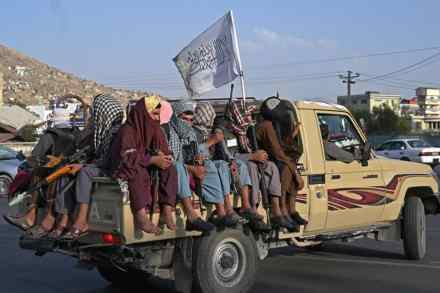
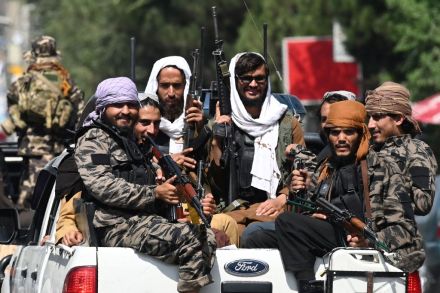
While Taliban posing with newly acquired US military hardware has been a searing humiliation for America in recent days, here in Japan the debacle in Afghanistan has led to a different source of embarrassment. A recurring image of coverage from Kabul is of Toyota pick-up trucks ferrying gun-toting fighters around the city. It has given the iconic company’s management a serious PR problem, and not for the first time. The Taliban have been favouring the sturdy and reliable Japanese ‘Land Cruisers’ since the 1990s, but it is also the vehicle of choice for Al Qaeda and Isis. The appeal seems to be the suitability for rough terrain and the ease with which the trucks can be retrofitted with gun placements, or in other ways customised for combat or intimidation.

Ken Cuccinelli: Afghans flown to US ‘not being vetted’

From our US edition

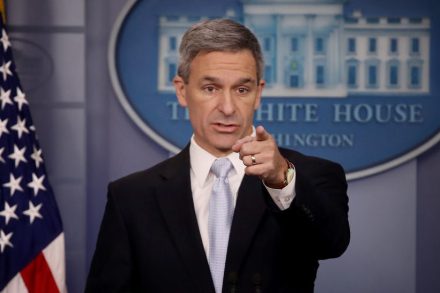
Former deputy secretary of Homeland Security Ken Cuccinelli said Thursday that the United States has flown in thousands of Afghan nationals that have not been properly vetted in the aftermath of the military withdrawal of Afghanistan. According to data published by the Washington Post, 23,876 'at risk' Afghans have already arrived in the US out of the more than 120,000 individuals that were evacuated from the Kabul airport. Cuccinelli explained during an interview on WMAL's O'Connor & Company that these individuals are being 'paroled in' to the US because there has not been enough time to conduct a thorough security screening and confer them legal status. 'They're not being vetted. They're being what's called "paroled" in,' Cuccinelli said.

ken cuccinelli
taliban

The Taliban didn’t beat America. Afghanistan did

From our US edition

The late Edward Said invented, or at least brought into vogue, the notion of Orientalism. For a time this became the big boo word in academia, a handy phrase for casting a variety of writers, ranging from Jane Austen to Charles Dickens to Joseph Conrad, into the abyss for their putative imperial cast of mind when it came to depicting the inhabitants of the further reaches of the British empire. But soon enough, as a recent and lengthy erudite review in the London Review of Books noted, Said apparently found himself accused of the very same sin by the cultural revolutionaries that he had exposed. It turned out that the founder of Orientalism was (gulp) an Orientalist. My, my.

America, the Taliban and a farewell to arms

It was quite the handover at Kabul airport this week. The last American troops to exit Afghanistan reportedly left facing an ‘elite unit’ of the Taliban. In a season finale that the most dystopian screenwriter would have struggled to invent, the elite Taliban unit was itself bedecked in US military kit. That is, they were not only wearing uniforms and protective kit provided by the fleeing US army, but were parading the airport with US-provided guns in US-provided vehicles. This was the culmination of a fortnight that the White House is still trying to present as a success. One of the biggest airlifts in history, they insist. In reality the Biden administration has pulled off a feat few of us thought possible.