Liam Duffy

Liam Duffy is a researcher studying extremism and Islamism.

Elon Musk isn’t an extremist threat

From our UK edition

At conferences and roundtables on counter extremism in recent months, it has been impossible to escape the terms ‘mis’ and ‘disinformation’. For among experts, practitioners, academics, civil servants and police officers, it is the default explanation for understanding not only extremism in Britain, but the wider mood of popular discontent.  Over the weekend, this view was lent further credence in the pages of the Observer by two counter-extremism heavyweights, former counter-extremism commissioner Dame Sara Khan and the former head of counter-terrorism police, Neil Basu.
The French academic paying a heavy price for probing the Muslim Brotherhood

From our UK edition

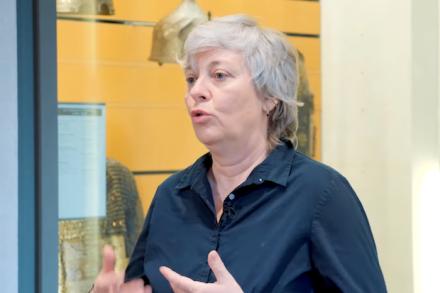
Loitering by the entrance, I clock a large gentleman with tattoos crawling up his neck from underneath his collar. It’s immediately obvious he’s not there for lunch: he is there on behalf of the French state to prevent an assassination. Specifically, the targeting of the academic I am meeting: Dr. Florence Bergeaud-Blackler, who’s been living under police protection for the last six weeks since the reaction to her book on the Muslim Brotherhood took a turn. The Muslim Brotherhood is perhaps the most significant Islamist organisation in the world. A political party founded against the backdrop of 20th century colonialism in Egypt, it arrived in the West via students and exiles fleeing repressive regimes in the Arab world. It is also obsessively secretive.

Prevent and the problem of ‘political correctness’

From our UK edition

Britain is reviewing its cornerstone anti-terror programme. As the name implies, Prevent is a strategy designed to stop radicalisation before it metastasises into killer intent. But how well is it working? There have been accusations that Prevent is discriminatory. Groups such as Liberty and the Muslim Council of Britain have criticised the anti-terror strategy for targetting Muslims, arguing that it has caused hurt to Britain’s Islamic communities. But there are also criticisms that, even on its own terms, the Home Office programme isn’t working as well as it should. Dame Sara Khan, the social cohesion tsar, last week warned that efforts to tackle Islamist extremism are being hampered by ‘political correctness’.

We shouldn’t forget the horrific crimes of Isis returnees

From our UK edition

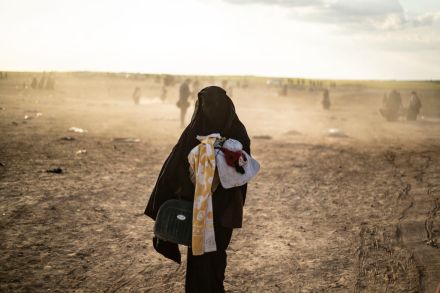
Summer 2015. A five-year-old girl is chained up and left outside in the desert sun in Fallujah, Iraq – a punishment for wetting the bed while feeling unwell. The little girl slowly died of thirst in temperatures exceeding 50 degrees Celsius. Condemned to the same inhumane punishment was the girl's mother, made to endure the additional and unimaginable horror of helplessly watching the life drain from her daughter's tiny body. The mother and child were members of Iraq’s Yazidi religious minority. Their captors, members of Islamic State (IS), are said to be German and Iraqi. At the time, Islamic State recruits felt invincible. They taunted the West and ruled over civilians in their territory with cruelty and terror.

Why police shouldn’t stop using the term ‘Islamist terrorism’

From our UK edition

The Times has revealed today that counter-terror police officers are considering dropping the term ‘Islamism’ to describe terror attacks motivated by Islam. If it feels like we’ve been here before, we have. Ever since Islamist terror hit the West in  September 2001, the circular debates over the correct way to describe terrorists has been a near-constant distraction. In 2014, precious time and energy that could have been used to save the lives of innocent aid workers, journalists, religious minorities and civilians living under the jackboot of ISIS – or indeed stopping hundreds of our own citizens joining the frenzy – was instead spent debating whether or not we should call the group ‘Daesh’, or the ‘un-Islamic State.