Spain

Matajudíos

A village has changed its name because it seemed offensive. But I think the villagers were under a misapprehension. The village is in Spain: Castrillo Matajudíos. Of its population of 57, 29 voted to change the name to Castrillo Mota de Judíos because they did not like the idea of the former name meaning ‘Kill Jews’. Another settlement, in Extremadura, is called Valle de Matamoros, but its inhabitants are not planning to change it lest it be taken to urge the killing of Moors. The silly thing is that the Spanish place-name element mata does not mean ‘kill’ at all. It is quite common. There is a quiet little place in the Cantabrian region called Mataporquera. You might think it came from mata ‘kill’ and porquera, ‘piggy’.

Does anybody still believe that the EU is a benign institution?

Ever since Margaret Thatcher U-turned in the dying days of her premiership, there has been a kind of agreement between Left and Right on what the European Union is. Most Conservatives followed the late-vintage Thatcher. They stopped regarding the EU as a free market that British business must be a part of, and started to see it as an unaccountable socialist menace that could impose left-wing labour and environmental policies on a right-wing government. As many critics have said, the Tory version of British nationalism that followed had many hypocrisies. It did not want foreigners infringing national sovereignty when they were bureaucrats in Brussels but did not seem to mind them when they were generals at Nato or economists at the WTO.

Living history

It has been a while since the BBC really pushed the boat out on the epic history documentary front. Perhaps to make amends it is treating us to possibly the most historian-studded, blue-screen-special-effects-enhanced, rare-documentastic, no-hyperbole-knowingly-under-employed series ever shown on television. Armada: 12 Days to Save England (Sundays, BBC2). Having clearly spent a lot of money here, the BBC is taking no chances with its demographic spread. For the laydeez, in the Ross Poldark role it has Dan Snow, captured somewhat gratuitously piloting his handsome yacht into the choppy waters of the English Channel. (Just like in 1588! Sort of.

Remembering Raymond

I first heard of Raymond Carr, who wrote for this magazine for more than 40 years, when I was in Italy in the army at the end of the second world war, and I had a letter from my sister in London saying that she had met the most marvellous man who was not only very funny but immensely clever, and I must meet him when I got back. By the time I did, Raymond had moved from being a wartime schoolmaster at Wellington College to a being a resident fellow of All Souls, Oxford. He was, yes, both immensely funny and rather grand. Raymond Carr had been educated at Brockenhurst school, and then in 1941 won a history scholarship to Christ Church, Oxford, having continued his education (as he used to put it) by teaching himself the clarinet and supporting himself by performing in a jazz band.

Mob rules

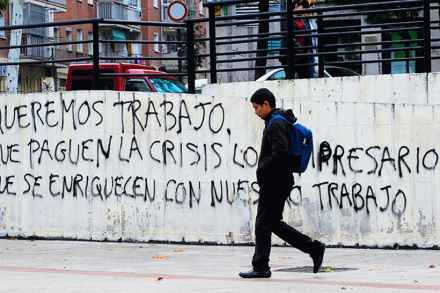
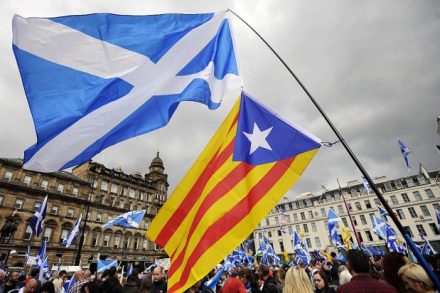
A spectre is haunting Europe — and knocking on the door of Downing Street. It has installed a president in France and a mayor in New York. It is causing mayhem in Spain and Greece and insurgency in Scotland and it may yet halt Hillary Clinton’s march to the White House. This idea — left-wing populism — is a radical, coherent and modern response to the financial crisis and the hardship suffered since. It is being effectively harnessed by Ed Miliband, taking him within touching distance of victory. And it may well become the creed that guides the next five years of British government. The Labour manifesto that was published this week is a response to the new populist mood.

Wines to toast a warrior saint

Towards the chimes at midnight, a few of us left a — respectable — establishment near Leicester Square. Eight or nine youngsters were brawling vigorously, boots and fists. 999 was dialled, and the response was admirably fast. The cops would no doubt have recorded it as just another trivial incident in the life of a British inner city. But how squalid. That day, there was a story about undergraduettes moonlighting as lap-dancers or strippers, or worse. We have suffered a loss of civilisation since Newman: most of the ‘universities’ to which those girls were accredited should never have received that status. Until the day before yesterday, they would have been called the Haltemprice Mechanics’ Institute or somesuch, and done useful work.

Opera North’s Gianni Schicchi and La vida breve reviewed: a flawless double helping of verismo

Is there a more beautiful aria than ‘O mio babbino caro’ from Puccini’s Gianni Schicchi? There are more overwhelming moments in opera, to be sure, but few arias can rival it for the way its beauty kicks you in the back of the knees; its gentle rocking motion causes your shoulders to slump while the little floated top notes dilate the music’s gaze, drawing the listener irresistibly into its secret promise of untroubled bliss. Nor does it help that the aria’s whole point is to be irresistible. ‘Daddy dearest, I love him so,’ sings Schicchi’s teenage daughter Lauretta.

Why France so worries European policy makers

Today’s huge Podemos rally in Madrid is a reminder that Syriza’s victory in Greece has emboldened the anti-austerity left across the Eurozone. What worries Angela Merkel and other northern European leaders is, as I say in the magazine this week, that any concessions to the new government in Athens, will lead to Podemos—a party which was founded less than 12 months ago—wining the Spanish elections later this year. But the country that most worries European policymakers isn’t Greece or Spain but France. Its economy is showing no signs of recovering and its politics are threatening to become very ugly indeed. A new poll published this week shows the Front National’s Marine Le Pen topping the first round of the French presidential election.

Royal Ballet’s Don Quixote: Carlos Acosta is too brainy with this no-brain ballet

One feels the pang of impending failure whenever the Royal Ballet ventures like a deluded Don Quixote into a periodic quest to stage that delightful old ballet named after him. Twice in recent years has it tilted at the windmill and flopped back, dazed and bruised. It never remembers, though, and here it goes a third time. A Spanish romp in the sun, with brilliant dancing, silly comedy and a happy ending, makes a perfect change from the usual Christmas Nutcracker, does it not? And nowadays, with such a substantial cohort of Cuban, Argentinian, Brazilian and Spanish dancers the Royal should be able to scorch the floor in required style, shouldn’t it?

How to fight Europe’s demons of deflation

Deflation terrifies economists because once it starts, they have no idea what to do about it. When demand in an economy shrinks, companies cut jobs, and with fewer employed demand shrinks even more. The deflationary spiral is self-reinforcing. Central banks can cut interest rates to near zero and slosh money around like drunken lottery winners, but once hope flickers and dies, there is nothing they can do to persuade anyone to invest in the economy. Deflation took hold in Japan in the early 1990s and despite the government straining every sinew, its economy is still ailing 20 years on. Europe is right, then, to be in a panic. Inflation across the eurozone is just 0.

I nearly went lost my mind in southern Spain on the trail of Gerald Brenan

Another writer I once liked very much is Gerald Brenan. Brenan served with distinction in the first world war and afterwards carted 2,000 books to Yegen, a remote village in the Sierra Nevada, to eke out his family allowance and educate himself. He was a great walker. From his house in Yegen he walked 57 miles in two days to Almeria to buy second-hand furniture, and once he walked the 71 miles to Malaga in 28 hours to meet friends. A lifelong friendship with Ralph Partridge drew him into the Bloomsbury group of writers and artists, and he spent years trying to get his well-developed leg over Dora Carrington, Partridge’s wife. Lytton Strachey visited him at Yegen, suffering agonies from his haemorrhoids on the mule trek from the coast.

A buffet in an Egyptian tomb

Atlantico is a vast buffet inside the Lopesan Costa Meloneras Resort Spa and Casino in Gran Canaria. The Lopesan Costa Melonoras Resort Spa and Casino — or, as I will henceforth call it, TLCMRSAC — looks like Citizen Kane’s Xanadu without the art, the metaphor or the tragedy. It has towers, chandeliers, vistas, pools, terraces, tennis courts, a swim-up bar, a miniature golf course and palm trees. It is a synthetic paradise for Europeans who want sun in November in their own time zone; it is more unnatural than Las Vegas. Atlantico has roughly one thousand covers, if you include an annexe room styled like an Egyptian tomb with a coffee machine, and an annexe terrace. (Each terrace has its own familiar, or cat.

The king who blamed everything that went wrong on God

Geoffrey Parker is a product of Nottingham and Christ’s College Cambridge, and I think was once a pupil of the unforgettable Jack Plumb. He went to Urbana-Champaign (Illinois) in 1986, Yale in 1995 and since 1997 has been at Ohio State University. Against that improbable background he established himself years ago as the world’s outstanding historian of Philip II, his court, his problems and tragedies, having devoted much attention to the Dutch revolt. His masterly biography of King Philip appeared first in 1978. Now, after publishing several authorative revisions, he has written a new biography of the same monarch.

How Italy failed the stress test (and Emilio Botín didn’t)

Continuing last week’s theme, it was the Italian banks — with nine fails, four still requiring capital injections — that bagged the booby prize in the great EU stress-testing exercise, followed predictably by Greece and Cyprus, while Germany and Austria (with one fail each) fared better than some of us had feared. The most delinquent European bank turned out to be the most ancient, Banca Monte dei Paschi di Siena, which was judged to have a capital shortfall of €2.1 billion as a result of a very modern set of problems. Founded in 1472 as a kind of charitable pawnbroker, the bank which eventually became Italy’s third largest had a more or less blameless 527-year record until it listed on the Italian stock exchange in 1999.

Happy Sunday, Nigel Farage – Barroso snubs Cameron’s migration cap

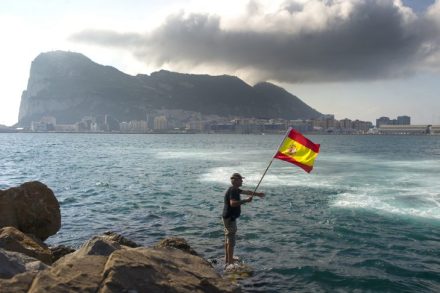
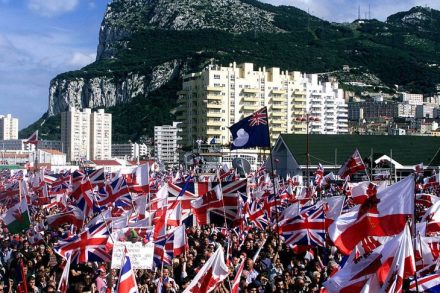
Everyone's favourite unelected European was doing the broadcasting rounds this morning, popping up on the BBC's Andrew Marr show to tell David Cameron that he can forget any plans to cap the number of EU immigrants in Britain. Here's what José Manuel Barroso had to say:- "Any kind of arbitrary cap seems to be not in conformity with Europeans laws. For us it is very important – the principle of non-discrimination. The freedom of movement is a very important principle in the internal market: movement of goods, of capital, of services and of people. By the way, I remember when prime minister Cameron called me to ask the commission to be tough ensuring the freedom of movement between Gibraltar and Spain.

Keep calm and address Ebola: a brief history of pandemics at The Spectator

Ebola clinics in many parts of West Africa are full, so more and more people are being told to stay at home and take Paracetamol and fluids if they become infected. It means if someone in your family gets Ebola, you all have to stay in the house, which is effectively a death sentence. At the moment, the disease is killing 70 per cent of the people it infects, but that’s likely to go up. People who need other medical treatment can’t get it, and in Sierra Leone 40 per cent of farmland has been abandoned. Western governments are building secure military encampments for health workers, fearing civil unrest and angry mobs. In 1898, there were plague riots in India after authorities brought in sanitary measures, including quarantine camps.

One dog down, in Spain’s Ebola panic

[UPDATE: The dog is now dead, WSJ reports.] For anyone concerned about Spain's ability to contain Ebola, after a Spanish nurse's aide tested positive for the virus, fear not: Madrid's regional government plans to euthanize the infected woman's pet dog in the interest of combatting contagion. The dog, a 12-year-old mutt named Excalibur, shows no sign of infection, and it's unclear whether the disease even can be transmitted from dogs to humans. A 2005 report from the U.S. Centers for Disease Control and Prevention notes that 'dogs might be asymptomatically infected by Ebola virus,' and that during Gabon's 2001-02 outbreak, 'several dogs were highly exposed to Ebola virus by eating infected dead animals.

I like the look of this exciting new Islamic State. But why don’t they want Belgium?

There is something attractive about almost the whole of southern Europe being part of an immense and somewhat rigorous caliphate, as promised by the exciting Sunni Islamic movement formerly known as Isis. This new entity, stretching from Santander in what we currently know as Spain, to Cox’s Bazar on the Bangladesh and Burmese border, would handily encapsulate 98 per cent of the worst countries in the world, as defined by me out of rank prejudice, but also by various more scientific UN criteria.

World Cup diary – Thank God the reign of Spain is over!

It is a wicked thing to revel in someone else’s misery. Trouble is, occasionally it can’t be helped. So – bye, bye Spain! I think I would have traded England winning tonight (and therefore prolonging the agony) for Spain’s magnificently rapid exit from this world cup. Oh, Chile – you brave sons of Pinochet and Allende! Whichever you prefer – who cares? It is the more civilised parts of Latin America which have shone in this world cup – Chile themselves and Costa Rica. Brazil struggled and have been, uh, “fortunate”, Argentina looked distrait, Uruguay simply incompetent (though that opinion may need to be revised later); Mexico, the world’s great under-achievers, look set to under-achieve again.

World Cup diary – Spain humiliated

You see – that’s the trouble. You write off the World Cup for moral reasons because of FIFA sleaze (and that opening game). And then Spain are magnificently humiliated, cheering me up more than I could have thought possible. Undoubtedly talented, Spain have nonetheless been boring us rigid for too long, with that self-regarding, tippy tappy, stifling of what the game should really be about. The Netherlands taught them that, with great glee. I haven’t been so pleased about a world cup result for ages – well, not since the French fell to bits against Mexico and South Africa. You sort of hope this is the end of an era, or the beginning of the end of an era. We must now get behind Chile and hope they can take at least a point form the Spanish.