Spain

Red hot

Everything about Julieta feels totally Almodóvarian. It’s a family saga that smoothly blends tragedy and levity, with exquisite performances from a company of passionate actresses. It looks carefully ravishing. Many of the director’s abiding themes are here: terminal illness, sudden death, a mother’s love for her child, men hanging about the fringes. And yet it is based on a most un-Hispanic source. The Julieta of the title was originally Juliet, who features in three interlinked short stories from Runaway, the 2004 collection by Alice Munro. Munro won the Nobel Prize for Literature three years ago after a lifetime writing quiet stories that conceal hammer blows. In the originals, the setting

Great hairdos, love the wallpaper – shame about the movie: Almodóvar's Julieta reviewed

Pedro Almodóvar’s last two films were affronts to his reputation as a director. The Skin I Live In (2011) was a grotesque horror show starring Antonio Banderas as a mad plastic surgeon. I’m So Excited was a wacky romp in an airplane that badly needed fuel. His latest, Julieta, currently in competition at Cannes, was a box office disappointment in Spain, where it opened last month – possibly due to the director being named in the Panama Papers – but it’s better than a lot of what he’s done lately, as well as the closest thing to a mainstream movie that one can imagine from the Spanish eccentric. There are

Bullfighting

Looking at the programme for the feria of San Isidro in Madrid this month (bullfights are being held on 31 consecutive days), it may be hard to believe that there is any threat to the future of the spectacle — it is not a sport — of what in Spain is called la corrida (the running of the bulls). But its popularity has undeniably been declining in recent years, due to two factors: growing opposition, in the sometimes spurious name of animal welfare, and Spain’s economic crisis. The decision taken in 2010 to ban bullfighting in Catalonia had considerably less to do with the welfare of bulls than with the

Was Spain's 'new political era' just a mirage?

More than four months on from Spain’s December general election, optimism has given way to fatigue and cynicism among the electorate. Coalition negotiations between leading parties have failed, and a repeat election will now be held in Spain on 26 June, a few days after Britain’s EU referendum. But there is little enthusiasm for this second-take. Many Spaniards are now saying they will register disappointment with their politicians by abstaining. And what of the supposed new breed of Spanish politician represented by Albert Rivera, the leader of Ciudadanos (‘Citizens’) and Pablo Iglesias, leader of Podemos (‘We Can’)? They were meant to have ushered in a ‘new political era’ but the farcical, self-centred nature of the

The Spanish argument for abolishing government

On 26 October last year, the Spanish government shut up shop in preparation for a general election. This duly took place in December but then a strange thing happened: after all the build-up, the arguments, the posters and the television coverage, the result was… nothing. The various parties were so balanced, so mutually distrustful and ill-assorted that no government could be formed. Since last October, therefore, there has been no government in Spain. One can imagine that the average political correspondent would think this a terrible problem, maybe even a crisis. The Financial Times has referred to Spain ‘enduring’ months of ‘political uncertainty’. This is assumed to be a matter

Who needs governments?

On 26 October last year, the Spanish government shut up shop in preparation for a general election. This duly took place in December but then a strange thing happened: after all the build-up, the arguments, the posters and the television coverage, the result was… nothing. The various parties were so balanced, so mutually distrustful and ill-assorted that no government could be formed. Since last October, therefore, there has been no government in Spain. One can imagine that the average political correspondent would think this a terrible problem, maybe even a crisis. The Financial Times has referred to Spain ‘enduring’ months of ‘political uncertainty’. This is assumed to be a matter

Britannia rued the waves

Military history is more popular than respected. It is not hard to see why. It is masculine history, a trifecta of logistical planning, technical detail and violent death. It shows the value of hierarchy and duty, sacrifice and patriotism — disgraceful notions which the young and impressionable might be inspired to emulate. And,with its sudden twists from tedium to danger and its tidily destructive conclusions, it has tight plots. One way to make civilian history as exciting is, as Eric Hobsbawm showed, to turn it into a false kind of fiction, true neither to the facts nor the life. Another, as N.A.M. Rodger did in The Wooden World, his ‘anatomy’

Courting Sultana Isabel

The idea for a mechanical cock was never going to work. In 1595 the English ambassador to Constantinople, Edward Barton, advised Queen Elizabeth I that the surest way for her to impress Sultan Mehmed III, the new leader of the formidable Ottoman empire, was to send him a ‘clock in the form of a cock’. Knowing that Mehmed had a growing reputation for psychopathy rather than ornithology — he had his 19 brothers circumcised and then strangled to death — Elizabeth demurred and eventually sent him an elaborate clockwork organ instead. The organ was accompanied by its maker, Thomas Dallam, who spent his first month in Constantinople fixing the damage

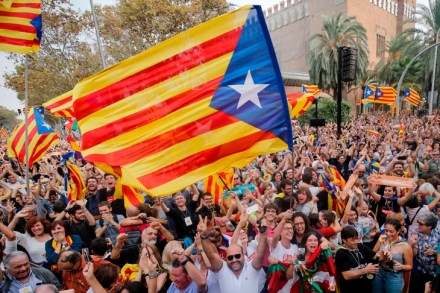
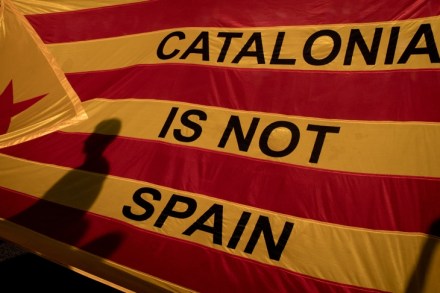
As Catalonia turns up the heat, Madrid's politicians are ever more divided

Almost a month on from an unprecedentedly divisive general election, Spain seems further away from forming a new government than ever. In Madrid’s grandiose Palacio de las Cortes on Wednesday, the Spanish parliament convened for the first time since the December 20 vote, and it proved an eventful session – but not because some combination of the four main parties managed to move towards a coalition government. Division, not unity, was the order of the day. Oaths were taken in Catalan, Basque and Galician as well as Castilian; Podemos leader Pablo Iglesias tweeted bitchy remarks about other parties during proceedings in which his political secretary vowed to rewrite the Spanish

Spain has rejected austerity. So what does it do now?

Spain is a long way from being Greece or Portugal, but in Sunday’s historic general election, Spaniards sent out the same message that the Greeks did in July and the Portugese did in October – namely, a resounding ‘No’ to austerity economics. Anti-austerity Podemos—the left-wing challenger party that is less than two years old—took a staggering 20.7 per cent of the national vote and is now the third-strongest political force in Spain. As long as the composition of Spain’s new government is unknown, the country’s economic recovery is on hold – but two things, at least, are now very clear. First, the Popular Party has failed to convince many Spaniards of its claim

Revolutionaries? Podemos belong to the ivory tower, not to the masses

If you hear any of your friends refer to the rise of Podemos in Spain as a revolution, please buy them a dictionary for Christmas. For far from representing the sweeping aside of the political establishment by a new, angry class in society — which is what a revolution is — the success of Podemos speaks to the emergence of simply a different kind of political elite. Let’s call them politico-academics, former inhabitants of the ivory tower, who are armed with PhDs rather than cudgels, and who are more likely to install a Dictatorship of the Professors than a Dictatorship of the Proletariat. This isn’t to distract from the enormity of what has

Spain has just experienced a very modern revolution

Graffiti artists have added social commentary to many of the billboard advertisements in Madrid, and election campaign posters are no exception. The improbably smooth forehead of Albert Rivera, who leads Ciudadanos, has ‘fascista’ written all over it. The would-be Banksy of the Madrid metro doesn’t elaborate, but the charge seems unlikely. Rivera’s party is, by (almost) anyone’s definition, firmly in the centre ground; it’s endorsed by Guy Verhofstadt, the former Prime Minister of Belgium and one of Europe’s leading federalists. Images of Pablo Iglesias, who leads Podemos, are mostly left alone. Perhaps the vandals like his pony tail, or his parties proposal of a universal ‘citizen’s wage’. After all, spray

Spain's hunger for political change may be just what Catalonia needs

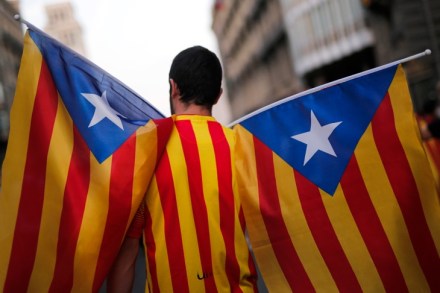
Some unjustified assumptions inform the Spanish government’s anti-Catalonian rhetoric: that it will be in power long enough to prevent Catalonia leaving Spain; that it can disallow the region’s continued or renewed membership of the EU as an independent state; or, at the very least, that it can ban a referendum on the matter. On 20 December, Spaniards head to the polls in a general election that will see the country’s two main parties – the governing, conservative Popular Party and the socialist PSOE – challenged, for the first time in the country’s democratic history, by newcomers such as leftist Podemos (‘We Can’) and centre-right Ciudadanos (‘Citizens’). The makeup of the next Spanish government is at present an

The young entrepreneurs making the best of Spain’s crisis

There was much talk about the anti-austerity party Podemos when we visited Andalucía in June. It was hot and sunny, and the orange trees smelt wonderful, but at the same time, youth unemployment sat at 49 per cent, second only to Greece, and that seemed to be what people wanted to chat about. Podemos, which means ‘we can’ in Spanish, does seem to have generated some hope for bright but frustrated young things, many of whom have given up hope of ever finding a professional job. In Seville, a story was doing the rounds about a low-paid receptionist job that had received 2,000 applications, although tales like this were apparently

Why did Goya’s sitters put up with his brutal honesty?

Sometimes, contrary to a widespread suspicion, critics do get it right. On 17 August, 1798 an anonymous contributor to the Diario de Madrid, reviewing an exhibition at the Royal Spanish Academy, noted that Goya’s portrait of Don Andrés del Peral was so good — in its draughtsmanship, its freedom of brushwork, its light and shade — that all on its own it was enough to bring credit to the epoch and nation in which it was created. He (or she) was absolutely correct. Goya’s portrait of Don Andrés del Peral The same could be said of many of the exhibits in Goya: The Portraits at the National Gallery. The people

Will Spain learn?

One of the unforeseen consequences of the reunification of Europe after the Cold War has been a resurgence of independence movements in western Europe. Emboldened by a greater sense of security and influenced by the rebirth of independent nations to the east, separatist parties have begun to challenge the boundaries of nation states which a quarter of a century ago we took for granted. Scotland’s near miss — a 45 per cent vote for ‘yes’ — inspired the leader of Spain’s Catalonia region, Artur Mas, to launch his own vote on secession. This week, forbidden by Madrid from calling a referendum, he called regional elections in which pro-independence parties formed

Diary - 20 August 2015

This is the Corbyn summer. From the perspective of a short holiday, my overwhelming feeling is one of despair at my own semi-trade — the political commentariat, the natterati, the salaried yacketting classes. Who among us, really, predicted that Jeremy Corbyn would be romping ahead like this? Where were the post-election columns pointing out that David Cameron’s victory would lead to a resurgent quasi-Marxist left? And that’s just the beginning: how many of the well-connected, sophisticated, numerate political writers expected Labour to be slaughtered in the general election? Not me, that’s for sure. Going further back, how many people in 1992 told us John Major was an election winner? That Parris,

In search of the platonic gazpacho

We were eating tapas and talking about Spain. Leaving caviar on one side, when jamón ibérico is at its best, there is nothing better to eat. In the Hispania restaurant, it is always at its best. Nothing could match it, although Hispania’s cured leg of beef, the anchovies, the black pudding and the blood pudding all gave their uttermost. But there was one marginal disappointment. Gazpacho is one of the world’s great dishes, and like several others — haggis is the obvious comparison — it began as a food for the poor, only using cheap and readily available ingredients. Early recipes call for only stale bread, water, olive oil —

Low life | 16 July 2015

Watching the daily running of the bulls through Pamplona’s narrow streets online this week has given me a wistful pang about not being there again. I once went to Pamplona’s feria three times in four years and ran with the bulls every morning. One year I took Sharon. The day we arrived, she took one look at the streets pullulating with thousands of handsome, drunk young men and did the psychical equivalent of a graceful swallow dive into their midst. I had rented us a room in the town but she visited it only rarely and never slept there. I hardly saw her for the seven days. I should explain

Matajudíos

A village has changed its name because it seemed offensive. But I think the villagers were under a misapprehension. The village is in Spain: Castrillo Matajudíos. Of its population of 57, 29 voted to change the name to Castrillo Mota de Judíos because they did not like the idea of the former name meaning ‘Kill Jews’. Another settlement, in Extremadura, is called Valle de Matamoros, but its inhabitants are not planning to change it lest it be taken to urge the killing of Moors. The silly thing is that the Spanish place-name element mata does not mean ‘kill’ at all. It is quite common. There is a quiet little place