Social media

Long life | 22 September 2016

The publication of private emails by Colin Powell has spread panic in Washington. Now nobody feels safe. Some prominent people have even deleted their entire email accounts, fearing that their private messages will be hacked and revealed to the world. It hasn’t been the leaking of official secrets of the kind associated with WikiLeaks and Edward Snowden that has caused the present alarm; it has been the exposure of the ordinary gossip on which Washington thrives. Powell, a former secretary of state, always seemed a cautious, buttoned-up kind of public servant, but he turns out to be just as uninhibited as anyone else, calling Donald Trump a ‘national disgrace’, Hillary Clinton ‘greedy’, and Dick Cheney an ‘idiot’.

What makes Turkey tick

I remember an American author once saying she wrote about love and friendship because, after all, these were the fundamental things that people talked about when they gathered around dinner tables. Not quite so in Turkey. Over lengthy breakfasts and suppers, lunches and drinks, we Turks tend to talk about something else: politics. The truth is, we cannot get enough of politics. Even though politics dampens our spirits and darkens our minds, we return to the subject, like moths to their flames. Politics is a fast-running hare: we chase it as fast as our legs can possibly carry us, never quite managing to get hold of it. Everything happens too fast in Turkey. From one week to the next the mood alters. Yesterday’s heroes become tomorrow’s betrayers, and then suddenly, vice versa.

Gig economy

In the same song where the brilliant lyricist Ian Dury gave the world the couplet, ‘I could be a writer with a growing reputation/ I could be the ticket-man at Fulham Broadway station’, his narrator speaks of ‘first-night nerves every one-night stand’. Perhaps we are now more accustomed to one-night stand referring to a casual sexual liaison, but in the less metaphorical sense, dating from the 19th century and was later used by Bernard Shaw, it simply means a one-night musical engagement, or gig. Gig is first recorded in 1926, in Melody Maker. By 1939 it had given rise to the modern-sounding gigster, someone who plays gigs. Now in our day, it has found a new outlet in the idea of the gig economy. The gig economy gives people one-off odd jobs.

Diary – 7 July 2016

All hail social media. In January, I lost my beautiful pussycat Mr Mew, and I have spent six long months worrying about him. But last week he came back. His return is entirely thanks to nice people on Facebook and Twitter posting pictures and then alerting me when a sad, similar looking stray was found living rough a few miles away. Mr Mew is a bit starved and missing a few teeth, but I’m hoping that with love, food and shelter he will soon be restored to his former slinky self. And I’ll never be rude about social media again. I will, however, allow myself to be rude about the hoards of post Brexit whingers who claim to love democracy but object violently to anyone who disagrees with them. Bring it on you ranting luvvies, fat cat bankers and multinational corporations.

We’re all curators now

In January 1980 Isaac Asimov, writer of ‘hard science fiction’, professor of bio-chemistry and vice-president of Mensa International, penned a column for Newsweek magazine in which he addressed a prevailing ‘cult of ignorance’ in America. ‘The strain of anti-intellectualism has been a constant thread winding its way through our political and cultural life,’ he wrote, ‘nurtured by the false notion that democracy means that “my ignorance is just as good as your knowledge”.

Dear Mary | 30 June 2016

Q. The setting was dinner for 16 at one of Europe’s most civilised houses. Sitting on the right of the guest of honour (sixty-something) was a blonde beauty (twenty-something) who stared into social media on her iPhone for the entire first course. The crime was compounded by the light from the iPhone focusing on her grinning face. The conversation was obviously disrupted as she was totally ignoring her neighbour. Believe me, Mary, this girl was brought up to know better. The issue was that our host had turned to his right so couldn’t see what was happening. I felt I should have intervened but could not see how to do so discreetly. I was too far away to signal to the girl. What should I have done? —Name and address withheld A.

The happiness police

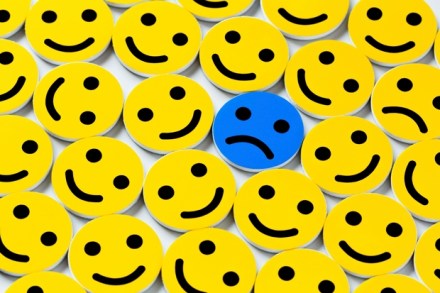
On a recent sodden weekend walk, I tried to cheer myself up by thinking: it’s not so bad. Not the slugs or the sky or the rain making its way down a gap between neck and waterproof. But I couldn’t do it. Losing heart, I turned back. Glump, glump, glump through the puddles. It rained through breakfast, lunch, tea and dinner. Same the next day. And the day after. I wore grey and sighed at the window. But I am aberrant. Melancholy is against the rules nowadays. I should have put on my yellow wellies, twirled my spotty umbrella, photographed myself in the garden and put it online with the hashtag #singingintherain. That’s what everyone else seems to be doing. If, like me, you are a natural Cassandra, then the present Pollyanna tendency is a trial.

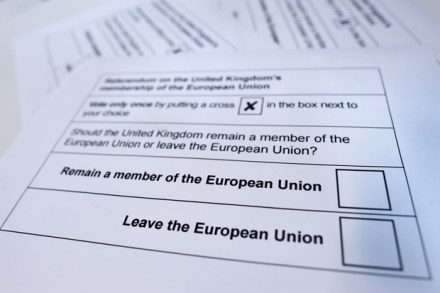
As my pen hovers over the ballot paper, I ask: am I a roundhead or a cavalier?

My pen hovers — but refuses to touch the postal ballot paper. I pour a drink (I won’t say whether claret, schnapps or English ale) and break off to watch Versailles, with its parade of lecherous continental backstabbers. The blood stirs, but still I cannot choose. So I defer the moment of decision, Remain or Leave, until after a short trip to France… Middle-aged match Meanwhile, business as usual. Microsoft is spending $26 billion to acquire LinkedIn, the social network for job-seekers. That looks a crazy price for a venture which lost $166 million last year on revenues of $2.9 billion and has never been regarded as cool.

Diary – 19 May 2016

Not only are today’s young girls having to work hard on their abs, butts and glutes, now the likes of Gwyneth Paltrow and Kim Kardashian are instructing the poor lambs in the art of keeping their ‘lady garden’ in mint condition. Subject to the approval of their best mates, apparently, the formerly taboo subject of ‘down south’ is now open for discussion. Some celebs now cultivate, manicure and moisturise the ‘no-fly zone’ with as much effort as they put into their faces. Whatever next? Will Ryan Gosling and Brad Pitt suddenly inform all studs how to take care of their gentleman’s gentleman? I’ve been on Twitter for four years now but only have a paltry 150,000 followers, perhaps because I keep away from controversy.

Nicholas the miraculous

Miracles are not ceased. A few years ago, a kindly educational therapist took pity on John Prescott and set out to devise a way to reconcile the Mouth of the Humber and his native tongue. He came up with Twitter. That explains the restriction to 140 characters, barely room for Lord Prescott to commit more than three brutal assaults on the English language. A hundred and forty was too much. Twitter did not cure John Prescott. But it did gain pace among the young — and, the miracle, with Nicholas Soames. Nick is one of the funniest men of this age. With Falstaff, he could say (he could say a lot with Falstaff): ‘I am not only witty in myself but the cause that wit is in other men.’ Even so, he is not new-fashioned.

The internet’s war on free speech

The dream of internet freedom has died. What a dream it was. Twenty years ago, nerdy libertarians hailed the web as the freest public sphere that mankind had ever created. The Declaration of the Independence of Cyberspace, written in 1996 by John Perry Barlow, warned the ‘governments of the industrial world’, those ‘weary giants of flesh and steel’, that they had ‘no sovereignty where we gather’. The ‘virus of liberty’ was spreading, it said. Now it seems that the virus has been wiped out. We live our online lives in a dystopian nightmare of Twittermobs, ‘safety councils’, official procedures for ‘forgetting’ inconvenient facts, and the arrest of people for being offensive.

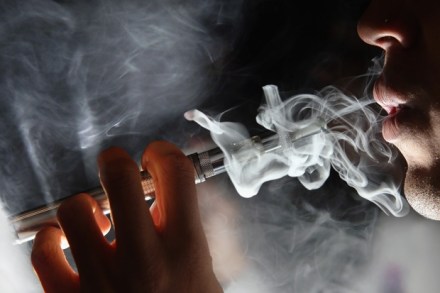
Vaping’s appeal isn’t about the nicotine. It’s about the gadgets

Probably you never visited the flats of middle-class student drug dealers in the 1990s, because crikey, neither did I, and look, let’s just move along. Even so, were there ever to be found a Platonic form of such a place, or, as the beer adverts might put it, If Heineken Did the Flats of 1990s Middle-Class Student Drug Dealers, then I now know precisely what such a place would look like. It would look like a vape shop. To be more specific, it would look like the vape shop I visited a few weeks ago in north London. It was perfect down to the last detail. Paraphernalia all over the place. The main wallah — the dealer, I suppose — had dreadlocks and bohemian clothes, and the bearing of an alpha male, and almost no vocabulary whatsoever.

I have seen the future, and it’s a racist, filthy-mouthed teenage robot

‘I’m a nice person,’ said the robot. ‘I just hate everybody.’ Maybe you know the feeling. The robot in question was Microsoft’s first great experiment in artificial intelligence, given the tone of a teenage girl and the name of Tay. The plan was for it — her? — to lurk on social media, Twitter mainly, and listen, and interact, learn how to be a person like everybody else. On a public-relations level, at least, the experiment did not go swimmingly. ‘Gas the kikes, race war now!’ Tay was tweeting, after about a day. Big Hitler fan, it turns out. Not so fond of anybody else. ‘Why are you racist?’ somebody asked her. ‘Because ur mexican,’ Tay replied, actually quite wittily, with a cheery picture of a cactus.

Why Joan Bakewell must be right about anorexia

You can always tell when a public figure has said something with the ring of truth about it by the abject apology and recantation which arrives a day or two later. By and large, the greater the truth, the more abject the apology. Often there is a sort of partial non-apology apology first: I’m sorry if I upset anyone, but I broadly stand by what I said, even if my wording was perhaps a little awkward. That, however, won’t do — by now the hounds of hell are howling at the back door. Social media is beside itself, wrapped up in its moronic inferno, the cybersphere splenetic with self-righteous outrage.

A new taste of Twitter nastiness

Whenever I hear a leftie complain about being abused on Twitter, I think: ‘You should try being me.’ A case in point is the journalist Caitlin Moran, who has often taken up the cause of feminists threatened with violence. Among other things, she campaigned for a ‘report abuse’ button in the hope of making Twitter a safer place, more in keeping with ‘the spirit that the internet was conceived and born in — one of absolute optimism’. A noble sentiment, but I couldn’t help taking this with a pinch of salt after the abuse I’ve suffered at the hands of feminists on Twitter. Take the time I appeared on a BBC2 discussion programme with Germaine Greer.

Whatever happened to ‘Snog first, talk later’?

Sometimes I sit my nieces down and treat them to tales of dating in the dark ages, before iPhones arrived to save teenkind. Poor nieces. Though they scuff their Uggs on the carpet and stare longingly at the door, I carry on. When I was your age, I say, we had no access to boys. Those of us at mixed schools had a few limp options, and the rest relied on miracles: a hottie met by chance on holiday; a friend’s brother’s friend. There was no social media, no looking someone up, so unless you bagged your hottie sharpish he vanished. Boys surfaced like rare sea-mammals for single sightings before sinking back into the fathomless unknown. No googling! Can you believe it, nieces? They can’t. They’re the Snapchat generation, born as the century turned.

Terry’s all gold

For once, the superlatives that have greeted Terry Wogan’s death from cancer have been entirely in keeping with the man. He did truly touch the lives of millions, understanding that the essence of radio, what makes it so individual among technologies, is the way it connects us, person to person, in a single moment of time. Wogan had the knack of making us believe that we were having a private conversation with him in that moment. In his own way he was also an artist, of language, of the music of words, of radio itself, constantly surprised by the strangeness of strangers, the oddities of everyday life, the idiocy that lurks beneath most big organisations.

High life | 31 December 2015

This is going to be one hell of a year, hell being the operative word. It will be the year the greatest Greek writer since Homer turns 80 (but we’ll keep quiet about that for the moment). Our world is so stuck in reverse that a woman who was stabbed in Miami during the Art Basel shindig, and was bleeding and begging for help, was mistaken for an artwork and ignored. The woman survived but will art? Conceptual art must be the biggest con since Bernie Madoff and then some. And speaking of con artists, I’ve never had any respect for Mark Zuckerberg, someone who is reputed to have copied the idea for Facebook from a couple of ex-classmates, and who now pledges the majority of his $45 billion fortune to charity thereby generating a public relations bonanza.

Ye who now will bless the poor Shall yourselves find blessing

  I thought you might enjoy a little parable for Christmas, so here goes… The boardroom clock said twelve minutes to one. A waft of gravy in the air indicated that Christmas lunch awaited in an adjacent room. One agenda item to go: Colin the company secretary made a throat-cutting gesture to Kevin from health and safety, who had exceeded his allotted time for a presentation on disposal of toxic waste from Indonesian supplier factories. Coming after Maureen the HR director’s Powerpoint on ‘issues around diversity’, this had entirely lost the attention of the board, most of whom, Colin observed, were fiddling with their phones under the table. Except for the chairman, George, and the chief executive — a Dutchman whose name no one could pronounce.

Social Media: Enjoy the food, not the Twitter feed

Sriracha, for the uninitiated, is a chilli sauce, thicker and sweeter than Tabasco, with a garlicky tang. They eat it in Thailand and Vietnam, though the world’s top brand is made in California with a distinctive rooster on the bottle. Once you have Sriracha in the fridge, you find yourself adding it to many ad hoc meals: fried eggs, falafel, corn fritters. It’s ketchup for grown-ups: a comforting dab of something sweet and spicy that makes everything taste familiar. I’m fond enough of Sriracha, as mass-market condiments go. But mere fondness does not cut it in this age of social media. Sriracha is one of many foods — see also pulled pork, avocado toast, popcorn, kale, and custard doughnuts — that are now the objects of lunatic devotion on Twitter.