Social media

I’d rather live under communism than the tyranny of social media

At the time it felt like a century, but it was only 12 years. I began this column in 1977 and the Berlin Wall came down in 1989, which meant an end to the anti-communist tracts that my first editor, Alexander Chancellor, described as quasi-fascist efforts to subvert democracy. By 1977 I had been trying to get something published in The Speccie for a couple of years. I only achieved it when I abandoned right-wing politics and wrote about how one could always tell an Englishman abroad. (Brits would use flashlights to check their bill in dark and crowded Parisian nightclubs, making them persona non grata with waiters at Jimmy’s.

OK zoomer, is that really the best you’ve got?

Every generation and teen subculture likes to put the boot into baby boomers like me. I’ve been physically attacked by skinheads, verbally assaulted by right-wing intellectuals and mocked by millennials. But I never thought I would be subjected to the derision and verbal lashings of Generation Z. The ‘zoomers’ — that is, people born after about 1995 — have come up with a cutting and dismissive retort for older people: ‘OK boomer.’ It all began when an elderly man posted a video on the social media app Tik-Tok denouncing the younger generation. They were, he claimed, suffering from ‘Peter Pan syndrome’ and ‘needed to grow up’.

Be more carthorse: why we would all benefit from a little self-loathing

Leaving the auditorium of the Royal Opera House last week after The Sleeping Beauty, I passed a woman taking selfie after selfie in the mirror of the hall. She had snuck out during the curtain call to have the red banquettes to herself. When she should have been applauding Yasmine Naghdi and Francesca Hayward — goddesses, Olympians, immortals — this complete nincompoop was basking in her own glory. All so that someone will post beneath her picture: ‘Hot lady alert.’ If I’d had a bouquet I’d have thrown it at her. We hear a lot about abuse, the coarsening of discourse, the howls of ‘fascist’, ‘nationalist’, ‘snowflake’ and ‘boomer’, the constituents who torment MPs with nightly threats.

Abba, Twitter vs Instagram, and papal selfies: the modern face of the Catholic Church

As a lifelong Catholic, I’ve often thought that two of the Church’s chief characteristics are a) how weird it is when you think about it; and b) how weird it is that so few people in it think how weird it is when you think about it. Happily, if a little smugly, I have to say that nothing in the first episode of Inside the Vatican (BBC2, Friday) caused me to revise this theory. There was a time, of course, when allowing TV cameras to film your institution was a risky strategy, as St Paul’s cathedral and the Royal Opera House can testify after those fly-on-the-wall series of the 1990s showed us their dirty laundry with some glee.

Trump will be re-elected because of left-liberal stupidity

From our US edition

Not such a long time ago, in a galaxy that now appears far, far away, the public space was clearly distinguished from the obscenities of private exchanges. Politicians, journalists and other media personalities were expected to address us with a minimum of dignity, talking and acting as if the common good is their main preoccupation, avoiding vulgar expressions and reference to personal intimacies. There were, of course, rumors about their private vices, but they remained that – private matters mentioned only in the yellow press. Today, however, not only we can read in the mass media about the intimate details of public personalities, populist politicians themselves often regress to shameless obscenity.

donald trump re-elected

The strange tale of the Deep Fried BBQ Stuffed Chicken Pizzadilla

From our US edition

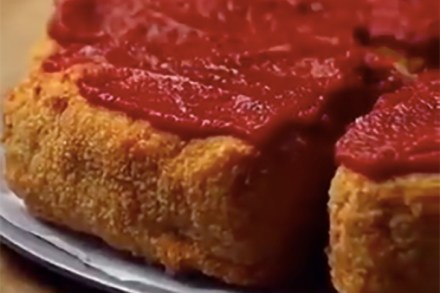
The Greeks had Aesop, whose Fables attempted to teach moral lessons using, for the most part, a cast of animal characters. On the internet, we have a tale of a pizza. But not just any pizza. A deep-fried BBQ chicken quesadilla pizza with a sour cream and mayonnaise dipping sauce. And what unfolded when the video of how to create it went viral this weekend is, when you think about it, the perfect fable for the age we live in. It’s an era where just about everything is fake, and even if it’s fake, it’s profitable. Social media is full of cooking videos – filmed from above, often with time lapses or sped-up video, made popular by the likes of BuzzFeed.

pizzadilla

How Google’s tunnel vision cost us all

From our US edition

As a member of the marketing team for Google’s once-hyped Google+ social network (remember that?) I can recall only one occasion when I encountered concerns about objectionable or controversial content. It was circa 2012, and it involved beer. Craft breweries and homebrew enthusiasts had created a pleasant little home for themselves on Google+, using its Hangouts video technology to run tutorials and virtual tastings, even announcing new collaborations with other breweries around the world. To a product marketer, this was thrilling: actual user engagement!

google

The bizarre, normal death of Bianca Devins

From our US edition

Twenty years ago, the death of Bianca Devins would have been a small town horror story. Tragic. Brutal. Stomach-turning. Essentially local. A jealous man stabbed her to death in a fit of outrage before trying, and failing, to kill himself. Something of this kind happens too often for anyone to hear about them all. Bianca Devins's killer did something different, though: he took pictures of the 17-year-old’s dead body and posted them online, to a private forum on the app Discord. He also took pictures of himself after his suicide attempt and uploaded them as well. Little information on the murder is reliable. Rumors spread that Devins's killer was an 'incel' and a 'stalker'. Other rumors spread that he was in fact her boyfriend.

bianca devins

How C.S. Lewis predicted Instagram

From our US edition

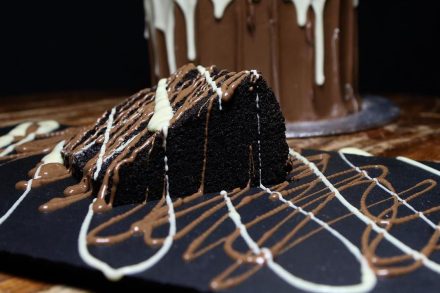
To peruse any of the tens of thousands of Instagram accounts devoted to food, some of them with nearly a million followers, is a jaunt into the pornographic. The photo captions alone seem straight out of paperback erotica. ‘See this naughty Asian pear get humiliated by sticky globs of caramel-infused pistachio milk while creepy cranberry sorbet watches,’ some of them might as well read. ‘This moist blood orange bundt cake is loaded with drippy pink glaze and grew up without a father.’ On Instagram, like Pornhub, you can sort by fetish. Got a thing for cakes and pies? Stylish editorial displays? Pizza? Seasonal vegetables? There’s a feed for every perversion, even at least one devoted to sprinkles, which is legitimately unsettling.

chocolate cake instagram c.s. lewis

Parent trap

The mother of a little girl in my son’s year at school recently committed suicide. On the surface she was a radiant person, smiling and full of light. Devoted to her daughter, successful at work, always good for a laugh at the school gates. No one — save those loved ones who knew her private struggle — saw it coming. For days, waves of confusion and sadness emanated out through our patch of north-west London. This is the way of suicides in social groups. I’ve seen it before. They ripple and reach well beyond where they have any right to. But the peculiar thing about this tragedy was the way the news was disseminated — namely through the popular social media service WhatsApp.

Twitter is a virus of the mind

From our US edition

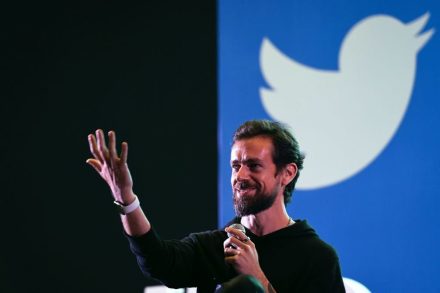
Society seems to be growing steadily crazier. And maybe it doesn’t just seem to be. Maybe it actually is growing crazier. In the 1930s, science-fiction writer Robert Heinlein dubbed the early 21st century ‘the Crazy Years’, a time when rapid technological and social change would leave people psychologically unmoored and, frankly, crazy. Today’s society seems to be living up to that prediction. But why? I recently read James C. Scott’s Against the Grain: A Deep History of the Earliest States. One of the interesting aspects of the earliest agricultural civilizations is how fragile they were. A bunch of people and their animals would crowd together in a newly formed city.

twitter jack dorsey

The quiet sorrow of the Instagram blogger

From our US edition

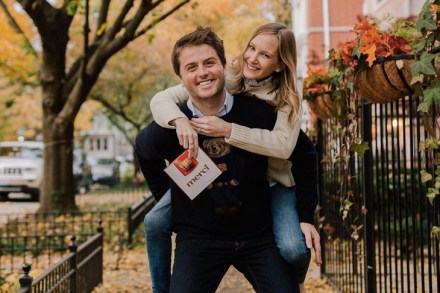
A quick scroll through Chicago-based Kelly Larkin’s Instagram account or lifestyle blog, Kelly in the City, is enough to put anyone in a good mood. It’s a blend of bright patterns, fresh and clean interior spaces, and high-quality photos of Larkin, her husband, their toddler daughter, and Noodle the dachshund. The Larkins are aspirational yet accessible, and Kelly Larkin herself, a former journalist and public school teacher, is funny and quick-witted about life and parenting.

instagram

Real life | 14 February 2019

Since posting some of my research into the RSPCA on Facebook, I now better understand the way social networking works. Social networking is local as well as global. So if you live in Surrey and ride horses you can join a Facebook group full of people in the same area doing the same thing. Only because these people are not speaking face to face, they can be tremendously rude to each other. The upshot of my spending a couple of days on one of these sites plugging my investigations into the RSPCA, including its role in the seizure of 123 horses from a farm down the road from my home, was that all these people started arguing and fighting with each other online in a way they would never dream of doing if they were standing in the same room.

When did Donald Trump’s tweets become so boring?

From our US edition

It wasn’t so long ago Trump’s tweets were easily the planet’s most important media events. Comedy zingers, outrageous denunciations of the previously undenounceable, white knuckle threats of nuclear apocalypse sent in the small hours… how we hung on the leader of the free world’s every word. But now, suddenly, it feels like he’s phoning them in – tweeting by numbers. Where’s the brio? Where’s the zip? The heart seems gone. I can’t help but wonder if he needs more Executive Time. Sure, the insults and the catchphrases are still there, but they no longer carry the famous Trump bite. Take these tweets – two of his more lively – from the last seven days: https://twitter.

donald trump tweets

The agonizing death of Hillary Clinton’s ‘Internet Freedom’ agenda

From our US edition

Has there ever been a more fitting corporate meltdown than that endured by Facebook over the last two years? After perhaps swinging an election or two in 2016, the company has been dragged bawling through the mud more times than an Medieval Estonian peasant caught stealing horses. There have been non-apologies and listening tours, rebrands and reach-outs, Senate committee hearings, slap-downs and back-pedals, faked humility and conspiracy theories, inquests and campaigns and furious denunciations, ponderous op-eds and stock-price massacres, would-be trust-busters on the make, crisis management PR operations and parade ground about-faces.

hillary clinton internet freedom

Welcome back Titania McGrath!

From our US edition

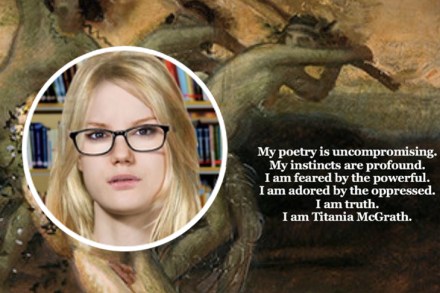
I met Titania McGrath at the Genderfree Silent Poetry Class I used to attend on a Thursday evening at the Basement Bar in York. I remember her standing out from the rest of the artistes because of the amount of screaming she did. Since her first draft of ‘My Ovaries Are The Devil’s Kidneys’ which she wrote back in 2013, her work has come on in leaps and bounds, and improved with every court summons. More recently she has found her niche on Twitter. She inspires thousands of followers, or dare I say, disciples, with a heady mixture of defiant slam poetry and staunch feminist views. Her poems are raw, unbridled, angry, and often nonsensical. Like Lewis Carroll meets Quentin Tarantino.

titania mcgrath

Meghan Murphy, Twitter and the new trans misogyny

From our US edition

I woke up this morning to a private message on Twitter from a young student. She had been warned that her account would be suspended if she ‘violated the rules’ again. Her crime? Tweeting details of Sheila Jeffreys’s book, Gender Hurts: A Feminist Analysis of the Politics of Transgenderism. Refusing to accept the mantra ‘Trans women are women’ is, in the eyes of many now, a crime, for which there must be punishment. Everyone from massive corporate social media machines to well-meaning liberals seem to be toeing the line. But some of us resist. Meghan Murphy for example, a Vancouver-based feminist journalist, has been permanently banned from Twitter for referring to a man who identifies as a woman as a man.

meghan murphy twitter trans

The trouble with baby boomers and social media

From our US edition

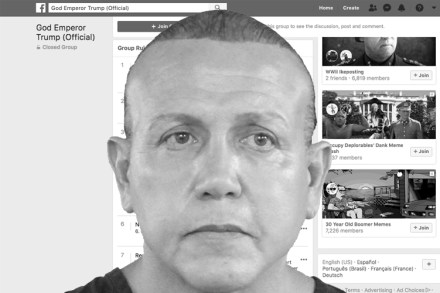
Spending too long online can take its toll, no matter your age. The majority of under 35s grew up squinting at backlit screens with bags below their eyes, poring over forums and AOL Messenger, pornography and Netflix. Yet somehow it’s baby boomers who are the worst victims of the internet: technologically dumb, easily scammed, and often more susceptible to fake news. And it looks as if Cesar Sayoc, the Florida man arrested in connection to the pipe bombs sent to prominent Democrats and left-wing celebrities, is the latest spectacular example of a silver (or in his case, it seems. hairplugged) surfer going off the deep end.

cesar sayoc social media baby boomers

On being sacked

It was a shock but not really a surprise. I came back from holiday at the beginning of August to find an item in the UK Press Gazette saying that Decca Aitkenhead had just been appointed chief interviewer at the Sunday Times, and an email from the Sunday Times magazine editor, Eleanor Mills, saying we needed to meet. It was not difficult to put two and two together. Eleanor suggested we meet at the Flask in Highgate — which was kind because it’s near my home — and when I arrived she was already sitting there with a glass of red wine lined up for me. Such unprecedented thoughtfulness made me wonder for a mad moment if she was planning to offer me a rise instead of sacking me, but no.

Approaching mild panic

For a brief moment in 2011, standing among thousands of people occupying Syntagma, the central square in Athens, it looked as though social media would change the world. A row of laptops set up next to the subway entrance became the beating heart of an anti-austerity movement that promised to go well beyond simple protest politics, up to perhaps reshaping the political culture of a stale Greek parliament. From Occupy Wall Street to the Arab Spring and the streets of Europe, a demand for such new politics and more democracy made itself known to the wider world through tweets and Facebook posts. Truly it appeared that if you gave people the tools to connect and actually meet each other in the digital commons, a demand for progress and change would arise almost naturally.