Science

The short, eventful life of George Forster – explorer, naturalist and revolutionary

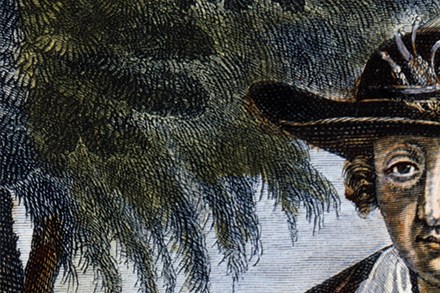
George Forster (1754-94), the German-Polish polymath, was in every sense a late Enlightenment prodigy. He was just ten years old when he accompanied his father, Johann Reinhold, on a scientific expedition to Russia and still in his teens when he sailed with him on Captain Cook’s epic three-year voyage to Antarctica and the Pacific islands. The ensuing book, A Voyage Round the World (1777), largely written by George, became a classic. It established him as one of the most significant naturalists and travel writers of the age, leading to him being elected a Fellow of the Royal Society aged just 22. He was also a very young polyglot, having learnt German, French, English and Russian by the age of 12. (He later added Dutch, Italian, Spanish, Portuguese and Swedish, as well as Latin.

Does a propensity for crime depend on one’s DNA?

This book begins strangely. Kathryn Paige Harden and her man Travis go off into the Texas desert to take some LSD in the hope that it will provide a ‘hard serotonergic reboot’. They have not so far had sex, but Travis has plans. ‘You’ll come back with your third eye,’ he says, ‘and then we’ll fuck. You’ll be glad we waited.’ At this point you may be tempted to hurl the book across the room. The self-centredness is oppressive. But persist. It rapidly becomes a very powerful read. Harden is a psychologist and behavioural geneticist, and the primary theme of Original Sin is the way in which science raises questions about morality and the law. For example, is a psychotic man who murders his wife less guilty than a sane man who does so with a clear head?

Weeds, bugs and lichens must now thrill the imagination

In the summer of 1992, the Times sent me to Orkney to interview the poet George Mackay Brown. He was notoriously wary of media interest – perhaps the only author ever to have asked his doctor for anti-depressants when shortlisted for the Booker prize – and I could hardly get a word out of him. His council flat didn’t yield much either: a sofa, a table – a Formica surface which Brown cleared of crumbs after breakfast and then wrote on till lunchtime. But behind his rocking chair, a huge banner, embroidered in bright wools, blazed out across an otherwise monochrome room: O let them be left, wildness and wet Long live the weeds and the wilderness yet.

The torture of Michael Frayn’s Copenhagen

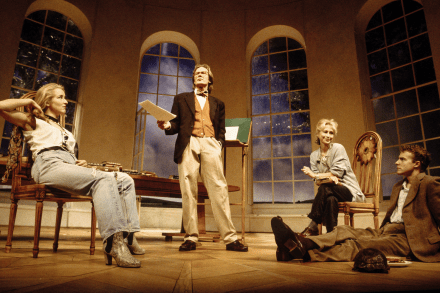
Copenhagen by Michael Frayn is a problem play. It debuted at the National in 1998 and ran for two years in the West End before transferring to Broadway. Since then, no UK producer has mounted a revival. Something must alarm investors. It’s a very chatty show. Three actors with three wooden chairs appear on a plain stage reciting dialogue about a meeting in Denmark in 1941 between the physicist Niels Bohr, his missus, and a family friend, Werner Heisenberg. The discussion focuses on the main developments in atomic science during the 20th century. Mrs Bohr, played by Alex Kingston, is there to offer a female angle on the ruminations of the two mega-nerds.

Unravelling the infinite mysteries of physics

Can artificial intelligence become godlike? Can such technology unravel the world’s great mysteries? Can everything, from love and intuition to consciousness and wonder, be replicated by computers and reduced to simply knowing the right algorithm? These are the big questions running through Sebastian Mallaby’s engaging book The Infinity Machine, which charts the rise of DeepMind, the London-based AI research firm owned by Google, and its exceptionally clever co-founder and chief executive, Demis Hassabis. The book’s narrative is centred on Hassabis’s hope to make DeepMind the first company to create AGI (Artificial General Intelligence) in which computers can match or surpass humans at virtually all cognitive tasks, and the morality of such an achievement.

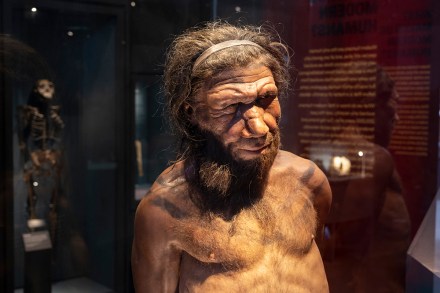
Who wants to bring back the Neanderthals?

In the not-too-distant future, if your T-shirt starts giving fashion advice or we’re all enslaved by a race of disease-resistant metahumans, then blame Martin Amis. More precisely, blame his obsession with Space Invaders. With a foreword by Steven Spielberg, Amis’s 1982 Invasion of the Space Invaders: An Addict’s Guide to Battle Tactics, Big Scores and the Best Machines gave intellectual heft to a pursuit – videogaming – that had hitherto been the preserve of glassy-eyed youths. His advocacy proved prescient. Over the next couple of decades, the best minds of a generation dedicated their lives to making pixellated worlds as compelling and realistic as possible.

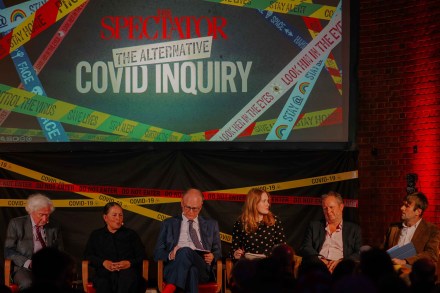
LIVE: The Spectator’s Alternative Covid Inquiry

53 min listen

As the official Covid Inquiry comes to an end, the Spectator has convened a panel of our own experts to ask the questions that the Inquiry didn’t – or wouldn’t – answer. The Spectator’s commissioning editor Lara Brown is joined by science writer and Conservative peer Matt Ridley, Oxford professor of theoretical epidemiology Sunetra Gupta, former Supreme Court judge Jonathan Sumption, journalist Christopher Snowdon and science writer Tom Whipple. This is a condensed version of the event. Subscribers can access the full event via Spectator TV and you can find more events from the Spectator here.

LIVE: The Spectator’s Alternative Covid Inquiry

What drama gets right and wrong about science

A few days after Tom Stoppard’s death last month, Michael Baum, a distinguished surgeon, wrote a letter to the Times. He explained how Stoppard’s discussion of chaos theory in Arcadia had inspired him to discover a new and far more effective chemotherapy to treat breast cancer. ‘Stoppard never learnt how many lives he saved by writing Arcadia,’ wrote Baum. I’ve long been fascinated by the relationship between science and drama. I knew Tom Stoppard and when I was professor of history and philosophy of science at UCL, we had several illuminating conversations about art, science and theatre, which he recalled in a 1994 article entitled ‘Playing with Science’ for the journal Engineering and Science. ‘Science and art are nowadays beyond being like each other.

David Deutsch: The Enlightenment, ‘irrational memes’ and how Wikipedia turned woke

The Amazon reviews for David Deutsch’s The Beginning of Infinity don’t alert you to the fact that this is a book on theoretical physics. They sound more like a weepy divorcé’s YouTube comments below a Mark Knopfler guitar solo. ‘I didn’t so much read it,’ says one. ‘It read me.’ ‘I was honestly sad when it was over,’ writes another. ‘This book changed my way of seeing the world, politics, science and, most importantly, of seeing what I will understand as containing some truth.’ When I talk to Deutsch – one of the most sensationally interesting theoretical physicists of our age – on Zoom, I see two beady eyes peering at me over some non-spectacular spectacles under a mess of thin white hair, borne by a thin white man in a thin white shirt.

Who will stand up for motherhood?

Scientists at the Oregon Health and Science University have created the beginnings of a baby using not human eggs, but skin cells. My reaction upon reading this news was to try to fold it up and tuck it away deep in some mental crevasse where I’d be sure never to see it again, because the implications are just too grim; the potential for suffering too much to bear. What the lab has done is devise a way to persuade human skin cells to behave like sex cells (eggs and sperm) and to divide using not only mitosis, which replicates all 46 chromosomes, but meiosis, which results in just 23. Once they’ve discarded half their chromosomes, the skin cells can then be fertilised with sperm, just as if they were human eggs.

The young Tennyson reaches for the stars

Edward FitzGerald had a good story about rowing across Lake Windermere at the end of May 1835 with his old friend Alfred Tennyson. As they rested on their oars and gazed into the clear, still water, Tennyson recited some lines from his work in progress, ‘Morte d’Arthur’, describing how the Lady of the Lake fashioned Excalibur out of sight: ‘Nine years she wrought it, sitting in the deeps/ Upon the hidden bases of the hills.’ Then he gave himself a little pat on the back: ‘Not bad that, Fitz, is it?’ The lines are better than not bad, as they imagine an invisible process of creation by incorporating several fragments of earlier writing.

The cultification of science

My, how we all laughed. Thirty years ago the physicist Alan Sokal hoaxed a social science journal into publishing a paper ‘liberally salted with nonsense’ (in his own words) that ‘flattered the editors’ ideological preconceptions’. Its title alone gave away the joke: ‘Transgressing the Boundaries: Towards a Transformative Hermeneutics of Quantum Gravity.’ Little did we in the truth-seeking enterprise which is real science realise that verbose and vapid social deconstruction was coming for us too. In a new book, The War on Science, edited by the astrophysicist Lawrence Krauss, 31 scientists and scholars lament the corruption of their field by left-wing ideological nonsense.

Will we resist the bacteria of the future?

Every doctor can remember a time when bacterial infection laid waste to their patient with hair-raising speed and virulence. The most indelible for me occurred a decade ago during surgical night shifts. Again and again I was called to the bedside of a young woman with the ‘flesh-eating bug’, or necrotising fasciitis. By the time she’d presented to A&E, a recent graze to her leg was causing such disproportionate pain that her family had been forced to carry her. When the surgeons opened up the limb, they found carnage. Group A streptococcus – a bacterium that benignly colonises the throats and skin of millions of us – had burrowed from the graze into the deepest tissues, where it dissolved flesh with the ease of battery acid.

The AI apocalypse is the least of our worries

What is your p(doom)? This is the pseudo-scientific manner in which some people express the strength of their belief that an artificial superintelligence running on computers will, in the coming decades, kill all humans. If your p(doom) is 0.1, you think it 10 per cent likely. If your p(doom) is 0.9, you’re very confident it will happen. Well, maybe ‘confident’ isn’t the word. Those who have a high p(doom) and seem otherwise intelligent argue that there’s no point in having children or planning much for the future because we are all going to die. One of the most prominent doomers, a combative autodidact and the author of Harry Potter fan-fiction named Eliezer Yudkowsky, was recently asked what advice he would give to young people. He replied: ‘Don’t expect a long life.

The race against Hitler to build the first nuclear bomb

Ettore Majorana vanished in March 1938. According to Frank Close in Destroyer of Worlds, the 31-year-old Sicilian physicist ‘probably understood more nuclear physics theory than anyone in the world’, and was hailed by Enrico Fermi as a ‘magician’, in the elevated company of Newton and Galileo. Majorana was also an ardent fascist; yet he was haunted by the destructive potential of his work on mapping the nucleus. His disappearance – perhaps a suicide; more likely a new, incognito life in South America – has been related to an anguished remark he made to a colleague: ‘Physics has taken a bad turn. We have all taken a bad turn.

Should we give weight loss jabs to children?

I have seen the future of food. And some of you won’t like it. On a research trip to the Netherlands last week, along with the fellow partners of my firm, Bramble, I took a speedboat tour of the port of Rotterdam. One of the most awesome sights was the so-called ‘Innocent Blender’ – a vast smoothie-making fortress, box-shaped and silver – glinting over the water. This is where the British-based, Coca-Cola-owned company makes its ‘tasty little drinks’. The factory location makes sense: most of Europe’s imported fruit comes via Rotterdam. Massive tankers – 600ft long and filled with 40,000 tons of chilled orange juice from Brazil – move through constantly. The Blender is completely electric, runs on renewable energy and uses robots to purée, bottle and package.

How the US military became world experts on the environment

In 1941, as it entered the second world war, the US Army barely bested Bulgaria’s for size and combat readiness. Nor did US forces have very much idea of what conditions were like in their new theatres of operation. In the winter of 1942, hot-weather gear and lightweight machinery landed in the deserts of North Africa where hot and dry conditions were assumed to persist throughout the year. Men froze half to death, even as their digging equipment foundered in winter mud. Sand, Snow and Stardust is the story of how the US military shed its ignorance and, by harnessing logistical intelligence and environmental knowledge, turned America into a global superpower. Before the second world war the US operated just 14 overseas military bases.

Why going nuclear is humanity’s only hope

There are three parties when it comes to global warming. First, the hard right, which says it isn’t happening, and even if it is that we can do nothing about it. Then there are the far leftish Luddites who would smash all power generation systems, allowing only wind turbines, wave power etc. Finally there are the suave centrists who know perfectly well that only nuclear can save us. This book will become their bible. Tim Gregory is a nuclear scientist who works at Sellafield. He has a serious problem defending his conviction that nuclear is the answer: radiophobia, the terror people feel about radioactivity. Superficially, this terror seems well-founded.

The downfall of climate change poster boy Michael Mann

Even if you’ve never heard of Michael Mann, you will have felt his baleful influence on your energy bills. He is the inventor of the hockey stick chart, which shows a sharp increase in late 20th century global temperatures, like the blade of an ice hockey stick. It put rocket boosters on the climate change scare and was used as an excuse by policymakers to send green taxes, tariffs and regulations soaring. Mann was an obscure academic who had just been given his PhD at the University of Massachusetts when his graph was published in the journal Nature in 1998. Within months – fêted everywhere from the New York Times to the Intergovernmental Panel on Climate Change (IPCC) – he’d become the poster boy for the alleged global warming apocalypse.

Controlling AI is the great challenge of our age

In 1997 the world chess champion Garry Kasparov was beaten by an IBM computer system called Deep Blue. It had defied all expectations, exploring some 300 million possible moves in one second. The most that skilled chess players can contemplate is about 110 moves at any given time. It was a seminal moment in the advance of artificial intelligence – even if not fully understood, writes Richard Susskind in How to Think About AI. People did not wholly grasp the impact of the exponential power of computers, nor that new ways would be found to develop systems that could achieve human expert-level performance. Fast forward to 2016 and to AlphaGo, a machine designed to play the complex game Go, which has more possible moves than atoms in the observable universe.