Science

How scientists misled the world about faith

From our US edition

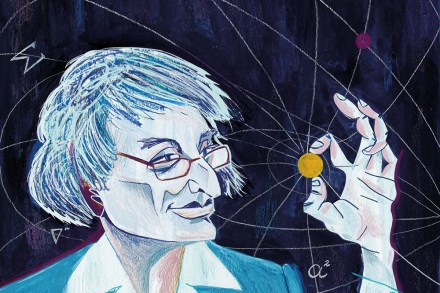
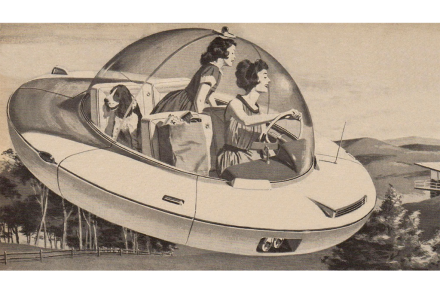
Sometime in 1953, Dorothy Martin was contacted by aliens. They had bad news and they had good news. The bad: Earth was about to be swallowed up by floodwaters. The good: as the leader of a chosen few, Martin would be saved by flying saucers. Mankind had brought this calamity on itself by following Lucifer’s agents – scientists – and abandoning Christ. Over the next year or so, Martin assembled a little flock of disciples who believed their salvation, and the world’s end, would come on December 21, 1954. A team of psychologists caught wind of Martin’s prediction.

UFOs alien psychology faith

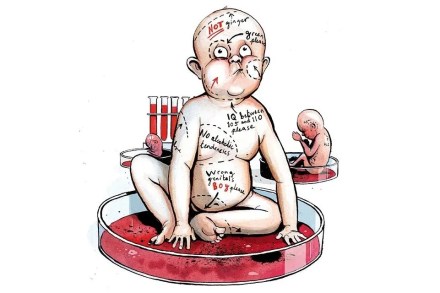
Who will stand up for motherhood?

Scientists at the Oregon Health and Science University have created the beginnings of a baby using not human eggs, but skin cells. My reaction upon reading this news was to try to fold it up and tuck it away deep in some mental crevasse where I’d be sure never to see it again, because the implications are just too grim; the potential for suffering too much to bear. What the lab has done is devise a way to persuade human skin cells to behave like sex cells (eggs and sperm) and to divide using not only mitosis, which replicates all 46 chromosomes, but meiosis, which results in just 23. Once they’ve discarded half their chromosomes, the skin cells can then be fertilised with sperm, just as if they were human eggs.

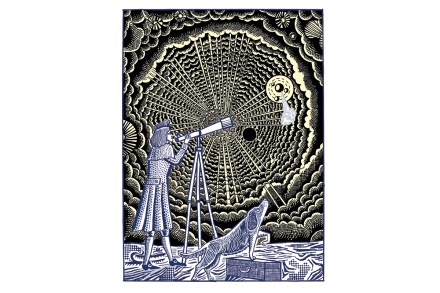
The young Tennyson reaches for the stars

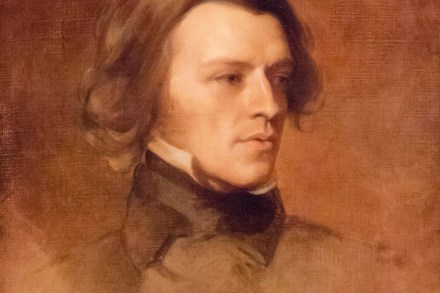
Edward FitzGerald had a good story about rowing across Lake Windermere at the end of May 1835 with his old friend Alfred Tennyson. As they rested on their oars and gazed into the clear, still water, Tennyson recited some lines from his work in progress, ‘Morte d’Arthur’, describing how the Lady of the Lake fashioned Excalibur out of sight: ‘Nine years she wrought it, sitting in the deeps/ Upon the hidden bases of the hills.’ Then he gave himself a little pat on the back: ‘Not bad that, Fitz, is it?’ The lines are better than not bad, as they imagine an invisible process of creation by incorporating several fragments of earlier writing.

The cultification of science

My, how we all laughed. Thirty years ago the physicist Alan Sokal hoaxed a social science journal into publishing a paper ‘liberally salted with nonsense’ (in his own words) that ‘flattered the editors’ ideological preconceptions’. Its title alone gave away the joke: ‘Transgressing the Boundaries: Towards a Transformative Hermeneutics of Quantum Gravity.’ Little did we in the truth-seeking enterprise which is real science realise that verbose and vapid social deconstruction was coming for us too. In a new book, The War on Science, edited by the astrophysicist Lawrence Krauss, 31 scientists and scholars lament the corruption of their field by left-wing ideological nonsense.

Will we resist the bacteria of the future?

Every doctor can remember a time when bacterial infection laid waste to their patient with hair-raising speed and virulence. The most indelible for me occurred a decade ago during surgical night shifts. Again and again I was called to the bedside of a young woman with the ‘flesh-eating bug’, or necrotising fasciitis. By the time she’d presented to A&E, a recent graze to her leg was causing such disproportionate pain that her family had been forced to carry her. When the surgeons opened up the limb, they found carnage. Group A streptococcus – a bacterium that benignly colonises the throats and skin of millions of us – had burrowed from the graze into the deepest tissues, where it dissolved flesh with the ease of battery acid.

The new eugenics dilemma

From our US edition

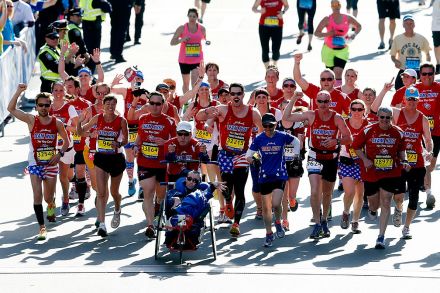
What comes to mind when you think about the maximum amount of love a parent can have for their child?For me, I think of Dick Hoyt pushing his son Rick, who had cerebral palsy, in a wheelchair through the Ironman World Championship course. I think of the parents of Nick Vujicic, born without arms or legs, raising Nick with confidence, and cheering him on as he became an international motivational speaker. I think of the mother of a child with Down Syndrome, choosing each day to recognize the absolute gift of their child. I think of the parent at the dinner table comforting a child upset by a ‘C’ on their report card.Noor Siddiqui, founder of Orchid Biosciences, sees things differently.

Eugenics

How justified is climate-change alarmism?

From our US edition

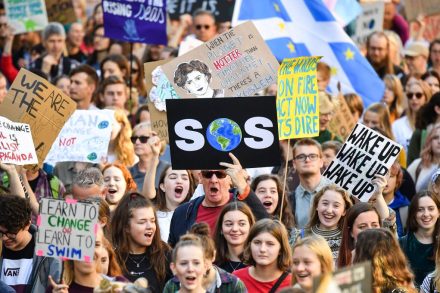
For decades, the picture of Earth’s future – as laid out by journalists and climate scientists alike – has been bleak. By 2070 we will see famine, economic collapse, a sun that cooks us, melted icecaps, flooding, extreme hurricanes and ever-present tropical storms. "Vast swathes" of the planet will be inhospitable for human life. And Greta Thunberg, in her late sixties, will wear a gas mask as she sits on the steps of Swedish Parliament with a cardboard sign declaring, "I told you so." Advocates have poured gasoline on the climate-alarmism fire earnestly, backed by reports declaring, "There really is no serious scientific debate remaining about climate change.

Global Climate Strike on September 20, 2019 in Edinburgh, Scotland (Getty)

The AI apocalypse is the least of our worries

What is your p(doom)? This is the pseudo-scientific manner in which some people express the strength of their belief that an artificial superintelligence running on computers will, in the coming decades, kill all humans. If your p(doom) is 0.1, you think it 10 per cent likely. If your p(doom) is 0.9, you’re very confident it will happen. Well, maybe ‘confident’ isn’t the word. Those who have a high p(doom) and seem otherwise intelligent argue that there’s no point in having children or planning much for the future because we are all going to die. One of the most prominent doomers, a combative autodidact and the author of Harry Potter fan-fiction named Eliezer Yudkowsky, was recently asked what advice he would give to young people. He replied: ‘Don’t expect a long life.

What happens when AI surpasses humans?

From our US edition

I recently sat down to dinner with some very smart economists. I am the chief executive of an artificial intelligence company and so the conversation swiftly turned to the value of AI for the economy. The economists had many interesting things to say, both about the advantages of AI adoption and about the displacement effects on jobs. But about halfway through the dinner, another AI chief executive offered an opinion that struck me. He said: “I can’t quite articulate it, but I have a sense that what you are measuring with your GDP analysis is not what I care about. You treat this like an economic question. But it’s more like a geopolitical question.”  At a gut level, I knew exactly what he meant – but I also couldn’t clearly state the distinction.

AI
AI

Should AI have rights?

From our US edition

Mary Shelley was challenged by Lord Byron to write a ghost story during a summer of “incessant rainfall” on Lake Geneva in 1816. She came up with something far more interesting than a mere ghost story: the tale of Dr. Frankenstein, a scientist who creates life by reanimating a corpse. Shelley, who was just 18 at the time, was horrified by her “waking dream.” The thought that man could “mock” God’s creation of life was “supremely frightful.” Some of the scientists building artificial intelligence today believe they, too, might be creating life. The implications are frightening – and not just because an AI might decide to kill us all. What if we could hurt the AI?

In the age of AI, humans must keep learning

From our US edition

This year, colleges stopped teaching students to write. As artificial intelligence chatbots allow students to generate unique essays that can’t easily be vetted for plagiarism, professors have felt the need to replace essay assignments with written examinations in closed rooms. It’s a considerably shrunken version of the kind of university education that was on offer 75 years ago. In June, a study from MIT showed steadily waning brain engagement and originality as student essayists used AI more. The college business model is in trouble: $75,000 for a year’s worth of diversity, equity and inclusion nonsense already struck parents as a bit steep. But at least the kids were being taught something. The new limitations AI places on instruction may do a lot of colleges in.

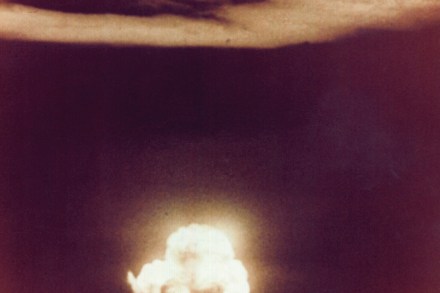
The race against Hitler to build the first nuclear bomb

Ettore Majorana vanished in March 1938. According to Frank Close in Destroyer of Worlds, the 31-year-old Sicilian physicist ‘probably understood more nuclear physics theory than anyone in the world’, and was hailed by Enrico Fermi as a ‘magician’, in the elevated company of Newton and Galileo. Majorana was also an ardent fascist; yet he was haunted by the destructive potential of his work on mapping the nucleus. His disappearance – perhaps a suicide; more likely a new, incognito life in South America – has been related to an anguished remark he made to a colleague: ‘Physics has taken a bad turn. We have all taken a bad turn.

How China is out-innovating the West

From our US edition

The world received a jolt in 2018 – and it wasn’t from a Silicon Valley whiz or a lab at MIT. It came from Shenzhen, China, where a lanky, unassuming biochemist named He Jiankui did the unthinkable. Using the newly discovered CRISPR-Cas9 toolkit, and asking no one’s permission, He edited the genes of Lulu and Nana, twin baby girls, so that both were born immune to HIV. The scientific establishment gasped, jaws dropped and the moralists clutched their pearls. “Monstrous!” the bioethicists cried. “I was just horrified,” said Jennifer Doudna, who won the 2020 Nobel Prize in Chemistry for inventing the CRISPR gene-editing technique.

The fight to make science great again

From our US edition

If one were looking for dismal assessments of the Trump administration’s contributions to the vitality of American intellectual inquiry, the editorial eructations of Holden Thorp would likely be at the top of the list.   Thorp is the editor-in-chief of Science, the weekly journal of American Association for the Advancement of Science (AAAS). This makes him one of the most influential figures in the academy and in American science as a whole. Few weeks go by without an editorial from Thorp denouncing the havoc wrought by Trump. The May 8 issue is mildly titled, “The New Reality for American Academe,” but the mildness ends there.

science

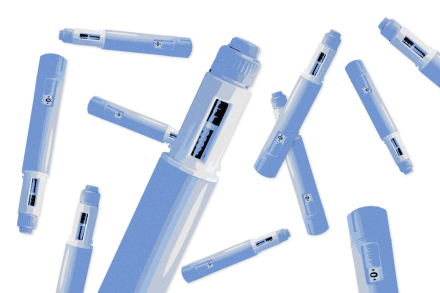
Should we give weight loss jabs to children?

I have seen the future of food. And some of you won’t like it. On a research trip to the Netherlands last week, along with the fellow partners of my firm, Bramble, I took a speedboat tour of the port of Rotterdam. One of the most awesome sights was the so-called ‘Innocent Blender’ – a vast smoothie-making fortress, box-shaped and silver – glinting over the water. This is where the British-based, Coca-Cola-owned company makes its ‘tasty little drinks’. The factory location makes sense: most of Europe’s imported fruit comes via Rotterdam. Massive tankers – 600ft long and filled with 40,000 tons of chilled orange juice from Brazil – move through constantly. The Blender is completely electric, runs on renewable energy and uses robots to purée, bottle and package.

How the US military became world experts on the environment

In 1941, as it entered the second world war, the US Army barely bested Bulgaria’s for size and combat readiness. Nor did US forces have very much idea of what conditions were like in their new theatres of operation. In the winter of 1942, hot-weather gear and lightweight machinery landed in the deserts of North Africa where hot and dry conditions were assumed to persist throughout the year. Men froze half to death, even as their digging equipment foundered in winter mud. Sand, Snow and Stardust is the story of how the US military shed its ignorance and, by harnessing logistical intelligence and environmental knowledge, turned America into a global superpower. Before the second world war the US operated just 14 overseas military bases.

Why going nuclear is humanity’s only hope

There are three parties when it comes to global warming. First, the hard right, which says it isn’t happening, and even if it is that we can do nothing about it. Then there are the far leftish Luddites who would smash all power generation systems, allowing only wind turbines, wave power etc. Finally there are the suave centrists who know perfectly well that only nuclear can save us. This book will become their bible. Tim Gregory is a nuclear scientist who works at Sellafield. He has a serious problem defending his conviction that nuclear is the answer: radiophobia, the terror people feel about radioactivity. Superficially, this terror seems well-founded.

A new map of the universe may turn gravity on its head

From our US edition

Scientists have released the largest map of the universe ever compiled. Millions of galaxies have been surveyed, stretching back 11 billion years, most of the age of the cosmos. According to many scientists, this data, combined with other observations, presages a major reassessment of what we know about the universe: possibly, for the first time, revealing a crack in Einstein’s theory of gravity. The Dark Energy Spectroscopic Instrument (DESI) is attached to a large telescope at the Kitt Peak National Observatory in Arizona. Each night it measures the positions of and distances to thousands of galaxies. Galaxies exist in groups and their motions are influenced by other, nearby galaxies.

universe 3I
scientists

Why won’t western scientists condemn Wuhan?

From our US edition

“I am officially launching my new company: Cathy Medicine. We will eradicate diseases in future generations through germline gene editing.” This is one of several strongly – and strangely – worded tweets sent in recent weeks from the X account of He Jiankui, a Chinese scientist who served a three-year prison sentence for gene-editing two human embryos. Those embryos are now people: seven-year old twin girls living under the pseudonyms Lulu and Nana. “Good morning bitches,” Dr. He wrote on April 16. “How many embryos have you gene edited today?” “Get in luddite, we’re going gene editing,” he added the next day. He also wrote: “I literally went to prison for this shit.” Is it the real Dr. He? The journalist Antonio Regalado, who first broke the story of Dr.

The downfall of climate change poster boy Michael Mann

Even if you’ve never heard of Michael Mann, you will have felt his baleful influence on your energy bills. He is the inventor of the hockey stick chart, which shows a sharp increase in late 20th century global temperatures, like the blade of an ice hockey stick. It put rocket boosters on the climate change scare and was used as an excuse by policymakers to send green taxes, tariffs and regulations soaring. Mann was an obscure academic who had just been given his PhD at the University of Massachusetts when his graph was published in the journal Nature in 1998. Within months – fêted everywhere from the New York Times to the Intergovernmental Panel on Climate Change (IPCC) – he’d become the poster boy for the alleged global warming apocalypse.