Rwanda

Stopping the boats shouldn’t require magical thinking

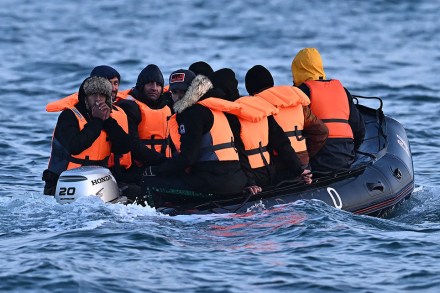
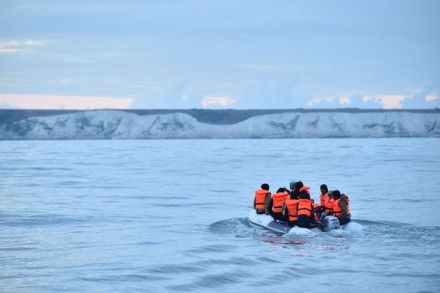
The BBC’s tracking-down of Kardo Ranya as a people-smuggling mastermind is a triumph of investigative journalism. But anyone who thinks this will seriously help ‘smash the gangs’ is deluded. As the drugs trade illustrates, where there is demand there will be supply. What’s to be done? Imagine you were the party leader of a mainstream British political party. Daydreaming, you see a vision – pouffe! A bang and a flash, and there stands the Fairy Queen herself. ‘What, oh party leader,’ she demands, ‘is your heart’s desire?’ Your reply is unhesitating but – you suppose – hopeless. ‘A winning strategy for the next general election,’ you wail. ‘I ask only for that.

A late Congolese ruler with a new following

From our US edition

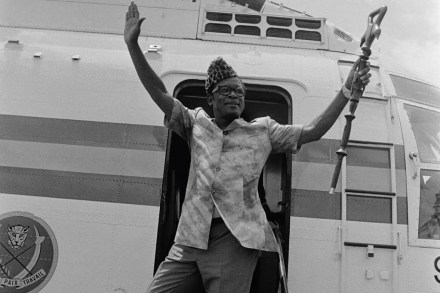
At the exit of the National Museum in Kinshasa, capital of the Democratic Republic of Congo (DRC), is a whiteboard for visitors to leave their comments. On that whiteboard, full of underlinings and exclamation marks, are messages like this: “Thank you for your life.” “Thank you for our national unity.” “You left behind a glorious historical legacy. We plan to follow in your footsteps.” A giant photograph of the man the messages refer to hangs in the museum’s main hall as part of its new exhibition, a man in dark glasses and leopard-skin toque, smiling down at his people. More than 28 years after fleeing into exile, Mobutu Sese Seko, once known as “The Leopard” and “The Great Helmsman,” is back in the limelight in the DRC.

Trump’s peace process pageantry

From our US edition

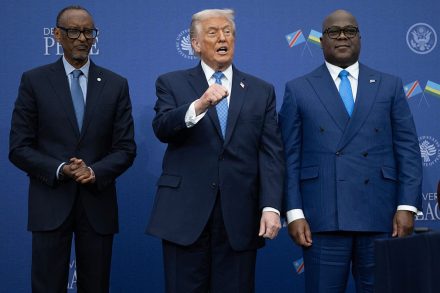
The US Institute of Peace was taken over by DoGE in January and now appears to have undergone a makeover both inside and out. Its new name is emblazoned on the front: “Donald J. Trump Institute of Peace.” The President loves deals and good branding, perhaps as much as he professes to love peace. On Thursday, in the high-ceilinged atrium of the building, he hosted a celebration of a peace agreement between the Democratic Republic of Congo and Rwanda. The actual peace agreement in question was signed over the summer with shaky results. Nevertheless, leaders from several East African nations, as well as the UAE and Qatar turned up to bear witness to the ceremonial acknowledgement of the agreement.

donald trump peace

Did Kamala Harris ‘stun’ at the Met Gala?

From our US edition

Met Gala turns @TheDemocrats into @PopCrave Celebrities from the music industry, the NFL and Hollywood joined Kamala Harris at the annual Met Gala fundraiser for the Metropolitan Museum of Art’s Costume Institute. In an embarrassing tweet emulating viral celebrity accounts such as @PopCrave, @TheDemocrats (yes, the official social media account for the entire Democratic party) wrote, “Kamala Harris stuns at the Met Gala.” The defeated presidential candidate wore a black and white dress in a possible homage to Cruella de Vil. Despite the online slavering at DNC HQ, Emily Smith notes elsewhere in The Spectator that Harris’s audience might have been on the other coast.

kamala harris met gala

The danger of becoming a ‘professional survivor’

It was a relatively minor episode in a period marked by the killing of two African presidents, months of massacres in churches, schools and sports stadiums, a biblical exodus by much of the Hutu population, a cholera outbreak in refugee camps established in the neighbouring Democratic Republic of Congo (DRC), and a rebel takeover of the country. But it mattered a great deal to Beata Umubyeyi Mairesse, the author of this book, as she was one of the children evacuated in June 1994. At 15, she did not meet the criteria stipulated by the convoy’s organisers, so she and her mother hid under a tarpaulin sat upon by the smaller children as the trucks worked their painstaking way through a series of road blocks manned by Hutu militiamen hungry for fresh victims.

Why does the beheading of Christians not make headlines?

The Congolese chapter of Islamic State has a ruthless way of stopping outsiders reporting their presence to the authorities. Under the edicts of their founder, Jamil Mukulu, who once lived as a cleric in London, anyone who strays across them in their forest hideouts should be killed on sight. ‘Slaughter him or her, behead them immediately,’ Mukulu once commanded. ‘Never give it a second thought, do not hesitate.’ His acolytes take him at his word, even when it’s not just one hapless villager who runs into them, but dozens. Last month, they beheaded 70 Christians in Mayba in the eastern Congo, according to the Catholic charity Aid to the Church in Need, which campaigns on behalf of persecuted Christians worldwide.

Can we trust the Tories on immigration? An interview with Chris Philp, shadow home secretary

38 min listen

On this special episode of Coffee House Shots, economics editor Kate Andrews is joined by shadow home secretary Chris Philp to discuss the Tories’ newly announced plan to tackle immigration. On legal migration, their proposal includes plans to end worklessness in order to stop the reliance on low-paid migrant workers. And on illegal migration, the line is ‘zero tolerance’ on small boats, including a removals deterrent much like the Rwanda plan, as well as other changes to the legal framework. One of the more controversial elements of their strategy is on citizenship.

Bill Clinton’s latest memoir sees him at his chirpiest — and most combative

From our US edition

In February 1974, the British prime minister Edward Heath, then facing one of his country’s cyclical economic crises, called a snap general election. The result was close; Heath’s Conservative Party won the popular vote but secured fewer parliamentary seats than the Labour opposition. After power-sharing discussions broke down, Heath resigned from office. A fifty-seven-year-old bachelor without a London home of his own, he lodged for the next several months at a small Westminster flat owned by his political secretary Timothy Kitson. The man who had served as his nation’s head of government for the previous four years was left with a typist, a single daytime detective and a part-time driver at his disposal.

Clinton

Rwanda to Uganda: a cross-border quest

From our US edition

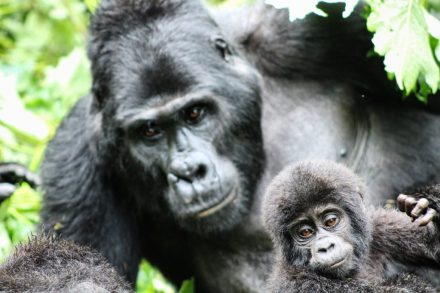
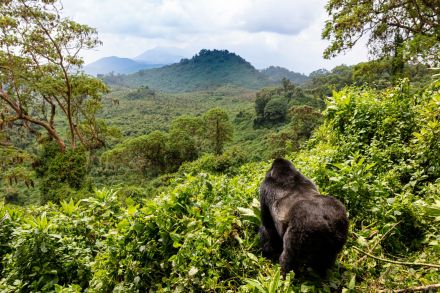
The shelves of my father’s study-cum-Tottenham Hotspur shrine, stacked with leatherbound match day programs and soccer players’ autobiographies, belie his life’s true obsession: gorillas. The clues are there, though. A small bronze statue of a silverback makes a heavy bookend. A wooden walking stick, its handle carved into the shape of an ape, is propped in the corner. Remove them — and our hazy memories of tracking black, fluffy balls of muscle through lush African forest could be chalked up to a fever dream. But we really did it. After a decade of idle talk, Dad and I devised our mission: we’d research gorillas in Rwanda and realize his life goal of tracking them in Uganda.

How to manage migration like the Swedish

In the end, the German state of Thuringia did not fall into the hands of the far-right Alternative für Deutschland (AfD). The party won the most votes in the recent election but was unable to form a coalition, meaning that Björn Höcke will not be the state’s minister-president. This is ideal for him: he can cry foul, claim to represent the true voice of Germany and point to a conspiracy to keep him out of power. His incendiary strain of politics proved more popular than the more moderate version of the AfD in Saxony, which held elections the same day. These will all be lessons taken into consideration ahead of Brandenburg’s state elections in two weeks’ time. The growing strength of the AfD has sent mainstream parties scurrying to respond to public concerns.

After Rwanda: what will Labour do now?

Keir Starmer is advertising for someone to head his newly created Border Security Command. The salary is higher than his own: the person in charge of stopping the boats would earn between £140,000 and £200,000. According to the ad, the job of patrolling the English Channel can be done remotely from any one of 12 cities, including Edinburgh and Belfast. It will require coordination with the Home Office, parts of the navy and even MI5. Never mind that this goes on already, with no discernible effect. The key requirement for the job, it would seem, is to be the fall guy, someone ready to take the blame for a policy that is certain to fail. Rishi Sunak’s pledge to ‘stop the boats’ never stood a chance. This was resented by voters.

Why won’t Rishi honour our £1,000 bet?

When I interviewed Rishi Sunak in February, I told him I thought his Rwanda plan for ‘stopping the boats’ was an expensive, unworkable dud and offered him a £1,000 bet to be paid to a refugee charity that he wouldn’t get any asylum-seeker planes taking off before the next general election. To my surprise, the Prime Minister clutched my outstretched hand and accepted the wager, sparking considerable revulsion. As the HBO comedian John Oliver put it: ‘Set aside the grossness on display here, imagine what a monster you have to be to put me in a position of genuinely wanting Piers Morgan to win something?’ Now Sunak has admitted no planes will leave for Rwanda before 4 July. Therefore, I told him on X that I’d like the £1,000 to go to the British Red Cross. But No.

An exquisitely funny sitcom that should be on the BBC

Agathe by Angela J. Davis follows the early phases of the Rwanda genocide 30 years ago. The subject, Agathe Uwilingiyimana, became prime minister on 18 July 1993 but her tenure ended abruptly when she was assassinated by a rioting mob which surrounded the UN compound where she was sheltering on 7 April 1994. She saved her children, according to some accounts, by sacrificing her own life. This is a rough-and-ready play that tells the story impressionistically through monologues, rap lyrics, news broadcasts and reconstructed scenes at the UN headquarters. It doesn’t pretend to offer a full historical account but it generates a horrible mood of impending doom.

Are the Houthi strikes working?

12 min listen

The UK launched a new set of strikes on eight Houthi targets last night. Typoon jets dropped £30,000 Paveway bombs on an underground storage site and surveillance and missile capabilities controlled by the Yemeni rebel group. But are the strikes working? The Houthis have continued to attack ships in the Red Sea, and a row has also started about whether government properly briefed Keir Starmer and Sir Lindsay Hoyle. Max Jeffery speaks to Katy Balls and Isabel Hardman.

Is the ERG a spent force?

12 min listen

After much back and forth, the Rwanda Bill passed last night with only 11 votes against while other critics, such as Lee Anderson who resigned his party role, abstained. Rishi Sunak can celebrate a small victory as it appears that the Brexit 'Spartans' of yesteryear are something of a spent force today. Cindy Yu talks to Katy Balls and Fraser Nelson. Produced by Cindy Yu.

Portrait of the week: tax cuts, hostage releases and highly rated horses

Home Rishi Sunak, the Prime Minister, said, ‘We can now move on to the next phase of our economic plan and turn our attention to cutting taxes,’ having seen a reduction in inflation. Jeremy Hunt, the Chancellor of the Exchequer, followed suit in the Autumn Statement, cutting personal taxes. The government was to make changes to long-term benefits. The minimum wage, known officially as the National Living Wage, currently £10.42 an hour for those over the age of 23, will rise to £11.44 an hour for those over 21 from next April. The government also drew attention to £8.3 billion allocated to mending potholes, money purportedly saved from the curtailment of the HS2 project. Households living close to new pylons would receive compensation.

Why the Supreme Court demolished the Rwanda scheme

In its simple and comprehensible judgment, the Supreme Court has dealt a crushing blow to the Home Office’s Rwanda policy this morning.   The court upheld the decision of the Court of Appeal that the policy was unlawful. It reached that view because it believed there were substantial grounds to think that asylum claims would not be properly determined by the Rwandan authorities. That would mean that asylum seekers might be returned to a country where their life or freedom would be threatened, or where they would be subject to a risk of torture or inhuman or degrading treatment.

Gorillas in the mix: in search of Rwanda’s silverbacks

Two hours into a muddy hike through Rwanda’s Nyungwe rainforest and though I’ve been barked at by a baboon, crossed rivers of fire ants and stepped over a foot-long centipede, I have yet to see any chimpanzees, which is the reason I’m here.  My guide and our team of trackers are on the path ahead, armed with machetes, rifles and a walkie talkie. We’re looking for an alpha male called Kuyu. His morning calls echo in the distance and my guide tells me we’re not far from him. I hope he’s right. I am covered in Mosquito repellent clothing, I’m hot, tired and my enthusiasm is waning.  ‘Look up,’ says my guide, and he gestures at a dark shadow that glides across the tree canopy above. We’ve found them!

Gripping tale of Ireland’s most polite bank robber: I’m Not Here To Hurt You reviewed

There should really be a special word for it: that vicarious fragility you feel when hearing of a minor decision with catastrophically heavy consequences, as if a falling acorn had tipped a boulder. In the case of John O’Hegarty, the subject of the engrossing podcast I’m Not Here To Hurt You, the catalyst for disaster was a quick short cut the wrong way down a one-way Dublin street while working as a bicycle courier. It would ultimately lead him – an academic with a master’s degree in psychology – into heroin and crack cocaine addiction, followed by a stint as a bank robber and eight years in prison.