Rwanda

Is Sunak heading for a showdown over Rwanda?

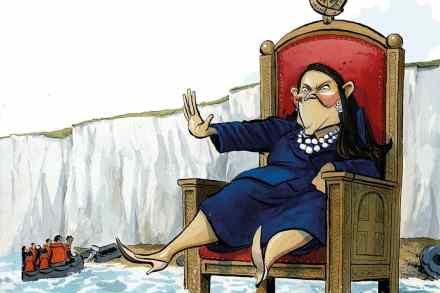
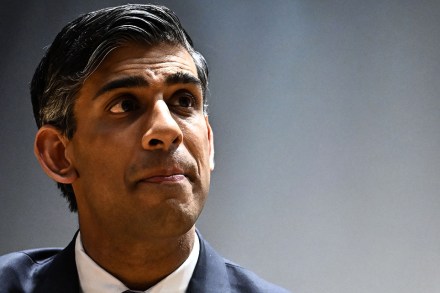
When the Prime Minister first assembled his cabinet, the most controversial appointment was Suella Braverman as Home Secretary. She had only just left the role under Liz Truss after she admitted sending an official document from a personal email account. But when Truss fell, Braverman called for Rishi Sunak rather than a Boris Johnson restoration. She was back in the Home Office after less than a week. ‘It’s either stop the boats or leave the ECHR,’ says one senior Tory Some suspected a grubby deal between the two, but Sunak had plenty of reasons to want Braverman back. While critics accuse her of harbouring unsubtle leadership ambitions, her place in the cabinet keeps an important part of the Tory coalition on side – even if it comes with downsides.
The European court has seriously overstepped over Rwanda

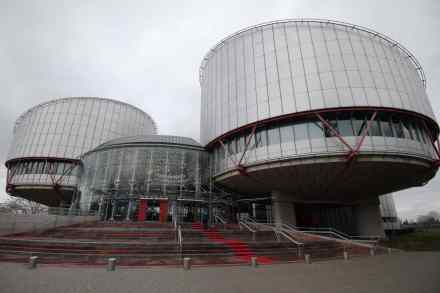
Last night’s abrupt order from the European Court of Human Rights that led to the grounding of the first Rwanda deportation flight delighted progressives everywhere. They will of course say – rather in the fashion of twentieth-century home secretaries calmly refusing to reprieve a condemned murderer – that the law is merely taking its course, and that we should be proud that the rule of law has been upheld. This sounds comforting. It is also wrong-headed. The Rwanda debacle in fact raises very serious questions about the legitimacy of the Strasbourg judges and their interference with national administrations. To remind you of the background, concerted lawfare in the English courts failed to block the flight.

Progressives, don’t cheer Rwanda’s setbacks

The last-minute halting of the first flight to Rwanda is humiliating for Boris Johnson’s government. An urgent interim measure from the European Court of Human Rights prompted a domino effect of domestic court orders that ended with the plane returning to base without passengers. The ECtHR’s order came down to three factors. First, that evidence from the UN High Commissioner for Refugees and others suggested asylum seekers transferred to Rwanda ‘will not have access to fair and efficient procedures for the determination of refugee status’.

Is Boris willing to make the Rwanda plan work?

Priti Patel’s first go at deporting migrants to Rwanda is turning before our eyes into one of those answers from the TV quiz show Pointless – when you see the on-screen counter drop remorselessly towards zero. At the time of writing, the counter for the number of migrants to be flown out to Rwanda is down to seven – from an original list of 130. While Home Office officials continue to insist their chartered plane will take off tonight with at least some migrants on board, other parts of government do not seem so sure. So we could still be about to witness a completely pointless answer.

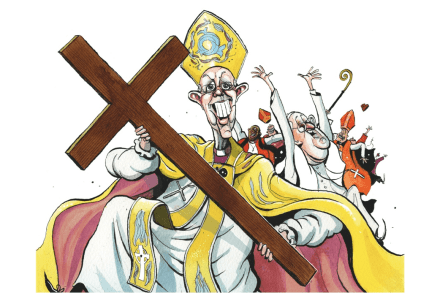
In defence of meddlesome priests

The British constitution is best understood as a dinner party. Imagine the key institutions of national life personified and sat around a table debating the issues of the day. True, as you and I picture this scene it is now a little late in the evening, the surroundings are worn and some hitherto unheard voices are beginning to loudly bark above the polite murmur of the older interlocutors. But the conversation carries on. One of the longest-standing participants in this national conversation is the Church of England; indeed, perhaps only the Crown has been part of it for longer. The traditions of Toryism and liberalism are comparative newcomers, Labour even more so. The BBC and the NHS have barely graduated from the children’s table.

Will the government stand up to mob rule?

A very big week is in store for the government’s strategy to tackle illegal immigration with all eyes on the planned first air transfer of irregular migrants to Rwanda, due to take place on Tuesday. Whether the flight takes off at all and how many migrants will be on board is yet to be seen. But the policy has already attracted strong adverse commentary from leading lights in Britain’s unelected establishment, from the Archbishop of Canterbury to the heir to the throne. But another struggle over the enforcement of immigration law is being waged at ground level, with the springing up of networks of local activists seeking to prevent immigration enforcement officers accompanied by the police from detaining illegal immigrants to facilitate their deportation.

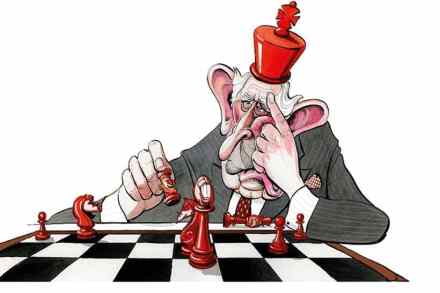
Prince Charles is playing with fire

Charles is a prince on a perilous path. It’s a well-trodden one that is proving more problematic the closer he gets to having a crown placed on his head. He has opinions, who doesn’t. He wants to share them, like the rest of us. His decades long predicament is that he occupies a privileged position which should limit his ability to hold forth. His once private – and not denied – belief that the government’s plan to deport asylum seekers to Rwanda is ‘appalling’ is not the consensus view. A man teetering on the edge of inheriting a unifying role as Head of the Nation has entered a divisive debate very firmly on the side of Boris Johnson’s opponents.

My phone call with God

Got slightly wrecked over the bank holiday weekend and had hoped to kind of glide through the early part of the week without too much requirement for that bane of the columnist, research – looking stuff up, talking to people, etc. But I crawled downstairs on Tuesday, switched on the laptop and there was a message bearing the address s.fidelis@almighty.com: ‘Hey Rod, I might have something for you. Give me a call x.’ I hadn’t heard from Semp for three or four years, when he was a canny and ambitious junior press officer, helpful, disinclined to panic, never obsequious. Slightly grating Cardiff accent but other than that, a good sort. Now it seemed he was actually ‘Director of Communications’. For God.

Priti Patel is playing into Paul Kagame’s hands

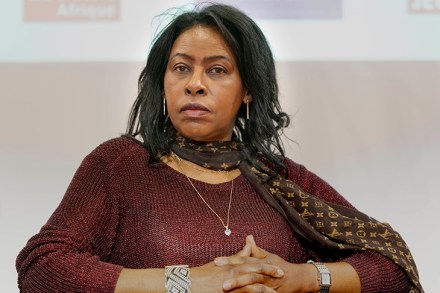
If President Paul Kagame has been tracking the furore over Priti Patel’s plan to send asylum seekers to Rwanda, he’s been doing it on the hoof. Kagame moves constantly these days: the news broke while he was en route to Barbados after a visit to Jamaica. In the past two months he has been to Congo-Brazzaville, Kenya (twice), Zambia, Germany (twice), Egypt, Jordan, Qatar, Mauritania, Senegal and Belgium. How the president of one of Africa’s poorest nations can afford all this travelling is a puzzle, and the fact that his Gulfstream jet is supplied by Crystal Ventures, his Rwandan Patriotic Front’s monopolistic investment arm, raises interesting budgetary questions.

What’s wrong with the Rwanda plan?

There are many unanswered questions about the government’s new policy of compelled expulsion to Rwanda of uninvited asylum claimants. Here are just a few. 1) What is the estimated cost per expelled refugee? None of the briefings give a clue. In its absence, how can the policy be assessed for its value for money, compared with the status quo? 2) What is the UK’s responsibility – moral, legal – if bad things (illness, accident, attack) happen to the expelled refugees after arrival in Rwanda? This would be a concern even if Rwanda did not have a recent history of trampling on civil liberties and basic human rights (see this report from the US state department).

The problem with Boris’s Rwanda solution

Is the Prime Minister’s plan to divert some asylum seekers to Rwanda racist? Is it inhumane? Is it a dead cat to distract from his fixed-penalty notice for breaching Covid rules? These are the questions fixating the political-media-activist class today and while they are not necessarily unimportant, they neglect a question that might be of more immediate concern to the average voter concerned about border integrity and abuse of the asylum system. Namely, will the Prime Minister’s plan work? To answer this, we must acknowledge its provenance in Australia’s policy of offshore processing, detention and turn backs, introduced in 2001 as John Howard’s Pacific Solution and reintroduced by Tony Abbott in 2013 as Operation Sovereign Borders.

When it comes to Africa, the media look away

Kenya We were flown around the country, hovering low over mobs using machetes to hack each other up Each time I sit in St Bride’s on Fleet Street during the memorial of another friend, I look around at the crowds they’ve been able to pull in and feel terribly envious. Riffling through the order of service and then the church’s book of correspondents to find the faces of old comrades, I’m like a man wondering if any guests will bother turning up to one’s own hastily arranged bring-a-bottle party. Our 1990s generation of Nairobi hacks has been severely depleted. While we survivors are not a distillation of complete bastards, it’s natural to feel many of the best have gone before us. Too many were killed young on the story.

The dictator of the dorm: Our Lady of the Nile, by Scholastique Mukasonga, reviewed

In the cloud-capped highlands of Rwanda, even the rain-makers sound like crashing snobs. When two teenage pupils from Our Lady of the Nile lycée slope off to consult the sorceress Nyamirongi about some boyfriend trouble, she sizes up their genealogies and comes over all Mitford duchess: ‘You’re not from very good families. But nowadays they say it no longer matters.’ Like so much in Scholastique Mukasonga’s novel, it’s a comic scene with a rumble of menace in the background — akin to the rainy season’s distant thunder in these lush, green hills. Where you belong — your people, your connections, your identity — has been a matter of life and death before. Soon it will be again.

English beef: France’s loathing of the ‘Anglo-Saxons’

To find out who your true friends and rivals really are, just gauge the reaction to news of your latest success story. It is revealing, for example, that many French officials have taken grave exception to the stunning speed and efficiency of our national vaccination programme. This became clear at the end of January, when President Emmanuel Macron defied medical opinion by unjustly claiming that the AstraZeneca jab was ‘quasi-ineffective’ for elderly people. His cynical tone, remarkable even by the frosty standards of the rest of the EU, was echoed by his Europe Minister, Clément Beaune, who stated that ‘the UK has taken a lot of risks in authorising Astra-Zeneca extremely quickly’.