Russia

Letters: The BBC licence fee is a protection racket

Russia’s star Sir: Wolfgang Münchau is surely right to highlight the risk posed to European peace and stability by Germany’s strategic myopia (‘In the pipeline’, 22 January). But he may be in error to assert that ‘Russia is in the ascendant’ — at least in terms of the fundamentals. Russia no longer makes it into the top ten of the world’s economies and is about to be overtaken by South Korea. Its poorly developed economy is unduly reliant on energy exports — a sort of Saudi Arabia with snow instead of sand. A state whose star is rising has every incentive to sit tight and allow that to continue — which is what China has been doing for years.

What did the Russians make of Francis Bacon?

The KGB might not have known much about modern art, but they knew what they liked. For instance, at what came to be called the ‘Bulldozer show’ of 15 September 1974, the Soviet secret service instructed a small militia of off-duty policemen to besiege an unofficial exhibition being staged by a group of underground artists in a field on the outskirts of Moscow. As James Birch recalls, KGB goons ‘attacked the show, using bulldozers and water cannons. Artists and onlookers were beaten up, some paintings were set on fire, other works were thrown into tipper lorries where mud was piled on top by diggers’. Surviving artworks were ‘driven off to be buried’ in an unknown location.

Don’t go to war with Russia over Ukraine

From our US edition

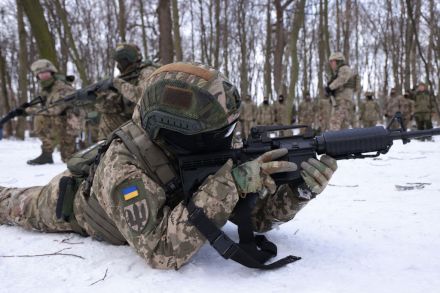
With shocking speed, talk in Washington has shifted from disunity among the Democrats and Joe Biden’s unhappy first year to possible war in Europe. The Putin government is reinforcing units poised to invade Ukraine. Washington is sending weapons to Kyiv. The United States and United Kingdom have begun to evacuate embassy personnel. President Biden is considering sending additional troops to garrison NATO member states. But for what? Why is the United States so thoroughly entangled in a conflict not its own? Not for reasons of history Throughout most of America’s relatively short existence, Ukraine was part of either the Russian Empire or Soviet Union.

ukraine

Russia may very well invade Ukraine

From our US edition

The United States is doing what it can to deter Russian President Vladimir Putin from ordering another invasion of Ukraine. Despite the cool and collected persona that Ukrainian President Volodymyr Zelensky is trying to present to his people, the White House still believes Russian military action is "imminent.” The Biden administration recently put 8,500 American troops on alert for deployment to Eastern Europe. Washington has spent the last several weeks trying to convince the Kremlin that any incursion into its neighbor would be costly. On Tuesday, the US sent a third shipment of lethal equipment to the Ukrainian military, including 300 additional Javelin anti-tank missiles. This comes on top of the 200,000 pounds of lethal aid that had already been provided by Washington.

Russia is the lost great power

From our US edition

Lost in the endless debate about whether Russia will invade Ukraine is the real reason that Moscow — armed with nuclear weapons and one of the most advanced militaries on the planet — feels so threatened by its neighbors, the NATO alliance, and ultimately the United States. While the expansion of NATO in the 1990s plays a big role, it is Russia’s everlasting internal debate about its place in the world that is the real source of tension. It's a historical black hole no one wants to get sucked into, but unless resolved it has the potential to be a source of armed conflict the likes of which Europe has not witnessed since World War II. Geography and history are both a blessing and a curse for Russia.

Will the old world order end in Ukraine?

From our US edition

As Russian troops encircling eastern Ukraine are preparing to attack, western leaders are bracing for a Russian invasion while struggling to maintain a united front. Following the fallout of peace negotiations and numerous deterrence measures that appear to be inconsequential, French President Emmanuel Macron has called on the EU to conduct its own dialogue with Russia and forge its own plan for security and stability. It’s an indication that most European nations are tired of being sidelined during negotiations and reluctant to impose harsh sanctions against Russia, especially since it could risk a gas shortage that would impact recovering European economies.

chinese meddling

The failure of hashtag diplomacy

From our US edition

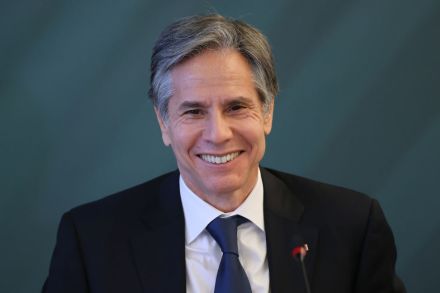
The adults are back in charge! The State Department and its secretary Antony Blinken are tweeting out Spotify playlists! Spokesman Ned Price is sending hashtags and emojis in support of Ukraine! Meanwhile, nonessential American personnel have been ordered to evacuate their posts in Kiev. But surely they'll find a good hashtag to use on their way to the helicopters and airports. In all seriousness, this is a dangerously unserious administration that appears to be attempting to TikTok their way out of a crisis. Here’s hoping Vladimir Putin is checking his Snapchat for updates from Jen Psaki and the Jonas Brothers. What the Biden administration is trying to do is to recreate the wonder of the Obama years and their way-too-online Millennial social media strategy.

What does Russia hope to achieve in Ukraine?

From our US edition

President Biden said this week that a “minor incursion” of Russian troops into Ukrainian territory would not bring about the severe economic sanctions the White House threatened in response to a “significant invasion.” His counterpart in the Kremlin can probably hardly believe his luck. Effectively, Vladimir Putin has been given carte blanche by the West to launch military operations against Ukraine. Of course, the fact that there is no definition of what constitutes a “minor incursion” gifts the White House a preemptive get-out clause from having to truly confront Moscow.

ukraine

Eastern Europe’s toxic relationship with Russia has left the EU divided

Joe Biden’s fatalistic statement this week that suggested a ‘minor incursion’ by Russia into Ukraine might be tolerated by the United States was only the latest indictment of the West’s failings when it comes to holding off Vladimir Putin. Less remarked on was Emmanuel Macron’s futile call in the European Parliament the same day for Europeans to ‘collectively make our own demands and put ourselves in a position to enforce them.’ The French President’s vision for the EU as a ‘power of the future’ hinges on member states holding a common position when it comes to international threats.

Can Putin ever be stopped?

From our US edition

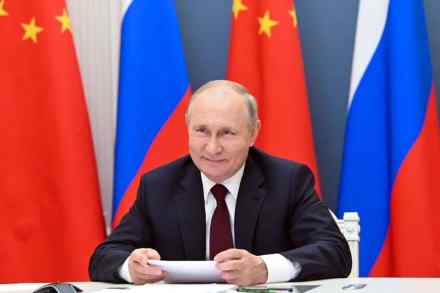
Vladimir Putin has been the most effective practitioner of Realpolitik for the past two decades. With an economy about the size of Italy’s, and just as corrupt, he has accomplished his most ambitious goal: returning Russia to the status of a Great Power. Now he’s thrown his chips on the table once more, launching a massive troop build-up on the border with Ukraine and sending still more into Belarus (for “joint exercises”), positioning them just north of Ukraine’s capital of Kyiv. Although the numbers don’t appear large enough to conquer all his neighbor’s territory, they are large enough to push through the eastern region (the one bordering Russia) and form a land bridge to Crimea, which Russia conquered in February 2014.

putin

In the pipeline: would Germany side with Russia in a conflict?

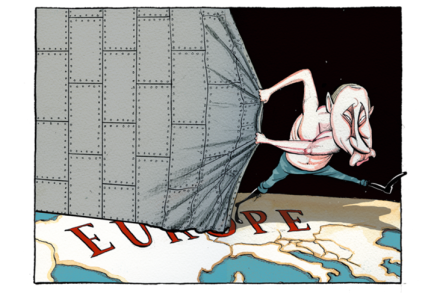
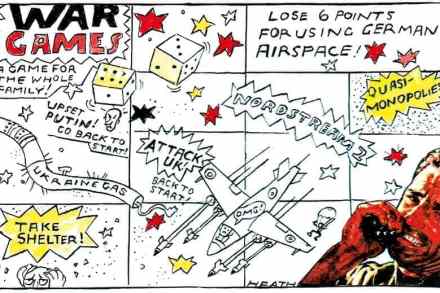
If Russia were to invade Ukraine, would Germany side with the Russians? For most of our post-war history, that would have been an absurd question, but things are changing fast in Europe. In the wake of recent events, it would not be irrational for Vladimir Putin to bet that if push came to shove, he could count on German neutrality — or even support. The Ukraine crisis continues apace, with up to 100,000 Russian troops now gathered near its border. The obvious question is: what would happen if Putin were to invade? It would split the EU, exposing its energy dependence on Russia, ruin what is left of transatlantic relations and force Germany to choose sides.

My new nickname for Putin

According to the new Chief of the Defence Staff, Admiral Sir Tony Radakin, the Russians wish to ‘put at risk and potentially exploit the world’s real information system, which is undersea cables that go all around the world’. Apparently, these carry 99 per cent of international communications. The cables which serve Britain are in the Atlantic, where Russian submarines are increasingly probing. This revelation resembles the plot of a book I loved as a child, The Pirates in the Deep Green Sea, by Eric Linklater, published in 1959. Timothy and Hew are two boys living, temporarily without their parents, on Popinsay, a Scottish island.

Haunted: the spectre of revolution is stalking Putin

A spectre is haunting the former Soviet Union — the spectre of people power. Every time it appears, Vladimir Putin leads an unholy alliance of all the reactionary autocrats of the former Soviet space to try to exorcise it. Last week, Putin sent 3,000 Russian paratroopers to Kazakhstan at the request of its president to crush a sudden revolution that left at least 160 protestors and 12 security officers dead. For the time being, it looks like Putin’s timely intervention — as well as an internet shutdown that paralysed protestors’ ability to coordinate — has successfully quelled the flames.

Portrait of the week: No. 10’s garden party, Djokovic’s visa row and France’s vaccine protests

Home Boris Johnson admitted to attending evening drinks for about 40 staff in the garden of 10 Downing Street on 20 May 2020, when lockdown regulations made social gatherings illegal. ‘We thought it would be nice to make the most of the lovely weather and have some socially distanced drinks in the No. 10 garden this evening,’ said an email from the Prime Minister’s principal private secretary, Martin Reynolds. ‘Please join us from 6 p.m. and bring your own booze!’ Mr Johnson said that he had been talking to Rishi Sunak, the Chancellor of the Exchequer, about how people could be helped with soaring energy bills.

Biden chickens out of Iran negotiations

From our US edition

We were promised a war of nerves in Vienna between Washington and Tehran, a game of chicken. Instead, President Biden has chickened out. He's also blaming Israel. Call it fowl play. Here's how it should be going. The United States wants Iran to re-commit to refreezing its nuclear program. Iran demands in exchange the revoking of the economic sanctions against it. Each side insists that it won't give up on its demands — even if that could lead to the collapse of the negotiations, the demise of the Joint Comprehensive Plan of Action (JCPOA) and eventually to a military confrontation. The diplomatic and military tensions between the United States and Russia over Ukraine involve just such an exercise in brinkmanship.

iran

America still won’t risk a war with Russia over Ukraine

From our US edition

Anybody who thought this week’s intense diplomacy between American, European, and Russian officials would magically resolve the ongoing crisis in Ukraine should lie down until the feeling passes. Crisis diplomacy isn’t a walk in the park; if anything, it’s a slow-moving car ride through rush-hour traffic, with plenty of speed bumps along the way. On Monday, January 10, Washington and Moscow met for a round of discussions in Vienna to sound each other out and present their list of seemingly endless grievances. After eight hours of talks, both delegations left the room with, coincidently, similar assessments as to how it all went.

Was the Kazakhstan uprising an attempted Jihadi takeover?

The Kazakh uprising is over. The stench of burnt-out vehicles and bombed out buildings in Kazakhstan’s most populous city and former capital, Almaty, has begun to dissipate. Life is returning to normal. Banks have reopened. Salaries and pensions are being paid. The internet is up and running again. Almaty airport is expected to reopen today. As the fog of war lifts some clarity about these events is beginning to emerge. Officials have reported that 100 businesses and banks were destroyed along with 400 vehicles. Seven policemen died and hundreds more were wounded; 8,000 people have been arrested. Some 164 civilians were killed. The government of President Kassym-Jomart Tokayev has survived and with some ease as it turns out.

Antony Blinken’s soundtrack to failure

From our US edition

Antony Blinken, the secretary of state and first guitarist, has broken with the tired protocols of the past, faced the complexities of the multipolar twenty-first century world, and issued a Spotify playlist. This may be a better way of reaching new audiences than bombing them. But shouldn’t public figures be judged on their records, not their record collections? “The thread that runs throughout my life is probably music,” Blinken told Rolling Stone last year as he meditated his mixtape. Hitler would probably have said the same about painting had Rolling Stone been around to profile the Viennese amateur who was turning the art world upside down.

Letters: Afghan interpreters deserve better from Britain

Welcome changes Sir: Lloyd Evans’s sympathetic piece on the fate of Afghans once they arrive in the UK made for sobering reading (‘New arrivals’, 18 December). In the Sulha Alliance we are endeavouring to support those Afghans and their families who served with and alongside British forces in Afghanistan. That is not the totality of Afghan migrants, but of the former interpreters and their families it can be truly said ‘they are here because we were there’ — and we owe them. I will not go over the whole sorry saga of the UK’s mistreatment of this group, but we really need a step change in how they are looked after.

The next chapter in American foreign policy

From our US edition

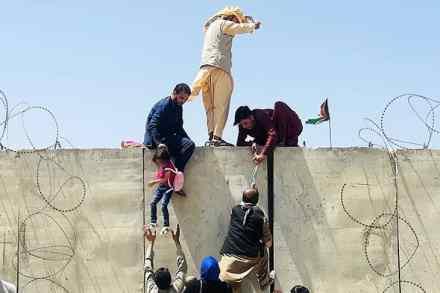
The new year begins a new chapter in American foreign policy. For the first time since 2001, we are not at war in Afghanistan. More than that, we no longer have an architectonic strategy for our role in world affairs. We had one during the Cold War: to win it. And we had one afterward, too: a decade before 9/11, our policy elite had already committed to the idea that we must police the world for the good of the liberal international order. The lead-up to the first Gulf War was the opening paragraph of that chapter, the ignominious retreat from Afghanistan its last line. Our policy mandarins have not changed their minds, but the world has changed too much for their grand design to have any meaning in 2022.

foreign policy