Russia

Why so many African leaders support Putin

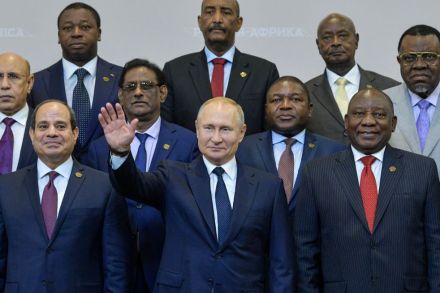
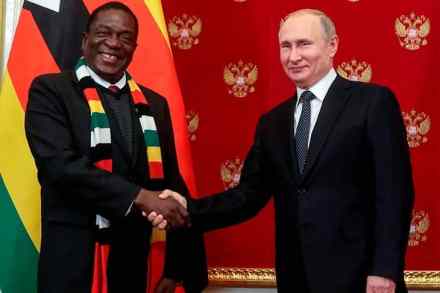
The Russian atrocities against civilians in Ukraine have been met with silence from Dar es Salaam, Harare and Juba. Not a word from Addis Ababa, Maputo or Khartoum. On Russia’s invasion of Ukraine the Ugandan President’s son, lieutenant general Muhoozi Kainerugaba, is clear: ‘Putin is absolutely right!’ Nearly half of Africa’s 54 nations refused to vote against Russia at the United Nations last month. Not only African governments but multitudes of Africans, even in countries that opposed Russia, such as Kenya, enthusiastically support Vladimir Putin. And the curious thing is that it’s the very countries that have historically received the most western aid that seem most in favour of him. In fact, they support him because he is the West’s enemy.
I can feel my heart hardening as the war goes on

Palm Sunday in Perugia. Umbrians were scuttling around with twigs and leaves, but I was in town to celebrate another faith. It was the annual International Journalism Festival, which hasn’t been ‘annual’ for the past two years due to Covid. Happy reunions were applauded with the sound of countless clinking glasses, but the mood was often mournful. In the first panel I was on, the moderator, Natalia Antelava, asked for a moment of silence for the 18 journalists already killed in Ukraine. Among them was Oksana Baulina, a former colleague of Natalia’s at Coda Story news platform, where I am also a contributing editor. Oksana was Russian.

Is this the birth of a Nordic Nato?

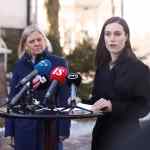
In the past six weeks, Finland and Sweden’s security policies have changed more than they have over the past six decades. In much of what they do, the two countries come as a couple and were militarily neutral during the Cold War – but their defence cooperation has only deepened since Russia’s invasion of Crimea in 2014. Now, the two are about to break with their long history of non-alignment. Their applications to join Nato are likely to come in the next two months. At a press conference in Stockholm this week, the prime ministers of the two countries – Sanna Marin and Magdalena Andersson – came close to admitting they want their countries to join the western military alliance. That declaration cannot be understated.

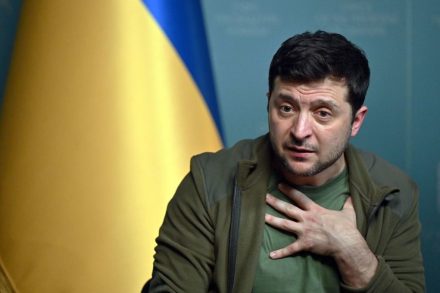
Zelensky has snubbed Germany’s President

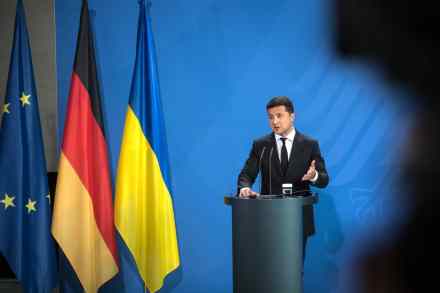
When Volodymyr Zelensky told the German President Frank-Walter Steinmeier yesterday that he did not want to see him in Kyiv, it hit his delegation like a slap in the face. The political class in Berlin still underestimates the depths of mistrust caused by Germany’s Russia policy. Whether trust with Eastern Europe can be rebuilt will depend on Berlin’s support for Ukraine – and certainly not on empty words, gestures and visits. Steinmeier had been on a state visit to Poland when Zelensky’s message reached him. He had travelled there in order to meet with President Andrzej Duda – in itself no easy encounter. Tensions between the two countries run higher than many in Germany realise.

Is Putin using chemical weapons in Ukraine?

In 1942, as Hitler’s forces swept through the Soviet Union, the Red Army went underground. Outside the city of Kerch in Crimea, 10,000 Russian, Belarusian and Ukrainian soldiers dug into the caves of a limestone quarry, ready to defend their position to the last man. Intent on flushing them out, the Nazis bombed them from the skies, flooded the complex and, according to testimony from survivors, pumped noxious gas into the tunnels. That siege, 80 years ago, would have been the last time that chemical weapons were used in combat in Europe. Until, perhaps, yesterday. Just over 100 miles north of Kerch, in the Ukrainian city of Mariupol, locals have reportedly complained of lung and ear problems after a drone dropped its payload overhead.

Putin’s imperialism in Africa

From our US edition

Last week, at roughly the time that photographs and stories began to filter out of liberated Bucha in Ukraine, the NGO Human Rights Watch published a report of similar massacres which took place contemporaneously in rural Mali. What linked the two was the identity of the perpetrators. In Ukraine and across Africa, these atrocities are committed by Russians. In combination with the Malian military junta, foreign soldiers "summarily executed an estimated 300 civilian men," in the town of Moura in late March. These soldiers did not speak French.

Russia is trying to destroy Ukraine’s energy sector

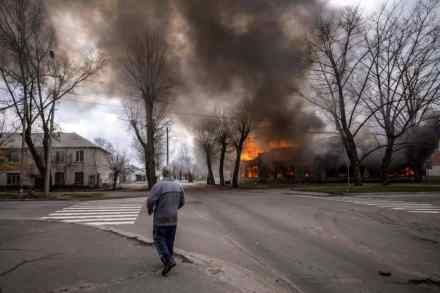
We are seven weeks into the war and the level of destruction in Ukraine is mounting. Every single day we learn more about Russia’s scorched earth tactics and about the atrocities its forces have committed in the areas they once occupied. But with another Russian surge in Ukraine’s east looming, one trend is not sufficiently understood in the West. Over the past weeks, Russian air and missile strikes have deliberately targeted and destroyed key components of Ukraine’s critical civilian infrastructure, especially in the energy sector, in a bid to make the country collapse. In late March the Pentagon estimated that Russia had fired over 1,200 precision guided missiles into Ukraine.

The Russian army is running out of options

So much had been written about the Russian armed forces’ modernisation and improvement over the last decade that that it was widely believed that the Russians possessed one of the largest and most powerful armies in the world until a few weeks ago. The army might not be on par with the US or China, but it was certainly capable of conquering a military minnow like Ukraine – or so the logic went. The six weeks of war in Ukraine – which have seen Russian forces fail to take Kyiv and fall back elsewhere – has dented the army’s reputation. And now it seems that the Russian military may be running out of options in the rest of the country too.

Boris and Scholz parade the new Europe

Russia's invasion of Ukraine has changed Europe forever. That was the argument that Boris Johnson made on Friday when he held a joint press conference with German Chancellor Olaf Scholz. One of the changes Johnson was keen to emphasise was that European leaders are united in their support of Ukraine and against Putin. This, he argued, was one of the ways in which the Russian President had failed: he had sought to create divisions in Europe, but had 'demonstrably failed'. 'The Europe we knew just six weeks ago no longer exists: Putin's invasion strikes at the very foundations of the security of our continent,' he said, adding: 'Putin has steeled our resolve, sharpened our focus, and he has forced Europe to begin to rearm to guarantee our shared security.

Russia ‘realists’ have very little to say about evil

‘Every way of a man is right in his own eyes’, the Book of Proverbs says: it makes us feel good to know we’re on the side of the angels. The corollary is that other men must be in the wrong, and therefore blameworthy, and this shores up our self-regard still further. Of course, taken to extremes, the outcome is full-blown narcissism. But in certain schools of international relations, there’s a kind of especially vigorous anti-narcissism in fashion: the idea that when it comes to the sins of the world, ‘we’ in the west are almost always the guilty party (excepting those enlightened enough to perceive this truth). Ukraine is the latest conflict where self-flagellants flex a version of the argument.

The Kremlin’s clown prince

From our US edition

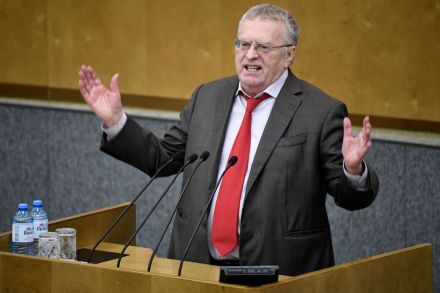
The beginning of the year has not gone as well as it could have for Vladimir Zhirinovsky. Mostly because he is now dead, but also because Zhirinovsky, a Russian politician of the “managed” (pro-Kremlin) opposition, predicted and vigorously supported Russia’s invasion of Ukraine. If Zhirinovsky were able to follow the campaign from his hospital bed, it could not have met his expectations. The imperial Russia of his imagination ought to have come into glorious existence, but its armed forces instead suffered reversal and humiliation. Zhirinovsky was the long-time leader of the Russian Liberal Democratic Party — a grouping that, as many wags have separately concluded, was under his leadership neither liberal nor democratic nor, in some lights, a party.

The view from Ukraine: world war three has already started

I saw the first Russian bombs land from my balcony in Chernivtsi. They hit a military depot 50 miles away but the vibrations were so strong it felt like it happened right by us. I’d attended an intelligence briefing from Volodymyr Zelensky’s office hours before to be updated on the situation: I’m the governor of Chernivtsi, the capital of the Oblast region. The President's office was keeping us abreast of plans for an invasion that many Ukrainians thought would never happen. Even now, it’s hard to take in. The horrific images from Bucha have finally alerted the world to Putin’s true tactics. We are living through daily air raids, rocket strikes, and even white phosphorus bombs.

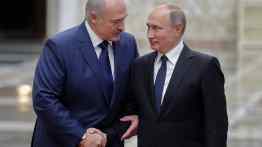
Europe’s last dictator: Lukashenko’s fate depends on Ukraine

A young man wearing combat fatigues and an extravagant moustache, and carrying a heavy machine-gun over his shoulder, nods towards some burned-out armoured vehicles. ‘We smashed the orcs today,’ he says, using the Ukrainian soldiers’ term for the invading Russians, a reference to the sub-human legion in Tolkien’s The Lord of the Rings. He goes on: ‘Putin, you are a dickhead – your Greater Russia will die together with you.’ The soldier – his uniform has a badge saying ‘Ivanov’ in Cyrillic – is not, in fact, Ukrainian. He is one of a small number of volunteers from Belarus, next door, a country that is certainly part of the Greater Russian project.

The Russians aren’t the first to rewrite history

Historians in Russia have a long and craven record, now going back centuries, of being economical with the truth about their current regime. The Roman historian Tacitus had a fascinating explanation for why such economy was also the case under the early Roman emperors. First, some background. Livy’s 142-book moral and romantic history of Rome stretched from earliest times to 9 bc, including the end of the republic in 27 bc when Augustus became emperor.

Portrait of the week: Covid fines, cancelled flights and sunflower oil shortages

Home Jonathan Reynolds, Labour’s business spokesman, said that the government should be preparing for energy rationing, but Grant Shapps, the Transport Secretary ruled it out. Kwasi Kwarteng, the Business Secretary, asked the British Geological Survey to reassess the effects of fracking, Essex police arrested 192 people from Just Stop Oil in a weekend of protest at oil refineries. By the end of March, 4,700 visas had been issued from 32,200 applications to sponsor accommodation for Ukrainian refugees; under the family visa scheme, 24,400 had been issued from 32,800 applications. Britain’s biggest bottler of sunflower oil had stocks for only three weeks left and said that food manufacturers were turning to rape.

Spies shouldn’t be political

Now that events in Ukraine are restoring a sense of proportion about the difference between aggressive autocracies and free countries, it seems almost incredible that, only last year, sporting teams etc were all but compelled to ‘take the knee’ in deference to Black Lives Matter. One official prominent in this obeisance (metaphorical not literal in his case) was Sir Stephen Lovegrove. As Permanent Secretary at the Ministry of Defence, he emailed staff in the wake of George Floyd’s murder in May 2020, using the BLM hashtag, and castigating the racism of his own department.

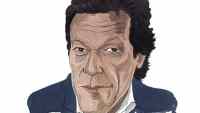
Can Imran Khan cling on to power in Pakistan?

In the brief interlude of Chechen independence between the Russia-Chechen Wars of the 1990s, I travelled with Imran Khan from Grozny to Baku, where we were due to meet Azerbaijan’s finance minister. We had different reasons for our visit. I was interested in the business potential of the countries of the Caucasus, while Khan, a former cricketer turned fledging politician who had recently formed the Pakistan Movement for Justice party (PTI), was keen to support the then independent Sufi Islamic state of Chechnya. To get to Baku we had to catch a plane from the neighbouring Russian republic of Dagestan. Our Chechen hosts told us that we did not need papers to get across the border.

Putin’s war is a disaster for Russia

Strasbourg Europhobes will never have a better argument against European integration than the seat of the European parliament in Strasbourg. It’s not just the €200 million per year it costs to move MEPs to and from Brussels once a month at great inconvenience to everyone; the building itself is a disgrace. It feels like a prison: identical glass corridors look out over a useless inner courtyard, so you can go on walks without the danger of escape. The former president of the European Commission José Manuel Barroso once suggested turning the building into the headquarters of the European Institute of Technology, which was an excellent offer both for the country and the city, but to no avail.

Don’t blame the West for its Ukraine hesitance

From our US edition

As Ukrainian President Volodymyr Zelensky addressed the UN Security Council today with all the anguish you would expect from a wartime commander-in-chief, he could nonetheless be relatively pleased about several things. Sure, Zelensky and his advisers are constantly making the point that Ukraine needs bigger and better weapons to resist Russia’s invasion, but the West has been quite responsive to Kyiv’s requests. The Biden administration’s latest weapons shipment, announced last week, adds to the $1.6 billion in military aid the US has sent to the Ukrainian military since the war broke out on February 24.