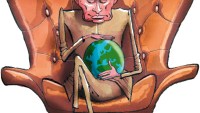
Putin

Putin rages against the “crusading” West

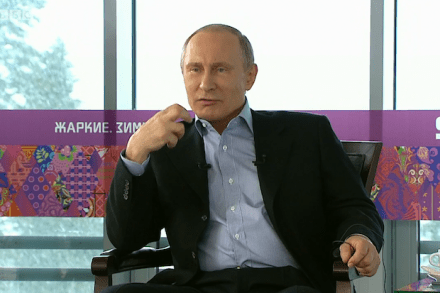
A gold star for Vladimir Putin, for providing us with one of the most extraordinary interventions of the day. While we knew that the Russian Prime Minister is opposed to military action in Libya — and also that he is no natural friend of the West — it is still striking to hear him talk as he does in the video above. "It reminds me," he says of the UN resolution at hand, "of the medieval call for a crusade." Ever the pacifist, he then goes on to rail against the "steady trend in US policy" to get involved in conflicts abroad. Meanwhile, our government is doing its part to assure Parliament, and the public, that their policy on Libya is more multilateral than medieval. Their note on the legal basis for action in Libya has just been published.

What to do about Belarus, Europe’s last dictatorship?

For a while it looked like the West had the upper hand. Belarus' Aleksandr Lukashenko, Europe's last dictator, seemed to be moving away from Russia and closer to the West. A succession of European ministers went to see him and returned to develop packages of support and assistance with his country. In that new "Great Game" played out on Europe's periphery it looked like Vladimir Putin's winning streak was finally coming to en end, after partial success in Georgia and outright victory in Ukraine. Or so European leaders hoped. But any hope of changing Belarus' position has now been dashed with the violent crackdown in Minsk against pro-democracy activists following December's presidential elections.

Vladimir Putin’s Eulalie Moment

You can be dictator of All the Russias or you can be the kind of fellow who sings Blueberry Hill. In public. But not both. That's the theory anyway. It's hard to believe this is real but, yes, it is. Which reminds me: Wodehouse is immensely popular in Russia. I'd have thought the old boy well-nigh on untranslatable but perhaps life in Russia runs to grimness so completely that novels offering music come as a welcome relief given the native scribes' fondness for delving deep into the mire without so much as even a cursory damn. Even Vladimir Brussilov admitted that Wodehouse, like Tolstoy, was "not bad". And he would know.