Putin

Spectator letters: Wind and bias, and the Scots at war

Caution over wind Sir: While the broadcast media have assailed their audiences with simplistic yet blanket coverage of the floods crisis, it behoves Christopher Booker to provide a long overdue critical perspective of the Environmental Agency (‘Sunk!’, 15 February). The two main tenets of his article have been ignored by most, if not all, other journalists. With something approaching delicious irony we are then treated in the same issue to a self-serving missive from the Renewables UK boxwallah Jennifer Weber (Letters, 15 February).

Podcast: Julie Burchill vs. Paris Lees, Putin’s plan to rule the world and Cameron’s love for Angela Merkel

What is intersectionality and why is it ruining feminism? On this week’s View from 22 podcast, Julie Burchill and Paris Lees debate the current state of feminism and whether intersectionality has been damaging to the left. How are the feminists of today different from those in the past? What does the treatment of Julie Bindel show about feminism infighting? And is there any chance of returning to a more traditional strand of socialism? Mary Wakefield and Freddy Gray also discuss Vladimir Putin’s new plan for world domination. What do the Sochi Winter Olympics tell us about Russia’s hard and soft power in the world today? Why are social conservatives looking to Putin as a voice against the tide of social liberalism from the west?

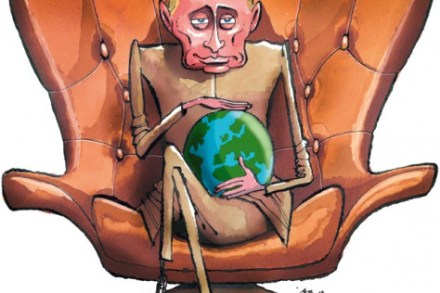
Vladimir Putin’s new plan for world domination

[audioplayer src="http://traffic.libsyn.com/spectator/Untitled_2_AAC_audio.mp3" title="Anne Applebaum and Matthew Parris discuss how far we should let Putin go"] Listen [/audioplayer]It’s been a generation or so since Russians were in the business of shaping the destiny of the world, and most of us have forgotten how good they used to be at it. For much of the last century Moscow fuelled — and often won — the West’s ideological and culture wars. In the 1930s, brilliant operatives like Willi Muenzenberg convinced ‘useful idiots’ to join anti-fascist organisations that were in reality fronts for the Soviet-backed Communist International.

Ian Buruma’s notebook: Teenagers discover Montaigne the blogger

Bard College in upstate New York, where I teach in the spring semester, is an interesting institution, once better known for sex, drugs and rock ’n’ roll than academic rigour. This has changed, thanks to Bard’s president, Leon Botstein, who conducts orchestras when he is not presiding. This semester, I am teaching a class in literary journalism. I asked my students to write a short essay about their favourite writer of non-fiction. This proved to be difficult for some, since they had no favourite writers of non-fiction; indeed they had never read any literary non-fiction at all for pleasure, certainly not at book length. But several did come up with a name: Michel de Montaigne. They really liked his essays.

Ukraine reinforces the case for a wider but shallower EU

With Ukip heading for possible victory in the European elections and anti-EU fervour growing across the continent, it is hard to imagine a country where people are so desperate to join the EU that they are prepared to take on water canon in order to make their point. But that country is Ukraine. The violence which has been brewing for weeks and which erupted yesterday has its source in many tensions in the country, but one issue defines the two sides: protesters who are looking westwards towards EU membership and a government which rejects this and looks eastwards towards Russia.

Why doesn’t Stephen Fry boycott the Saudis as well as the Russians? 

Call me sentimental, but I’ve never seen a better opening ceremony than the Sochi one, evoking Russia’s great past in literature and in many other things. The ballet sequence was tops, especially the acrobatics by the black-clad dancer portraying the cruel officer in War and Peace who seduced Natasha. All those hysterics about boycotts and terrorism, they were just hypocritical sensationalism by those PC jerks that seem to be running our lives nowadays. We westerners are averse to any discipline, impervious to duty, and disinclined to belong to a nation. We owe allegiance only to ourselves and love only ourselves. Not so over in Russia, where there’s a mystic connection between the nation and every single man and woman born there.

Putin: ‘Oi, Europe, you’re a bunch of poofs’

Sochi 2014 is the least wintry Winter Olympics ever. Yes, there’s a bit of downhill shimmying going on in the slalom. And a few figure skaters are pirouetting around the rink. Midair daredevils, with their feet lashed to planks of bendy plastic, are performing spectacular twirls and somersaults and crashes. And there are speed freaks on tea trays racing down ice-packed gulleys in tribute to the Hadron Collider. But the real action is off-piste and off-chute. It’s a political grudge match. Two implacable foes are angrily denouncing each other as shameful and perverted barbarians. The Hope Theatre’s verbatim drama, Sochi 2014, taps into this febrile mood with a documentary history of gay Russia since the collapse of the Soviet empire. At first all was rosy.

Enjoy the Winter Olympics but remember – and listen to – Pussy Riot as well.

And so to the winter Olympic Games which should not be hosted by Vladimir Putin's Russia. Sure, Putin's Russia is not nearly as horrific as Stalin's Russia but when that's the yardstick for decency you know you've bankrupted yourself. Was anyone taken in by Putin's decision to release a handful of political prisoners recently? Shame on them if they were gulled by such an obvious play. Again, it is better that the likes of Mikhail Khodorkhovsky and Pussy Riot's Maria Alyokhina and Nadezhda Tolokonnikova freed but they should never have been in prison in the first place. The upside, as so often in Russia, is heavily qualified.

Sochi Olympics: Why picking on gays has backfired so horribly for Vladimir Putin

After all the fuss, the billions spent, the calls for boycotts and so on, the Sochi Winter Olympics will begin next week. Given the incredibly low expectations, the Russian Games may even be judged a success — as long as the weather stays cold and no terrorist attack takes place. But Vladimir Putin should not be too smug, because his broader campaign against homosexuality has backfired spectacularly. The Russian President’s decision to sign a law prohibiting ‘the propaganda of nontraditional sexual relations to minors’ last summer probably made sense to him at the time.

Five reasons to be cheerful about British sport (yes, even the cricket)

James Cook’s third voyage as an English captain ended in disaster, stabbed to death and disembowelled by a pack of angry Hawaiians in 1779. The latest Captain Cook’s third tour since taking charge of the national cricket team has been just as successful, with Alastair’s England given the Hawaiian treatment by Australia. But don’t despair: for the British sports fan there are plenty of reasons to be cheerful. Try these: 1. Our women cricketers are thumping the Aussies, and it’s the women’s Ashes that matters, right? Just remind any passing Australian of that, and last summer’s Lions tour too, if you’ve got the time.

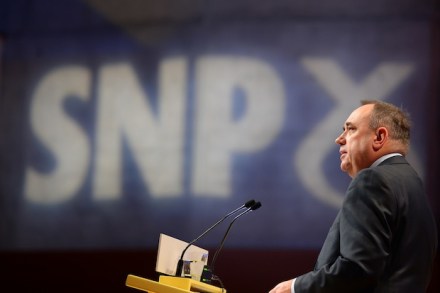
Putin’s strange intervention over Scottish independence

Is it useful to have Vladimir Putin on your side or not? One would have hoped anybody in the UK Government would have considered this question before, apparently, asking for the Russian President’s help in their battle with the Scottish nationalists over independence. Many people saw President Putin’s intervention in the Scottish independence debate on the Andrew Marr Show yesterday morning. Far fewer, however, are aware of the rather murky background to the exchange between Putin and Marr which seems to have preceded it. For the record, this is what the Russian President said in response to a question from Marr about Scottish independence: ‘It is not a matter for Russia, it is a domestic issue for the UK.

The Winter Olympics should never have been awarded to Vladimir Putin’s Russia

Last month's terrorist attacks in Volgograd were doubtless an attempt to warn foreigners off the Winter Olympics in Sochi next month. An attempt, too, to remind Vladimir Putin that his problems in the Caucasus - many of them at least partially made in Moscow - haven't gone away. For understandable reasons the bombs have caused plenty of folk to wonder about the security of athletes and visitors in Sochi. Those concerns are, plainly, real even if we may also, I think, expect the Russian state to erect several rings of steel around the Black Sea resort. The real concern, frankly, is that Russia was awarded the games in the first place. As I've written in today's Scotsman: The games should never have been sent to Russia in the first place.

Secrets of the Kremlin

A building bearing testimony to the power of eternal Russia; a timeless symbol of the Russian state; a monument to Russian sovereignty. To the modern eye, the Kremlin fortress seems as if it had always been there, as if it had never changed and never will. All of which is utter nonsense, as Catherine Merridale’s fascinating history reveals: the story of this famous compound is not one of continuity, but of construction, destruction and reconstruction. Every reincarnation of the Russian state over the centuries — and there have been many — has been accompanied by a corresponding reincarnation of the Kremlin. Its history is thus a metaphorical history of Russia, as Merridale understands very well.

No shame in protesting against pro-Putin conductor, Valery Gergiev

For a moment I thought someone had spiked my tea with LSD. With escalating levels of disbelief, I read Melanie McDonagh’s bizarre account of last Thursday’s protest at the Barbican against the pro-Putin Russian conductor Valery Gergiev. Then, as her article became ever-more divorced from reality, I wondered if perhaps she had been the victim of an acid prankster. Melanie is usually a fine writer. What prompted her to scribble such tosh? She lambasts the ‘barracking’ and ‘bullying’ of Gergiev, describing him as a ‘Russian composer’. Actually, he’s a conductor and he was nowhere in sight that evening. We were on the pavement outside, not in the ‘concert hall’. It was a small, good-natured, peaceful protest.

Peter Tatchell’s shameful treatment of Valery Gergiev, and others

Did anyone else feel a bat-squeak of embarrassment, a ‘Not in My Name’ sort of feeling, at the barracking of a Russian composer at the Barbican last night? The only bit of the catcalls from the 60 or 70 protesters I could make out was ‘Shame!’ but it was vicarious shame I felt at the bullying of Valery Gergiev who was presumably here to direct the LSO at their invitation and who probably expected a courteous reception for his take on Berlioz, not sustained and disruptive harassment from Peter Tatchell and his acolytes. It was bullying; no more acceptable for being self-righteous, self-congratulatory bullying, and it has no place in a concert hall.

Hugo Rifkind: Yes, I’m apathetic about politics. But isn’t Russell Brand?

Since I was a child, pretty much everybody I have ever met has asked me if I want to be a politician. The answer has always been no. Once, at university, I dimly remember giving this answer with so much vigour and conviction that I was escorted from the room, and the guy I’d given it to — an almost perfect stranger — came back to find me the next day, to apologise for asking in the first place. Even these days, the phrase ‘follow in your father’s footsteps’ drifting across the table at a dinner party can cause my wife to shoot me a warning look. My point here being, it’s never been ‘maybe’.

This diplomatic ‘triumph’ over Syrian WMD could be disastrous

The age-old question cui bono (who benefits) should be asked regarding Russia and the United States’ diplomatic agreement on the international control and subsequent destruction of Syria’s chemical weapons. Amidst the hopefulness and optimism, the answers to this question prove disturbing. We must remember that it might take a disaster even worse than 100,000 dead and the use of WMDs against civilians before this light touch regulation of crimes against humanity is shown to be immoral and flawed. Who benefits? The Syrian government’s response is indicative, with Ali Haider, who has the Kafkaesque title of Minister of National Reconciliation, claiming ‘a victory for Syria won thanks to our Russian friends’.

G20 summit gets small-minded with ‘small island’ gibe

What a nice host Vladimir Putin is. Shortly after world leaders gathered in his country for the G20 summit in St Petersburg, a briefing from the President's official spokesman that Britain is 'just a small island no-one pays any attention to' made its way into the media. Nothing like rubbing the nose of one of your guests in the dirt as politicians in this country work out where Britain now stands in the world after rejecting intervention in Syria (more on this in James's column this week).

Long life: Putin, Saatchi, Murdoch…hell hath no fury like an old man scorned

The days may be long gone when a husband would pretend to commit adultery in a Brighton hotel so as to clear his wife, whatever her faults, of any blame for a divorce. But might it not still be customary for him at least to present their separation as mutually and amicably agreed? Not so, apparently. For such gallantry has been strikingly absent from the three most publicised divorce suits of the summer, in which rich and powerful men have each acted unilaterally and without much regard to their spouses’ dignity. A month ago, Vladimir Putin appeared on Russian television with his wife, Lyudmila, to announce that their 30-year marriage was over.

Cameron wants to change the military balance in Syria, but how do you do that without arming the Islamists?

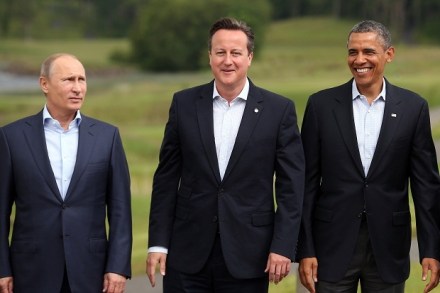
David Cameron and Vladimir Putin have just concluded their pre G8 talks, the main topic of which was Syria. Cameron wants to use the next few days to try and persuade the Russians to stop backing Assad; the weapons they’ve been sending him have enabled him to gain the upper hand on the rebels militarily. Cameron instinctively wants to do something about the slaughter in the Levant for both strategic and moral reasons. As one figure intimately involved in British policy making on Syria told me earlier, ‘The one certainty is that, if nothing is done, not only will lives be lost, not only will Assad not negotiate, but we will also not stop radicalisation.