Poland

How a Polish coal mine risks derailing the EU’s climate strategy

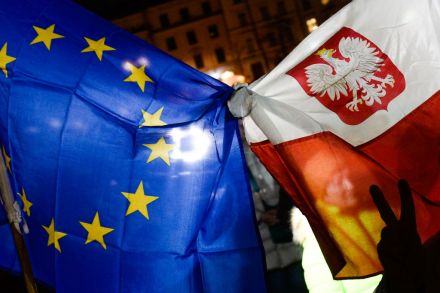
Cracks are appearing in the EU’s climate strategy. An international dispute over the court-ordered closure of a coal mine on the Poland-Czech Republic border has thrown divisions over how to phase out fossil fuels into sharp relief, leading to the first ever environment-related lawsuit between two EU member states. The Czech Republic has taken Poland to the European Court of Justice to oppose the extension of a licence for the Turów coal mine on Poland’s south-western border with the Czech Republic and Germany. The Czech government said that continued operations at the mine constitute a risk to the health of Czechs living nearby due to air pollution and reduced groundwater supplies.

Stalin as puppet master: how Uncle Joe manipulated the West

Of the two dictators who began the second world war as allied partners in crime but ended it in combat to the death, there is no doubt who has received more attention from historians and in the popular imagination. So much so, indeed, that the conflict is often labelled ‘Hitler’s War’. In this unashamedly revisionist account, the American academic historian Sean McMeekin asserts that we have been looking at the war through the wrong end of the telescope. The tyrant who, while not launching the conflict, took advantage of the circumstances that it presented at every turn, and certainly ended up by winning it, he says, was the man he constantly calls the Vozhd (the boss): Joseph Stalin.

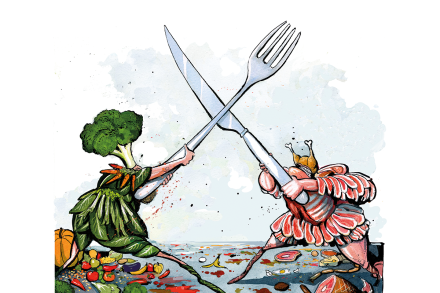
Can I be vegetarian and conservative?

From our US edition

My jar of vegan flaczki has been eyeing me for the last four months. It sits in my fridge, large, round and imposing, filled with a lumpy gray mixture. Flaczki is tripe soup, a traditional Polish concoction of broth, herbs, spices, vegetables and guts. Poles adore the stuff. It is warming and hearty. An unimpressed friend once described it as ‘elastic-band stew’. My vegan flaczki contains mushrooms instead of tripe. I bought it for a lark. My Polish friends thought it funny that a modern, progressive twist was being put on a firmly traditional dish. I am a vegetarian, but every time I think about eating my vegan flaczki, I think again. Traditional Polish food is warm, rich and meaty. Roulada, for example, is a meat roll stuffed with, among other things, more meat.

vegetarian

How does ‘taking the knee’ help Qatar’s World Cup slaves?

What was going through the minds of England players as they took the knee, yet again, prior to their victory over Poland in their 2022 World Cup qualifier at Wembley last week? George Floyd? Racism in sport? Nothing in particular?  We’ll never know. But it seems unlikely they were thinking too hard about the destination where, if their good form holds, they will be representing their country next winter: the tiny gulf state of Qatar. If they had, they might have spared a thought, and perhaps a gesture, for the 6,500 migrant workers estimated to have died since Qatar won the right to host next year’s tournament. The issue of migrant worker deaths in Qatar has been a running sore, which has become inflamed again as the qualifiers have got under way.

Poles apart: why the Polish community doesn’t want the vaccine

There is a joke going around Poland at the moment which encapsulates the national character perfectly. A German is told he has to have the Covid vaccine. He is uncertain. ‘It’s an order,’ the doctor says, and so he agrees. A British man is told the same. He wavers. ‘Do it for Queen and country,’ the doctor says. He agrees. A French man is told ‘It’s the fashionable thing to do’, and he agrees, too. Finally, a Pole has his turn. The doctor says: ‘You’re Polish, you definitely won’t take the vaccine.’ The Pole replies: ‘Don’t tell me what I think. Give me that vaccine!’ Anyone who knows Poles (I’m half Polish, so I do) will find it unsurprising that they are sceptical about the vaccine.

The EU is sliding into a United States of Europe

When a proposed constitution for the EU was mooted in 2005, many in the UK and elsewhere in the bloc smelt a rat. This looked like a bid to shoehorn national governments into a nascent United States of Europe. The French and the Dutch agreed: and being constitutionally guaranteed a referendum on the matter, both took the obvious step and voted the scheme down. No matter. As we now know, the proposal was re-packaged in almost the same form as a consolidation measure called the Lisbon Treaty. It is now part of the EU treaty system. The Cassandras were, of course, absolutely right. The EU was indeed playing a long federalist game. The point is nicely made by a decision of the EU’s Court of Justice this week.

Central Europe’s vaccine scepticism problem

Countries around the world are in a race against time to vaccinate their populations against Covid-19. But there is one particular region which appears to have a growing problem with vaccine scepticism: Central and Eastern Europe. As a British expat living in the Czech Republic, I have noticed the lack of eagerness with which many Czechs discuss the vaccine rollout. This may in part be due to the country’s floundering and much-criticised vaccination programme. But it is noticeable that anti-vaccine sentiment is more common – and gets much more attention – here than in the UK. Ex-President Václav Klaus recently told a large anti-lockdown rally in Prague that vaccines are not the solution to the virus.

The courts, the bishops and the troubling case of a dying man

It’s not every day a Polish bishop asks an English bishop to write to Matt Hancock to plead for the life of a Polish citizen living in England, but that’s what’s happened this week. Last year, Mr RS, as he’s known, had a heart attack, went to hospital in Plymouth and was given hydration and nutrition through tubes into his body. The hospital withdrew this support after a court ruling earlier this month. RS’s wife and children, living here, wanted the hydration and feeding stopped; his Polish mother and sisters wanted it maintained. The Court of Appeal has sided with his wife and children, while the European Court of Human Rights has refused applications by his Polish family to intervene.

How Poland is reinventing Euroscepticism after Brexit

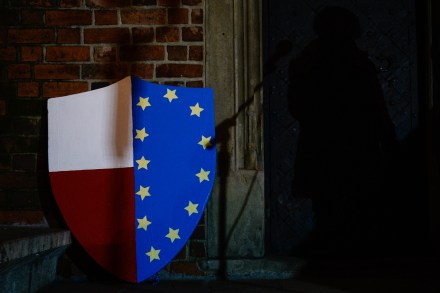
With Britain leaving the EU, Brussels is adopting a new assertiveness – but Poland and Hungary are fighting back. The two countries are plotting a strategy of vetoing the EU's latest budget because of a mechanism attached to it allowing the bloc to withhold money if a country falls short of its standards. Poland and Hungary fear that this measure could leave them vulnerable if Brussels doesn't like their domestic legislation. But this drama is about more than just money – it also shows the direction Euroscepticism is heading in after Brexit. Without Britain's influence, Euroscepticism is now beginning to take on a new form – more cultural, and less economic.

The Visegrád bloc are threatening to tear apart the EU

The bad boys of Europe are at it again. The EU has been attempting to tie budget funds to members states’ adherence to the rule of law. This has been rejected by Poland and Hungary, leading to the latest in a long line of conflicts between Brussels and the conservative Central European countries. But looking at the issue in a wider regional context, it becomes clear that this is not just another diplomatic spat, but part of a wider trend. The liberalism of the EU is now facing a serious ideological opposition from the entire ‘Visegrád Four’ bloc of Hungary, Poland, the Czech Republic, and Slovakia. The latest dispute over the rule of law mechanism could have been seen coming.

Poland’s All Saints’ Day traditions are at risk

The grave sweepers came early this year. When I visited one 18th century cemetery in Warsaw, half the tombstones had already been tidied and decked with pots of yellow chrysanthemums, well before All Saints’ Day. The other graves remained obscured by sodden piles of leaves. Many cemeteries may not see guests at all this year. Traditionally, on the first day of November millions of Poles travel to their family tombs for All Saints’ Day – some traversing the entire country to reach rural resting places in ancestral hometowns. When they arrive, they lay new plastic flowers, throwing away last year’s imitations, by now turned pale yellow and fluorescent green. In cities public transport routes are rewritten to shuttle crowds between urban burial grounds.

Trump should take lessons in lying from Joe Biden

Gstaad It snowed on the last two days of August up here, and why not? We’ve traded freedom of speech for freedom from speech, so on an upside-down planet, snow in the Alps in August is the new normal. The world is suddenly a grim place, a sick prank when you think about it. It’s a kamikaze fantasy with the bad guys winning and being cheered on by the left and the media. The virus is now a metaphor, religion having been cast aside by the global elite who follow only their interests and think of the rest of us as cannon fodder.

The two faces of Polish rebellion

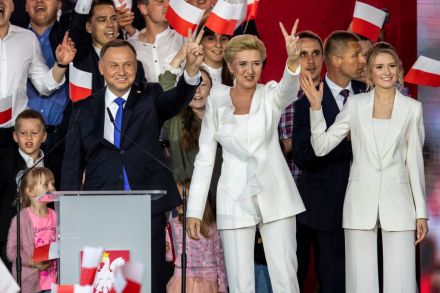
The narrowness of President Andrzej Duda's victory in this weekend's Polish presidential elections, where he defeated Rafał Trzaskowski, the Mayor of Warsaw, by less than 2 per cent, was God's gift to opinion commentators. What with Brexit, Trump et cetera we can write 800-1200 words about a nation being ‘divided’ and ‘polarised’ in our sleep. Why even write different pieces? Just shift the names around and you are golden. The problem with that kind of article is it often obscures national distinctions. In Poland, for example, President Duda's Law and Justice Party – unlike the Conservatives and the Republicans – is the more redistributionist of the two leading parties.

Waiting for corona in Poland

From our US edition

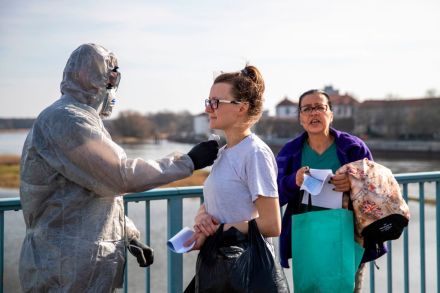
We are all improvising now. In front of the supermarket, at 6.30 a.m., we stood at a cautious distance from one another. Then the doors opened, and men and women rushed forward as one, in a habitual desire to be first inside the shop.Normalcy ended last Wednesday. My office closed its doors, like many others, with the optimistic hope of opening them again in two weeks. I had a beer with a friend in a quiet bar as my phone buzzed with news of closures and infections. I doubted there would be another pub night soon.It is a beautiful spring in Tarnowskie Góry, in the Upper Silesia region of Poland. Of course, few of us are in a position to enjoy it. All the bars, cafés and restaurants have been closed. No mass gatherings are allowed.

poland

Yalta was a carve-up — and the Poles are understandably still bitter about it

‘The strong do what they can. The weak suffer what they must.’ Thucydides’ principle expresses an uncomfortable truth. The eight-day meeting between Stalin, Roosevelt and Churchill at Yalta in the Crimea in February 1945 settled the fate of Eastern Europe and beyond. Its effects are still with us. President George W. Bush compared it with the way Britain, France and the Soviet Union sold out to Hitler before the war began: he called it ‘one of the greatest wrongs of history’. ‘Yalta’, like ‘Munich’, has become a synonym for the cynical betrayal of the weak by the strong. It is an oft-told, well-documented and controversial story. Diana Preston retells it fluently, perceptively and with meticulous scholarship.

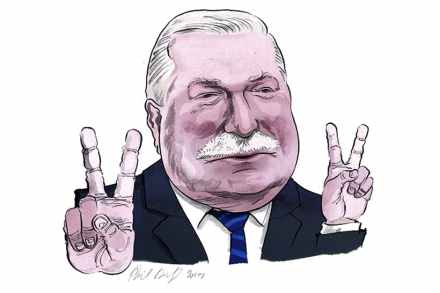
Hero or double agent? An encounter with Lech Walesa

Lech Walesa is probably the most famous of all the thousands — actually millions — who struggled against the oppression of Communist rule in Eastern Europe and the Soviet Union. The only person with a similar level of fame is Vaclav Havel in what was then Czechoslovakia. Walesa was the leader of the Solidarity trade union which, according to the legend, grew from ten members to ten million in a single year, fundamentally challenging the totalitarian rule of the Communist party. He was awarded the Nobel Peace Prize in 1983. He was imprisoned multiple times.

Whatever happened to glasnost and perestroika?

This is a timely book. It addresses the challenges of a fractious and fractured Europe. The first word of the title means ‘truth’ in Russian, and the author’s point is that we have collectively lost sight of that essential commodity. Rory MacLean, whose previous books include Stalin’s Nose, Under the Dragon and Falling for Icarus, retraces in reverse a journey he made 30 years ago. Starting in Moscow this time and ending in London, his aim is ‘to understand what had gone wrong’ since the heady optimism following the fall of both the Soviet Union and the Berlin Wall: ‘I wanted to learn how refugees, the dispossessed and cyberhackers had been used by nationalists.

Poles are in a quandary over Brexit

At first, Brexit was seen in Poland as a glorious but chaotic farce. As strange as it sounds, three long, grim years after the referendum, the whole thing seemed, to them, like a glorious chaotic farce. Most of them supported Poland's membership of the EU but the irreverent Nigel Farage was more relatable than a bunch of uptight bureaucrats; they could at least imagine having a beer with him. As reality sunk in, and the months ground by, these comical aspects paled. Poles are now as bored hearing about Brexit as many Brits. The national conservative Polish government has been in an interesting position when it comes to Brexit.

Letters | 25 July 2019

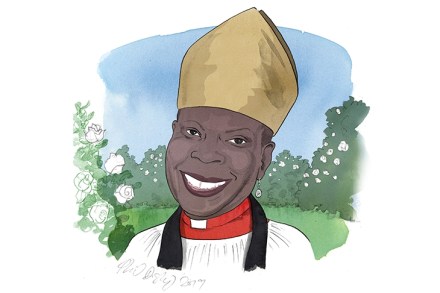
Rose is the right choice Sir: Every Wednesday for the past nine years, it has been my privilege to attend the lunchtime Eucharist services in the Parliamentary Chapel, conducted by the Speaker’s Chaplain Rose Hudson-Wilkin. These routine acts of worship are not public, but are attended by parliamentary staff, MPs and peers. Central to them are Rose’s homilies and prayers, which are spiritual life-support to those of us who serve and navigate our increasingly fraught politics.

The Spectator Podcast: the latest plot to oust Corbyn

When Labour moderates tried to oust Jeremy Corbyn in 2016, their attempt only made him stronger, protected by swathes of loyal members. But this year, is the tide turning for Corbyn, as even supporters begin to doubt him? First, there were the abysmal European Election results, which for many Corbynites were particularly painful because they disagree with the leadership's ambiguous stance on Brexit. Then, last week's BBC Panorama brought out a dark side to the leadership - the press team's defensive response to the programme, accusing whistleblowers of being 'disaffected', disheartened many most loyal to the project. One high profile Corbynite I spoke to told me that they were disappointed at the response, and believe the party was institutionally anti-Semitic.