Philosophy

Don’t let AI read philosophy for you

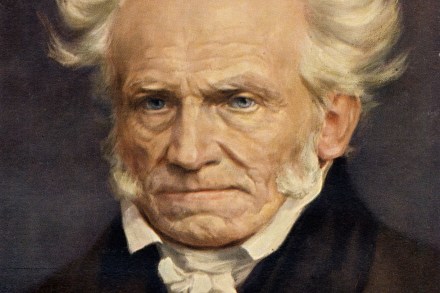
The German philosopher Arthur Schopenhauer (1788-1860) once wrote that "the man who feels himself drawn to philosophy must himself seek out its immortal teachers in the quiet sanctuary of their works." That’s easier said than done: philosophical classics have a terrible reputation outside ivory towers – as big, boring, difficult books, filled with obtuse theorizing about irrelevant problems, their covers featuring ghastly old men staring miserably out at the reader. Books about philosophy are hugely popular today, most of which repackage the thoughts of past thinkers for time-pressed readers – but I suspect not many people transition from these guides to the great works themselves, especially when AI can do all the hard reading for you.

philosophy

Christian nihilism is taking over American life

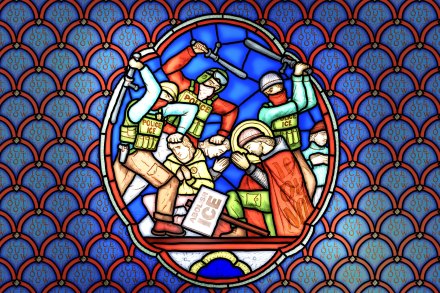
There’s something very religious about nihilism. For proof, look to the new capital of American nihilism, Minneapolis. A callousness toward death and danger has fallen over the city. Of the many disturbing videos to come out of Minnesota’s anti-ICE protests, one of the stranger examples shows a white man walking up to a line of heavily armed law-enforcement officers, shouting: “Shoot us in the fucking face! Shoot me in the fucking head!” What possesses someone to do that? I understand being against Donald Trump and Stephen Miller’s blitzkrieg deportation policy. And it’s not irrational, in the viral age, to protest theatrically. But this is psychotic. It is the death drive in overdrive.

christian nihilism

Reflections on the Winter Solstice

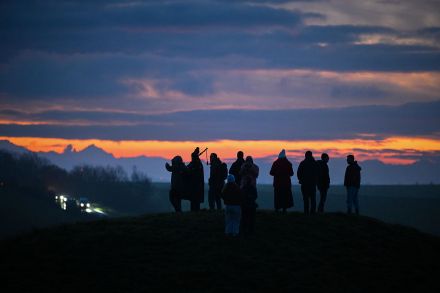
According to the handy timeanddate.com website, the Sun rose over our patch of Long Island Sound today at 7:18 this morning. It will set this afternoon at 4:28. From beginning to end, we will enjoy 9 hours, 12 minutes and 53 seconds of full daylight (not counting the prefatory and subsequent periods of twilight) in this bit of New England today. That may seem like a gyp. In high summer, we get more than 15 hours of daylight. But look on the bright side. Yesterday was the Winter Solstice, the shortest day of the year. We had just 9 hours, 12 minutes and 50 seconds of daylight. So you see today is fully three seconds longer than yesterday. Gutta cavat lapidem. I can’t quite see it yet, but today the Sun began its leisurely trek back north.

winter solstice

Camus comes to America

The 20th-century French writer Albert Camus remains a living author, a permanent contemporary, in a way that the far more dogmatic and ideological Jean-Paul Sartre does not. The latter provided a caricature of “existentialism,” nihilism dressed up as absolute freedom, beholden to no limits and no enduring truths. In contrast, the author of The Stranger and The Plague rejected Sartre’s facile nihilism, as well as his repellant accommodation with murderous messianism, typically conveyed in fashionable leftist nostrums. The more hopeful side of Camus comes through in his recently re-released Travels in the Americas: Notes and Impressions of a New World.

camus

We don’t live in an age of reason

When Tucker Carlson claimed to have been “physically mauled” by a demon in his sleep late last year, it was something of a bellwether: a sign that America’s cultural Right, now in the ascendancy, has persuaded itself to take a symbolic stand against the Enlightenment and the scientific worldview. Looking back on the 2010s and early 2020s, much of the American right now sees an era of secular hubris. The problems of the previous 15 years were put down to a naive faith in human reason; which was then confronted by dark and atavistic forces it couldn’t assimilate. The result had been all sorts of premodern terrors come again: plague, war, popular mania, social order overthrown.  The answer would have to be some sort of return of the spiritual.

reason

Living one’s best life

In our era of Twitter hot takes and Medium listicles promising to make you millions, I have a soft spot for life-wisdom books, meditations of the old school that you can spend quality time with even when the ideas presented in them are timeless. I’ve read with pleasure the popular life guidance books of the past decades, from The Happiness Hypothesis or Letters to a Young Contrarian to Zena Hitz’s quietly transformative Lost in Thought, and I felt a renewed connection with the ancient questions of existence in a modern retelling. It should be the habit of all widely read thinkers, whether coming from STEM, the humanities or the social sciences, to sit down and write an accessible recap for all of us of what they have found out.

wild problems

Government by the Very Online

Tucker Carlson has been telling us for months that American progressives are too online. In October, the Fox News host lit into Democrats for being more concerned with shattering the glass ceiling for transgender admirals than with addressing the supply chain crisis: “[Our leaders] do not care if the actual country, the physical country, comes apart at the seams, as long as the population dutifully repeats the correct slogans. Once you understand that, you understand why every day we get some frivolous new announcement about some social justice goal that in the end will not improve the life of a single American citizen.” Earlier this month, he played a clip of Jen Psaki laughing at the “alternate universe” Fox News creates for its viewers.

very online
china climate xi jinping thought

‘Xi Jinping Thought’ is taking over China’s classrooms

From last fall, in an extension of a personality cult not seen since Mao Zedong, “Xi Jinping Thought” is being incorporated into China’s national curriculum. School textbooks are emblazoned with Xi’s smiling face, together with heartwarming slogans telling readers as young as six that their leader is watching over them. “Grandpa Xi Jinping is very busy with work, but no matter how busy he is, he still joins in our activities and cares about our growth,” reads one. “Xi Jinping Thought” must be taught at all levels of education, from elementary school to graduate programs, and there is special emphasis on capturing the minds of the youngest children.

What Bernard-Henri Lévy sees for the West

I meet Bernard-Henri Lévy at his apartment in central Paris on a chilly autumn afternoon. Considerations of security prohibit me from revealing its location. A French Jew who is a public and vocal enemy of both Islamism and some of the world’s worst regimes, Lévy is both perhaps the most important public intellectual in Europe, and a man with enemies. I have come to ask him about the future of the West — if, that is, he feels there will be one. Lévy, internationally known by his initials BHL, is a philosopher who has been at the heart of French — and international — society for half a century. But he remains an idiosyncratic figure.

lévy

When child abuse was avant-garde

Last month the New Yorker published an essay about a grotesque experiment that took place in West Germany in the 1970s, in which young boys who had been taken from, or abandoned by, their parents were placed with known pedophiles. It was no accident. It was quite deliberate. The powerful sexologist Helmet Kentler believed that pedophilic guardianship would foster an open and unashamed attitude towards sex that would preclude the development of fascistic attitudes. As the New Yorker says: ’Kentler’s goal was to develop a child-rearing philosophy for a new kind of German man. Sexual liberation, he wrote, was the best way to “prevent another Auschwitz.”’ A sensible reader could guess what happened to the boys.

pedophilia child abuse

The monsters we become

Nietzsche would have been great at Twitter. He excelled at epigrams, which are to philosophy as the fortune-cookie motto is to Chinese takeout, and he loved to hate. Scholars divide as to whether his epigrammatic excellence came from using a typewriter — he was the earliest philosophical adopter of this technology — or because he was no good at joined-up thinking but very good at vituperating about the news. It was Nietzsche who spotted that the emerging theme of democratic society was not the reign of reason and universal brotherhood, but the ‘stupidification of the world’ and resentment. He called it ressentiment. Philosophy goes better in French, and Nietzsche had lately turned against Wagner, anti-Semitism and German nationalism.

Nietzsche

The truth about beauty

In the late 1940s, the German art historian Hans Sedlmayr observed that ‘many things that are classified as “back-ward”... might be the starting-point of real inner progress’. At a moment when the art establishment has abandoned art for political attitudinizing, the path forward begins with a movement of recuperation. In an age when anything can be a work of art, the question of whether something is art has ceased to be compelling: what matters is whether something is a good work of art, and about this the art world has rendered itself hors de combat. Should we be pleased with this state of affairs? Or, to put it another way, is the celebrity of people like Damien Hirst or Marina Abramović or the Chapman brothers a good thing for art?

beauty

Biden is wrong on Putin

I am no fan of Trump, but what Joe Biden said in a recent interview with George Stephanopoulos made me almost nostalgic for some aspects of the last presidency. When Biden was asked if he believes Putin to be a killer, he replied, 'I do.’ He also confirmed reports that in 2011, while serving as vice president, he personally told Putin that Putin does not 'have a soul’. Putin’s reply was quick and masterful: he wished Biden best health and inviting him to a public debate about big existential and ethical issues on Zoom. Biden’s strong words stand in sharp contrast to Trump who, in 2017, when the Fox News host Bill O’Reilly called Putin a 'killer’, suggested that America’s conduct was just as bad as that of the Russian president.

biden putin

Should we blame America?

Americans might be unaware, but a great deal of right-leaning discourse in Europe holds the United States responsible for the outbreak or inflammation of their culture wars. In France, Emmanuel Macron has spoken disparagingly of 'certain social science theories imported entirely from the US' which are 'based on a different history, which is not ours’. His education minister was more explicit, castigating an 'intellectual matrix coming from American universities...which wants to essentialize communities and identities’. In the UK, meanwhile, in a column mischievously titled 'It’s All America’s Fault’, the English commentator Ed West blamed the US for the spread of 'social justice’ trends across Britain.

macron europe blame

The reason of Jordan Peterson

If only Hamlet had known Jordan Peterson. To be or not to be, Dr Peterson believes, is indeed the burning question — but it’s a question that can be resolved decisively in favor of Being with a capital B. And he’s willing to walk any modern-day Hamlet who cares to listen through the math. This reasoned position in favor of existence is at the heart of Jordan Peterson’s latest book, Beyond Chaos: 12 More Rules for Life. It’s also, I’d argue, at the heart of his popular appeal. Sure, his undeniable charisma doesn’t hurt; and of course, he’s brilliant, well-read and articulate. But so are many other public intellectuals.

cultural marxism jordan peterson

The Enneagram: a remarkably efficient way to handle a room full of people

To paraphrase Tolstoy, all happy people are alike but every unhappy person is unhappy in one of exactly nine ways. Thus contends the Enneagram, a personality-typing system popular among millennial Christians and lifestyle bloggers. Bestselling books and popular social-media accounts clarify and affirm each of the Enneagram’s nine ‘types’. There are Enneagram coaches, consultants and devotionals, and podcasts ranging from the whimsical (Say Enneathing) to the vaguely mystical (The Wisdom of the Enneagram). The Enneagram is frivolous, self-indulgent and indefensible before science or theology. But I would say that: a Type 6 is skeptical. The truth is, I love the Enneagram.

enneagram

What will a Biden administration do? Ask Rousseau

There is an endless stream of commentary on what a Biden administration will do in foreign and domestic policy. Some writers seem prescient, others seem like gossip and speculation. However, you need not be a Beltway policy wonk to understand the moral, spiritual and ethical outlook of the Establishment elites who will be on Biden’s staff — and therefore to know what their policy prescriptions will entail.Classical political philosophy understood that all political problems are downstream from moral and spiritual problems. And, in the 18th century, Jean-Jacques Rousseau destroyed the West’s understanding of morality and spirituality, setting the stage for our current confusions.

rousseau

Francis Fukuyama does not read your tweets

Francis Fukuyama never reads the comments. He is a benign presence on social media, whether it’s on Twitter, or Instagram. Now I know why. Unlike many public thinkers, Fukuyama is not that interested in joining the digital fray. He reckons that a third of comments on his posts ‘are going to be stupid references to The End of History — “this is not the end of history, is it” — so I’ve avoided the temptation to get into fights.’ I’ve called Dr Fukuyama — permanently assured of a place in the history of ideas since his essay “The End of History?” appeared in 1989 — to talk about his hobbies. Great minds need to rest. Socrates enjoyed dancing. Diogenes was a keen sunbather. Immanuel Kant was a dedicated pipe smoker.

francis fukuyama
burke

Burke’s work

Edmund Burke wrote the authoritative Western defense of cultural traditionalism in modernity, Reflections on the Revolution in France. How could he also compose a tract called Thoughts and Details on Scarcity, in which the same writer provided steadfast support for Enlightenment, market-based principles that were perceived by contemporaries as a threat to settled social conventions?Burke’s opposition to state intervention in the domestic agricultural economy bursts through in his very first statement in Thoughts and Details. ‘Of all things, an indiscreet tampering with the trade of provisions is the most dangerous,’ he writes, ‘and it is always worst in the time when men are most disposed to it: that is, in the time of scarcity.

The truth according to social justice

We have reached a point in history where the ideas that sustain the liberalism and modernity at the heart of western civilization are at great risk. The precise nature of this threat is complicated. It arises from at least two overwhelming pressures, one revolutionary and the other reactionary, that are at war over which illiberal direction our societies should be dragged. Far-right populist movements claim to make a last desperate stand for liberalism and democracy against a rising tide of progressivism and globalism. They are increasingly turning toward leadership in dictators and strongmen who can maintain and preserve ‘western’ sovereignty and values.

social justice