Victor Sebestyen

Caught between Hitler and Bomber Command – the Berliners’ cruel predicament

From our UK edition

Can you be a true, thoroughgoing patriot and still want your country to lose in a war? It’s a dilemma that faced countless thoughtful people in the past century who lived under totalitarian regimes, and I know is torturing many Russians today. It’s the stark question at the centre of Ian Buruma’s subtly nuanced and beautifully written book about the lives of Berliners in the second world war as their city was being destroyed by a combination of aerial bombardment and the manic cruelty of their own leaders.

The rewards of being the ‘asylum capital of the world’

From our UK edition

They came on a small, crowded, leaky boat from Calais towards Dover in seas that could turn from placid to treacherous in an instant, around 30 people seeking sanctuary from persecution, unsure of the welcome they would receive. ‘We were seized by horrible vomitings and most of the party became so dreadfully ill they thought they were dying,’ one of the group, a young mother accompanied by her two children, wrote later. The year was 1620 and quite possibly among the refugees might have been a forebear of Nigel Farage. This small boat, one of many hundreds that crossed the Channel in the late 16th and early 17th centuries, was full of Huguenot asylum seekers fleeing Catholic France and the Lowlands.

The GDR was not the Stasiland of grey monotony we imagine

From our UK edition

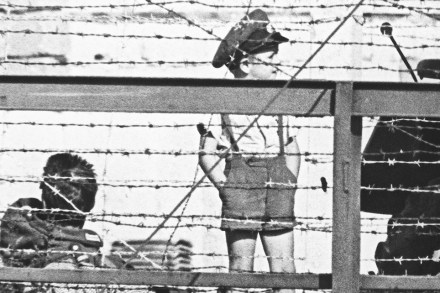
One of the great unsung heroes of modern times is Lt Colonel Harald Jäger, an East German border guard who was the commanding officer at the Bornholmer Strasse checkpoint in central Berlin on that wondrous night of 9 November 1989.  There are heart-rending stories of those who were shot ‘wall jumping’, the near-impossible method of escape By 10.30 p.m., 20,000 people had massed in a narrow street, demanding to be allowed into the West, on the other side of the Wall – though at that crossing point the border was just a pair of gates. The mood was extraordinarily tense as the crowd became angrier.  Whenever Jäger asked for instructions from his bosses in the Politburo or the higher brass in the army they panicked and told him to do nothing and wait.

Why is Ukraine honouring the monsters of the past?

From our UK edition

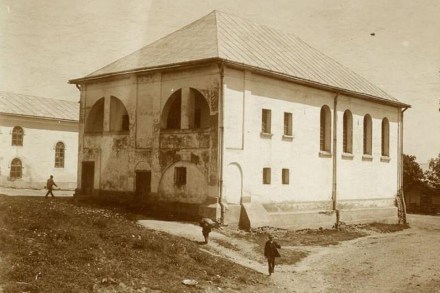
The historian Bernard Wasserstein is admired as a rigorous academic. In his monumental work on the Holocaust and his perceptive study of barbarism vs civilisation in the West, he strove for objectivity and maintained a professorial tone, as if writing of the past from an Olympian height. Wasserstein’s grandparents and aunt were forced to dig their own graves, and were then shot Not so in this extraordinarily moving book about Krakowiec, the shtetl 40 miles from Lviv where his forebears lived for generations, and the role his family played there. At various times part of Austria, Poland, Ukraine, Germany and Soviet Russia, it was, he says, ‘a small place you’ve never heard of’. Yet its complex history is relevant today, as war returns to Eastern Europe.

‘The strangest of lives’: the plight of White Russians in Paris

From our UK edition

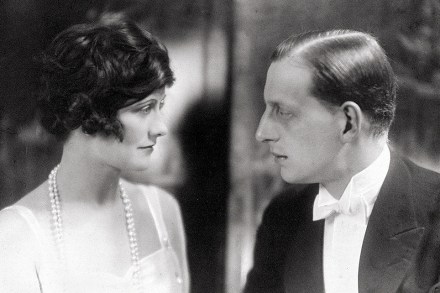
During the years between school and my first job on a newspaper I worked briefly in Paris in an antique shop in the septième, owned by an ancient White Russian who had fled Petrograd at the end of 1917. She was a charming old woman, impeccably turned out and with beautiful manners. She was prone to quote Pushkin, flirt with young men and burst into tears several times a day. She shed a few even when she fired me for the understandable reason that I failed to sell any stock and knew next to nothing about antiques. She claimed to be Countess Sonya X (she has living relatives), though I discovered much later that she had in fact been a countess’s maid and had somehow managed to get out of revolutionary Russia with some jewels, which she sold to establish herself in a business.

A brave new world – at gunpoint

From our UK edition

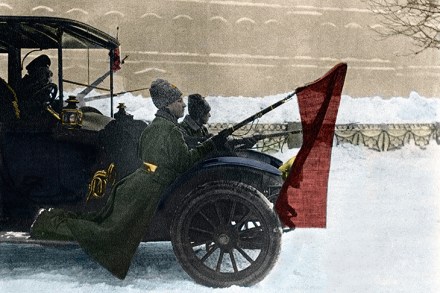
Of the many books published this year to mark the centenary of the Russian revolution, this is perhaps the most curious. China Miéville is best known as an imaginative and entertaining writer of ‘weird’ (his word) science fiction and magic realism. October is a narrative history of the two 1917 revolutions in Russia, written from an ultra-left perspective — with a novelist’s eye for a good story and colourful characters. So it’s an examination of why the communist experiment failed miserably — at the cost of much blood — that is also wonderfully well written: smart, witty and full of fresh insight. But it can also read like an A-level essay, regurgitated from textbooks. Weird indeed.

General Anders to the rescue

From our UK edition

Until Poland applied to join the EU in the 1990s, the biggest single influx of Poles into this country was in the immediate aftermath of the second world war. Around 200,000 Poles who had fought for the Allies chose to seek refuge here, rather than return to their homeland and face life under Stalin. Many of them had been members of the most curious of all the armies that took part in the conflict: the Polish Army of the Soviet Union and the Middle East, otherwise known as the Anders Army.

The brutal mask of anarchy

From our UK edition

In September 1939 Britain went to war against Germany, ostensibly in defence of Poland. One big secret that the British government didn’t know at the time — and not until much later — was that while the Anglo-Polish alliance treaty was being negotiated during the previous months, the Poles had been actively training and arming terrorists to kill British troops in the Middle East. I don’t normally believe in convoluted conspiracy theories, but this one happens to be true. In the 1930s the anti-Semitic government in Warsaw wanted rid of 3.5 million Polish Jews. Initially they tried to pack them off to Madagascar. But then the Poles hit on the idea of helping Jews create their own state in British-occupied Palestine.

What went so wrong for Vaclav Havel?

From our UK edition

The unforgettable moment a quarter of a century ago when the Berlin Wall came down was the most vivid drama in that dizzying year of revolutions in 1989 when the Soviet empire fell to its knees. But another event a month later and 250 miles away in Prague was equally poignant. As the playwright/philosopher Václav Havel was sworn in as president of Czechoslovakia and declared in one of the most moving speeches I have heard, ‘Citizens, your government has returned to you’, it was clear that if history hadn’t exactly come to an end, the world had changed utterly. In his own country Havel’s reputation has nosedived since those giddy days, though it flickered briefly after his death two years ago.

It’s not just Putin who misses the Soviet empire. President Bush did, too

From our UK edition

Vladimir Putin calls it ‘the greatest geopolitical disaster of the 20th century’, a viewpoint which explains much of his recent behaviour. Few others anywhere in the world, particularly people who live around Russia’s borders, would agree that the collapse of the Soviet Union was anything to lament. From Riga to Tbilisi and from Kiev to Tashkent, Christmas Day 1991, when Mikhail Gorbachev resigned as leader of the USSR and the Red Flag was lowered from the Kremlin, remains a day to celebrate. With nearly a quarter of a century’s hindsight it still seems astonishing that a great superpower and, with it, an entirely different way of looking at the world — Soviet-style communism — disappeared almost overnight and with practically no bloodshed.

A Pole’s view of the Czechs. Who cares? You will

From our UK edition

When this extraordinary book was about to come out in French four years ago its author was told by his editor that it was likely to fail miserably. As Mariusz Szczgieł explains, the doubts were reasonable. No one was sure if anybody in the west would be interested in what a Pole had to say about the Czechs: ‘A representative of one marginal nation writing about another marginal nation is unlikely to be a success.’ But in 2009 Gottland won the European Book Prize (a serious award; the late Tony Judt’s Postwar won it the previous year) and it has been well received throughout the continent.

Gavrilo Princip – history’s ultimate teenage tearaway

From our UK edition

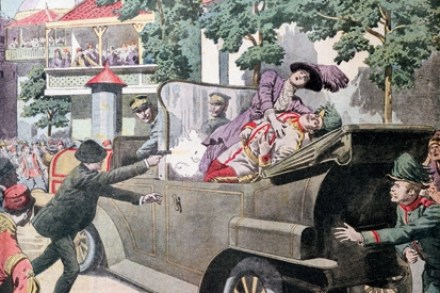
Amid the vast tonnage of recent books about the first world war this must be the most unusual — and one of the most interesting. The ‘Trigger’ of the title is Gavrilo Princip, the 19-year-old student dropout who shot the Habsburg Archduke Franz Ferdinand on a Sarajevo street corner on 28 June 1914 and began the chain of events that led to catastrophic war a few weeks later. At first it reads oddly, a curious ragbag of material that seems disconnected.

What price freedom?

From our UK edition

One of the best-known contacts for many Western reporters covering Poland and the Solidarity protests of the 1980s was Konstanty ‘Kostek’ Gebert. A fine journalist who usually wrote under the name Dawid Warszawski, he seemed to know everyone in Warsaw, liked to talk late into the night about ideas and gossip, wore his vast learning lightly and had an invaluable gift for putting complex issues into broad perspective. Gebert’s parents were Jewish migrants to the US in the 1920s. They were loyal members of the American Communist Party for years and returned to Poland in 1947 to build socialism from the ruins of the second world war. When Gebert, born in the Fifties, was old enough to think he knew he loathed communism.

City of the dead

From our UK edition

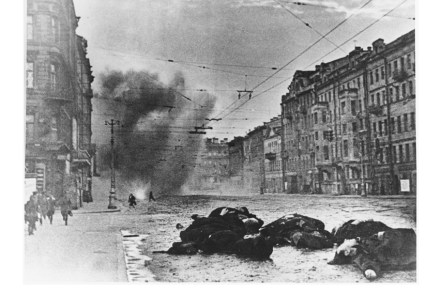
Russian officials today, much like the Soviet authorities of a past generation,  encourage a cult of the Great Patriotic War. In the national narrative, this was their Finest Hour, still invoked on significant anniversary days as an example of heroism and sacrifice by politicians such as Vladimir Putin. For Russians the most painful trauma in that conflict was the three-year-long siege of Leningrad. As Anna Reid points out in this  masterly and beautifully written account, the deadliest blockade of any city in history has received little attention in the West. Antony Beevor has been followed by a few historians who focused on the nightmare of the Eastern Front, where most of the fighting and dying against Nazism took place — Tim Snyder’s Bloodlands for example.

The missing millions

From our UK edition

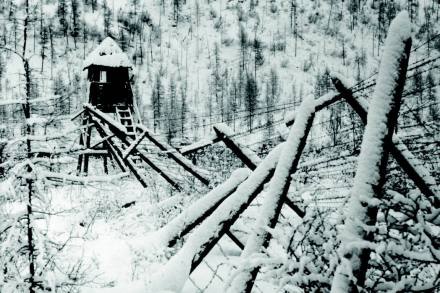
The collapse of the Soviet Union spawned an entire genre of literature: the Gulag memoir, produced by victims of the USSR’s concentration camps. A few masterpieces were published in the West, or in samizdat, before the 1980s, for example Evgenia Ginzburg’s renowned Into the Whirlwind and the works of Alexander Solzhenitsyn.But as Soviet-style communism fell apart, the long-suffering voices were allowed to speak, and in Russia an enormous number of first-person books and articles began appearing. In her brilliant 2004 Gulag, Anne Applebaum wrote the best history of the Soviet camps to appear outside of what was once referred to as the Eastern bloc. That was a monumental achievement.

Before and after the Fall

From our UK edition

No one here (I mean in Britain, not perhaps in the columns of The Spectator) likes to read anything nice about the Germans. So I shall warn you that there will be some praise for Germany in this review, mixed with the usual level of bashing. If the very thought of this shocks or appals you, I’ll do that rare thing for any journalist and suggest you turn the page and move on to something more comforting. In the last few weeks there has been one principal story told in several new books, most of the press and broadcast coverage, and even the material on the Tweets that have marked the 20th anniversary of the fall of the Berlin Wall. It is that after all the euphoria and the street parties of 9 November 1989, something has gone badly wrong with the re-marriage of the Germanys.

How many Russians does it take to change a lightbulb?

From our UK edition

In 1969, the Slovak writer Jan Kalina published 1001 Jokes, a collection of (mainly) anti-Communist stories which sold out within a couple of days. This was during the permafrost that descended on Czechoslovakia following the Russian suppression a year earlier of the Prague Spring. The ruling regime’s retribution was predictable. Listening devices were placed in his flat so the authorities could find out who passed the jokes on to him, and after a year of this surveillance Kalina was charged with slandering the state. He was jailed for a couple of years. During his trial the prosecution claimed, hilariously, that the bugging equipment in his home had been placed there by Western secret agents. ‘I never told that joke,’ Kalina said in response.

The revolutionary, the president, the playwright

From our UK edition

Victor Sebestyen reviews Václav Havel's new book A troika of heroic Slavic statesmen played the key roles in the last great drama of European history — the collapse of Soviet Communism. They were Mikhail Gorbachev, Lech Walesa and Václav Havel. All are still feted in Western capitals and can command high fees on the international lecture circuit. All are treated with disdain bordering on contempt in their own countries, where nowadays they can barely get themselves interviewed on local TV. Of the three, Havel, naturally, is the best able to write about how all political careers end in failure, however many magnificent and unexpected victories there may be along the way. Havel describes To the Castle and Back as ‘this strange little book of mine’.

The clash of the armoured megalosaurs

From our UK edition

‘If ‘justice were done’, writes Norman Davies in this fascinating and infuriating work, ‘all books on the second world war in Europe would devote perhaps three quarters of their contents to the Eastern Front.’ In the real world, of course, the victors dispense the justice and write the history afterwards. So it is gratifying that there is a scholar around with the skill and passion of Norman Davies to change perspectives about the war and shift the centre of gravity eastwards. Here, rather more than 75 per cent of the action takes place in East/Central Europe, where on a body count most of the lives were lost and on a misery index the greatest suffering took place.

An elegy for Yugoslavia

From our UK edition

The title of this charming book refers to the last summer the author spent in her native city of Belgrade in 1986, just before she married an Englishman and emigrated to London. Twenty-four-year-old Vesna Bjelogrlic, as she then was, picked berries in the hills near her home to make jam. Nearly two decades later, when she discovers she has breast cancer, she imagines that her illness had been caused by poisoned fruit. Ukrainian winds had borne fallout from the Chernobyl nuclear reactor to her favourite strawberry fields. As a medical diagnosis this may lack scientific rigour, but Goldsworthy could claim minor celebrity as a teenage poet and she makes the idea work effectively as a literary device.