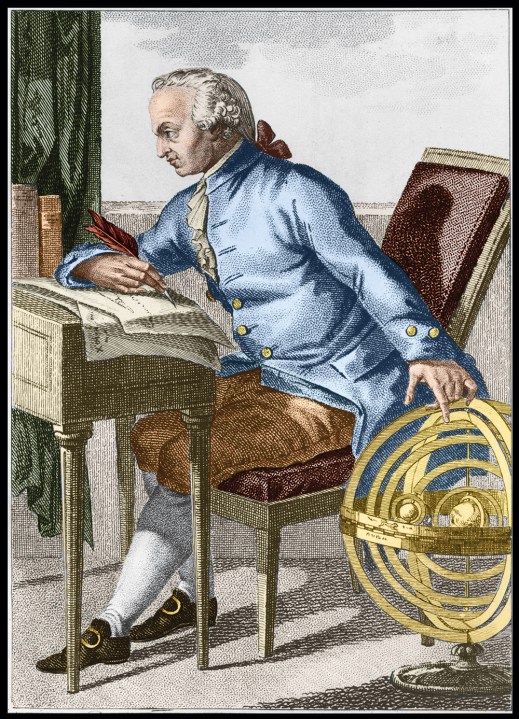
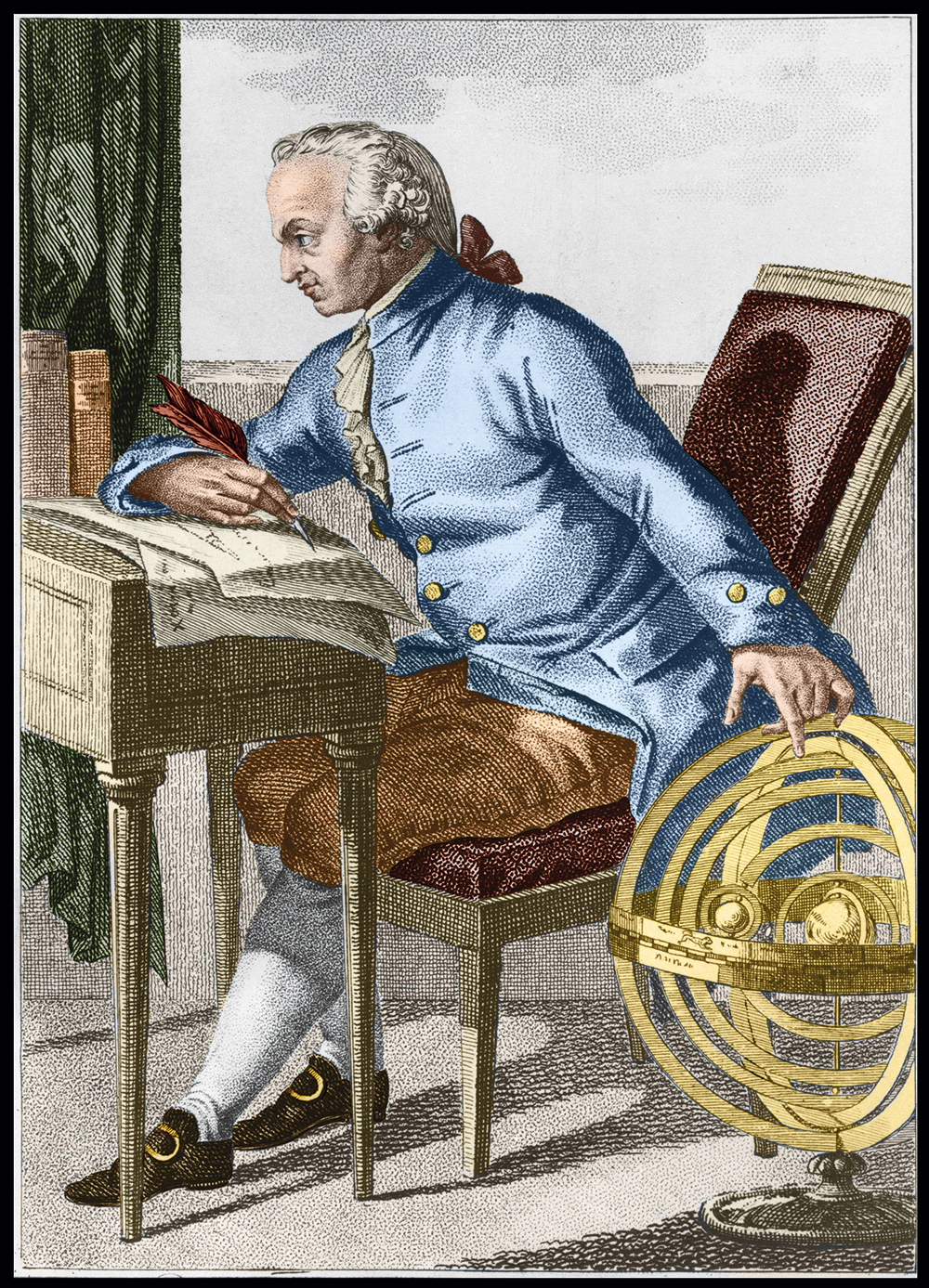
If the only story you’ve heard about Immanuel Kant’s life is that it was so regular that the citizens of Königsberg (now Kaliningrad) would set their watch by his daily walk, then this book has much to teach you.
In fact the provenance of this oft repeated anecdote is an essay by the German poet Heinrich Heine, who, far from being an eyewitness, had never even met Kant: ‘Everything had its set time, and the neighbours knew that it was exactly half past three when Immanuel Kant, in his grey frock coat, rattan cane in hand, emerged from his front door.’

The Kant that emerges from these pages is less dull and more recognisably human than his metronomic image. He played billiards, gambled and socialised with the great and good of Königsberg. He was ambitious and status-conscious. His interests extended way beyond philosophy, narrowly defined. He wrote about geography and anthropology, and after the devastating Lisbon earthquake of 1755 published three essays on the causes of earthquakes, now regarded as important contributions to early seismology.
Still, unfortunately for a biographer, it was hardly a life of picaresque adventure. Kant never strayed far from Königsberg and spent his entire career writing and teaching – mostly at the university. He was raised in a strict Lutheran household. More specifically – and Robert Wicks makes much of this – the family was from the Pietist reform movement, which emphasised Bible study and the prioritising of conscience over action. Kant always maintained that his philosophical framework was consistent with faith. Over the years he produced many books, some of the best-known in his fifties and sixties. His masterpiece, The Critique of Pure Reason (1781), in which he set out to describe the limits of human reason and to interrogate what we can know and what lies beyond knowledge, appeared when he was 57.
Outside work, his life was uneventful. There was a bit of female interest, but he remained a bachelor, a fact possibly connected to his attitude to the institution of marriage:
This is the age of the rule of women, but with little honour, because they degrade the man in his worth. They first make him vain, yielding and foolish, and after they have deprived him of the dignity of male honour, they have no obstacle. In all marriages, women rule…
Kant’s misogyny is eclipsed by his racism, which has been the focus of much recent scholarly attention, though he’s too embedded in the canon ever to be cancelled. In his works of moral philosophy, including The Critique of Practical Reason (1788), he made the case that humans differed from other animals in being rational and possessing moral autonomy. All humans are worthy of respect and should be treated as ends in themselves. They should never be used merely as means to an end. These are ideas that have helped underpin today’s conception of universal human rights. Odd, then, that we find in Kant statements such as: ‘Humanity has its highest degree of perfection in the white race. The yellow Indians have a somewhat lesser talent. The Negroes are much lower; and lowest of all is part of the American races.’
Kant thought one should even tell the truth to a murderer, if asked about the whereabouts of his would-be victim
There’s no shortage of anti-Semitism, too: ‘The great majority of [Jews] have earned the not unfounded reputation of being cheaters, due to their spirit of usury.’ Plus: ‘Jews lie and deceive without it troubling their conscience.’
Wicks makes a spirited case for his subject. He points out that this tension between theory and practice (aka hypocrisy) was hardly new. Kant was writing as the founders of the Constitution of the United States were declaring that all men are created equal in a society in which slavery was widely practised. As for the anti-Semitism, Kant ‘found the supposed permission to lie stated in the Judaic scriptures to be morally intolerable, and accordingly condemned the Jews as a group’. He took lying extremely seriously. Notoriously, he thought one should even tell the truth to a murderer who asked for the whereabouts of his would-be victim. Even if Kant was guilty of ignorance, Wicks argues, his views were grounded in what he regarded as facts. They weren’t an irrational extrapolation from a dislike of any particular individual. Indeed, he had Jewish pals, such as the philosopher and theologian Moses Mendelssohn. Think of this as the some of my best friends…’ defence.
This book is a pleasant enough stroll through Kant’s life, his key ideas and his legacy. Although it comes in at only 190 pages, it could have been shorter still, for there are unnecessary digressions. As for Kant’s daily walk, it seems to have been part of a carefully planned fitness regime. And it paid off. He died at the ripe age of 79. By this time, he was celebrated across Europe, and Kantian memorabilia was in demand. Shortly after his death, his 30-year-old sleeping cap was flogged off for a high price.





Comments