Mark Nayler

Confessions of a former bullfighting enthusiast

From our UK edition

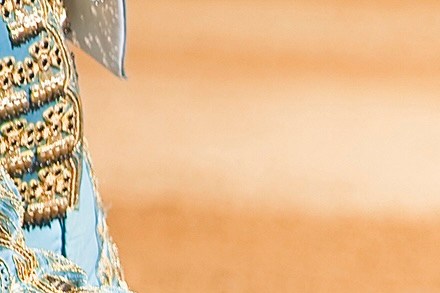
Bullfighting season in Spain began earlier this week at Seville’s huge annual fair, known as the Feria de Abril. A couple of days before the fair began, at a corrida de toros (‘running of bulls’, translated into English as ‘bullfight’) in the Andalusian capital’s beautiful 18th-century bullring, one of the country’s best-known bullfighters (toreros) was badly gored in the rectum. The reaction from anti-bullfighters, pouring out on social media and in comment threads, was entirely predictable: he deserved it.   This sort of hateful, knee-jerk reaction to bullfighting can be ignored as the ranting of morons.

Picasso’s Guernica has reopened old wounds in Spain

From our UK edition

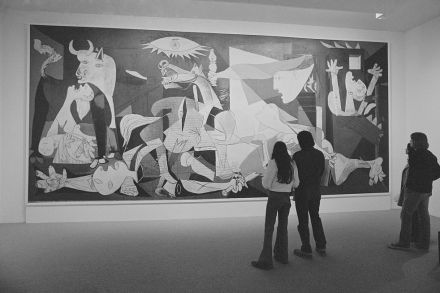
A row has erupted in Spain over what to do with Pablo Picasso’s 1937 Cubist masterpiece ‘Guernica’. Since 1992, this gigantic black-and-white painting – which depicts the bombing of the Basque town of Guernica in April 1937 by planes from Fascist Italy and Nazi Germany – has hung in Madrid’s Reina Sofía Museum. The Basque government has now requested that it be transferred to Bilbao’s Guggenheim Museum from October this year to June 2027, to mark the 90th anniversary of Guernica’s destruction. It’s often said in Spain that you need only scratch the surface to uncover Civil War-era grievances: the Guernica dispute shows how true this is The resulting dispute has quickly turned political.

How the paralysed Franz Rosenzweig continued to translate the Bible

From our UK edition

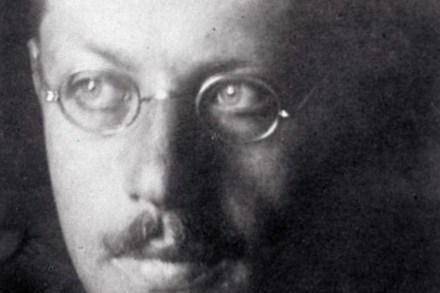
In the early years of the 20th century, a young philosopher named Franz Rosenzweig (1886-1929) set himself the task of revitalising German Jewry – of bringing German Jews in from what he saw as the periphery of assimilation to the centre of a living faith. He thus became one of the pioneers of a Renaissance in German Jewry that occurred during the turbulent years of the Weimar Republic (1919-33). This short, dense biography by Paul Mendes-Flohr, an expert on 19th- and 20th-century Jewish thinkers, who died in 2024, aged 83, also highlights Rosenzweig’s existentialism (which saw him break from the western philosophical tradition by elevating subjective experience over abstract theorising) and his influence as an educator.

Don’t let AI read philosophy for you

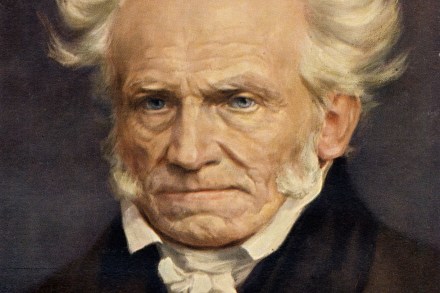
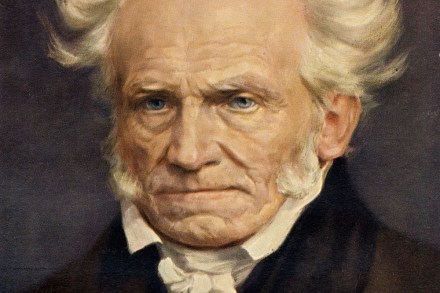
The German philosopher Arthur Schopenhauer (1788-1860) once wrote: ‘[T]he man who feels himself drawn to philosophy must himself seek out its immortal teachers in the quiet sanctuary of their works.’ That’s easier said than done: philosophical classics have a terrible reputation outside ivory towers – as big, boring, difficult books, filled with obtuse theorising about irrelevant problems, their covers featuring ghastly old men staring miserably out at the reader. Books about philosophy are hugely popular today, most of which repackage the thoughts of past thinkers for time-pressed readers – but I suspect not many people transition from these guides to the great works themselves, especially when AI can do all the hard reading for you.

Spanish border guards won’t make Gibraltar less British

From our UK edition

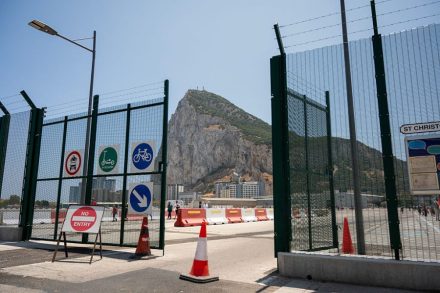
Almost a decade after Brexit, Gibraltar is entering a new era. As stipulated in a thousand-page treaty published on 26 February, which sets out the terms agreed by the UK and EU, Spanish guards will check the passports of travellers entering the Rock, as the British Overseas Territory (BOT) is known, and the 0.7-mile chain-link fence separating it from Spain will be dismantled. Though the treaty requires ratification by the European and British parliaments, it is expected to be provisionally in place from early next month. It is the long-awaited result of an agreement made last year between Spain, Gibraltar, the UK and the EU. According to Fabian Picardo, the Rock’s chief minister, it will remove 'the physical barriers of a bygone era of friction'.

What Spain’s social media ban gets wrong

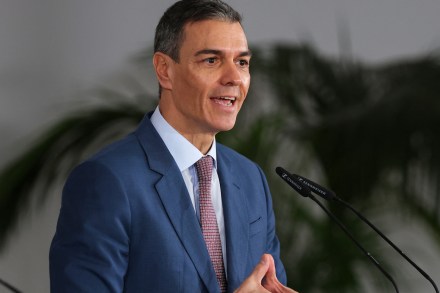
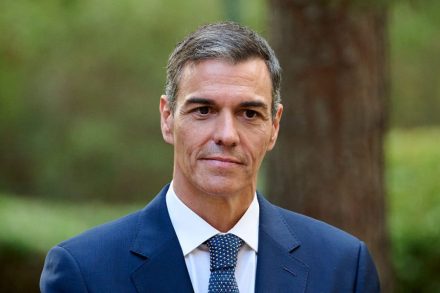
Spain’s Socialist prime minister Pedro Sánchez is proposing a ban on under-16s using social media, following the example set by Australia last year. Speaking at the World Government Summit in Dubai earlier this week, Sánchez said: ‘Today our children are exposed to a space they were never meant to navigate alone… We will protect [them] from the digital Wild West.’ The Spanish premier’s announcement comes at a time when several other European nations are also attempting to combat the harmful effects of social media on children. France’s ban on under-15s using social media is expected to become law later this year, while Greece, Portugal and Denmark have signalled their intention to enact similar legislation.

Can Karl Loxley make classical music cool?

From our UK edition

I’m backstage with classical crossover singer Karl Loxley and his pianist Tim Abel at Stratford-Upon-Avon’s Rother Street Arts House. The sound and lighting team are setting up in the empty theatre for what will be one of the final shows in Loxley’s ‘Songs of Christmas’ tour. Since 2015, when Loxley sung Puccini’s ‘Nessun Dorma’ on the TV talent show The Voice, he’s been on a mission to make classical music cool. I’m here to see exactly what that involves – and if he’s succeeding.  Loxley is charming, expansive and – at least when I interview him, a couple of hours before showtime – relaxed. Appearing on The Voice, he tells me, was ‘a very nerve-wracking experience. I don’t think I would have the nerve to do it now.

Philosophy’s greatest pessimist wasn’t so miserable after all

From our UK edition

According to the German philosopher Arthur Schopenhauer (1788-1860), people prefer reading books about great thinkers rather than by the thinkers themselves because ‘like is attracted to like and the shallow, tasteless gossip of a contemporary pinhead is more agreeable and convenient to them than the thoughts of great minds’. Thankfully, this contemptuous attitude towards biographers has not deterred David Bather Woods, a professor at Warwick University, from taking a fresh look at one of the most influential yet misunderstood figures in western philosophy. Woods’s prose is clear and compelling, though the book’s thematic structure is confusing. He argues that the defining event in Schopenhauer’s life was the suspected suicide of his father, Heinrich Floris.

Why piano competitions strike a controversial note

From our UK edition

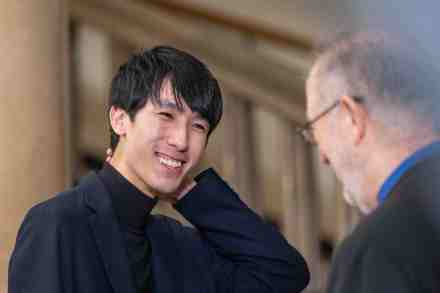
The USA’s Eric Lu has beaten more than 600 other pianists to win the 19th International Chopin Piano Competition. Held every five years in Warsaw around the anniversary of the Polish composer’s death on 17 October, this is one of several piano tournaments that often launch major careers, along with Moscow’s Tchaikovsky Competition, the Van Cliburn in Texas and the Leeds International. Unlike any of those, however, the Chopin competition requires contestants to perform the music of just one composer. Lu, 27, didn’t exactly need this win. He took first prize at the Leeds International in 2018 and has already released two records on the Warner Classics label. After his victory in Warsaw, he will take home a cash prize of €60,000 (£52,000).

Pedro Sanchez is compiling a blacklist of anti-abortion doctors

From our UK edition

Pedro Sánchez, Spain’s Socialist prime minister, has demanded that the regions of Aragon, Asturias, the Balearic Islands and Madrid – most of which are governed by the Conservative People’s party (PP) – compile lists of doctors who refuse to perform pregnancy terminations. Isabel Díaz Ayuso, the PP president of Madrid, has refused to publish what she calls a ‘blacklist’. The move is part of Sanchez’s plan to make abortion a constitutional right, following the example set by France last year. Abortion has been legal in Spain since 1985, and in 2010 the 12-week rule, which allowed women to receive pregnancy terminations without having to give a reason, was increased to 14 weeks.

Pedro Sanchez’s pro-Palestine obsession is damaging Spain

From our UK edition

'Today Spain shines as an example and as a source of pride. It’s [giving] an example to the international community by taking a step forward in defence of human rights.' So said Spain’s Socialist prime minister Pedro Sánchez on Sunday, in praise of the pro-Palestine mob that brought the Vuelta a España cycle race to a premature end in Madrid. Sanchez’s support for these disruptive protests came a week after his promise to 'consolidate in law' a ban on Spain purchasing Israeli military equipment, in reaction to what he calls Israel’s 'genocide' in Gaza.  Cyclists on the Vuelta still had several circuits of the Spanish capital to complete that afternoon, totalling around 60 kilometres.

Should we believe in the miracles of the first Gen-Z saint?

From our UK edition

Today, Pope Leo XIV will perform his first two canonisations, both of which were due to take place earlier this year but postponed after the death of Pope Francis. The recipients will be Pier Giorgio Frassati, an early twentieth century Catholic activist from Turin, and the 21st century’s first saint, Carlo Acutis – also known by the awful Gen-Z nickname of ‘God’s influencer’. The canonisation process – from death to beatification and eventually sainthood, which can take centuries – rests on miracle-attribution, an activity that is as fascinating as it is philosophically flawed. Carlo Acutis is also known by the awful Gen-Z nickname of ‘God’s influencer’ Acutis, a London-born Italian, was 15 years old when he died in 2006 from leukaemia.

All the fun of the feria: why August is the time to visit Málaga

From our UK edition

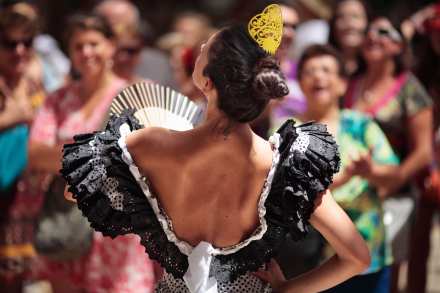
If I were a doctor specialising in alternative treatments, and someone came to me feeling depressed, I wouldn’t send them off with a herb-based elixir or a bunch of St John’s Wort. I wouldn’t cleanse their chakras or refer them to an acupuncturist. I’d send them off to Málaga’s annual fair, which this year runs from 16 to 23 August. Summer in Andalusia is feria season – the best cure that I know of for a bout of the blues. Usually lasting three or four days, or an entire week in the regional capitals, ferias are occasions of pure alegria (joy) and inclusivity.

Spain’s anti-Islam turn

From our UK edition

‘Spain is and will be forever the land of Christian people’. These are not, as you might think, the words of a marauding conquistador, but of a spokesperson for Spain’s right wing Vox party. They were posted on X this week, in response to a ban on Muslim religious celebrations in the southeastern town of Jumilla. It is the first prohibition of its kind in Spain. It was proposed by Jumilla’s Conservative administration and passed with Vox’s (surprising) abstention. It bans the use of municipal facilities such as sports halls for ‘religious, cultural or social activities alien to our identity unless organised by the local authority’. This senseless legislation means that the 7.

Keep Palestine out of Pamplona

From our UK edition

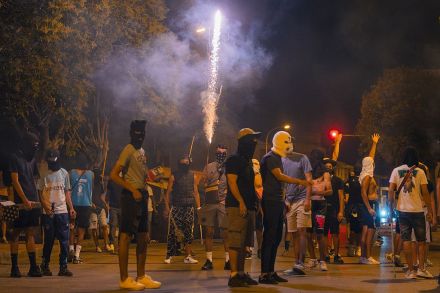
At this time of year, I’m usually immersed in Pamplona’s San Fermin festival, which burst into life on Sunday and runs until next Monday. The fiesta is famous for its daily bull runs through the narrow streets of the old town – an anarchic, life-affirming tradition in which I have participated six times. Unable to attend this year, I watched Sunday afternoon’s opening celebration on TV from southern Spain, feeling envious of each and every one of the 13,000 people present. But I was angered and saddened by what I saw. One of their members yelled: 'Stop genocide, free Palestine!' before lighting the rocket. Pamplona’s mayor chooses who lights the firework, or chupinazo, that officially launches San Fermin.

The problem with Pascal’s wager

From our UK edition

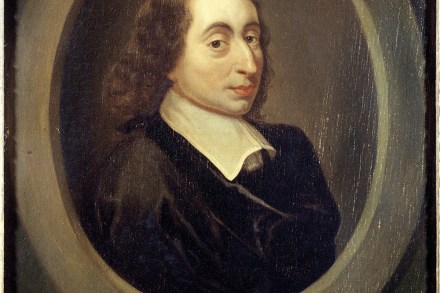
Blaise Pascal resists definition. During a short life (he died in 1662, aged 39) he invented the calculator, laid the foundations for probability theory and created the first public transport system. He was also an austere Catholic, whose call for a return to strict Augustinian doctrines put him outside the religious mainstream. As a philosopher, he is remembered today for his ‘wager’ argument – a challenge to atheists, framed as a cosmic gamble. As Graham Tomlin shows in this lively, conversational biography, Pascal worked in threes, often steering a course between extremes.

The mystery of Spain’s blackout

From our UK edition

Early yesterday afternoon, I walked home from my local supermarket empty-handed. In the Andalucian town of Antequera, the power and internet had just disappeared, card machines weren’t working and I had no cash. As I tried to remember what I had in the cupboards, I passed a woman on the street shouting up to someone on a balcony, ‘It’s all over Spain, France, Germany and Portugal’. Whatever she was talking about, I thought, it obviously had nothing to do with the power outage. It had been a windy night. A pylon had probably been brought down somewhere nearby.

Can you ever be fluent in a foreign language?

From our UK edition

A couple of weeks ago, at one of my local bars in Antequera, a waiter asked me something as he served our glasses of wine. I didn’t catch it, so I asked him to repeat what he’d said. After the third time, I still hadn’t understood and clearly wasn’t going to. This guy has a thick Andalusian accent and sprays out about a thousand syllables per minute, but we usually communicate without problems. Two Spanish girlfriends also taught me a lot, and that’s definitely the most fun way to learn a language There’s also a local character, we call him ‘Gummy’, who roams the streets asking for cigarettes or change. I never understand a word he says either, except for ‘eurito’ (a little euro) or ‘cigarillo’ (cigarette). In my defence, he has no teeth.

All Souls is the SAS of academia

From our UK edition

‘What sort of book might Satan write?’ ‘Why do people watch horror films?’ ‘Should we give up hope?’ These were three of the questions faced earlier this year by candidates seeking admission to All Souls College, Oxford, Britain’s most elite academic institution. Founded by the Archbishop of Canterbury, Henry Chichele, and King Henry VI in 1438, the college takes its name from All Souls’ Day on 2 November, the occasion on which Christians around the world pray for the faithful departed (in Mexico it’s called Día de Muertos, or the Day of the Dead).

Meet England’s octogenarian matador

From our UK edition

It’s a sunny October morning at a bull-breeding ranch north of Seville, and 82-year-old Frank Evans is preparing to step into the ring. Born in Salford, Evans is one of the few British men ever to become a professional bullfighter, or torero. There is something of the retired rock star about him. He is dressed in the traditional matador’s outfit of black trousers, white shirt and red-and-black waistcoat. Although a little frail, he is toned. His thinning hair is dyed brown but still reaches his shoulders. ‘There are a million people in the local cemetery who’d love to have my eye problem’ Evans and I are here for a tienta – a practice session in a private bullring, in which young cows and bulls are assessed for breeding.