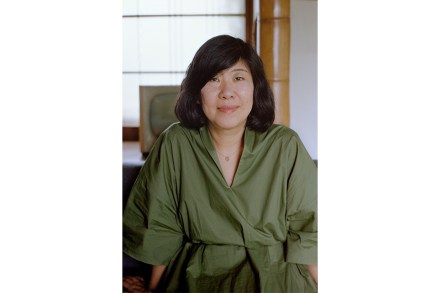
Suzi Feay

A foolproof way of predicting the future

From our UK edition

A peek at the horoscope, puzzling the meaning of dreams, wearing lucky socks, having a method for choosing lottery numbers – many otherwise rational people retain a vestigial interest in prediction to ensure favourable outcomes. I’ll happily admit to a fascination with Tarot cards – and I do seem to be an archetypal bossy Aries. Christopher Dell’s Prophecies demonstrates just how widespread a belief in divination has always been across cultures, however peculiar or unsavoury the methods. In ordering his vast material, Dell sets out some ‘categories of convenience which allow us to impose some structure on a naturally amorphous topic’.

Adventures in the City of Light: Rousseau’s Lost Children, by Gavin McCrea, reviewed

From our UK edition

What biographer would pass up a time-travelling opportunity to meet their subject face to face? This novel’s protagonist, Gavin Mulvany, an academic specialising in Jean-Jacques Rousseau, is somehow able to slip back in time to 1777, a year before the fractious French writer died. He turns from irritating fan to close companion, accompanying Jean-Jacques on long philosophical rambles and coach journeys around Paris. They attend the premiere of Voltaire’s last play (as does Marie Antoinette), call on Benjamin Franklin and visit the Marquis de Sade in a lunatic asylum. Gavin’s long-delayed book about Rousseau is concerned to solve the puzzle of why a passionate theorist on children’s education could dispatch his own five newborns to a foundling hospital, never to see them again.

The little imps who pretended to be poltergeists

From our UK edition

It comes as a surprise for anyone assuming that ghosthunters are easily fooled scaredy cats to learn that there was once a Society for Psychical Research based at Cambridge University. Undergraduate members would gather on Sunday evenings to hear the latest reports of investigations into supernatural phenomena. It sounds quaint; but to judge from Ben Machell’s account of the group’s charismatic leader Tony Cornell, there must have been many enthralling moments. Machell uses the figure of Cornell to prise open the SPR, founded in 1882 in London. Members included Arthur Balfour, William Gladstone and Arthur Conan Doyle. Cornell became a member after encountering a hermit in India when on active service during the second world war.

Why would your dead daughter climb out of her grave to harm you?

From our UK edition

Yarnton, Oxfordshire. A teenage girl is dumped face down in a pit, her legs bent and tethered. Around her lie the crania, jawbones and ribs of several children. Taken alone, this scene of 9th-century carnage puzzles as much as it horrifies. When placed in the wider context of a seemingly universal need to ensure that the dead stay in their graves, it’s highly suggestive. The subtitle of the medieval historian John Blair’s Killing the Dead is a tease, since vampire fiction is almost an afterthought. Folklore and imaginative literature are carefully separated from archaeological evidence.

The grooming of teenaged Linn Ullmann

From our UK edition

Girl, 1983, a fusion of novel and memoir, tantalises with what we already know of its author. Linn Ullmann is the daughter of the Norwegian actress Liv Ullmann and the much older Swedish film director Ingmar Bergman. Their relationship was probed in her previous work, Unquiet. Here the parents are more distant figures, as the adult Linn attempts to reconstruct her headstrong 16-year-old self and recover a disturbing interlude spent in Paris as a would-be model. In 2019, Ullmann is struggling to write when her younger self materialises like an imaginary friend with a message that demands to be heard. Ullmann has a daughter now, which makes the quest to understand the events of decades ago all the more urgent.

A gloom-laden tale: The Foot on the Crown, by Christopher Fowler reviewed

From our UK edition

Christopher Fowler was almost absurdly prolific, for much of his life combining fiction with a hectic job heading a film promotion company (he wrote the Alien tagline ‘In space no one can hear you scream’). His debut, the horror novel Roofworld, was inspired by the view from the top of his Soho office building. Soho Black took a satirical poke at the film world, while Spanky set a sexy demon loose in London. More novels, many collections of short stories and three memoirs followed. The millennium saw a switch to crime fiction, with Full Dark House, which introduced his elderly detective duo, Arthur Bryant and John May, of London’s Peculiar Crimes Unit.

The strange potency of cheap perfume

From our UK edition

Ah, the scents of one’s youth! What hot, sour teenage kisses and grinding youth club discos would be conjured up for me by one whiff of Aqua Manda or the original Charlie. Adelle Stripe has constructed a memoir around 18 key fragrances, one for each chapter of her life, but true perfume addicts may find ‘the juice’ somewhat lacking. It might just be scented scaffolding, but fortunately the story underneath is captivating. Dune, CK One and the rest do not trigger madeleine-like waves of memory for Stripe; neither is this a paean to the olfactory art. The perfumes crop up casually rather than crucially: her dairy farmer father’s ancient bottle of Brut; her hairdresser mother’s Rive Gauche; a friend’s cloying Angel, which ‘fills every corner of the room like tear gas’.

Out of the depths: Dante’s Purgatorio, by Philip Terry, reviewed

From our UK edition

Many readers of Dante get no further than the Inferno. The inscription over the gates of Hell, the demon-haunted circles, the howling winds that buffet the lovers Paolo and Francesca, even the poet’s grim profile and bonnet, are part of the world’s literary and artistic heritage. Several translators also stop at the point that the dazed poet and his guide Virgil emerge from the bowels of the Earth into the astonishing starlight. It’s no surprise that Inferno seizes the imagination, but it’s only a third of the story; and possibly for Dante himself just the part you have to plunge through before you get to the good bits. Philip Terry’s witty, transgressive canto-by-canto Dante’s Inferno came out in 2014.

An otherworldly London: The Great When, by Alan Moore, reviewed

From our UK edition

Is occult knowledge even possible in the age of the internet? If a recondite author obsessed you back in the day, it took hours of fossicking in far-flung dusty bookshops to feed your hunger. Oh, the joys of hunting down a shabby collection of Arthur Machen weirdiana! Now a few keystrokes will do the job. The magic has been lost. Magic is Alan Moore’s business, and he’s also a Machen devotee. The graphic novelist is well known for issuing his illustrators with exceptionally detailed written instructions for series such as The League of Extraordinary Gentlemen and From Hell, which perhaps accounts for the throbbing prose style of this fantasy novel.

The chameleonic life of Claire Clairmont

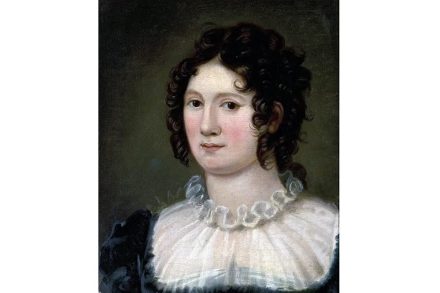
Commentary on the young Romantics can be curiously puritanical. Not on saintly John Keats, who died too young to cause any trouble. But Byron and Shelley? Beastly to women, negligent as parents, destructive as friends, oblivious to their own privilege. Feminist observers tend to resemble the English visitors to Geneva in 1816 who borrowed telescopes to spy on the renegade inhabitants of the Villa Diodati across the lake, hoping to be scandalized. A central character in the summer that saw the birth of Frankenstein was the only non-writer of the villa’s gathering, Byron’s young lover and Mary Shelley’s stepsister, Claire Clairmont.

Clairmont

Small mercies: Dead-End Memories, by Banana Yoshimoto, reviewed

From our UK edition

Tasty meals and epiphanies: that’s what Banana Yoshimoto mostly deals in. It’s no accident that her most famous book is entitled Kitchen. Sometimes the epiphanies come by way of the tasty meals; at other times they are triggered by effects of light playing over rivers, trees, landscapes, as if we had suddenly found ourselves inside a print by Hiroshige. And loneliness. She’s the supreme poet of solitude, and how it can grip even in the middle of one of the world’s busiest cities; even alongside a loving partner. And sudden death. But that’s making Yoshimoto’s graceful work sound far too depressing. There are always the epiphanies, and cake, and chicken with rice, but most of all the tiny kindnesses from other human beings that make life worth persevering with.

Mother of mysteries: Rosarita, by Anita Desai, reviewed

From our UK edition

There are other reasons beyond shortage of time (the acclaimed Indian novelist Anita Desai has just turned 87) to write a novella; the genre is as attractive and prestigious as it is fashionable. The deceptively slender format can briskly encompass whole worlds and histories, or alternatively, like the short story, depend on strict excisions and limitations for its effects. Rosarita does both. A young woman, Bonita, addressed as ‘you’ throughout, is taking time out from her Spanish-language studies and relaxing on a park bench in the historic centre of San Miguel de Allende, Mexico. Education has been her means of escape from the domineering family structure back in India that crushed her mother.

Visitants from the past: The Ministry of Time, by Kaliane Bradley, reviewed

From our UK edition

If you could resuscitate a hunk from history, who would you choose? The secretive Whitehall ministry in Kaliane Bradley’s striking debut is working on time travel, facilitating the removal of various Brits from their own era to (roughly) ours. The candidates were all due to die anyway, so the risk of altering history is minimal. Curiously, the boffins do not pick Lord Byron, but a naval officer on the doomed Franklin expedition to the Arctic, lost in the search for the Northwest Passage. Each time traveller is assigned a ‘bridge’ – someone to both monitor and help them adapt to 21st-century London. Lieutenant Graham Gore is paired with a young female civil servant of mixed white and Cambodian heritage.

The slave’s story: James, by Percival Everett, reviewed

From our UK edition

Rereading The Adventures of Huckle-berry Finn can be a saddening experience. It’s not just the oft-repeated n-word that jolts, then pains, then twinges; it’s the ‘no sah’, ‘I’s agwyne to’ locutions of Huck’s companion, the runaway slave Jim. In retelling the celebrated adventure story in Jim’s own voice, Percival Everett upends the convention. James and his fellow slaves can speak perfectly good English between themselves. It’s only when white folks are around that they perform blackness. Whether two slaves out of the earshot of whites would discuss if a situation represents ‘an example of proleptic irony or dramatic irony’ is another matter.

A free spirit: Clairmont, by Lesley McDowell, reviewed

From our UK edition

Commentary on the young Romantics can be curiously puritanical. Not on saintly John Keats, who died too young to cause any trouble. But Byron and Shelley? Beastly to women, negligent as parents, destructive as friends, oblivious to their own privilege. Feminist observers tend to resemble the English visitors to Geneva in 1816 who borrowed telescopes to spy on the renegade inhabitants of the Villa Diodati across the lake, hoping to be scandalised. A central character in the summer that saw the birth of Frankenstein was the only non-writer of the villa’s gathering, Byron’s young lover and Mary Shelley’s step-sister, Claire Clairmont.

Why were masters of the occult respected but witches burnt?

From our UK edition

It has long been acknowledged that alchemy, however bizarre its premises, is the fore-runner of modern chemistry, compelling a figure as rational as Sir Isaac Newton. Other aspects of Renaissance thought are harder to assimilate. In his study of five crucial figures of the 15th and 16th centuries, Anthony Grafton aims to demonstrate that astrology, angelology and conjuration were, if not central to the era’s world view, at least hard to extricate from its more respectable concerns. His first subject, Faust, is little more than a sideshow, but significant in establishing the magus as a not entirely respectable figure, from which ignominy Grafton seeks to rescue him.

Learned necromancers and lascivious witches: magic and misogyny through the ages

From our UK edition

Curses, conjurations, magic circles, incantations, abracadabra, gobbledygook... Why would any serious historian want to write a history of magic books?  Owen Davies issues a robust defence: magic is as old as human history, while a study of grimoires is a study of the book itself and its changing format over time. Through the lens of the grimoire (a book of magic spells and invocations), the parallel histories of religion and science are shown in an eerie new light. Perennial human desires, anxieties and aspirations for love, money and protection from harm bring people of the far past close to anyone today who reads a newspaper horoscope or consults the Tarot.

Making peace with a mother’s death – and life

From our UK edition

A fundamental question is posed midway through this narrative by Michael Portillo. Speaking in his guise as a colourfully dressed TV presenter rather than politician, he demands of Natasha Walter as the cameras roll: ‘What did your parents actually achieve?’ They are standing in a nuclear bunker, the site of her parents’ most audacious stunt, but the implication of futility resounds throughout the book, probed most rigorously by their daughter. Walter counts as royalty in left-wing activist circles, her parents, Nicolas and Ruth, having been foundational in the nuclear disarmament movement of the 1960s alongside many other progressive campaigns. Nicolas served time in prison and Ruth was arrested.

Fame came too late for Nick Drake

From our UK edition

A friend suggested I might bring a feminine twist to this review by imagining what it felt like to be Nick Drake’s mother. It was a startling thought. When I read artists’ biographies I tend to stand with them eye-to-eye, rather than conjure the perspective of an older generation. But the further we are distanced in time and age (the singer-songwriter died in 1974, aged 26), the more the picture morphs. Just as we’re supposed to grow out of liking Shelley (I never did) or learn to swap Mozart for Bach, our view of someone who was both an undoubted genius and the definition of callow inevitably matures.

Magic and espionage: The Warlock Effect, by Jeremy Dyson and Andy Nyman, reviewed

From our UK edition

When a shocking, plot-terminating event occurs almost halfway through The Warlock Effect, it’s not just the prospect of another 200 pages to go that alerts the reader to narrative trickery. The central character, Louis Warlock, is after all a stage illusionist who has already pulled off a seemingly impossible feat of mind-reading in front of a crowd of sceptics. Though Warlock likes to come across as a lone genius, behind his stunts lurks an invisible team of problem-crackers he dubs the Brains Trust. They include fellow magic- obsessive Dinah, a girlfriend he seems puzzlingly ambivalent about.