The German philosopher Arthur Schopenhauer (1788-1860) once wrote that “the man who feels himself drawn to philosophy must himself seek out its immortal teachers in the quiet sanctuary of their works.” That’s easier said than done: philosophical classics have a terrible reputation outside ivory towers – as big, boring, difficult books, filled with obtuse theorizing about irrelevant problems, their covers featuring ghastly old men staring miserably out at the reader. Books about philosophy are hugely popular today, most of which repackage the thoughts of past thinkers for time-pressed readers – but I suspect not many people transition from these guides to the great works themselves, especially when AI can do all the hard reading for you.

But Schopenhauer was right: to really get to know a philosopher, there’s no substitute for reading their books yourself. The rewards repay the effort several times over, as I have recently rediscovered. Last month, I finished reading Schopenhauer’s masterpiece The World as Will and Representation, in the classic 1958 English translation by E. F. J. Payne. With notebook and pen in hand, it took around 60 hours, spread over several months and 20 sessions. There were tough moments, of course, but overall it was one of the most exhilarating reading experiences of my life.
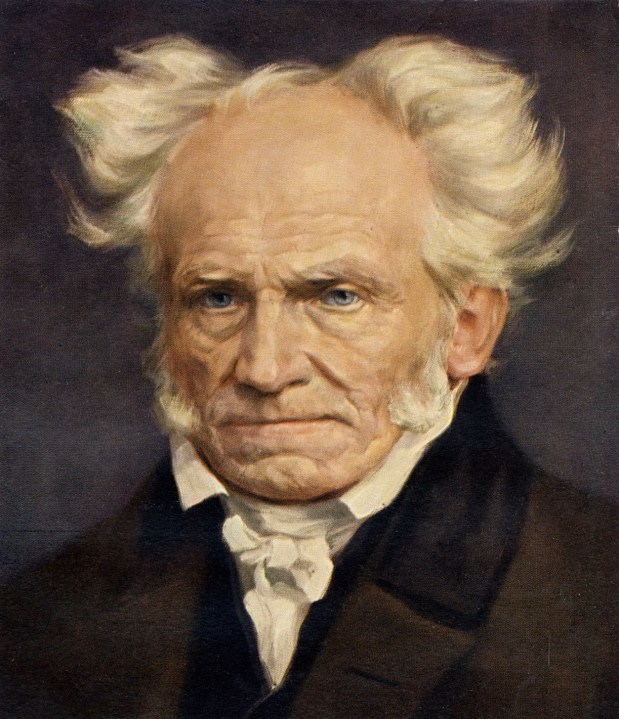
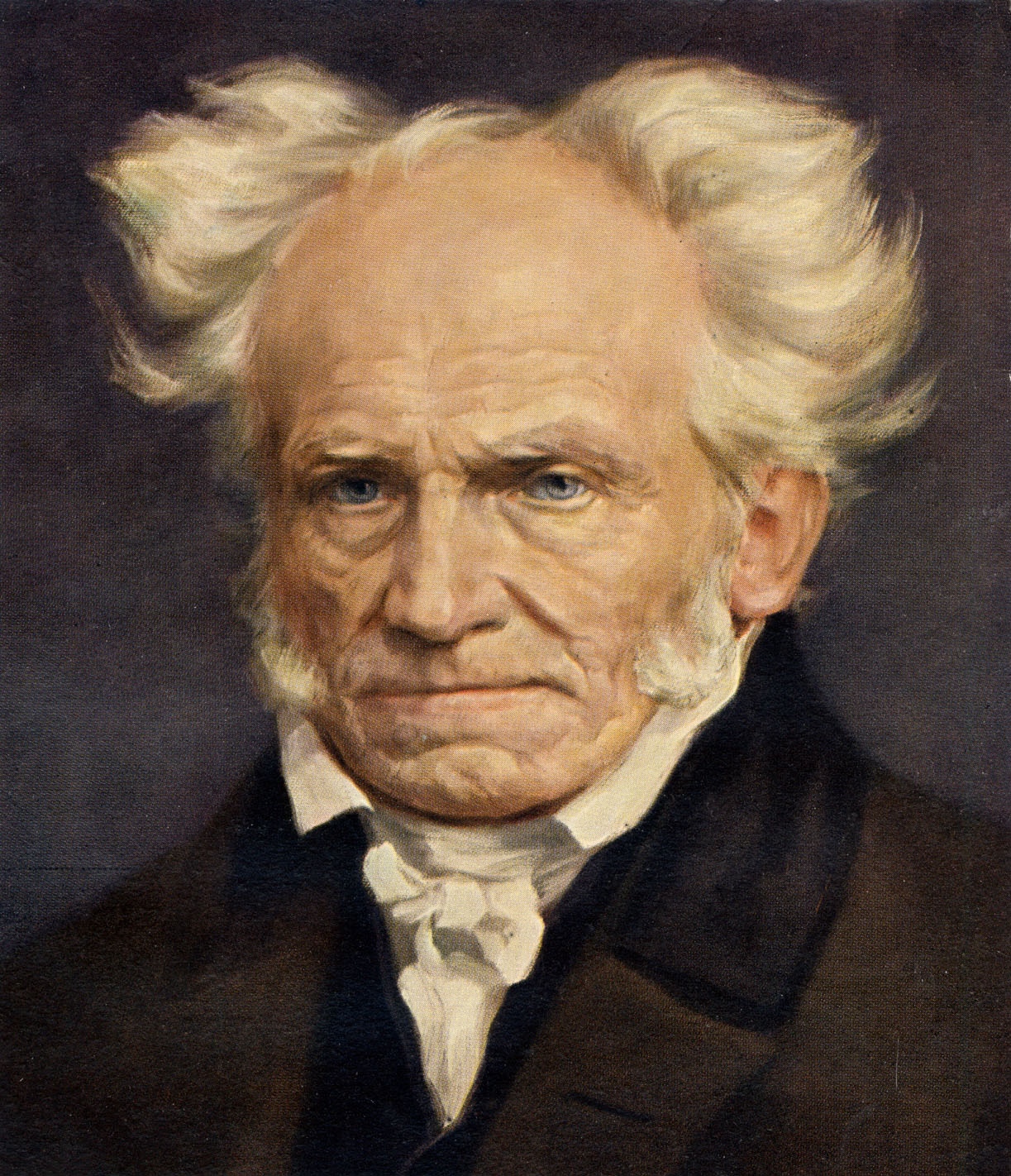
I understand why people are put off by Schopenhauer. He’s usually referred to as a pessimist, an accurate but by no means exhaustive description. Again, the image used on almost all his own works hardly invites the reader in: a daguerreotype taken in 1859, when the philosopher was 71, it shows an unsmiling, thin-lipped man with tufts of white hair sprouting on each side of an otherwise bald head. You can just imagine this cranky old misanthrope shouting at the women who stood gossiping in the corridor outside his Berlin apartment, as apparently, he used to. He also tends to be lumped together with the other major German philosophers of the period, most of whom deserve their reputation for soul-destroying difficulty and dullness (Hegel is the chief offender).
Readers who enter Schopenhauer’s world, then, are in for a big surprise. Unlike many philosophers, who couldn’t care less what they put their readers through, Schopenhauer is great company – witty, irreverent and fascinated by the human and natural worlds. The first edition of The World as Will and Representation was published in 1818, when its author was 30 years old. It is very much a young man’s book, full of passion and urgency. Schopenhauer claimed that it was the elaboration of a single thought, presented in the first sentence: “‘The world is my representation”: this is a truth valid with reference to every living and knowing being, although man alone can bring it into reflective, abstract consciousness.” While working on the book, Schopenhauer discovered, to his amazement, that this basic idea (as well as several others in his system) also appeared in the ancient Vedanta philosophy of Hinduism; as a result, his work is unique in the western canon for its frequent references to Indian thought.
I understand why people are put off by Schopenhauer
Schopenhauer was also one of philosophy’s rare stylists. An Anglophile who read the Times of London every day, he modeled his prose on that of the Scottish thinker David Hume. He sought to emulate Hume’s precision and clarity, with great success. On every page, even in the most difficult passages, it is evident that Schopenhauer cared about his readers’ experience. He loathed obscurity in philosophical prose, claiming that it was a fig-leaf for intellectual vacuity. This was his chief complaint against the philosophers he despised the most – Fichte, Schelling and Hegel.
Schopenhauer deserves his reputation as a pessimist: he described the world as a living hell and considered optimism “a really wicked way of thinking, a bitter mockery of the unspeakable sufferings of mankind.” But this element of his thought is balanced out by its more uplifting aspects. A devoted lover of the arts, especially music, he presents a fascinating account of their power to lift us above the chaos of life. He defends an ethics of compassion, premised on the idea that ultimately everything is One (a key similarity with Hindu thought). The sheer unity of his system is awe-inspiring. Whether or not you agree with his premises, he uses them to explain (or try to) literally everything: why we shouldn’t fear death; why music is the deepest art; why boredom and desire are opposite but equal torments; and, perhaps most importantly, why fruit is “admissible” in still-life painting but lavish feasts absolutely aren’t.
When you see a crap film or read a crap book, you regret the hours you wasted on it – hours you’ll never get back. I feel the opposite after this epic reading journey. I don’t regret a single moment that I spent in this “quiet sanctuary” of genius, not even those when I thought my head was going to explode. Or rather, especially not those.






Comments