Oil

Why Putin is unlikely to attend the Miami G20

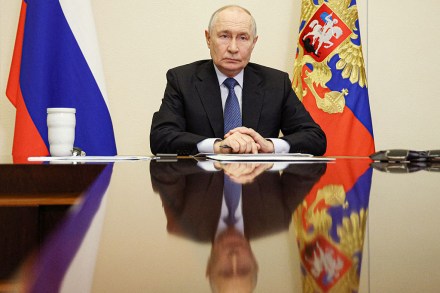
Secretary of State Marco Rubio has today announced that the US has invited Vladimir Putin to an upcoming G20 summit in Miami, giving the Russian leader “an opportunity to engage not just with Trump, but with other world leaders.” In one sense, the invitation is an olive branch to Moscow from Washington, so far the only Western nation willing to engage in peace talks with Putin. On the other, it’s a poisoned chalice that the Kremlin has already signaled that Putin will probably not accept.  For one, the summit will be held on Trump’s home turf – quite literally, as the venue is the Trump-owned Doral golf resort near Miami. When they met on a US Air Force base in Anchorage, Alaska, last year the two leaders were on more-or-less neutral ground.
putin

Could I bear to vote for Zack Polanski?

Will Labour’s ‘visitor levy’ generate £52 million of revenue for public spending in York and North Yorkshire, as a House of Commons briefing suggests? Or will it deter holidaymakers from exploring the region I love – and every other English destination where the levy is applied – while piling adversity on a hospitality trade already caned by employment cost hikes and tight consumer wallets? Modelling by the Tax Policy Associates thinktank offers a central estimate that the proposed tax on overnight stays (at up to 5 per cent, as set by local authorities) could raise £603 million a year for the loss of 5.8 million room-nights and £689 million in overall visitor spending, roughly half from overseas.

Oil at $100 a barrel is a disaster for Trump

From our US edition

When Donald Trump's political obituary comes to be written, none of his colorful phrases over the years will seem quite as outrageous as his remark in June, when the Consumer Prices Index hit 4.2 percent: "I love the inflation." He later claimed that he meant he loved the inflation figures because they weren't as high as they could have been. But that isn't going to wash: he had scorned the very people who had voted for him, and for whom inflation is a very big deal, by dismissing inflation as something unimportant.  He won't be making the same mistake, presumably, now that oil prices have hit $100 a barrel once more, for the first time since July.

oil

Labour must go further and faster in the North Sea

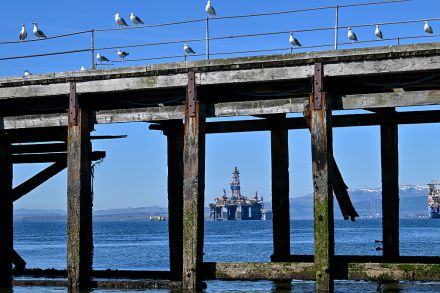
John Healey stood in front of two giant robotic arms this week and promised to ‘make Great Britain Growth Britain again’. The Chancellor also promised, borrowing a catchphrase from his neighbour in No. 10, to deliver ‘good growth in every postcode’. In the North Sea, 150 miles east off the coast of Aberdeen, lies the first big test of this promise. The 6,000-ton Jackdaw extraction platform is ready to start pumping gas from a field three miles below the surface. Twenty years after the Jackdaw field was first successfully prospected, it will, at the stroke of a ministerial pen, finally be allowed to operate.

Energy investor that bailed on Britain IPOs for $230 million

From our US edition

Britain is losing out as a result of its changeable energy policy. That’s the main takeaway from Samos Energy’s recent closing of a $230 million initial public offering. On July 13, Samos Energy Acquisition Corporation announced the conclusion of its IPO of 23 million units, sold at $10 each to raise a total of $230 million. This number included an extra 3 million units that were bought due to high demand. The IPO comes after the company shifted its attention from the UK to Africa and South America, when co-founder Jacques Tohme called out the problems on the North Sea that influenced his decision. “The UK Treasury has become very unstable and lacks engagement with the industry,” Tohme said in 2023.

north sea samos

There is no alternative to the Strait of Hormuz

From our US edition

As a UFC aficionado, President Donald Trump might know what a twister is. It works by cranking the victim’s head one way while controlling his hips in the other. Apparently, the pressure that this places on the spine is agonizing, leading to a rapid tap out or life-altering injuries to the back and neck. In the Middle East, the President finds himself in a geopolitical twister. On the one hand, Iran’s Memorandum of Understanding terms are too unpalatable for President Trump to swallow – crystalizing as they would an unambiguous defeat, with all the strategic and political consequences that that would entail. On the other, the US Air Force has been unable to suppress or interdict Iran’s missiles and drones.

Is the US heading for another oil shock?

From our US edition

It won’t be anything on the scale of 1973, when President Nixon imposed year round daylight saving time to reduce electricity consumption as well as a 50mph highway speed limit. Nor are we likely to see the thermostat restrictions, or the standby plans for rationing, that were introduced by President Carter in 1979.  The "oil shocks" of the 1970s were not just from a different era, they were of a different magnitude as well.  Trump may well step in with some form of oil export controls Yet that does not mean that the American economy is immune to another crisis, nor that we won’t see a dramatic response from the White House - because, in reality, the US could easily run out of oil later this year.

Oil prices

Can the Kremlin afford to fix Russia’s oil crisis?

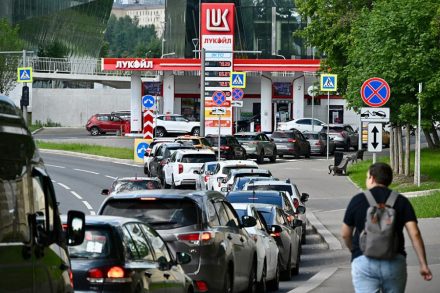
For a country that pumps roughly nine million barrels of oil a day – the third highest of any country in the world – Russia has managed to achieve something genuinely remarkable: it cannot keep its own gas stations stocked. More than half of its regions are now reporting shortages, the consequence of a Ukrainian drone campaign that has struck with increasing frequency and precision at the refinery infrastructure on which the country's civilian economy depends. The sometimes hours-long lines that have appeared – even in Moscow, for what may be the first time in the war – carry a symbolic weight that no amount of official reassurance from the Kremlin has managed to dispel. How this has come about is obvious enough.

oil

Europe has squandered its energy security

From our US edition

“Europe is desperate for Energy, and yet the United Kingdom refuses to open North Sea Oil, one of the greatest fields in the World.” Donald Trump said this month on Truth Social. It is, to use the President’s phrase, “Tragic!!!” But the necessity of oil hasn’t always been recognized. Back in 2008, while running for the White House, Barack Obama declared that one of the major challenges facing the US is “what we will do about our addiction to foreign oil.” His solution was to switch America to renewables. In that address, known as the “New Energy For America” speech, Obama said, “We simply cannot pretend, as Senator McCain does, that we can drill our way out of this problem.

energy

We’re stuck at the worst possible oil price

From our US edition

A ceasefire has been agreed with Iran. The Straits of Hormuz will reopen. And the oil market will get back to normal very quickly. By Wednesday morning, it looked as if the energy crisis was over. Finance ministers will be breathing a sigh of relief as the crisis abates. But hold on. In reality, the truce is fragile, and huge amounts of supply have been taken out of the market. So long as that remains true, the price of oil, and with it the global economy, will remain stuck. The average price of $90 to $100 a barrel is not what anyone really thinks a barrel of oil is worth The price of oil has been on a wild ride ever since the United States and Israel started the attack on Iran a month ago.

oil

Why Ukraine’s Russian oil strikes are backfiring

Every drone Ukraine fires at a Russian oil terminal is meant to defund Moscow's war in Ukraine. Right now, each one may be doing the opposite. Ukraine's strikes on Russian oil export infrastructure are intended to starve Moscow of the budget revenues that fund its war machine. The logic is straightforward: disrupt exports, reduce revenues, constrain the war effort. Kyiv has been explicit about this: Ukrainian officials consistently frame attacks on oil terminals as direct hits on Russia's war chest, treating every barrel that cannot be shipped as a ruble that cannot be spent on missiles or mobilization. Reuters puts the scale of that disruption in stark terms – at least 40 percent of Russia's crude export capacity, roughly 2 million barrels per day, is currently offline.

ukraine oil drone

Why is crude oil measured in barrels?

Crude estimates Why is crude oil measured in barrels?  — From medieval times onwards, all sorts of commodities were measured in barrels for convenience, from wine to eels to whale oil. However, standardisation only arrived in fits and starts. Since Richard III’s time, a barrel of wine was defined as 42 ‘wine gallons’, but this wasn’t the same as 42 gallons of water. When the US oil industry started in the mid 19th century, traders adopted the same measure as was used for selling wine. However, in 1824, Britain had standardised a gallon as 20 per cent larger than a wine gallon, the latter of which was renamed a ‘US gallon’. Hence a barrel of oil is only 35 imperial gallons.

Should NATO help America defend the Strait of Hormuz?

As soon as Operation Epic Fury, America’s latest campaign against the Islamic Republic of Iran, got underway on the last day of February, political, military and economic minds around the world should have turned their attention to the Strait of Hormuz. The waterway provided the only shipping route from the Persian Gulf to the Gulf of Oman and the open seas beyond. That has long made the strait the dagger Iran holds at the throat of the world. At its narrowest, it is less than 25 miles across, and Iran controls the northern shore; to the south is the Musandam Peninsula, shared by the United Arab Emirates and an exclave of Oman.

NATO STRAIT

The Iran war is just what Putin’s depleted coffers need

Of all the parties watching the chaos in the Middle East unfold, one should be rubbing its hands together with particular satisfaction. Russia has not fired a shot in this conflict, lost no allies it cannot afford to lose and has so far gained rather a lot, with more to come. A cynic might call it the perfect war for Vladimir Putin. Moscow's public reaction has been characteristically theatrical. The Foreign Ministry denounced American and Israeli actions as a "reckless step" and a "dangerous adventure." Things have gone no further. There has been no announcement of political or military support for Iran from the Kremlin – nor is there likely to be: Russia needs its drones and missiles for Ukraine.

putin

Ed Miliband must go

Economic forecasting was created, J.K. Galbraith said, to make astrology look respectable. It is not difficult to imagine what the great Keynesian economist would have thought of Rachel Reeves’s Spring Statement this week. It was pure -crystal balls. The statement was redundant on delivery – redundancy being one of the few areas of growth in our economy, as the bleak unemployment figures amply attest. The developing conflict in the Middle East, which has unleashed precipitous oil and gas price rises, has rendered the Chancellor’s promises of future growth more unlikely than ever.

Revealed: David Lammy’s curious relationship with Guyanese Big Oil

Better not tell Ed Miliband, but in spring 2022 his then shadow cabinet colleague, David Lammy, appears to have struck oil. For the first time, The Spectator can tell the story of how, while serving as Britain’s shadow foreign secretary, Lammy was announced as the director of another country’s sovereign wealth fund – set up to (theoretically) channel newfound oil riches to its people, with a bit left over for the board. This was announced on 20 April 2022 in an official press release from the President of Guyana’s office about the Natural Resource Fund (NRF). The statement is still on the government website.

Was the raid on Venezuela real?

From our US edition

From the very start, there was something weird about Operation Absolute Resolve. The official story went something like this: after a whirlwind air attack, which included the use of suicide drones for the first time, special operators from the US Army’s renowned but shadowy SFOD-D unit (“Delta Force”) were helicoptered into the Fuerte Tiuna military complex in the south of Caracas, the capital of Venezuela. They defeated the local garrison, used “massive blowtorches” to breach heavy metal doors in a fortress-like residential site within the base, captured the President of Venezuela, Nicolás Maduro, and his wife, then spirited them back to the helicopters and flew them out to face charges in the United States.

venezuela

The secrets of Putin’s shadow fleet

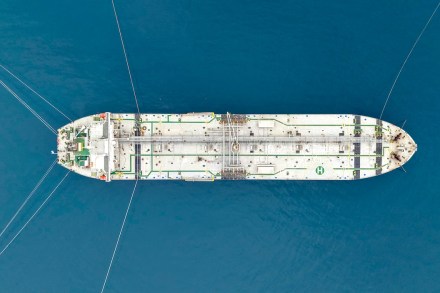
Of all the weapons in Vladimir Putin’s arsenal, the most strategically crucial has proved to be not hypersonic missiles but the motley fleet of oil tankers that have allowed Russian oil to keep flowing to international markets. Oil dollars have been the lifeblood of Russia’s war economy during four years of conflict. And the West’s failure to shut that export business down has, so far, been the single most important factor behind Putin’s continued military resilience. Economic sanctions were supposed to be the West’s superpower to punish the Kremlin for invading Ukraine in February 2022. So how come Russia now exports more oil by sea than it did at the beginning of the war?

What Trump should learn from the British empire

From our US edition

One remarkable thing about Donald Trump’s adventure in Venezuela is just how old-fashioned it is. It is a world away from George W. Bush’s neoconservative efforts at nation-building in Iraq and Afghanistan. There is little attempt to justify the arrest of Nicolás Maduro in terms of the human rights of Venezuelan citizens. Little attention appears to have been paid as to how the country will now be governed. Nor have we heard much more about the drugs crimes of Maduro, other than the admission that he perhaps isn’t, after all, quite the lynchpin of an international criminal racket (for all his other offenses against his own people).

Trump

Why would anyone want to rule Greenland?

It was the Viking, Erik the Red who, in AD 986, first saw Greenland’s potential. He wanted to colonize his newly-discovered island, and in a blatant piece of tenth-century spin-doctoring hit on a wizard wheeze to encourage other Norse people to come to this bleak, icy and remote corner of the unknown world: "In the summer, Erik left to settle in the country he had found, which he called Greenland, as he said people would be attracted there if it had a favorable name." More than a thousand years later, President Donald Trump is proposing something similar. "It’s a large real estate deal. Owning Greenland is vital for US security... and economic security... It’s an absolute necessity and I cannot assure you that we would not use military or economic coercion.

greenland