


John Healey stood in front of two giant robotic arms this week and promised to “make Great Britain growth Britain again.” The Chancellor also promised, borrowing a catchphrase from his neighbor in No. 10, to deliver “good growth in every postcode.”
In the North Sea, 150 miles east off the coast of Aberdeen, lies the first big test of this promise. The 6,000-ton Jackdaw extraction platform is ready to start pumping gas from a field three miles below the surface.
Twenty years after the Jackdaw field was first successfully prospected, it will, at the stroke of a ministerial pen, finally be allowed to operate. Industry bosses were told to prepare for a possible government handshaking visit on September 15. Rosebank – Jackdaw’s sister field, which could produce gas but mainly oil – is also expected to be approved by Energy Secretary Miatta Fahnbulleh, though the decision will likely come at a later date.
Jackdaw meets the postcode part of Healey and Andy Burnham’s promise. Aberdeen has lost a third of its offshore energy jobs in a decade. Some in the granite city fear further decline could finish it off. The human stakes extend beyond GDP: over the same period, “deaths of despair” – from drugs, alcohol and suicide – rose by 42 percent in Aberdeen, against 28 percent across Scotland. Employment, investment and opportunity are literally matters of life and death in these postcodes.
Employment, investment and opportunity are literally matters of life and death in Aberdeen
Approving Jackdaw is the right thing for the rest of Britain, too. The natural gas extracted from its wells will be vital for our energy security. At peak production, Jackdaw could pump out 6 percent of North Sea capacity – enough to heat 1.4 million homes. Almost all of it will be consumed domestically, which is vital given the state of our storage facilities. Despite a scorching summer, gas stores are at their most depleted since at least 2018. We’re heading into winter just a third full – down from 45 percent a year ago. There is even an environmental case to be made. Industry estimates suggest refusing Jackdaw and importing American gas instead would add four million extra tons of greenhouse gas over the project’s lifespan.
But the bigger prize lies in Rosebank and beyond. The two projects could support 3,500 jobs and deliver £11 billion in economic value to the northeast of Scotland, as well as an extra £1.4 billion to the Chancellor’s coffers this parliament. Britain is going to be using oil and gas for decades. Even the Climate Change Committee assumes our consumption in 2050 will be just a fifth of today’s level. At least half of that could be met by what lies beneath the North Sea. Why surrender the jobs and tax revenues from producing more of the fuel we will still consume anyway?
That said, approving Rosebank is politically much more unpleasant for Fahnbulleh. Eighty miles northwest of Shetland, the field is mostly oil, which Britain is no longer able to refine. It will have to be exported, which makes it far more carbon-intensive. Nevertheless, the mood is changing and the energy industry has been led to believe it is going to get a “yes.” Without one, the industry’s hope of “maximum extraction” from the North Sea would be finished.
A double announcement should not be ruled out, but industry sources don’t expect one. Jackdaw and Rosebank are separate decisions and some with the Energy Secretary’s ear are pushing for a delay to the Rosebank announcement for fear it will affect the Holborn and St. Pancras by-election, where Labour’s main opponents wear green. I also understand that there is ongoing wrangling about what Fahnbulleh is trying to extract in return for Rosebank approval. This could include extending North Sea windfall taxes or a commitment for the UK to aim toward an entirely internally priced energy market.
Nevertheless, by the end of the year Rosebank should be approved; extraction will begin in 2027. That will be celebrated in the pubs of Aberdeen and executive lounges in London and Edinburgh, but the rest of us shouldn’t expect to see any immediate benefit. Bills will not fall. Jackdaw’s gas will be sold at the same price as that set by the market in Norway or Qatar. Rosebank’s oil will be refined abroad before we buy it back.
But that isn’t the point. Rejecting these projects would kill our North Sea industry for good. And given the billions Shell and their partners have already sunk into the project, on the basis of repeated winks from successive governments that Jackdaw and Rosebank would be approved, the effects on business and investor confidence in the UK would be catastrophic.
The tax take from future North Sea drilling will not be insignificant either. Adura, the oil and gas producer owned equally by Shell and Equinor, says the two projects will generate nearly £4 billion in cumulative extra tax receipts by the end of the next parliament. That gives ministers the ability to cut bills. As David Whitehouse, engineer turned CEO of Offshore Energies UK (OEUK), explains: “We pay £5 billion worth of tax [already] and that gives the Chancellor choices.” A sum of that size could represent £200 off the bills of 24 million homes, he argues. That the government is going to argue that dirty, profit-making oil and gas meet their “good” growth test reflects a harsh economic reality. The last time Britain experienced proper growth, much of it came from the kind of enterprise our current ruling class would not describe as “good.” It was industrial, extractive and swashbuckling. It certainly wasn’t green. Ed Miliband once called Rosebank “climate vandalism;” Fahnbulleh called such projects “irresponsible and short–sighted” and was firm on no new drilling. Now she’s preparing to approve them.
Changing public attitudes drive this change of direction. A recent OEUK-commissioned poll found that 74 percent were in favor of Britain producing as much oil and gas domestically as possible, rather than relying on imports. With job losses mounting (180,000 since the election), inflation resurgent and debt out of control, Britons are a lot less picky about where growth might come from.
We’ve taken far too long to get here, though. Two decades have passed since gas was first prospected in the Jackdaw field. Four years have passed since the Boris Johnson government granted a license for its extraction. After five public consultations and a successful judicial review that forced ministers to reconsider its environmental impact, we’re finally seeing some progress.
There is a recognition on both sides that this saga has dragged on for too long. Debating The Spectator’s editor in a House of Commons function room last week, Nicola Sturgeon, long opposed to Jackdaw and Rosebank, said that more than anything she wished there had been a decision either way, bemoaning the fact that for at least a year almost all debate about the country’s energy problems have focused around two fields in the North Sea. She’s right. But the significance of Jackdaw doesn’t stop on the shores of the North Sea. It’s a test of our understanding of where we’ve gone wrong.
Indecisiveness is costly. In his speech on September 7, Healey complained that Britain was paying a penalty on our borrowing costs thanks to Liz Truss. But Britain’s moron premium – which has wiped out half of his fiscal rules margin-for-error and may necessitate tax rises come October – goes far beyond the actions of a 49-day prime minister.
When global bonds were sold off earlier this month, and yields rose, Britain was the worst hit. The reason? Dire expectations of our inflationary future. The price of gilt yields reflects the fear that inflation will eat away at investors’ returns. If they expect higher inflation in the future – and they do – they demand a higher premium for their borrowing.
That’s bad for us, because year-out inflation expectations – and longer-term ones too – are on the rise. Energy is the reason. Polling by More in Common shows more people are concerned about the cost of energy than of food. As one trader explains: “It’s three to four times more expensive for business to operate here compared with the US due to our mad energy policy. That makes any global shock three to four times worse for us.”
The result, he warns, is that, “given the debt burden, the energy policy and the openness of our economy, we’d probably be the first to fall if there was a debt crisis.” On September 9, Brent crude again broke through the $100 a barrel mark.
So the answer to what’s fundamentally wrong with Britain’s economy: it’s the energy, stupid. That is why Truss’s unfunded and theoretically limitless energy bailout – the largest public-spending policy in peacetime – really spooked our lenders.
This isn’t just ‘drill, baby, drill’ – it’s do anything, baby, anything. And we need to do it fast
To fix that problem we need abundance. We should extract every last drop of oil and pocket of gas left in the North Sea, but we need to go further and faster on renewables and nuclear, too. This isn’t just “drill, baby, drill” – it’s do anything, baby, anything. And we need to do it fast.
We need to get on with oil, we need to get on with gas and we need to get on with renewables. But even those trying to build businesses aiming at the latter find themselves up against a state infrastructure which seems to want to make it as difficult as possible for them to succeed.
One inventor complains that rather than spending time in the lab developing his green energy product, most of his week is spent meeting with government officials to discuss the measures his embryonic company is taking toward DEI. Innovate UK, a government grants agency, asks: “How are you ensuring that your organization and idea contribute toward equality, diversity and inclusion best practices?”
That question is given just as much importance as the actual proposal and whether it is commercially viable. Those who it is thought need help in “improving their answers” are encouraged to join a state-funded network called “Innovation and Growth Needs Inclusion and Engagement of All Talent in Energy.” “It’s totally mental,” the frustrated inventor says.
Tax policy makes everything more difficult, too. Earlier this month, OEUK wrote to the Chancellor to plead with him to bring forward a permanent levy regime – which was promised six months ago by Rachel Reeves – to replace the current windfall tax. This replacement levy would apply only to revenue above certain price thresholds. Companies could then invest in the knowledge that additional taxes would bite only when prices spike. This could potentially unlock £50 billion in extra investment.
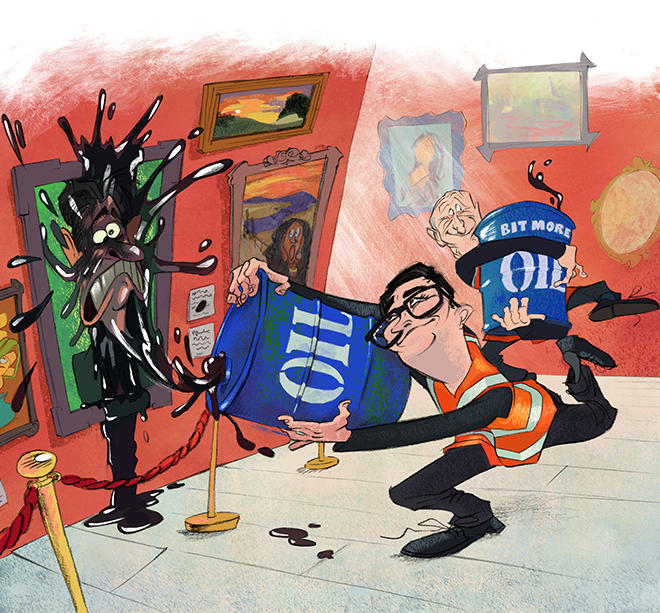
When Fahnbulleh gives Jackdaw the green light we should all celebrate. When the political weather makes it possible to announce Rosebank we should cheer some more. But these two new projects must only be the start. Five more projects are under environmental review. Letting them become national arguments that drag on for years is a luxury Britain cannot afford. It’s time to just start oil.





Comments