Nigeria

Boko Haram is using girls as bombs

Could there be anything more offensive to feminists than the use of young girls as suicide bombers? I doubt it. And I imagine that’s exactly why the militant Islamist group Boko Haram has adopted it as the latest technique in its campaign to overthrow the Nigerian government and create an Islamic state. In April last year, when Boko Haram militants captured a group of 276 schoolgirls, a number of high-profile women joined an online campaign to #BringBackOurGirls. Have they been brought back? No. Around 200 still remain in captivity. Horrific stories have since emerged from the few who managed to escape that the captured girls have been subjected to rape, abuse, physical torture and forced marriage.
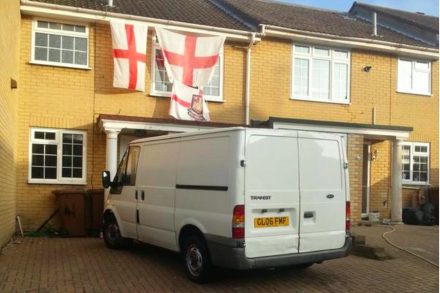
Patriotism isn’t uncivilised – it’s what makes civilisation possible

Is it racist to be patriotic? Is patriotism, by definition, small-minded and exclusive? When you strip away the onion layers of sentiment about history and hymns, Shakespeare and lawn clippings, does it have a hateful heart? I ask because, as I’ve written before, I feel patriotic, and until recently I’ve considered this to be a good thing. I felt particularly patriotic at a service in Ravenstonedale, Cumbria, last week. I slid in late and guilty, amid snippy Sunday stares. After the sermon we trooped outside and in the suddenly sunlit graveyard the vicar whipped a trumpet from his cassock and began to play. A pair of starlings began their electric warble, the motes and midges were bright against the dark church wall.

There’s one obvious question about immigration, but nobody is asking it

If you were to close your eyes at any debate on immigration, you might reasonably picture the participants standing back-to-back, shouting and gesticulating to opposite corners of the room. On such occasions, there’s typically only one point on which everyone actually agrees: that very highly skilled migrants – doctors, engineers, scientists – are welcome here in Britain. Oddly, though, nobody ever seems follow up with the obvious question: what about the countries these migrants leave behind? Look at the four nations from which we take most foreign doctors – India, Pakistan, South Africa and Nigeria. Is it not unfair to deprive them of their brightest medical minds?

Panic about Ebola in Africa – not here

Got Ebola yet? Early symptoms are very difficult to distinguish from either winter flu or, indeed, a particularly bad hangover. Bit feverish, aches and pains, sore throat and so on. Only when you start to bleed from the eyeballs should you worry a bit: that’s never happened before with Jack Daniels. It was the African bloke huddled up on the tube, I would reckon, the one who kept coughing. I knew I shouldn’t have sat near an African. One or two clinical experts have been likening the Ebola virus to HIV. They seem to me similar more in a sociological sense. I remember those days when people avoided being in close proximity to homosexuals for reasons other than their appalling taste in music, or their moustaches.

What will it take for us to stop doing business with Qatar?

On 17 June, a meeting of the Henry Jackson Society, held in the House of Commons, discussed (according to the minutes published on the society’s website) how a tribal elder in northern Cameroon who runs a car import business in Qatar has become one of the main intermediaries between kidnappers from Boko Haram and its offshoot Ansaru and those seeking to free hostages. It was alleged that embezzlement of funds going to Qatar via car imports might be disguising ransom payments. It was also alleged that Qatar was involved in financing Islamist militant groups in West Africa, helping with weapons and ideological training, and (with Saudi Arabia) funding the building of mosques in Mali and Nigeria that preach a highly intolerant version of Islam.

The forgotten flank of the forgotten corps of the Forgotten Army

The British who fought in Burma became known as the ‘Forgotten Army’ because this was a neglected theatre of the second world war. Barnaby Phillips’s tale is about the African forces fighting across this green hell — ‘the forgotten flank of the forgotten corps of the Forgotten Army’. At the age of 16 Isaac Fadoyebo left his village in colonial Nigeria and joined Britain’s call for recruits in the war. Hitler did regard black people as ‘semi-apes’, but Britain enrolled 500,000 Africans to fight for a cause they barely understood against enemies on the other side of the world. Isaac was sent not to battle the Nazis in Europe, as many other Africans were, but to Burma, whose inhabitants were also caught up in a conflict that wasn’t theirs.

Whatever happened to ‘Bring Back Our Girls’?

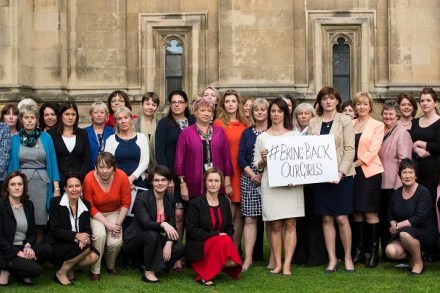
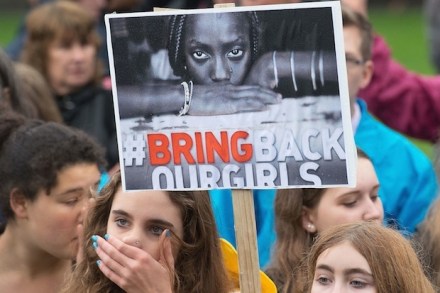
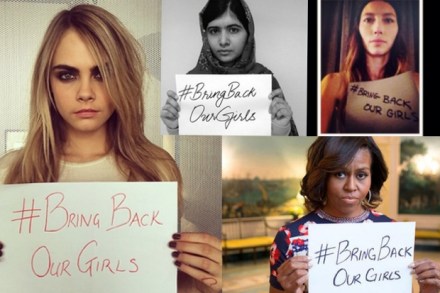
Whatever happened to ‘Bring Back Our Girls’? I only ask because it’s now three months since Twitter and all other social media, Michelle Obama, Christiane Amanpour, David Cameron etc. joined a hashtag group to ask Boko Haram to give back the hundreds of Nigerian schoolgirls they had kidnapped. It almost filled the news cycle for a couple of weeks. And yet nothing seems to have happened. That was April. This is July. The Nigerian security forces continue to appear incompetent. The foreign dignitaries who signed up to the social media campaigns haven’t done much more. And the newspapers, 24-hour media and assorted celebrities seem to have just, well, moved on. Still. Another week. Another fad. Ping. Pong.

World Cup diary: Iran vs Nigeria. Who to support?

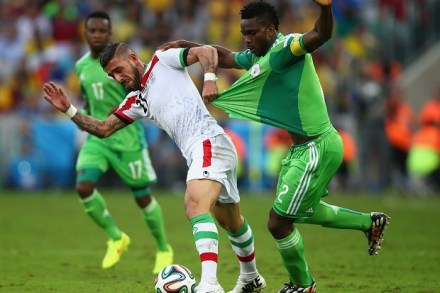
So – Nigeria versus Iran, then. I wonder who Boko Haram were cheering for, surrounded by their infidel abductees in some sand-blown, bilharzia riven hellhole. I was cheering for our new allies, Iran. We are told every year – since about 1986 – that African teams will take world football by storm. And they never do. They’re as useless as were Zaire in 1974. But that won’t stop the BBC spending our licence fee money on the African Cup of Nations, for political reasons. And then earlier, an enormous pleasure to watch Portugal’s pouting moppets, each of them seemingly named after a seaside donkey, thoroughly thrashed by good ol’ dependable Germany.

David Cameron’s plot to keep us in the EU (it’s working)

I write this before the results of the European elections, making the not very original guess that Ukip will do well. Few have noticed that the rise of Ukip coincides with a fall in the number of people saying they will vote to get Britain out of the EU. The change is quite big. The latest Ipsos Mori poll has 54 per cent wanting to stay in (and 37 per cent wanting to get out), compared with 41 per cent (with 49 per cent outers) in September 2011. If getting out becomes the strident property of a single party dedicated to the purpose, it becomes highly unlikely that the majority will vote for it. The main parties will conspire to push the idea of EU exit to the fringe. Waverers will wobble towards the status quo.

Why does Britain’s fight for religious freedom stop at Dover?

‘We don’t do God,’ was Alastair Campbell’s put-down when his charge, Tony Blair, was tempted to raise the issue of his faith. Unfortunately, it seems to have become the motto of David Cameron’s government. It is a month now since 276 girls were kidnapped from a school near the town of Chibok in northern Nigeria, and still the Foreign Office’s statements on the crisis read like a deliberate exercise in missing the point. ‘Continuing murders and abductions of schoolchildren, particularly girls in Nigeria by Boko Haram, are a stark reminder of the threat faced by women and girls in conflict-prone areas,’ Mark Simmonds, minister for Africa, said this week. ‘Young children are being denied universal freedoms such as an education.

The ‘selfie’ protest

The kidnapping of the 276 predominantly Christian schoolgirls by Islamic terror group Boko Haram is an atrocity, but it is not the first atrocity they have committed. It is just the first one to trip the West’s interest switch. A girl’s right to an education has become an important pillar in western ideology, and an important pawn in the battle against radical Islam. It is why Malala has seen herself elevated to an almost saint-like position. The recent kidnappings have enraged western sensibilities, because they desecrate hallowed ideas about female equality. The West has responded in the only way it knows how: a self-righteous selfie protest using the hashtag ‘Bring Back Our Girls’.

Beyond the Malachite Hills, by Jonathan Lawley; Last Man In, by John Hare – review

In post when the curtain came down on Britain’s African empire, there survives today a generation of colonial officers whose numbers are dwindling fast. Many were fired by an idealism already out of fashion when they chose their career. Most came to love their adopted continent. Some can write. Two of these are Jonathan Lawley and John Hare. Each has an incredible tale to tell. Here is a pair of books that, placed with a decanter of whisky on the bedside table of any Spectator reader’s guest bedroom, will have the reading-light burning late into the night. Yet they are very different stories, quite differently written.

Boko Haram proves the Nigerian government to be corrupt and useless

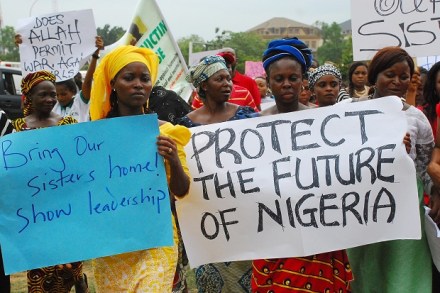
You know, the more we hear about the uselessness of the Nigerian government in dealing with the abduction – the rape, in the original sense of the word – by Boko Haram of 230-odd schoolgirls, the less appealing that government appears. The most striking and urgent action it took in response to the crisis in the three weeks since it happened was yesterday to arrest Naomi Mutah Nyadar, one of the women behind the mass demonstrations calling on the unhappily named president, Goodluck Jonathan, to get a grip and do something. Apparently his wife Patience took against her because she spoke about rescuing “our daughters” when in fact she was not the mother of any of the victims; she was speaking metaphorically, you see.

Forget the MINTs, the next economic success story will be in the BALLS

Jim O’Neill, the Mancunian former chief economist of Goldman Sachs in London, commands attention whenever he speaks and has a claim to fame as the coiner in 2001 of the acronym ‘Bric’ for the four rapidly developing countries — Brazil, Russia, India, China — to which economic power looked set to shift during the early part of the new century. Undeterred by the hindsight view that he should have gone for ‘Bic’, like the throwaway razor, because Russia has lagged so dismally behind the others on almost every measure of progress, O’Neill has now come up with ‘Mint’, for Mexico, Indonesia, Nigeria and Turkey, as the next cohort of economic giants.

Bye-bye Bric, hello Mint — are Mexico, Indonesia, Nigeria and Turkey really the new boom economies?  

New year new ideas as we woke up on Monday morning to find ourselves in Lagos with Evan Davies trying to convince us that Nigeria really is undergoing an economic earthquake. It’s part of a week-long campaign by Radio 4 to make us believe that the next economic leaders among world nations will be Mexico, Indonesia, Nigeria, Turkey. These new Mint countries are destined, we are told, to take over from the Bric countries, now deemed passé after just a decade in the limelight generated by the economist fashionistas. It’s stimulating stuff for this hibernating time of year.

Malala for free schools

That Malala Yousafzai, the girl the Taleban tried to murder, is a brave and resolute young woman is not in doubt. The youngest person ever nominated for the Nobel Peace Prize, she has won many awards, including the Sakharov Prize and an honorary degree from Edinburgh University, in her campaign for ‘the right to -education’. But something curious is going on. Something crucial to her experience is always omitted when her life and mission are described by international agencies and the media. Education International, the global teachers’ union umbrella group, is typical. Malala is campaigning, they say, so that all can benefit from ‘equitable public education’; that is, government education.

The war on Christians

Imagine if correspondents in late 1944 had reported the Battle of the Bulge, but without explaining that it was a turning point in the second world war. Or what if finance reporters had told the story of the AIG meltdown in 2008 without adding that it raised questions about derivatives and sub-prime mortgages that could augur a vast financial implosion? Most people would say that journalists had failed to provide the proper context to understand the news. Yet that’s routinely what media outlets do when it comes to outbreaks of anti-Christian persecution around the world, which is why the global war on Christians remains the greatest story never told of the early 21st century.

419 by Will Ferguson – review

The term ‘419’ is drawn from the article in the Nigerian penal code that addresses fraud. However, it has transcended its origins in statute and become shorthand for trickery across West Africa. When I worked as a correspondent in Sierra Leone, 1,400 miles from Nigeria’s capital Abuja, the phrase was in widespread use. Deception is fertile ground for fiction, and Will Ferguson has produced a fine novel from the West African variant. He takes 419 in its purest form: the email scam. Nigerian hustlers persuade foreigners to part with their savings, often with the promise of a tranche of a fortune that just needs a western bank account to park in.

To infinity and beyond!

Let’s hear it for Nigeria, which has just joined the space race. The country plans to launch a rocket by 2028, although nobody has explained where the rocket will be heading. It is a legal requirement, I suspect, for all countries which receive vast amounts of aid from Britain to start pinging rockets around the universe. Perhaps the Nigerians are hopeful of colonising Jupiter, or the ghostly moons of Uranus – Oberon, say, or Umbriel. Both satellites would undoubtedly benefit from some warm-hearted Nigerian vibrancy. We’re giving the Nigerians more than £300m next year, which should pay for the elastic band, at least. Our previous donations were revealed to have been utterly useless, incidentally, according to the Independent Commission on Aid Impact.

Americanah, by Chimamanda Ngozi Adichie, and Ghana Must Go, by Taiye Selasi – review

Excitement over the extraterritorial birthplace of authors on Granta’s recent list of Britain’s best young novelists must have been old news in the United States, where the New Yorker’s equivalent exercise four years ago turned up Americans from China, the Dominican Republic, Ethiopia, Latvia, Nigeria, Peru, Russia and Serbia. Roughly speaking, this immigrant fiction makes a threefold appeal: it’s exotic, yet familiar (‘our’ culture measured by the standards of another), with a hairshirt’s prickle, too (by showing how short we fall). Chimamanda Ngozi Adichie’s new novel briefly features an eight-year-old Pennsylvanian boy who, before his nanny arrived from Nigeria, never knew that oranges contained pips.