Nigeria

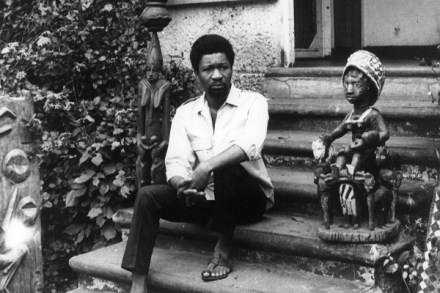
Wole Soyinka: Boko Haram must be destroyed | 18 November 2012

The Books Blog has an interview with Wole Soyinka, the Nigerian author who won the Nobel Prize for Literature in 1986. Soyinka is worth listening to for his ambivalence towards nationalism, his tolerant secularism and his recollection of solitary confinement during Nigeria’s civil war in the 1960s. But his comments on Boko Haram, the radical Islamist group that is terrorising northern and central Nigeria, are worth quoting here on a weekend of bloodshed in the Middle East. ‘I look at Boko Haram not just as a terrorist group, but also as a criminal gang, and a bunch of psychopaths. You don’t enter into dialogue with drug lords and criminals.
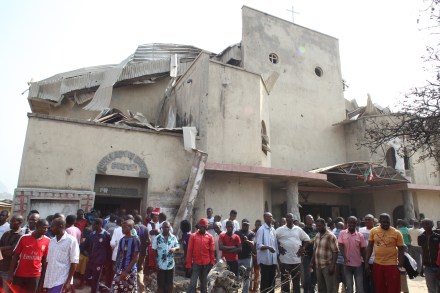
The evil being perpetrated against Christians in Nigeria

The religious cleansing against Christians is intensifying in Nigeria, where Christians have been told they have until Friday to leave the country or face attacks by Islamic extremists. As I wrote recently in the Daily Telegraph, this is a trend sweeping the Middle East. Thousands are fleeing Iraq and Egypt, but Nigeria is the scene of the most ferocious attacks. Its government condemns the attacks, but seems unable to respond to the Boko Haram menace. This from the National Review: ‘Catholic archbishop John Onaiyekan, of Abuja, Nigeria’s capital city, appealed for help. “It’s a national tragedy. We are all unsecured. It’s not only Catholic. Today it’s us. Tomorrow we don’t know who it will be,” he said.

Not for sissies

Nigeria is not exactly a tourist destination. A colleague chortles over the memory of trying to wangle his way in — without a journalist’s visa — during Sani Abacha’s military regime. ‘Purpose of visit?’ barked the immigration man. ‘Tourism,’ he lied. ‘No one comes to Nigeria for tourism,’ said the official. He was promptly expelled. The official was voicing a truism. Even seasoned Western adventurers avoid Nigeria — ‘is Lagos airport as terrifying as they say?’ you are often asked — while the country’s oil-fattened elite, oscillating between the national superiority complex and hardened self-loathing, regard an international flight as the obligatory start to any holiday.

The Costs of Closed Borders

There are many reasons to read James Fallows' Atlantic article on what happens when your email is hacked (and anyyone who uses gmail should definitely read it) but buried within it is this snippet on the In “The Chilling Story of Genius in a Land of Chronic Unemployment,” this past May in TechCrunch, Sarah Lacy portrayed a number of the hackers she had met in Lagos. In other circumstances, she said, the best of them might have been like Sergey Brin or Max Levchin, the immigrants who co-founded Google and PayPal, respectively. They were that clever and technically gifted. Or, more modestly, they could have been like the engineers and managers I’ve met over the years at Google, Microsoft, Intel, and other companies, at least half of whom were born and raised overseas.

Cross-cultural exchanges

The 18 stories, each around a dozen pages long, in E.C. Osondu’s Voice of America seem to have poured out of him like water. They have a fluency, an evenness of tone and texture, that creates an illusion of transparency and simplicity. The 18 stories, each around a dozen pages long, in E.C. Osondu’s Voice of America seem to have poured out of him like water. They have a fluency, an evenness of tone and texture, that creates an illusion of transparency and simplicity. There’s great comedy — and also artistry — in this because almost every story actually describes some degree of false consciousness, wrong-headedness or pathetic illusion.