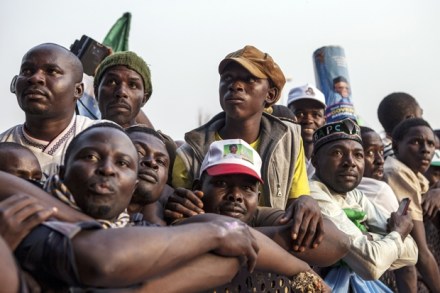
Nigeria

A tragic fall from grace

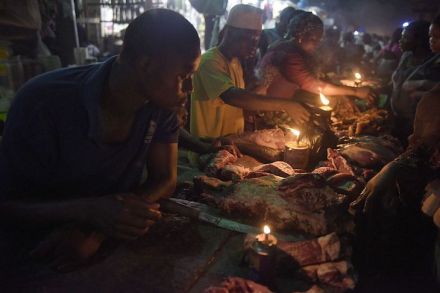
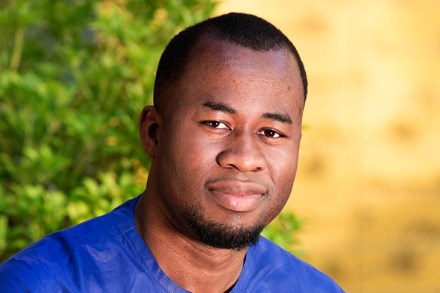
Nurture hatred in your heart and you will keep ‘an unfed tiger in a house full of children’. A man who passes on a plausible lie ‘may be offering a rattlesnake in a calabash of food’. Someone who lugs grievances around carries ‘a full pitcher of resentment from which, every step or so on its rough journey through the worn path of life, a drop or two spilled’. This second book from the young Nigerian author whose debut, The Fishermen, reached the Man Booker shortlist does not quite escape that difficult second novel syndrome. It’s overlong, raggedly structured and freighted with rambling digressions.
The ties that bound us

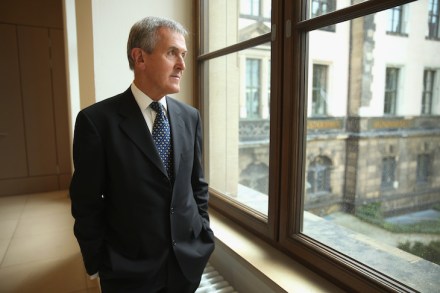
Only Neil MacGregor could do it — take us in a single thread from a blackened copper coin, about the size of a 10p piece, dating from Rome in about 200 AD, to a packed music hall in London during the first world war. In his new 30-part series for Radio 4, Living with the Gods, the former director of the British Museum looks at the ways in which societies come together through shared rituals and beliefs and how these rituals are developed and used to make sense of our place in a universe beyond human comprehension. One side of the coin shows a fire burning within the Temple of Vesta, dedicated to the Roman goddess of fire, and surrounded by the Vestal Virgins, whose job it was to keep the flames alight, to protect the ‘hearth’, or the focus of Rome’s power.

The bank that keeps poor nations poor

What is the point of the World Bank? You probably think of it, if at all, as a benign institution, a kind of giant, multilateral aid agency, whose job it is to bring liquidity to developing nations and help them grow out of poverty. Until not so long ago, that was indeed its function. Created alongside the International Monetary Fund at the 1944 Bretton Woods Conference, the bank did sterling work in its early years helping countries like France recover from the war; and later, giving mostly third world countries the vital seed money needed to help attract investors to risky capital projects. Its multiplier effect on investment can be extraordinary. In 2013, the World Bank gave Kosovo $40 million towards building a lignite power station.

Stitches in time

When Martha Ann Ricks was 76 she travelled from her home in Liberia to London to meet Queen Victoria. The daughter of a slave, who had purchased freedom for his family from his American owner and taken them to west Africa, she wanted to honour the Queen whom she believed had played a pivotal role in abolishing slavery. ‘She stoops,’ Ricks told a reporter from the Pall Mall Gazette of that meeting in a corridor at Windsor Castle on 16 July 1892, ‘and I don’t stoop though I’m older than her… But she has had troubles, great troubles. No wonder her shoulders are bent.’ Ricks considered herself fortunate that aged 13 she had been taken from the Tennessee plantation where she had been born and had thereafter lived as a free person.

Party piece

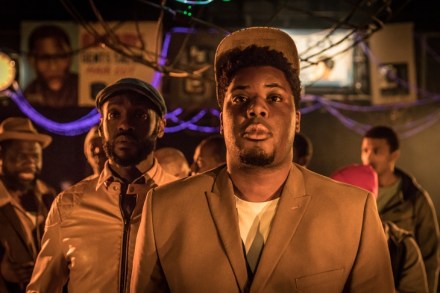
The National Theatre could hardly resist Barber Shop Chronicles. The play shines a light on a disregarded ethnic community, black urban males, who like to hang around in barber salons seeking friendship, laughs and tittle-tattle. Setting the play in a single venue would just be a sitcom, like Desmond’s, so the show establishes a series of shops stretching from London to the capitals of various sub-Saharan nations. This makes it a global epic. In theory, at least. In fact, it’s still a sitcom with some melodramatic bits on the end. The disjoined structure is tiresome at first as the action keeps legging it from Britain to Nigeria and Ghana and back again. Inevitably, the intellectual level is pretty undemanding, somewhere between music-hall and panto.

Every horror imaginable

The group of kidnapped women were terrified. They had been brought back to the camp as booty and were being urged to convert to Islam with machetes pressed to their necks. They did their best to gabble words that sounded like the prayers they were being taught before one fighter noticed a captive with a swollen belly. ‘I’m not pregnant,’ she insisted, spreading her hands over her belly in an instinctive reaction that only showed she was lying. The most senior of the armed men, who looked barely 20 years old, ordered her to lie down on the ground. ‘We don’t bring any Christian babies into the world here,’ he screamed.

United nations

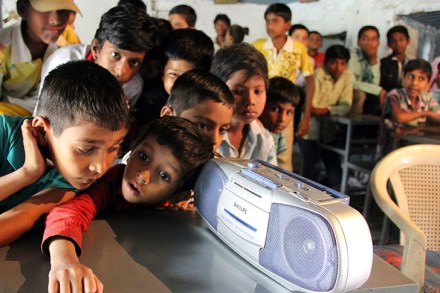
The Indian Prime Minister has twigged something that President Trump has yet to understand. On Monday, celebrated as World Radio Day, Narendra Modi tweeted his congratulations to ‘all radio lovers and those who work for the radio industry and keep the medium active and vibrant’. Modi uses radio to reach out to those in his country who live in its most remote and inaccessible corners, giving a monthly address to the nation known as ‘Mann Ki Baat’ (or ‘To mind’). He says it’s his way of ‘sharing his thoughts’ with his citizens, and a useful way of extending the tentacles of government into those areas where television sets are uncommon, let alone computer screens or smartphones.

Abandoned to their fate

Another day in northern Nigeria, another Christian village reeling from an attack by the Muslim Fulani herdsmen who used to be their neighbours — and who are now cleansing them from the area. The locals daren’t collect the freshest bodies. Some who tried earlier have already been killed, spotted by the waiting militia and hacked down or shot. The Fulani are watching everything closely from the surrounding mountains. Every week, their progress across the northern states of Plateau and Kaduna continues. Every week, more massacres — another village burned, its church razed, its inhabitants slaughtered, raped or chased away. A young woman, whose husband and two children have just been killed in front of her, tells me blankly, ‘Our parents told us about these people.

The road to the Jungle

 Calais On Sunday evening a British motorist, Abraham Reichman, 35, from Stamford Hill, north London, hit two Eritrean migrants who were trying to block the A16 outside Calais. They had leapt in front of his car, he says, as he slowed down to avoid dozens of migrants on the motorway. Terrified, Mr Reichman drove off at speed to the police station, where he later found out that one of the Eritreans had died. The police released him after several hours but he is under investigation for homicide involontaire. It is not difficult to meet migrants so determined to get to the land of milk and honey on the British side of the English Channel that they are prepared to risk their lives and put those of drivers in mortal danger.

This luvvies’ letter warning against Brexit isn’t worth the paper it’s written on

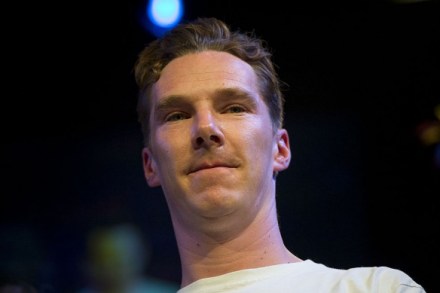
Politicians from across the spectrum have had their say on Brexit. So, too, have various business leaders. Spy chiefs have spoken out. And even Ian Botham has chipped in to spell out his opinion on the EU referendum. So it was probably just a matter of time before the luvvies did the same. And today they’ve done just that: Jude Law, Keira Knightley and Benedict Cumberbatch are amongst some 300 actors and musicians who have backed the call for Britain to stay in the EU. In a letter, put together by Britain Stronger in Europe, they urged Britain not to become ‘an outsider shouting from the wings’.

Was it wise for Cameron to bring up the ‘fantastically corrupt’?

David Cameron was today caught describing Nigeria to the Queen as ‘fantastically corrupt’. But after the Panama Papers leak, the Prime Minister may want to choose his words more carefully: after all, that accolade could easily belong closer to home. Your average dodgy Nigerian oil baron and big-time British fraudster have much in common; a shared love of champagne, a doctor in Harley Street and… a little company based off-shore in a tax haven whose sole purpose is to hide stolen fortunes. And in most cases, that tax haven is one of ‘ours’ - either a British Overseas Territory or a Crown Dependency. Half of the companies featured in the Panama Papers were registered in British-administered tax havens.

Portrait of the week | 23 July 2015

Home Parents would be able to have their children’s passports removed if they were suspected of planning to travel abroad to join a radical group, under provisions outlined by David Cameron, the Prime Minister, to deal with Islamist extremism. It emerged that five British pilots embedded with allied forces had been taking part in air strikes over Syria, which Parliament had voted against in 2013. Julian Lewis, the Conservative chairman of the Defence Select Committee, accused Mr Cameron of making up policy ‘on the hoof’. Lord Richards of Herstmonceux, the former Chief of the Defence Staff, said that in order to defeat the Islamic State, ‘tanks would have to roll and there’s going to have to be boots on the ground’.

Portrait of the week | 16 July 2015

Home The government postponed a Commons vote on relaxing the Hunting Act in England and Wales after the Scottish National Party said it would oppose the changes. Scottish police admitted that a crashed car off the M9, reported to them on a Sunday, was not examined until the Wednesday, when one of the two passengers inside it was still alive. She died three days later. A case of H7N7 bird flu was found at a poultry farm near Preston, Lancashire, where 170,000 chickens were slaughtered. British people were being urged by the Foreign Office to leave Tunisia because ‘a further terrorist attack is highly likely’. Up to 5,000 were flown home.

Aid is no substitute for defence, and Michael Fallon knows it

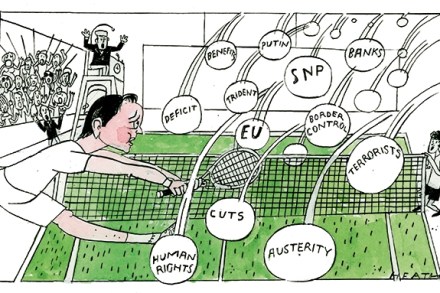
It’s been obvious for a while that the Prime Minister is exasperated by the way American and other allied officials – including President Obama himself – keep expressing concern about Britain’s rapidly shrinking defence capabilities and the prospect of yet more defence cuts. David Cameron also dislikes being reminded that he lectured other Nato leaders about meeting the alliance’s minimum of spending 2 per cent GDP on defence, when by any honest calculation the UK is not going to meet that target. He hasn’t responded directly to the multiple warnings from Washington.

Portrait of the week | 25 June 2015

Home Tens of thousands took part in a demonstration in London against austerity, and thousands more in other cities. Russell Brand was heckled for being too right-wing: ‘Fuck off back to Miliband,’ protestors in Parliament Square cried. David Cameron, the Prime Minister, explaining his thinking on further benefit cuts: ‘There is what I would call a merry-go-round: people working on the minimum wage having that money taxed by the government and then the government giving them that money back — and more — in welfare.’ The government sold more shares in the Lloyds Banking Group, bringing its ownership to less than 17 per cent.

Is gay marriage just a fad?

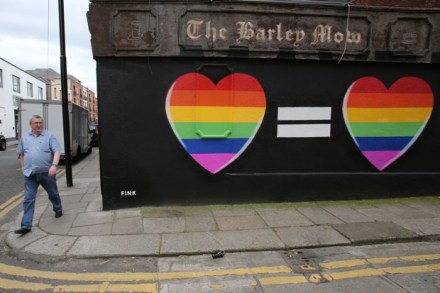
Now that Ireland has voted Yes to same-sex marriage, it will be widely believed that this trend is unstoppable and those who oppose it will end up looking like people who supported the slave trade. It is possible. But in fact history has many examples of admired ideas which look like the future for a bit and then run out of steam — high-rise housing, nationalisation, asbestos, Esperanto, communism. The obsession with gay rights and identity, and especially with homosexual marriage, seems to be characteristic of societies with low birth rates and declining global importance. Rising societies with growing populations see marriage as the key to the future of humanity, so they think it must be between a man and a woman.

How to defeat a caliphate

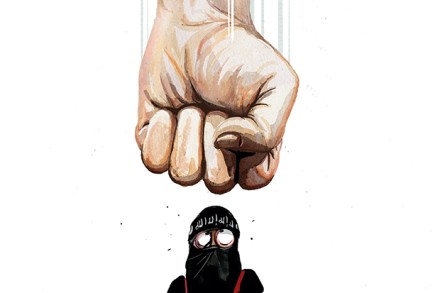
[audioplayer src="http://rss.acast.com/viewfrom22/defeatingisis/media.mp3" title="Andrew Bacevich and Douglas Murray discuss how ISIS can be crushed" startat=39] Listen [/audioplayer]Last Sunday Isis raised their black flag over Palmyra. Below the flag, in the days that followed, the usual carnage began: beheadings, torture, desecration. Syrian state TV has reported that over 400 civilians have been killed already, and the big question globally has become: how could this have happened? What went wrong with the Iraqi and Syrian troops? Isn’t there anything the West can do? Lord Dannatt, the former head of the army, has called on the British government to ‘think the previously unthinkable’ and send troops.

Portrait of the week | 26 February 2015

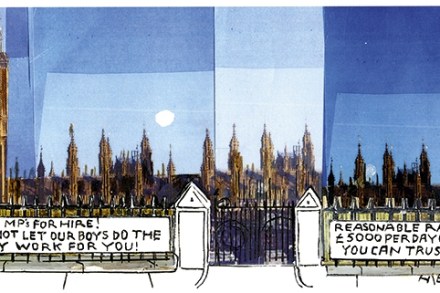
Home Sir Malcolm Rifkind, the former Conservative foreign secretary, resigned as chairman of Parliament’s Intelligence and Security Committee and promised not to stand for Parliament in May after he and Jack Straw, the former Labour foreign secretary, were suspended from their parties. This followed their being separately secretly filmed apparently offering their services for payment to reporters from the Daily Telegraph and Channel 4’s Dispatches programme pretending to be acting for a Chinese company. Ed Miliband, the Labour leader, declared that Labour candidates would in future not to be allowed to have second jobs.

I’ve received a mystifying marriage proposal

I have had many proposals of marriage recently via the internet, most of them coming from young ladies in Nigeria, Ghana, the DRC and so on. Some of them haven’t even asked for my bank details. I assume that request will come later. Here’s the best one, though. And also the most mystifying. Hello Dear one, Hello,You have a wonderful and charming look of which every man that knows something good must appreciate the good creature of the Almighty. I must say that you are an epitome of natural beauty and I would like to know you better and I hope to be your very good friend. Since the first time I saw your face here on the face book I find it hard to erase it out of my mind.

Only capitalism can save Nigeria

Abuja was eerily quiet when I arrived. The capital of Nigeria is normally bustling, but that morning the wide boulevards were empty. The red dust was undisturbed; the call to prayer echoed through the city like the sad lament of the lonely. There is an election approaching, and a lot of people take that as their cue to leave the country. You’ll find much of Nigeria’s ruling class in the Harrods food hall at this time. Although Abuja is far wealthier and more stable than most of Nigeria, its problems are representative of a country on the brink of disaster. Construction of the capital began in the 1970s, its layout heavily influenced by Milton Keynes. Today it is a mix of grand designs and organisational failure: my tour of the Ministry of Power was complicated by a power cut.