Jonathan Foreman

Will an Austrian detox really help me live longer?

From our UK edition

I had never thought much about longevity or even ageing. But once you hit your mid-50s, things shift in irritating ways: love handles become more stubborn, typefaces mysteriously blur, sports injuries take ages to heal and conversations in noisy restaurants start to become puzzles. You haven’t fallen apart but the factory settings no longer apply, and Philip Larkin’s poems increasingly seem more poignant than funny. I apparently am not the only man of a certain age to have had this realisation. Last September, at an autocrats’ conclave in Beijing, Vladimir Putin and Xi Jinping, both 72, wondered aloud if they might be able to extend their lives and therefore prolong their reigns indefinitely.

Britain must recognise Somaliland

From our UK edition

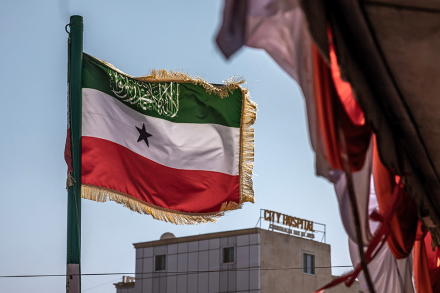
Somalia has been a byword for failed statehood and violence for so long that the calm of Somaliland, its neighbour to the north-east, feels almost miraculous. In contrast to Mogadishu, the bustling streets of Hargeisa, Somaliland’s capital, aren’t patrolled by grim-faced soldiers. Government offices aren’t huddled behind blast walls and protected by foreign troops. You can wander into a restaurant and enjoy camel steaks (a national speciality) without worrying about al-Shabaab terrorists. It is a former British colony which, for 30 years after independence, was joined to what had been Italian Somaliland.

Theresa May’s record as Home Secretary is alarming, not reassuring

From our UK edition

Despite David Cameron’s experience as a marketing man, his skills at reputation management were feeble compared to those of Theresa May. May was not a terrible Home Secretary but she was not a good one, still less an outstanding one. Yes, she remained in office for six years. But longevity in office is hardly proof of success, even at the Home Office. Anyone who has worked in a large organisation has encountered long-serving, apparently unfireable incompetents, and one thing that the history of the Cameron administration surely proves is that being bad at your job rarely leads to losing that job. Some kind of strange magic has prompted pundits and analysts to forget all the misfortunes and scandals of her tenure.

Aid is no substitute for defence, and Michael Fallon knows it

From our UK edition

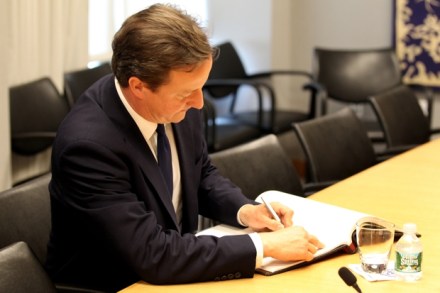
It’s been obvious for a while that the Prime Minister is exasperated by the way American and other allied officials – including President Obama himself – keep expressing concern about Britain’s rapidly shrinking defence capabilities and the prospect of yet more defence cuts. David Cameron also dislikes being reminded that he lectured other Nato leaders about meeting the alliance’s minimum of spending 2 per cent GDP on defence, when by any honest calculation the UK is not going to meet that target. He hasn’t responded directly to the multiple warnings from Washington.

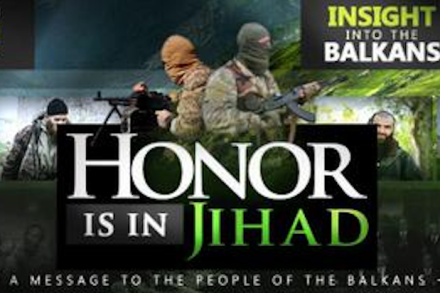
Telling young men that ISIS is ‘dangerous’ will only encourage them to go

From our UK edition

'The dreams in which I’m dying are the best I’ve ever had' When we were both sixteen, my then-best friend Dave carved the above lyric on his school desk. It was from the song 'Mad World' by the band Tears for Fears and we both thought it ineffably cool. It’s a line that elegantly evokes the self-pity and nihilism that afflicts so many teenaged boys. Every decade has songs that hit a nerve because they are similarly doom-laden and grandiose. But the important point is that many adolescent boys fantasize about death, killing and suicide – melodramatic, shocking gestures that might free them from their sense of powerlessness as they flail between childhood and the adult world.

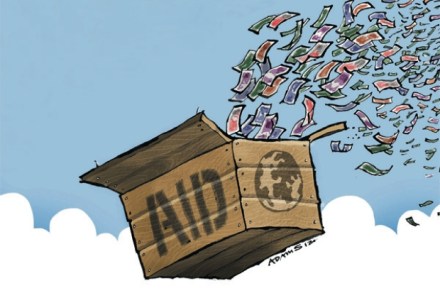
Why do our leaders continue to squander money on overseas aid?

From our UK edition

One of the more bizarre mysteries of contemporary British politics is the ironclad, almost fanatical intensity of the government’s commitment to foreign aid spending and the activities of DFID, the Department for International Development. The Times reveals today that Britain is paying professional aid staff up to £1,000 a day to work in Africa and Asia as part of a spending 'frenzy' to meet a government target. It is bizarre because the Prime Minister talks about foreign aid as if it’s all about famine relief and saving children’s lives. But he and his Cabinet are intelligent, worldly people and they know that the real world of aid rarely resembles the one celebrated in DFID pamphlets and Oxfam ads.

David Cameron’s draft resignation letter in the event of a Yes vote

From our UK edition

As told to Jonathan Foreman... To my fellow citizens I would like to apologise for the role I have played in the dismantling of the United Kingdom. I am sure there is little need for me to tell you that I never dreamed that my Prime Ministership would be the Union’s last, or that I would be the person ultimately responsible for the needless destruction of one of the most successful polities in the history of Europe and indeed the world. However, I must take responsibility for what has happened. First of all, the blame is mine for allowing the referendum question to be worded in a way that inevitably favoured the secessionist cause. As is obvious now, I should have insisted on wording such as: 'Do you think Scotland should leave the United Kingdom?

The one good thing we’re leaving in Afghanistan

From our UK edition

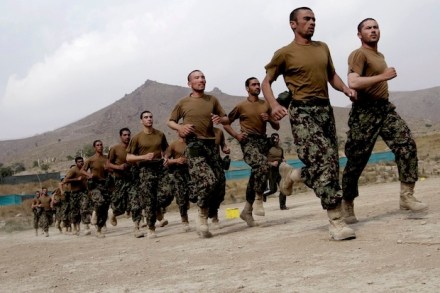
 Kabul A strange new institution is rising from the dust in the mountains west of Kabul. The foreigners here call it the Sandhurst in the Sand. Those who work at the new British-led military school, which welcomed its first cadets last week, prefer the more cumbersome ‘ANA-OA’, short for Afghan National Army Officers Academy (though the Australians who guard the place call it ‘Duntroon in the Desert’ after their own Sandhurst equivalent). Whichever name sticks, the ‘Afghan Sandhurst’ will be perhaps the only significant British contribution to Afghanistan’s security after the Nato mission finishes at the end of next year.

The great aid mystery

From our UK edition

One of the more bizarre mysteries of contemporary British politics is the ironclad, almost fanatical intensity of the government’s commitment to foreign aid spending and the activities of DFID, the Department for International Development. It is bizarre because the Prime Minister talks about foreign aid as if it’s all about famine relief and saving children’s lives. But he and his Cabinet are intelligent, worldly people and they know that the real world of aid rarely resembles the one celebrated in DFID pamphlets and Oxfam ads. They know that most aid is ‘development aid’ intended not to help in emergencies, but to foster prosperity. They also know that this development aid is at best useless and at worst counterproductive.

With Hitch in Lebanon

From our UK edition

One afternoon a couple of years ago Christopher Hitchens, Michael Totten and I had gone for a walk along Hamra street in West Beirut when Hitch spotted a signpost put up by a local fascist group called the Syrian Social Nationalist Party. The SSNP is a Hezbollah ally that does a lot of the Assad regime’s dirty work in Lebanon. Totten was in the middle of telling us about the SSNP’s reputation for for brutality and its skill at making bombs when Hitch took out his pen and started to deface the sign.

‘How many must be shot before Kashmir is news?’

From our UK edition

It was unfortunate timing. At the very moment David Cameron was pleasing his Indian audience by criticising Pakistan’s sponsorship of terrorism, security forces in Indian-controlled Kashmir were gunning down civilian protesters in the streets of Srinagar, the summer capital of the disputed state. It is not clear why Cameron failed to mention the worsening crisis in Kashmir — the violence and civilian deaths have been all over the Indian media — particularly after he was so forthright about the Gaza crisis during his trip to Turkey. But the killings of demonstrators, curfews and riots in the Muslim-majority state have not gone unnoticed in the Muslim world, and Pakistan’s President Zardari will almost certainly have raised the issue in London this week.

The terrible price that is paid by the forgotten casualties of war

From our UK edition

Jonathan Foreman says that the focus upon the death toll in the Afghan conflict obscures the high numbers of soldiers who have suffered catastrophic wounds — and the scandalously inadequate compensation they have been offered once home in a land unfit for such heroes It is not easy to measure success and failure in counter-insurgency warfare. Modern military establishments have all sorts of ‘metrics’, as they call statistics, but the politicians and the general public tend to focus on one measure alone: fatalities, and our fatalities at that. The deaths in Afghanistan of other Allied forces rarely make the headlines (though the loss of ten French troops in a single 2008 ambush did reach the front pages), and numbers of enemy dead are rarely mentioned at all.