Nicola sturgeon

Hamilton Report clears Sturgeon on all four counts – but with redactions

Nicola Sturgeon did not break the ministerial code over the Alex Salmond affair. This is the verdict of James Hamilton QC after his inquiry, with a 61-page report that clears her on all four charges.  She got things wrong in her account to parliament, Hamilton said, by giving an 'incomplete narrative of events.' But this was a 'genuine failure of recollection' and not deliberate. On the four points he was asked to look into (many of the questions facing her are outside Hamilton’s brief) he has given as strong an exoneration as she could have hoped for. And did she mislead parliament? He ducks this question. "It is for the Scottish Parliament to decide whether they were in fact misled.

What will Alex Salmond do next?

The Scottish Parliament goes into recess on Wednesday ahead of devolved elections on 6 May. That gives Nicola Sturgeon three days to see off her opponents (inside the SNP as much as outside) before the campaign begins proper. Before she gets there, we will have to face the publication of the Holyrood inquiry report. This is the SNP-chaired parliamentary panel tasked with investigating the SNP government’s mishandling of sexual harassment allegations against former SNP first minister Alex Salmond. Sturgeon’s government launched an internal investigation into Salmond, her one-time mentor turned nemesis, that was ruled by the Court of Session to be ‘unlawful’, ‘procedurally unfair’ and ‘tainted by apparent bias'.

Nicola Sturgeon’s nightmare week

It's only days before the Holyrood election campaign gets underway and Nicola Sturgeon is facing one of the most testing weeks of her political career. Two verdicts are due in the coming days on whether the First Minister broke the ministerial code over the Alex Salmond inquiry.  One is the finding of Scottish parliament's Alex Salmond committee which is due on Tuesday. The panel, which is made up of MSPs, is widely expected to say she did mislead parliament. Sturgeon and her allies will likely dismiss it as politically motivated. Already this line is being pushed out by the First Minister and SNP politicians.

Where’s Nicola Sturgeon?

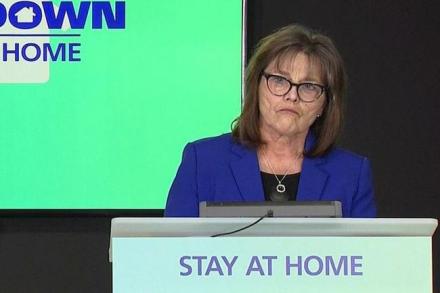
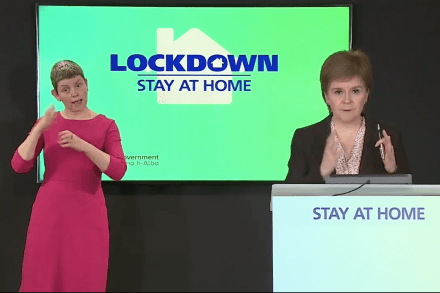
After being accused last night of misleading the Scottish parliament, Nicola Sturgeon's daily Covid briefing was high on Mr Steerpike's watch list today. Alas upon tuning in, viewers were greeted with the sight of Jeane Freeman, the country's health secretary (under fire for quite different reasons) rather than her embattled party leader. Asked by Sky about whether Sturgeon should resign, Freeman snapped back that: 'This is a Covid briefing and that is what I am here to answer questions on' before (quelle surprise) saying she still believed her colleague did not mislead parliament and that she should not resign. So where is Sturgeon and why is not doing her much loved daily presser?

Sturgeon’s future now hangs in the balance

At First Minister’s Questions this afternoon Nicola Sturgeon accused Ruth Davidson of peddling baseless conspiracy theories, dredged up from 'the bottom of the barrel'. For all that Davidson, like the rest of Sturgeon’s political opponents, might profess that their interest in the Salmond-Sturgeon affair rests on nothing more than ‘just the facts, ma’am’, the First Minister was clear their concern is primarily opportunistic and political. If they wished to pal around with Alex Salmond and his cronies in some kind of 'old boys club' that was their prerogative, but the people of Scotland will deliver their verdict in May’s elections. And there is, of course, some truth in that charge.

The Crown Office, The Spectator and a fight for a free press

The power wielded by Nicola Sturgeon and her Scottish government means it’s hard to hold her to account for basic policy failures — of which there are many. It’s even harder to investigate accusations that her aides conspired to frame and imprison someone who had become a political problem for her. The Alex Salmond affair has shown the many ways the public prosecutors in the Crown Office, led by a member of Sturgeon’s cabinet, have sought to censor and redact his allegations. The House of Commons is immune to the threats and menaces of government lawyers. The notion of parliamentary privilege, a corner-stone of British democracy, means that anything can be said within the walls of parliament without fear of prosecution.

Watch: Nicola Sturgeon’s hostile Covid briefing

First Minister Nicola Sturgeon appeared to be in a poor mood today, after David Davis used parliamentary privilege in the Commons last night to make a series of allegations against the Scottish government over its handling of the Salmond investigation. After the ITV journalist Peter Smith asked Sturgeon about the new allegations at the Scottish government’s Covid briefing, the First Minister at first refused to answer the question at all, saying ‘I’m not having this briefing side-tracked into the latest instalment of the conspiracy theories we’ve all be hearing about for a long time’. Sturgeon then took a rather more hostile approach, saying she would only answer questions from the journalist about Covid.

David Davis’s bombshell leak spells trouble for Nicola Sturgeon

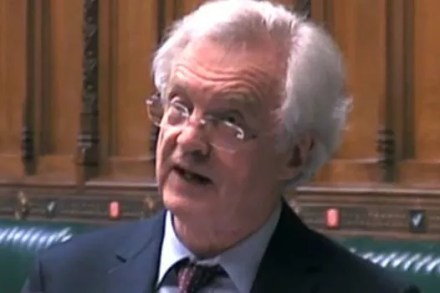
The first thing to be said about David Davis’s dramatic intervention in the Salmond-Sturgeon affair is that it is a masterful piece of concern-trolling. The second thing to be said is that this does not matter. Davis, speaking armoured by parliamentary privilege, revealed information passed to him by a 'whistleblower' that has hitherto been kept secret. On the face of it, there are very good reasons explaining why the SNP and the Scottish government would wish to keep it that way. Ostensibly, Davis’s intervention is motivated by concern that the Scottish parliament and its members lack the ability to pursue the truth wherever it may lead. He came, he said, to strengthen the Scottish parliament, not to bury it.

David Davis: Scotland – A deficit of power and accountability

For the past few months, Scotland has been transfixed by the Holyrood inquiry seeking the truth of what went wrong with the investigations into the former First Minister, Alex Salmond.  The inquiry is investigating matters of the most serious kind. Serious for the proper handling of sexual harassment complaints in Scotland. Serious for the accountability of those in positions of power, including the Scottish Government’s Permanent Secretary and its Lord Advocate. And serious, if the former First Minister’s claims hold any water, for the future of the present First Minister’s administration of Scotland. These matters are unquestionably something that should properly be dealt with in Holyrood.

Is Nicola Sturgeon’s loyalty her big weakness?

Loyalty is an important virtue. Indeed, it was loyalty to my former boss which led me to offer to act as Alex Salmond’s spokesman during his Court of Session battle with the Scottish Government. It was, at the time, a thankless task, trying to persuade sceptical former media colleagues that the whole affair was a stitch-up. Those same journalists don’t require much persuasion today. Once the Scottish Government belatedly conceded the errors in their flawed complaints procedure, at a cost to the taxpayer of at least a million pounds, and the accusations against Salmond were thrown out by a criminal court, the repercussions began.

Boris Johnson’s new approach to an independence referendum

Unionists are finding reasons for optimism when it comes to saving the union. As Nicola Sturgeon comes under fire north of the border over her handling of the Alex Salmond inquiry, 'No' has taken the lead in several recent independence polls. A poll this week for the Scotsman also suggested the SNP is no longer set for a majority in May's Scottish parliament election; instead it predicted a hung parliament. Of course, the SNP could still secure a majority in the upcoming elections. If anything, that is still viewed as the more likely scenario by Tories in Westminster. This is in part why ministers are having to carefully plan their response as to what do in such a scenario.

Alex Salmond and the trouble with revenge

Ancient Greeks were not slow to express their enthusiasm for taking revenge. Observing the recent proceedings in the Scottish parliament, they would probably have concluded that Alex Salmond was of like mind. But will that revenge do him any good? Plato made Socrates define ‘justice’ as ‘rendering to each man what he is owed’, which another speaker amplified as ‘owing good to one’s friends and ill to one’s enemies’, a sentiment repeated across Greek literature. As a result, pure enmity was regarded as a perfectly good motive for revenge. The Greek orator Demosthenes once justified bringing a case against a man for tax evasion by pointing out that his opponent had once accused him (unsuccessfully) of killing his own father.

Is Sturgeon losing support for Scottish independence?

Every politician likes to say that they don’t pay attention to opinion polls. In my experience, this is almost universally untrue. Those who sail in an ocean of public opinion want to know which way the wind is blowing. The most recent polls show the wind is in the Tories’ sails at the moment: the YouGov post-Budget survey indicated a 13-point Tory lead. But in Scotland for the past year, polls have consistently shown majority support for independence. That’s now changing. Nicola Sturgeon can’t claim she doesn’t pay attention to the polls; she has too often commented on ones showing independence ahead.

Why is the SNP afraid of issuing its own government bonds?

Rishi Sunak's budget appeared to offer some good news to Scots, not that the SNP saw it that way. An additional £1.2 billion in Barnett funding was handed over to Scotland's government. This is on top of £9.7 billion in extra spending delivered over the past year for pandemic support. But the SNP Scottish government took a different view. 'While I welcome some of the announcements today, it is clear the Chancellor has not matched Scotland’s ambition for economic recovery and supporting households,' said Scottish Finance Secretary Kate Forbes. Forbes and her colleagues often point out that 'Scotland's ambition' includes more borrowing powers.

The Sturgeon case exposes the fatal flaw in Scottish devolution

The campaign for a Scottish parliament was rooted in the notion of a ‘democratic deficit’. Scotland kept voting Labour but the UK kept getting Conservative governments. Devolution, so the logic ran, would give Scotland a more responsive government. Two decades on, a new democratic deficit is emerging: the chasm between the minimum accountability demanded by the parliament and the maximum Nicola Sturgeon’s government is prepared to give. A new establishment has taken root in Edinburgh, more powerful and less accountable than the old one. The Alex Salmond inquiry, which began as a recondite tale about a failed attempt by Sturgeon’s government to probe sexual misconduct claims against the former Scottish National party leader, has narrowed to three stark questions.

The key moments from Sturgeon’s evidence

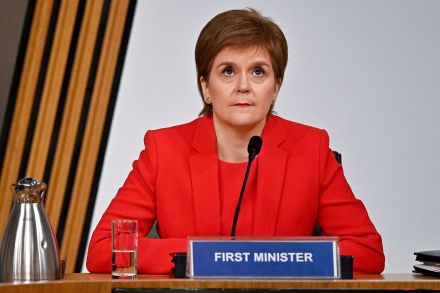
There have been inquiries, committees, multiple court cases and conflicting reports — the Salmond affair is as slippery as it is fishy. But the fundamental question is this: was there a conspiracy to take down Alex Salmond?  Having been acquitted of 13 counts of sexual assault last year, the former first minister has alleged that there was a conspiracy — and that his protégé Nicola Sturgeon was involved. Last week he told the Holyrood inquiry that Sturgeon and her husband, SNP chief executive Peter Murrell, led a 'malicious and concerted effort' to remove their political rival and even have him imprisoned. Now Sturgeon has given her side of events.

What is Nicola Sturgeon hiding?

For as long as it has been rumoured, and even more so since it was confirmed, Nicola Sturgeon’s appearance on Wednesday before the Holyrood committee investigating her government’s unlawful handling of complaints made against Alex Salmond promised to be a challenging, perhaps even chastening, moment for the First Minister. Twin revelations tonight appear to reinforce that supposition. In spades. If Sturgeon’s administration was not facing crisis before, it undoubtedly is now. At the outset of this process — which followed Salmond’s acquittal on all charges made against him in the criminal trial — Sturgeon promised that she and her government would co-operate fully with the inquiry. Such words are cheap, of course, and require the backing of actions.

The Lord Advocate shows the ‘punishable’ Scottish parliament where power really lies

The Alex Salmond inquiry is about far more than his allegations against Nicola Sturgeon and her government: it offers alarming insights into the extent and scope of political power in Scotland. In particular, the way in which the Crown Office, Scotland’s government prosecutors, pressured the devolved parliament into censoring Salmond’s evidence. It’s all the more worrying because the Lord Advocate, who runs the Crown Office, is a serving member of Sturgeon’s Cabinet. It was his turn to face that committee today. James Wolffe QC started by reminding them that they were dealing with someone above them. 'The actions of the Crown are not within the remit of the committee', he said in his first sentence.

Sturgeon’s establishment stitch-up

When The Spectator went to High Court in Edinburgh to seek clarification over the Alex Salmond case, we did not act out of chumminess or a conviction that he was telling the truth. We are not natural allies of his. We are not sure if his explosive claims are correct, but we are sure that they should be scrutinised by a free press and free parliament.  Sturgeon's allies were instead dealing with his allegations against her by seeking to stop Salmond's full story ever being told. The SNP-led investigating committee had said it would not publish his submitted evidence - which, as they knew, would mean he would not appear in front of them. The pretext?

A beginner’s guide to the Salmond inquiry

For some months now it has been apparent that the greatest threat to Nicola Sturgeon’s position as the uncontested queen of Scottish politics lay within her own movement. Opposition parties could — and did — criticise the Scottish government’s record in government but their efforts were as useful as attempting to sack Edinburgh Castle armed with nothing more threatening than a pea-shooter. Meanwhile, in London, Boris Johnson and his ministers appeared determined to do all they could to inadvertently bolster Sturgeon’s position. As Douglas Ross, the leader of the Scottish Conservative and Unionist party complained, 'the case for separation is now being made more effectively in London than it ever could be in Edinburgh'.