Nicola sturgeon

Sturgeon is indulging her conspiratorial supporters

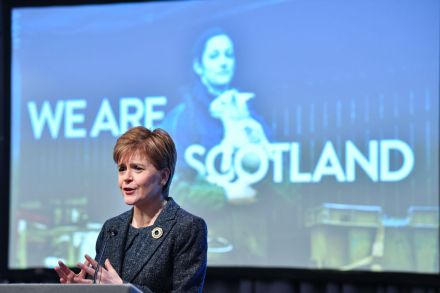
Nicola Sturgeon’s speech to the SNP’s conference earlier this afternoon was mostly standard fare (Covid, climate, coalition with the Greens, Universal Credit) but towards the end, a section on Brexit and independence stood out. She told the faithful: Westminster will use all that damage that they have inflicted as an argument for yet more Westminster control.By making us poorer, they’ll say we can’t afford to be independent. By cutting our trade with the EU, they’ll say we are too dependent on the rest of the UK. By causing our working population to fall, they’ll say the country is ageing too fast.They want us to believe we are powerless in the face of the disastrous decisions they have taken for us and the damage those decisions are doing.

Does Nicola Sturgeon care more about oil revenue or climate change?

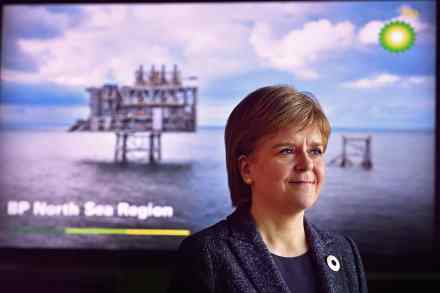
'Now, as I've hopefully made clear throughout all of my remarks, the North Sea will continue to produce oil for decades to come. It still contains up to 20 billion barrels of recoverable reserves. Our primary aim – and I want to underline and emphasis this – our primary aim is to maximise economic recovery of those reserves.' The words are from a speech made in June 2017, a few months after the Paris Agreement that aimed to limit climate change came into effect. A speech by a pro-oil Conservative, or perhaps the head of an industry group working on behalf of the oil sector? No. They are, in fact, the words of First Minister Nicola Sturgeon speaking at the Oil and Gas UK Conference that year.

Why is Sturgeon hiding behind the JCVI?

For much of its 58-year long existence, the scientists who sat on the government's Joint Committee on Vaccination and Immunisation (JCVI) lived a life of happy obscurity. But now the poor men and women who make up its membership have been thrust into the limelight amid furious Whitehall rows over whether 12 to 15 year-olds should be given the Covid vaccine.  Members of Boris Johnson's government are said to disagree with the JCVI's rulings but have had their hands tied by the committee's status as a statutory basis for giving advice in England and Wales – though intriguingly not Northern Ireland or Scotland. Judging by Nicola Sturgeon's recent comments however, you would be forgiven for not knowing this distinction.

Has Nicola Sturgeon run out of ideas for Scotland?

On Tuesday, another 4,323 cases of Covid-19 were confirmed in Scotland. A reminder, if it were needed, that the pandemic continues even though 80 per cent of the adult population are now fully vaccinated. The schools are back and the start of the new university year next month suggests more new cases are all but certain. The worst of this iteration of the pandemic may be in the past but it isn’t over. Indeed, it is so far from being over that the First Minister felt it necessary to warn that a fresh round of restrictions may be necessary should case numbers continue to rise. Even if that proves unnecessary and even if you are minded to think Sturgeon’s caution excessive, it is obvious that Covid will be a part of life for the foreseeable future.

When will Nicola Sturgeon see sense on Scotland’s mounting deficit?

UK borrowing in 2020-21 hit a record level of almost £300 billion, representing 14.2 per cent of British GDP, reported the Office for National Statistics in June. In the face of the biggest spending challenge since the Second World War, the Treasury, backed by one of the world's most established central banks, stepped up to supply all the funding needed to pay for furlough, business support and a highly successful vaccination programme.

The rise of the Nationalist deficit conspiracy

On the face of it, the numbers are damning. The Scottish government has released the latest annual edition of Scotland’s public finances. It does not paint a pretty picture. Scotland’s notional deficit has more than doubled from £15.8 billion to £36.3 billion, taking the nation’s fiscal shortfall from 8.8 per cent of GDP to 22.4 per cent. This figure factors in a geographical share of North Sea oil revenue and compares to a UK deficit of 14.2 per cent. That is not only the largest deficit of the devolved era but more than double that seen in the wake of the global financial crisis in 2009/10.

The SNP-Green alliance is a victory for the cranks

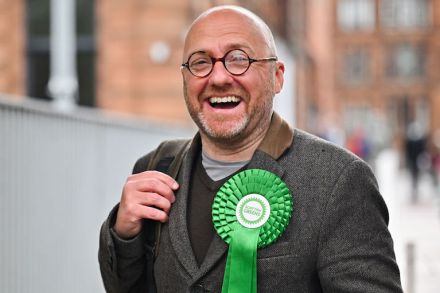
The SNP’s nationalist outriders, the Scottish Green party, are reported to be within touching distance of agreeing the terms of a formal cooperation agreement that will see them enter government for the first time. What will this mean for Scotland and its governing party? On the face of it, not a great deal. Some Green MSPs (the party has seven, including co-leaders Lorna Slater and Patrick Harvie) will get ministerial posts but will have minimal impact on SNP policy, which will likely remain tightly controlled by Sturgeon and her inner sanctum. The SNP will hope that the optics of hooking up with the Greens will boost their environmental credentials in the build-up to the Cop26 conference in Glasgow.

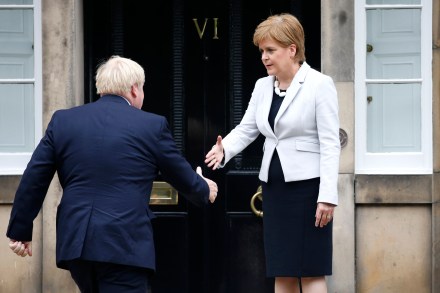
No, Boris didn’t ‘snub’ Sturgeon

One of the reasons the SNP has dominated Scottish politics for so long is that it is extremely adept at turning any crisis into a political crisis. So it is with the recent figures revealing that the Scottish government has overseen a truly appalling rise in drugs deaths over the ten years it has been in office. Scotland now has the highest per capita rates in Europe, several times higher than those of England or Wales. Yet if you ask Nicola Sturgeon, this is all somehow Westminster’s fault. The area is reserved and the Misuse of Drugs Act prevents Scotland introducing safe consumption rooms — so-called ‘shooting galleries’ — which she claims would make the difference.

Can Scotland reach net zero without the Union?

What’s more important to supporters of Scottish secession, achieving the break-up of Britain or seeing Scotland successfully transition to net zero greenhouse gas emissions? It is a difficult question for environmentally conscious independence supporters to face, but face it they must, for it is becoming increasingly clear that Scotland cutting itself out of the UK will see England, Wales and Northern Ireland power ahead to net zero while Scotland gets left behind. This month saw the publication of the Office for Budget Responsibility’s (OBR) latest fiscal risks report. The bi-annual document identifies and models potential shocks to the public finances.

Why should we expect Nicola Sturgeon to support Team GB?

It hasn’t been a great month for Scotland’s First Minister Nicola Sturgeon. First, there was the announcement that an official police investigation would take place into missing money from donations supposedly ‘ring-fenced’ for a future independence campaign; then questions about why Scotland’s vaccination targets had been missed led, apparently, to Sturgeon’s ‘Trump like meltdown’ (how she must have hated that comparison); and to cap it all off, Team GB started off rather well at the Tokyo Olympics. The sporting success led to politicians from all hues of the political spectrum tweeting their congratulations: all hues save the bright yellow of the Nats that is – from whence silence.

Has the Scottish Liberal Democrats’ time finally come?

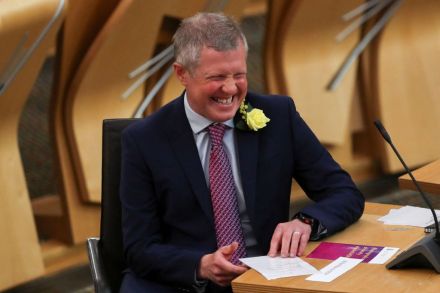
I announced my candidacy for the leadership of the Scottish Liberal Democrats this week and am under no illusions of the task ahead of me should I take the helm. In the aftermath of the coalition there was a real risk that the Liberal flame could flicker out. But with hard work, my colleagues and I have succeeded in turning our constituencies into fortresses. We have Willie Rennie to thank for that in large part. In his decade in charge of our party, Willie has gained a personal affection among the public with his colourful photo opportunities and the most recognisable smile in Scottish politics. When I think of Willie’s style, I’m reminded of the film, Fire in Babylon, about the rise of the West Indian cricket team in the 1970s.

Why the SNP fraud allegations matter

A common refrain from opponents of the Scottish National party is that ‘the SNP is not Scotland’. But it often seems they haven’t got the message, especially when Nationalist activists take it on themselves to stand guard on the border against the plague-ridden English. This week, the people who may really wish they’d done more to police the borders between themselves and the SNP are none other than grassroots separatists in the ‘Yes movement’. If you missed this story, the long and short of it is that a few years ago the SNP went on a fundraising drive. They secured hundreds of thousands of pounds in donations on the basis that the cash would go into a ring-fenced fighting fund to wage the next independence referendum.

Sturgeon’s economic council is a fig-leaf for independence

This month's announcement of a new economic advisory council formed by the Scottish government came with the usual flow of superlatives. The 17-member group will publish a strategy paper later this year to help deliver the ‘transformational change Scotland needs’, according to economy secretary Kate Forbes. We are promised ‘bold ideas’ that will bring ‘new, good and green jobs’. We have been here before. This group replaces a previous Council of Economic Advisers set up by Alex Salmond in 2007. It too had a remit to galvanise the Scottish economy. It provided 14 years of strategic advice (seven of those under Nicola Sturgeon’s leadership) to the SNP administration with no obvious corresponding uptick in Scotland’s economic performance.

Revealed: The SNP strategy for a second independence vote

A new leaflet from the SNP says another referendum on independence is ‘an issue of basic democracy’ and that Boris Johnson ‘is seeking to block the democratic right of the people of Scotland to decide our own future’. The eight-page missive, which I understand is being distributed initially to party members, is entitled ‘A Referendum for Recovery’ and features the ‘Yes’ branding of the SNP’s campaign for indyref2. The booklet is anchored by a short essay by Mike Russell, party president and former constitution minister in Nicola Sturgeon’s devolved administration at Holyrood.

Nicola Sturgeon isn’t serious about IndyRef2

The announcement reeked of desperation. Nicola Sturgeon is 'delighted' that the SNP National Executive Committee has approved her nomination of retired MSP and party grandee Mike Russell as 'political director of the HQ independence unit'. The statement, put out on Twitter last week, aimed to give a sense of momentum and industrious activity: Russell at the head of an elite squad of Nationalist campaigners who will deliver on promises of another referendum.  The appointment of Russell is not so much a sign of progress for the Nationalists as confirmation that their project to break up the UK has stalled. It follows the resignation, after just a few months in post, of Marco Biagi as campaign strategist for the SNP's 'independence taskforce', which was set up in January.

Ever weaker Union: The Tories lack a constitutional theory

No doubt Michael Gove is satisfied with how his latest comments on Scottish independence have gone down. The Chancellor of the Duchy of Lancaster, de facto minister for the Union (even though that’s meant to be someone else’s job), told the Telegraph he couldn’t see any circumstances under which the PM would allow Nicola Sturgeon a second referendum on breaking up Britain. This is exactly what Scotland’s embattled unionists want to hear and seem not to tire of hearing, even though they hear it a lot. Sturgeon has obliged by accusing Gove of ‘sneering, arrogant condescension’, ‘completely refusing to accept Scottish democracy’ and helping ‘build support for independence’. And so on this dull, dishonest dance goes.

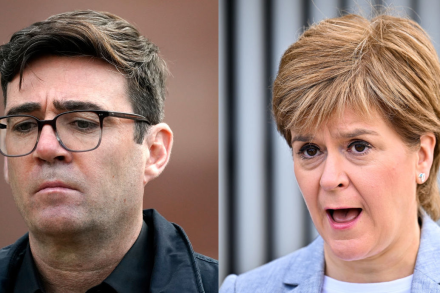
Andy Burnham turns the tables on Nicola Sturgeon

As leader of the SNP, Nicola Sturgeon has earned a reputation for rallying against what she argues is an arrogant Westminster elite which rides roughshod over Scots. It appears now though that the Scottish First Minister might be getting a taste of her own medicine. This week, she has ended up in a fierce war of words with the mayor of Greater Manchester, Andy Burnham, after the Scottish government unilaterally introduced a travel ban on Manchester and Salford. On Friday, Sturgeon announced without warning that travel between the two North West areas and Scotland would be forbidden from Sunday, due to rising concerns about the Indian (or Delta) variant. Travel had already been suspended between Scotland and Blackburn, Darwen and Bolton.

Westminster must stop Sturgeon’s separatist empire-building

It is so rare to see a Conservative push back against devolution creep that I didn’t believe my eyes at first. Stephen Kerr, newly elected to the Scottish parliament as a list member for Central Scotland,  highlighted this week the £2 million per year the Scottish government spends on a Brussels office with 17 staff members. This crypto-embassy is joined by similar set-ups in Washington DC, Beijing, Dublin, Berlin, Ottawa and Paris. All in, Nicola Sturgeon’s administration is spending just shy of £6 million each year to run these offices and employ almost 40 staffers across them. Kerr says: ‘It’s clear the SNP are doing this to try and boost international support for separation, using taxpayers’ money to do so.

Nicola Sturgeon and the rise of the traumocracy

In March, Nicola Sturgeon was asked about her response to Scotland’s drug deaths crisis. She said failings were ‘not because we didn’t care, or because we weren’t trying to do things, but we have concluded because we couldn’t do anything else, that we didn’t get it right’. This is how she addressed the worst drugs death rate in Europe and the government failings which fuelled it. An admission of regret and some self-justification: a recognition of the harm done but little in the way of a roadmap for future prevention. Drug deaths were a matter of regret rather than a health and social problem that needs solving. It wasn’t about what ministers did but whether they ‘cared’.

The wrath of Nicola Sturgeon

I can’t seem to find the Oracle of Delphi’s complete works. The libraries remain shut and when I go to Google I find the search engine inadequate in the matter of the ‘Complete Pythia’. So I throw the following story out there unsourced in the sure and certain knowledge that next week’s letters page looks set to be a bloodbath for me. Spectator readers are among the most learned readers around, and I know my fate if I relay any of this inaccurately. Nevertheless, here we go. Several years ago an utterance I’m pretty sure came from the Delphic Oracle lodged in my head. A foreign king (I hear you tapping ‘Dear Sir’ as I type) wanted to know whether he should go across the river and invade a neighbouring kingdom.