Nicola sturgeon

The Sturgeon paradox: the worse she does, the more popular she becomes

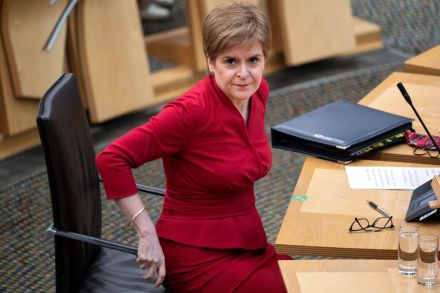
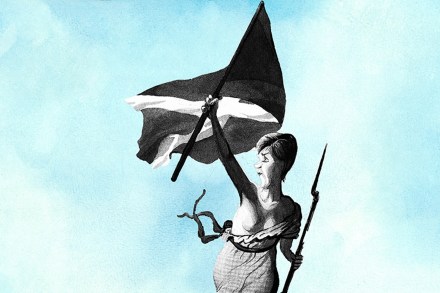
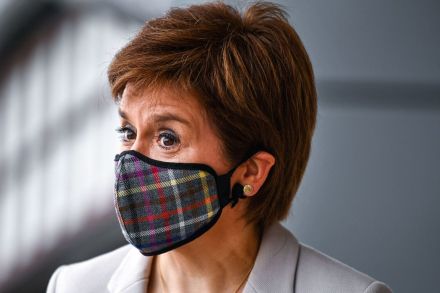
Before Covid-19, if you can remember such a time, this was supposed to be a difficult year for Nicola Sturgeon. Her party had been in power in Edinburgh since 2007 and, like all ministries of such antiquity, was beginning to look jaded. There was never any doubt that she would remain First Minister following next year’s Holyrood elections, but the prospect of her winning a majority seemed to be receding. Opposition parties believed that a relentless focus on the SNP’s record in office would be enough to clip Sturgeon’s wings. After 13 years, it was hard to point to many stunning successes: on the contrary, failures and scandals were accumulating. Time ruins all governments and hers did not seem to be an exception.

Leaving the Union would harm Scotland more than Brexit

The Spectator recently ran a piece by Andrew Wilson, author of the SNP’s Sustainable Growth Commission, under the headline 'Scotland can’t afford to remain part of the Union'. For those seeking any fresh insight into either the moral or economic case for breaking up the United Kingdom, it was thin gruel.  Instead of coherent arguments, we were offered bold and unsubstantiated assertions. We are asked to believe that the separatists’ position is 'highly sophisticated' and that because of Brexit, 'staying in the Union is riskier than independence'.

Sunday shows round-up: Brexit talks ‘in last week or so’, says Raab

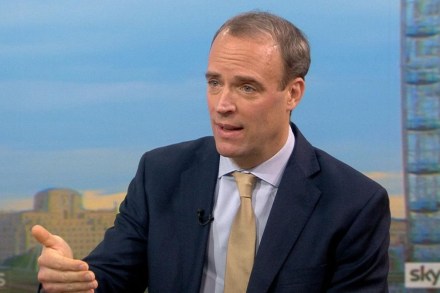
Dominic Raab - 'We want to come out' and 'stay out' of lockdown This week, the government will put its tiered system of coronavirus restrictions to a vote in the Commons. A sizeable rebellion is anticipated from the government's own MPs, who have raised concerns about the effect on the economy, as well as personal liberty and mental health. The Foreign Secretary Dominic Raab sought to ease some of their fears: https://twitter.com/RidgeOnSunday/status/1332967040903208962?ref_src=twsrc%5Etfw DR: We want to come out of national lockdown and stay out of it. There is hope... We are starting with a more restrictive approach than previously... but that allows us to ease up when we are confident that the virus is going down... There [will also be] a review every two weeks.

Nicola Sturgeon’s pandemic politics

Nicola Sturgeon had some choice words to say about Brexit last month. Speaking at one of Scotland’s daily coronavirus briefings, the First Minister said she was ‘deeply frustrated and depressed’ about the prospect of no deal in the new year, and suggested that to talk about Brexit in the middle of a pandemic was not only dangerous, but deeply irresponsible. The country doesn’t need ‘another big thing to be dealing with’ when the focus should be on coronavirus, the First Minister lamented. So you can imagine Mr Steerpike’s surprise when Sturgeon appeared to embark on her own political pet project yesterday.

Ian Blackford polices the border

In case you missed the memo, it's now illegal to cross the border to Scotland unless you have a 'reasonable excuse' that meets the First Minister's requirements. Nicola Sturgeon's new law – which limits the number of people who can travel from England to Scotland – is said to be aimed at protecting public health north of the border.  Luckily Sturgeon has her close allies on standby to support her in policing this new restriction. Step forward Ian Blackford. The SNP's leader in Westminster is so devoted to the cause that he has even taken to social media to look out for those who may have fallen foul.

More devolution in England could save the Union

Tory MPs are already starting to talk about May’s various elections. Boris Johnson’s first post-Covid electoral test will take place on 6 May and will show the durability — or otherwise — of his 2019 electoral coalition now that Brexit is ‘done’ and Jeremy Corbyn is gone. Can the Tories hold on to the much-prized Teesside and West Midlands mayoralties? If the answer is yes, the party will feel it can face the future with confidence. If not, it will start to panic. But the most significant result of the night will be the most predictable one: a Scottish National party victory in Holyrood. The SNP is currently polling comfortably, and consistently, at more than 50 per cent.

I’m turning into an English nationalist

One of the things I hadn’t anticipated about the pandemic is that it would turn me into an English nationalist. At the time of writing, the governments of Scotland, Wales and Northern Ireland have decided to place their countries under various forms of lockdown, while No. 10 has stopped short of imposing one on England with some Tier 3 hotspots. The explanation for this divergence is simple. The Scottish, Welsh and Northern Irish executives don’t need to worry about the economic harm the lockdowns will cause because they know that Westminster will come to their rescue. Boris, by contrast, cannot afford to be so reckless because England has no equivalent sugar daddy.

Wrecking the Brexit talks won’t help our fishermen

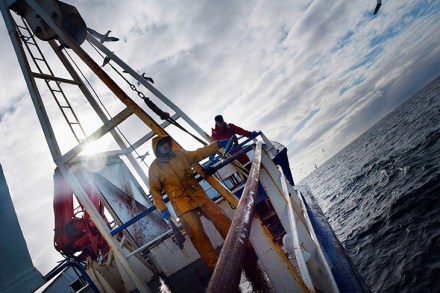
‘Every country has a political problem with its fishermen,’ wrote Peter Walker, the Conservative minister who negotiated the first effective EU-UK fishing deal in 1983. ‘Everyone sympathises with the tough life they lead. They all want to take as much fish as they can.’ And here’s Michel Barnier, still speaking as the EU’s chief Brexit negotiator in Dublin last week despite rumours he’s about to be sidelined: ‘Without a long-term, fair and sustainable solution on fisheries, there will simply be no new economic partnership with the UK.’ Those quotes encapsulate the bizarre fact that an industry which contributes just £1.

To save the Union, negotiate Scotland’s independence

The first cabinet meeting of the new term and Boris Johnson’s summer holiday were both dominated by one concern: how to turn the tide on Scottish nationalism. Johnson’s foray into the Highlands was intended to demonstrate his own personal commitment to the Union; it also allowed him to find out for himself how awful mobile phone coverage is in much of rural Scotland. The cabinet on Tuesday discussed how to stop the Scottish National party turning the legislation that will underpin the UK’s post-Brexit internal market into their latest argument for independence. The Prime Minister is confident about his chances of knocking back the Nationalists.

My Unionist faith is wearing thin

How does a believer lose the faith? It might begin with some quibble about a point of doctrine: the Virgin Birth, for instance. The believer struggles intellectually but cannot accept the dogma. What starts as a quibble then turns into an obstacle; as the doubt grows, the whole belief system starts to unravel. One day it dawns on them that they no longer believe. Reader, I am myself undergoing such a struggle to maintain my political faith in Unionism. I have been an instinctive, largely unquestioning Unionist ever since I became politically aware. The roots of my faith are simple enough: Scotland and England can do more together than individually. That and the fact of our shared history and land mass.

Justin Trudeau’s prorogation memory loss

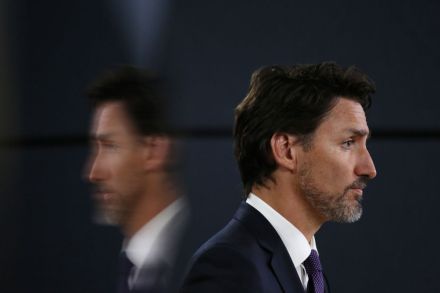
A prime minister better known for his charisma than his policy achievements proroguing parliament to ride out a political storm. Sound familiar? No, it is not Boris Johnson, but the quintessential liberal heartthrob Justin Trudeau. Trudeau’s party promised not to use prorogation to ‘avoid difficult political circumstances’ When Johnson suspended parliament a year ago, Nicola Sturgeon immediately branded him a ‘tin-pot dictator’. Mr Steerpike will wait with bated breath for a similar SNP comment on the Canadian PM.

Here’s Nicola: can Boris Johnson stop Scottish independence?

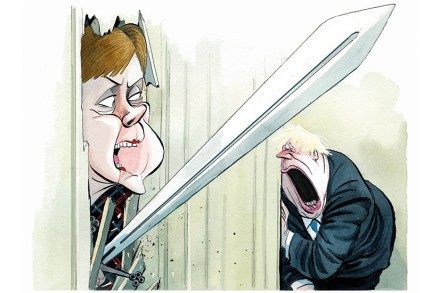
Boris Johnson is far from being the first prime minister to holiday in Scotland. David Cameron used to slip off the radar at his father-in-law’s estate on the Isle of Jura, and plenty of other Conservative premiers have enjoyed a Scottish August on the grouse moor. But Johnson may be the first to holiday north of the Tweed as a matter of political calculation and convenience. He comes to Scotland to show his commitment to what he calls the ‘magic’ of the Union. About time too. At last — at long last, Scottish Unionists might say — the cabinet has recognised it has a problem in North Britain.

Can the new Scottish Tory leader thwart Nicola Sturgeon?

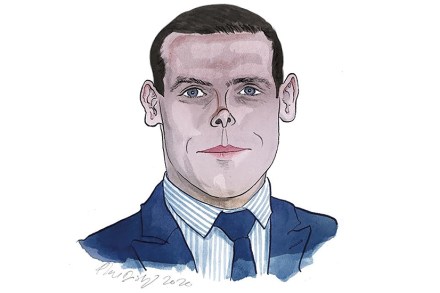
As a boy, Douglas Ross, the new leader of the Scottish Conservative and Unionist party, had two interests: cows and football. Growing up on a dairy farm in Moray, he never aspired to hold political office. He enjoyed the solitude of early morning milking. ‘Some people like big tractors, other people like sheep. I was just really interested in dairy cattle, and Holsteins in particular,’ he explained earlier this year. Now he finds himself faced with one of the more daunting tasks in British politics: thwarting Nicola Sturgeon and, in the process, preserving the United Kingdom of Great Britain and Northern Ireland. In 2016, Ruth Davidson identified Ross as one of the most talented new Tory MSPs produced by that year’s Holyrood election.

The continued existence of the United Kingdom is now at stake

When they come to write the history of the Union’s demise, there will be three guilty men. Tony Blair was a transformative prime minister, but he nodded through devolution after allowing himself to be convinced that it was an administrative change, rather than an unravelling of the United Kingdom. Many believe Iraq to be the blot on his legacy but contracting out the rewriting of the constitution to the Scottish Labour Party would cut against anyone’s greatness. David Cameron has no claim to greatness, but he deserves to be the toast of Scottish nationalists.

Nicola Sturgeon’s coronavirus failings

The numbers have seldom been better for Nicola Sturgeon. Ten months from the next Holyrood election, the SNP is polling 55 per cent on the constituency ballot and 50 per cent on the regional vote. Support for Scexit has swung into the majority. Almost three-quarters of Scots say she has handled the Covid-19 pandemic well, compared to just 21 per cent for Boris Johnson. Yet in terms of the record, Sturgeon’s response to coronavirus has been at least as impaired as that of Boris Johnson. The UK Government has been criticised for its lack of pandemic preparedness despite the findings of a 2017 simulation called Exercise Cygnus. However, the Scottish Government had its own review, conducted the previous year and codenamed Silver Swan, which heard warnings of PPE and staff shortages.

The Union is in graver danger than ever

The greatest single danger to this government is the state of the Union. Prime ministers can survive many things, but not the break-up of the country they lead. No. 10 has a plan to avoid this: it simply won’t allow a Scottish independence referendum this parliament. No legal referendum can take place without Westminster’s consent and it will be declined on the grounds that a generation has not elapsed since the ‘once in a generation vote’ in 2014. This approach, however, cannot change the fact that the Union is now in even graver danger than it was during that campaign. In recent weeks, the polls have consistently shown independence ahead. Scottish Unionists are downhearted.

The SNP may have overreached by planning to suspend jury trials

The Scottish Government may have overreached for the first time in its response to Covid-19. Today MSPs will vote on the Coronavirus (Scotland) Bill, which grants Scottish Ministers emergency powers to tackle the outbreak and suspends or amends the legal status quo in some important areas. Physical attendance in court will no longer be required unless a judge specifically instructs it; instead, appearances will be made ‘by electronic means’. Ministers will be able to permit the release of prison inmates in the event of custodial transmission (lifers and those convicted of sex crimes will not be eligible).

Alex Salmond will have his revenge

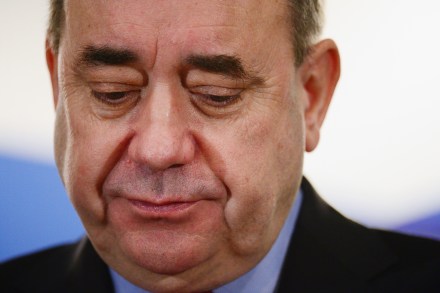
Alex Salmond has been cleared of sexual assault following a trial at the High Court in Edinburgh. The jury returned this afternoon and found the former First Minister not guilty of 12 charges and resorted to Scotland’s special not proven verdict on a 13th allegation. Salmond’s twin defences were that the claims against him were ‘exaggerations’ (he wasn’t perfect but he had never done anything criminal) or ‘deliberate fabrications for a political purpose’ (he was the victim of a conspiracy). In private, much of the Scottish political and media class already had him hanged, drawn and quartered and so this verdict is being met with a mixture of shock, horror and contempt. But the law is the law and the law says he didn’t do it.

Our politicians are only trying to do their best

This is a time for generosity and kindness; a moment for the cutting of slack and the making of allowances. These are, as most people now accept, unprecedented times. A great disruption to ordinary life that eclipses the two other great shocks to the system experienced this century. 9/11 and the great crash of 2008 were, in their different ways, man-made calamities. This is a beast of a different order altogether. And that, I think, should prompt a reappraisal of our political leaders. To say they are making it up as they go is not a criticism but, rather, obvious reality. What else can be expected in these circumstances?

Auditions for Sturgeon’s replacement are already taking place

Nicola Sturgeon has told Andrew Marr: ‘I do intend to lead my party into the next Scottish Parliament election and hopefully win that and stay as First Minister.’ What’s this all about, then? Didn’t she just record a stonking General Election victory north of the border? Yes, she did. Isn’t polling support for the SNP at levels that would impress even Kim Jong-un? Not quite, but not far off. The SNP leader finds herself in an unusual position. Electorally, she is her party’s most successful leader – winning three Westminster elections in a row and a third term in office at Holyrood. But Scottish Nationalists didn’t become Scottish Nationalists to win Westminster elections; they yearn to break free from the clutches of colonial tyranny.