Nicola sturgeon

The great pretender: Nicola Sturgeon’s independence bluff

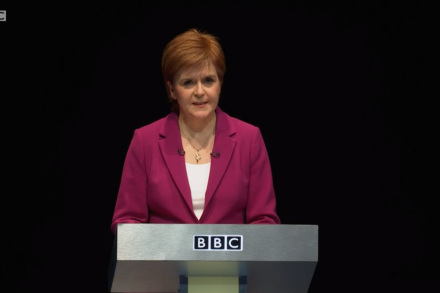
During the Scottish leaders’ debate, Nicola Sturgeon was asked a rather awkward question: what would she say to voters who want her as First Minister, but who certainly do not want another referendum, especially at such a delicate stage for the country? ‘What are they meant to do if they want you, but don’t want independence?’ she was asked. ‘They should vote for me,’ she replied, ‘safe in the knowledge that getting through this crisis is my priority.’ It’s amazing how quickly priorities can change.

Can the UK government navigate the SNP’s calls for a second referendum?

The Unionist tactical voting in Scotland makes it tempting to see the country as split down the middle between pro-independence and anti-independence voters. But this is not quite right. There is a good argument that the Scottish electorate is actually split three ways between Unionists, Nationalists and those who aren’t fully decided on the constitutional question. It is this third group who will determine the result of any second referendum. So, the UK government has to have them in mind when thinking about how to handle the inevitable request for a Section 30 order and a second referendum. The first thing to say is that the UK government should ensure Nicola Sturgeon is making the running on this. Headlines such as ‘PM: No new Scottish referendum’ are not helpful.

Scots, not Boris Johnson, are blocking IndyRef2

So what does it all mean? The first thing to bear in mind is that more than one thing may be true at the same time. This is, then, both a historic and thumping victory for Nicola Sturgeon and a mild disappointment. Historic because, after 14 years in power, Scottish voters have handed the SNP a fourth consecutive term in office; a modest disappointment because the SNP made little progress on their 2016 performance. Five years ago, Sturgeon lost the majority - albeit this was an accidental majority - she inherited from Alex Salmond and she failed to regain it this week. Doing so would have required everything to fall into place for the nationalists. They would have needed to pick up seats such as Dumbarton, Edinburgh Southern, and Aberdeenshire West to have a real crack at a majority.

Can Anas Sarwar rescue Scottish Labour?

When the Scottish parliament was set up by Tony Blair in 1999, it seemed as if Labour would govern Holyrood for the foreseeable future. The Scottish Tories were a contradiction in terms. Devolution was sold as a device that would kill nationalism ‘stone dead’. Suffice to say, this plan did not quite work. The Scottish National party took power in 2007, the Tories were resurrected as the new opposition and it was Scottish Labour that ended up on the brink of extinction. Now, for the first time in two decades, Scottish Labour is on the up, with a new party leader. Anas Sarwar, 38, was elected in February so has not had long to prepare for the campaign.

A vote for the SNP would mean another wasted decade in Scotland

Sometimes, Westminster unwittingly makes quite a good case for Scottish independence. Britain’s Covid emergency has ended, but the damage of the last year is enormous: the knock-on effects of lockdown can be seen in NHS waiting lists, the devastated high street, the mental health backlog and the 20,000 pupils who are absent from the school register. There is urgent work to do, yet the government is engaged in a battle to the death over who paid for wallpaper in Downing Street. We see a Prime Minister at war with his ex-adviser, unable to rise above the fray and capitalise on the opportunity of his vaccine success. Then there’s the opposition, unable to oppose.

Has the shine come off Saint Jacinda?

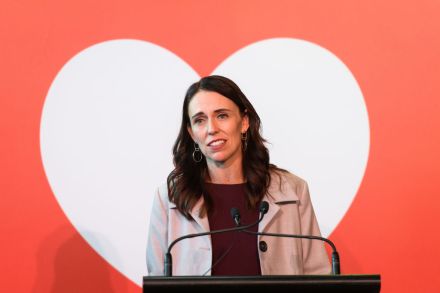
For a short time it seemed as if Jacinda Ardern, the popular premier of New Zealand, could do no wrong in the eyes of the British political establishment. The New Zealand PM was held up as the Platonic ideal of a liberal, centrist leader who had saved her country by locking down during the pandemic. The praise of Ardern reached fever pitch in October last year, when she romped home in the New Zealand elections. Labour MPs gushed over Jacinda’s ‘real leadership’ and suggested that: ‘Jacinda shows what a competent, moderate, progressive, emotionally intelligent, immensely likeable & unifying Labour leader can achieve.’ https://twitter.com/DavidLammy/status/1317528293994803205?

When will Boris next visit Scotland?

Poor Douglas Ross had a difficult outing on Radio 4's Today show this morning, being asked repeatedly as to whether the prime minister will visit Scotland prior to Holyrood polling on May 6 next month. A squirming Ross argued: I’m not sure if he’s going to come up in Scotland in this campaign. He had hoped to come up, and I thought he may come up, but given the pandemic and the restrictions to campaigning I’m not sure that’s likely now.

Drowning the sorrows of Scotland’s virulent nationalism

There is a more depressing subject than the lockdown. The evening began with a bottle of 18-year-old Glenmorangie. It was subtle and relatively gentle, but also powerful. Alas, this true flower of Scotland lured our talk towards disaster. We started discussing contemporary Scottish politics. Instantly, we were transported to Macbeth: ‘Alas, poor country, almost afraid to know itself.’ My friend said that this was unfair. Nicola Sturgeon was not as bad as Macbeth (though she would make a good Lady Macbeth). I disagreed. She is worse. It was relatively easy for Scotland to recover from Macbeth. He just needed to be slain. There is no such simple cure for the curse of the SNP.

Salmond could spark a nationalist war over Europe

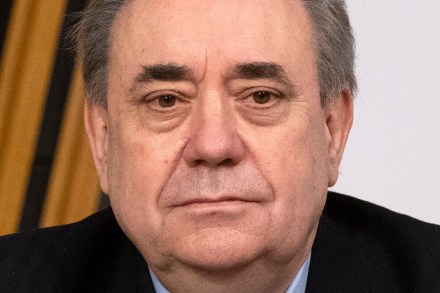
There was a Scooby Doo moment in Alex Salmond’s campaign launch on Tuesday. Something that made me think: ‘Ruh-roh’. The new leader of the Alba party was setting out his stall ahead of the 6 May Holyrood election and concentrating mostly on tactics. Voting for the SNP in the constituencies and Alba on the proportional list ballot, he contended, could elect a Scottish parliament with a ‘supermajority’ for independence. Thereafter — in fact, in week one of that new parliament — he would expect the Scottish government to open negotiations with Whitehall for the dismantling of the United Kingdom.

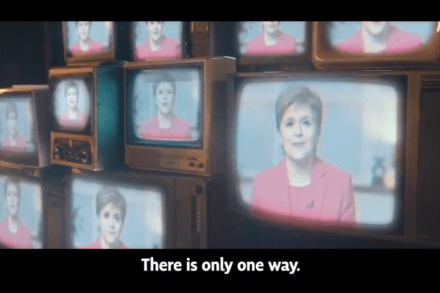
Watch: SNP’s ‘creepy’ party broadcast

Tonight the Scottish National party released its latest party political broadcast on Twitter. Featuring a young red-haired woman sitting on a stool, striding around a stage, it flashes various images onto the back of a screen complete with melodramatic background tones. Ignoring the Scottish government's own record of the last 14 years on health, education, social mobility and every other matter of public policy, it asks: 'Who will care? When you see your mother, your father, your brother, your sister, your grandpa and nan, how can we get governments that care about them. The governments that we can trust to work tirelessly for Scotland, day after day after day.' https://twitter.com/theSNP/status/1379484798251626497?

Has the SNP failed to learn from its ‘snoopers’ charter’ debacle?

In the run-up to the French vote on the European Constitution in 2005, Jean-Claude Juncker said ‘If it’s a Yes, we will say ‘on we go’, and if it’s a No we will say ‘we continue’’. Nicola Sturgeon and her SNP government are clearly of a similar mind. Not perturbed by the backlash that greeted the party's most notorious rejected policy, the Named Person Scheme, the SNP appears to be attempting its luck again, albeit in a subtly disguised and rebadged form. The Named Person Scheme was originally introduced as part of the Children and Young People Act (2014). It proposed that a ‘named person’ would be appointed for every child in Scotland up to the age of 18.

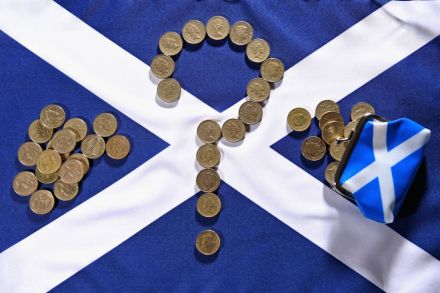
Has Salmond just shattered Sturgeon’s currency delusion?

The war of the Salmondites versus the Sturgeonites is just getting started. Who knows how nasty it will get or what the longer term ramifications will be? Already apparent though is how Salmond's pantomime villain shimmy back into the political arena is forcing Nicola Sturgeon onto ground she would rather avoid during an election campaign. The usual SNP tactic around elections is to downplay separation talk and reach out to risk averse moderate voters, safe in the knowledge the party's most zealous supporters will stay in line. But with Salmond on the scene demanding to know how exactly Sturgeon will achieve independence, that is not an option. Sturgeon will have to make another referendum and her commitment to leaving the UK a central part of her campaign.

How Nicola Sturgeon lost the leaders’ debate

I’m not sure anyone won the first leaders debate of the Holyrood election but Nicola Sturgeon definitely lost it. The SNP leader spent more than an hour on the defensive, first from voters, who joined via Zoom to harangue her for prioritising a second independence referendum during a pandemic, and then by the opposition leaders, who tore into her record on health and education. She has been running Scotland, either solo or in tandem with Alex Salmond, for 14 years now and there is the slimmest chance the public is starting to notice she's not very good at it. Sturgeon handled neither the interrogations from the audience nor those from her opponents with anything like her customary self-assurance.

Can Alex Salmond’s plan to ‘game’ Holyrood’s voting system work?

Alex Salmond’s reemergence on the Scottish political scene as leader of the Alba party had a pantomimic quality – some cheers, some boos, and a lively mix of interest and anxiety about where the plot would now go with the principal boy back centre stage. But working out how the appearance of Salmond’s new party affects what happens is a considerable challenge, thanks to Scotland’s infernally complex voting system. To paraphrase Lord Palmerston’s reference to the Schleswig-Holstein question, it may be that only around three people truly understand the D’Hondt voting system employed in Scottish parliamentary elections, though there are probably more, who like the fabled German professor, have gone mad trying to figure it out.

Salmond’s return is a headache for Sturgeon

When he was acquitted on sexual assault charges at the High Court in Edinburgh last March, I predicted: ‘Alex Salmond is back from the dead and he will have his revenge’. The past 12 months has seen a relentless onslaught against Nicola Sturgeon and the SNP establishment and anyone who thought that would culminate in the equivocal findings of two inquiries (one clearing Sturgeon, the other damning her) will have been disabused this afternoon. Salmond has announced his return to politics in time for May’s Holyrood elections, under the banner of an outfit calling itself the Alba Party. The party will stand only on the regional list and is pitching itself as an effort to help secure an ‘independence supermajority’.

What we still don’t know about the Salmond affair

The inquiry into the Alex Salmond affair has concluded that Nicola Sturgeon misled parliament and potentially breached the ministerial code. If you could swear you heard the exact opposite yesterday, that’s because you did. On Monday, the Scottish Government’s independent adviser James Hamilton released the findings of his inquiry into whether Sturgeon breached the code. He considered four potential violations: Sturgeon’s unminuted, belatedly reported meetings and phone calls with Salmond; whether she intervened in the sexual harassment investigation against him; her omission of a meeting with a Salmond representative from a statement to parliament; and her government continuing to oppose Salmond in court in spite of the advice of counsel.

The Hamilton report has not vindicated Nicola Sturgeon

Let me first deal with the general confusion. Most Scots think that the Hamilton Report, published today, deals with the question of whether the First Minister misled the Scottish Parliament when she told MSPs that the first time she knew of the allegations of sexual misconduct against Alex Salmond (of which he was acquitted of in a criminal court) was on 2 April 2018.  On any view this is hardly a ringing endorsement of Nicola Sturgeon's reliability It does no such thing. Instead, the report deals with a possible breach of the Ministerial Code by Nicola Sturgeon on the question of whether she ‘failed to feed back’ the terms of her various meetings with Alex Salmond and others between March and July 2018.

Sturgeon’s survival now seems certain

James Hamilton’s inquiry has found that Nicola Sturgeon did not breach the ministerial code. The former Irish prosecutor, who serves as the independent adviser on the code, was tasked with reviewing the Holyrood First Minister’s actions in relation to the Alex Salmond affair. Hamilton considered four allegations: That Sturgeon’s failure to record meetings and phone conversations with Alex Salmond and others (held between March 29 and July 18, 2018) breached the code’s provisions that ‘meetings on official business should normally be arranged through Private Offices’ and ‘a private secretary or official should be present for all discussions relating to government business’.

The shine has finally come off the SNP

This week is still going to be a bad one for Nicola Sturgeon. But it seems probable that we won’t know just how bad until May, after the Hamilton inquiry today found that she did not break the ministerial code. By aggressively stonewalling two inquiries, the First Minister has managed to forestall calls for her resignation by casting herself on the mercy of the electorate, which still looks set to return the Scottish National Party in the May elections. Attention has mostly concentrated on how Sturgeon and her ministers have obstructed the Holyrood inquiry. But as pro-Union legal blogger Ian Smart has set out, there were huge and unnecessary delays to James Hamilton QC’s inquiry into a potential breach of the Ministerial Code too.