Music

The lost king of the blues

From our US edition

February 15, 1981, the day after Valentine’s Day. At 11 on a Sunday morning, a man’s body was found slumped in the passenger seat of a beige 1971 Mercury on a residential street in the Forest Hills section of San Francisco. All four doors were locked. A Valium bottle was in the pocket of a coat on the back seat. There was no ID: the body went to the morgue as John Doe #15. The dead man was 37-year-old Michael Bloomfield, a pioneering guitarist who brought blues to the mainstream and set Bob Dylan’s music alight. The cause of death was registered as cocaine and methamphetamine poisoning. Questions remain unanswered about how he died; why methamphetamine, which he avoided, was in his system; and why he was in a part of town where he knew no one.

bloomfield

The legend of forgotten musical genius Mieczyslaw Weinberg

From our US edition

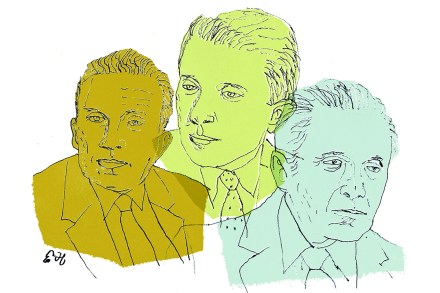
Imagine a John Le Carré thriller — one of the Cold War ones, not the tedious lefty morality tales — in which we meet Moisey Vainberg, a Polish Jewish composer who defected to Russia in 1943 while the rest of his family was wiped out in the Holocaust. He dresses like a mid-level bureaucrat and seems nervous about drawing attention to himself. That’s sensible, given that under Stalin he was thrown into jail for ‘Jewish bourgeois nationalism’. Then he’s rehabilitated, his music enjoys a brief vogue, he’s performed by Rostropovich, Shafran, Gilels, Kogan and the Borodins — but he never boasts or promotes himself. A few recordings reach the West, but the critics wrinkle their noses.

Weinberg

Wispy, gauzy beauty: This Is The Kit, Barbican, reviewed

On the way home from This Is The Kit’s show at a socially distanced Barbican, I listened to Avalon by Roxy Music, which had been brought to mind by the previous 90 minutes or so of music. It’s perhaps worth saying that This Is The Kit — the nom de chanson of Kate Stables, backed by a three-piece band and three horn players — have absolutely nothing in common with Avalon by Roxy Music, visually or musically. Stables, hair piled on top of her head, and dressed for comfort, not speed, did not look as though she intended to boost the Colombian export trade after the show; perhaps, instead, she would be offering forthright opinions about agribusiness over a lentil bake.

The joy of Radio 4 Extra

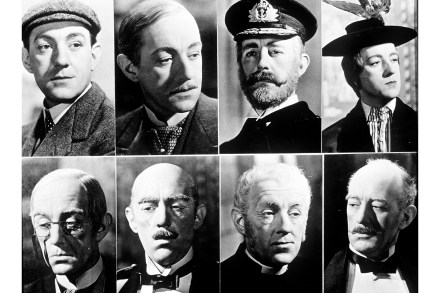
The best thing on the radio last week was, without question, Kind Hearts and Coronets. You may have missed it because it was on Radio 4 Extra, the poor, forgotten relation of the BBC’s main channels, which many regard as merely a Radio 4+1 for yesterday’s replays, when it is in fact home to the drama and comedy archive. Like the BBC4 TV channel, which is sadly ceasing commissioning, it hosts the sort of intelligent programmes people really enjoy, to the consternation of those who dismiss them as ‘old’. Fittingly, for Radio 4 Extra, Kind Hearts is all about a poor, forgotten relation who strives to reclaim his place within a family unwilling to acknowledge his existence.

The foghorn’s haunting hoot is a sad loss

Halfway through what must count as one of the more esoteric quests, Jennifer Lucy Allan finds herself on a hill near Birkenhead, in a cottage which houses the archive of the Association of Lighthouse Keepers. In a small bedroom long since surrendered to the past, she is handed a homemade CD of 90 foghorn recordings of ‘uncertain provenance’. Let’s call them Bootleg Blasts. She sits on the end of the single bed, craning her neck, ‘listening for more than what is there, listening for answers, listening for meaning’. Allan is a British writer, journalist and broadcaster with a passion for experimental music: I have had a long affair with ‘weird’ sounds and music.

Letters: The beauty of brick

The Union in peril Sir: Fraser Nelson (‘The great pretender’, 15 May) writes that it has never been easier to make a bold positive case for the Union. He suggests the UK government starts to fight. Perhaps the starting point could be the benefits which flowed from 1707 — joint citizenship, a currency union, a customs union and wealth transfer — both individual and national (the Barnett dividend speaks for itself). Without the Union these would not have happened. Without the Union there is no guarantee any of these will continue. It is not Project Fear to point that out.

Along came Bill Evans

From our US edition

Everybody Digs Bill Evans was the title of one of the great jazz pianist’s early albums, but it wasn’t always clear that he dug himself, at least if you consider his turbulent personal life. There was, first and foremost, the lifelong drug habit, culminating in his death in 1980, which one friend deemed the ‘longest suicide note in history’. There was also the introspective streak that prompted Evans to doubt his own prowess even after he had become famous. But there is also the spellbinding music that casts as powerful a spell as ever. Small wonder that a cluster of purveyors of fine music, including Craft Records, Electric Recording Company and Acoustic Sounds, have rushed to reissue his works on CD and LP.

bill evans

Take a trip with Hawkwind

From our US edition

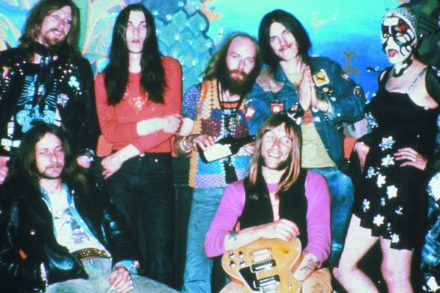
Fifty years ago this midsummer, a ramshackle convoy of vehicles — cars, minibuses, motorcycles and the odd hippie caravan — could be seen wending its way through the western counties of England in search of a patch of agricultural land near Shepton Mallet called Worthy Farm. There had already been several Sixties-era tribal gatherings in the fields beyond Michael Eavis’s now legendary homestead, but this iteration, widely advertised in the countercultural press, came billed as the very first Glastonbury Festival.

Hawkwind

‘I’m not interested in moral purity’: St Vincent interviewed

St Vincent — Annie Clark, a 38-year-old singer-guitarist of prodigious gifts — spends a lot of time confounding people. She confounds them with stage shows that are less gig than theatre, ostentatiously choreographed and fabulously provocative (though not in any crude sense). She confounds them with an image that morphs from album to album (for her sixth, Daddy’s Home, she has adopted the dissolute Cassavetes-heroine look). She confounds them by, in a puritan age, placing sex squarely within her work, though usually in a plausibly deniable way (the title Daddy’s Home refers to her father’s release in 2019 from prison after serving nine years for his part in a stock-manipulation scheme. She says of the title: ‘It’s pervy’).

Seldom less than gripping: Banged Up podcast reviewed

Prison-based podcast Banged Up, now in its second series, is far more uplifting — and less soapy — than its name suggests. It begins with the tacit assumption that, if you haven’t personally been incarcerated, you probably have at least a dozen questions you’d want to ask someone who had. Is the food really awful? How likely are you to be beaten up? Is there a lending library? (I’d start with the last.) Banged Up has the answers to plenty more besides. The podcast is hosted by a prison lawyer named Claire Salama and two ex-inmates, a former footballer, Mike Boateng, known as ‘Boats’, and university-educated Rob Morrison, who describes himself as ‘probably not their [prisons’] target market’.

I’m turning Japanese

From our US edition

The history of late-20th-century Japanese pop music can seem like an impenetrable forest to western minds. But stare past the trees and there is light from a parallel universe. The Japanese Group Sounds records of the mid-Sixties (the Spiders, the Tempters and er, the Mops) were heavily influenced by the original moptops’ Budokan Temple show of 1966 and surf bands such as the Ventures. The university campus hard rock of Tokyo’s late-Sixties freak scene — Les Rallizes Dénudés, Flower Travellin’ Band, Speed, Glue and Shinki — and the lysergic rock soundtracks to Shuji Terayama’s revolutionary theater plays by the great J.A.

japanese

The deafening rise of ‘background’ music

From our US edition

One of my favourite things on British Muslim TV is Ask the Alim. An alim is a learned expert in the law. He’ll answer anything, live. The 2020 Best Bits highlights programme included a question about divorce. Can a man take back a woman he has divorced? Good question. It depends whether the divorce is revocable or irrevocable, according to the alim. Boris Johnson has been doing something similar on Facebook recently: Ask the Prime Minister. Instead of expertise on Shariah, he offers an ‘irreversible roadmap to freedom’. But there has been something a bit weird recently about the broadcasts (easily viewed and reviewed to your heart’s content on Twitter, too). It’s the music. The alim certainly does not speak accompanied by music.

Dark knight of cool

From our US edition

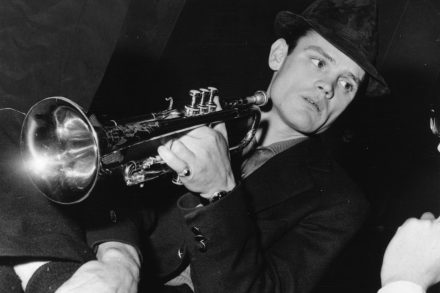
‘When the legend becomes fact, print the legend,’ Maxwell Scott announces in The Man Who Shot Liberty Valance. Something like this seems to have occurred with the jazz trumpeter Chet Baker. Other members of the West Coast jazz scene such as the great saxophonist Art Pepper were often in dire straits, but Baker has come to personify the romantic figure of the tragically doomed jazz artist. Once heralded as the ‘prince of cool’, Baker’s self-destruction was lucidly chronicled by Bruce Weber in the 1988 documentary Let’s Get Lost. Even his album covers, where he gazes broodingly at the viewer, underscore his vulnerability. His meditative, halting solos formed the antithesis of the frenetic bebop movement emanating from jazz haunts on the East Coast.

chet baker

The mystery and romance of the cassette tape

May the gods of Hiss and Compression bless Lou Ottens. As head of new product development at Phillips, the Dutch engineer invented the compact cassette in 1963 and changed music for ever. Ottens died last week at 94. A good age, and a good number. You could get a full album on each side. For many of us born in the 1970s, who came of age musically in the 1980s and 1990s, the blank cassette has an unkillable romance. We measured our lives in spools of magnetic tape: C60, C90, the occasional C46. Inside those hard plastic shells we surfed the thin end of the aural wedge, composing scrappy love letters in the medium’s notoriously tinny register — no bass, all treble. Tapes were desirable not for their audio quality, which was sub-prime, or aesthetic appeal.

Barack Obama will make you cringe: Renegades: Born in the USA reviewed

Barack Obama wants the world to know how much he loves singing. In his new podcast, which takes the form of a series of conversations with Bruce Springsteen, he’s rarely without a tune on his lips. ‘Further on up the road…/ you been laughing, pretty baby…’ A shower-singer, a bedroom warbler, an Air Force One air guitarist with an okay voice, the former president is proof that you really can be embarrassing without feeling an ounce of embarrassment. Oh, to have seen his daughters’ faces when he broke into ‘Let’s Stay Together’ in front of Al Green. The sound team at the fundraiser in Harlem urged him to do it, he tells Springsteen, but no one’s buying it.

‘I like upsetting people’: Steven Wilson interviewed

Steven Wilson is going about becoming a pop musician entirely the wrong way. For one thing, he’s into his fifties, not typically the point in life at which budding chart-botherers launch their assault on hearts and minds. For another, in an age in which pop stardom and identity politics have become entwined — in cultural discourse, at least, even if not necessarily in your teenager’s listening habits — he has everything going against him. ‘I come from a very well-adjusted family. I’m heterosexual. I’m white.’ Of course, Wilson doesn’t really expect to be competing against Stormzy and Dua Lipa and Cardi B.

From ancient Greece to TikTok: a short history of the sea shanty

Many things are now normal that would have seemed unlikely a year ago. But even in this strange new world the sudden rise of the sea shanty is, perhaps, strangest of all. It all started in December when Nathan Evans, a postman from North Lanarkshire, posted a video of himself online — a lone figure filmed in no-frills close-up, hoodie high under the chin, beanie pulled down to the eyes — singing the 19th-century whaling song ‘Wellerman’. A trickle of views became a storm, thousands turning to millions (now billions) and just like that sea shanties went from kitsch, Last Night of the Proms novelty to global phenomenon. The song went viral — the centre of a new internet craze: #ShantyTok. Fast forward a few months and Evans, whose song went to No.

Will Britain’s orchestras survive the Brexit exodus?

In the first month of Brexit, two British orchestras were publicly beheaded. The London Symphony Orchestra was shocked to discover that its music director, Sir Simon Rattle, had taken a better job in Munich, while the City of Birmingham Symphony Orchestra was forced to accept that its luminous Lithuanian, Mirga Gražinyte-Tyla, was simply too hot to hold any longer. Some pundits quickly predicted a post-Brexit talent haemorrhage. Of the two decapitations, the LSO’s was by far the more painful. Rattle is a totemic figure, a tousle-haired Liverpudlian who learned his scores in public libraries and won a music scholarship from the local council. He is the ultimate welfare-state success story, with a knighthood and an Order of Merit to show for it.

‘We knew there was greatness in these songs’: Steve Diggle of the Buzzcocks interviewed

Steve Diggle hasn’t spent this long away from a stage in 40-odd years. For the Buzzcocks guitarist, like everyone else, 2020 was a year of thwarted plans. Instead of touring Britain and America, Diggle spent the year in ‘self-analysis’ and writing a new album. What else for an ageing punk to do? Except, of course, curate your legacy, grapple with the past. When Diggle joined Buzzcocks in 1976, originally as the bass player, he didn’t imagine he would still be flying the flag 45 years later. It’s both a blessing and a curse. Though his band remains a going concern, the songs that shift tickets were written half a lifetime ago. ‘Ever Fallen In Love (With Someone You Shouldn’t’ve)’, ‘What Do I Get?

The reasons Beethoven is my man of the year

I could have predicted that music would be the thing to sustain me in this strange, often traumatic year: it can be thrilling or consoling, aspirational or confessional, as the situation requires. It has so much to say about loneliness and, in spite or because of that, can make you feel much less lonely. And it is just the thing when you are one Zoom meeting or White House press briefing away from preheating the oven and crawling in. What I did not expect was that Beethoven would be the music that meant most to me in this time. Perhaps this was foolish: Beethoven has, after all, been my greatest obsession for much of my life. But his innate intensity, his permanently gritted teeth, would not seem to provide the needed antidote to all the tooth-gritting we’ve been doing in 2020.