Music

Charles Brown’s Christmas

From our US edition

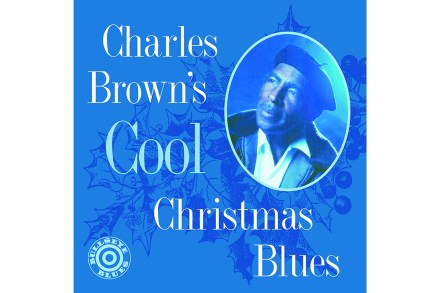
When a young singer and pianist named Charles Brown was hired in 1944 to play at Ivie’s Chicken Shack, the legendary jazz singer Ivie Anderson’s nightclub in Los Angeles, he was instructed to play ‘nothing degrading like the blues’. It wasn’t an admonition that he heeded very long. The blues didn’t degrade him. He elevated them. After Brown died in 1999, Bonnie Raitt, who toured with him starting in 1987, deemed him ‘the most extraordinary piano player I’ve ever heard’, noting that he ‘led the West Coast blues explosion’. Indeed he did.

charles brown

The great lost Beatles album

From our US edition

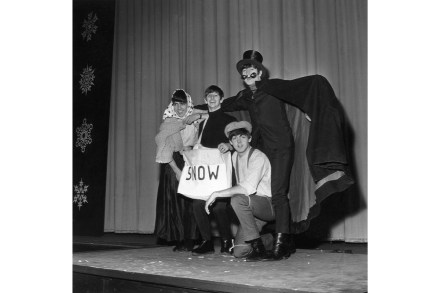
The Beatles never had a proper Christmas number one, only seasonal number ones with unseasonal bangers: ‘I Want To Hold Your Hand’, ‘I Feel Fine’, ‘We Can Work It Out’/‘Day Tripper’ (1963-65) and ‘Hello Goodbye’ (1967). Though they never made a traditional Christmas record, the Fabs loved Yule — and you know you should be glad. Between 1963 and 1969, they recorded an album-worth of charming Christmas nonsense. Welcome to the semi-secret hinterland between the legal and bootleg worlds: the Beatles’ Fan Club Christmas flexi discs. The flexis have only had one official release since their private circulation to the ravenous Brit-Beatle fan club.

beatles

‘You can’t have opinions any more’: Rick Wakeman interviewed

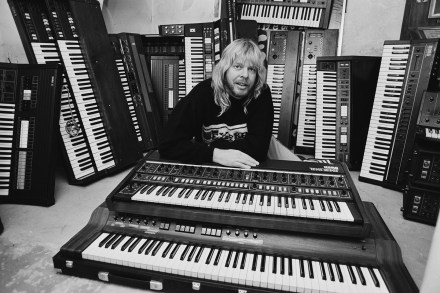
‘Classic rock’ is a rather fusty old oxymoron, but then the term ‘classic’ is applied these days to chocolate bars and that most in-demand of consumer undurable, lavatory paper, so I suppose one shouldn’t complain. Covid-19 will probably be remembered as a ‘classic virus’ one day not too soon, when there are other more baleful new-wave viruses with spiky hair pogoing around. ‘Classic rock’, meanwhile, is a term applied to the sort of chest-beating rawk that people of my generation admire: the Who, Bad Company, Blue Oyster Cult insisting, in timely fashion, that we should embrace death, and Lynyrd Skynyrd informing us, with unforeseen irony, that they can fly, free as a bird.

Jonathan Biss: The sadness and euphoria of playing to an empty room

My November was bookended by two characteristic displays of grace. I ushered it in by falling on all fours while out for a run, skinning both knees and demolishing my pride; masked and bleeding is not a good look, even (especially?) on Halloween. I bid the month farewell by leaving my house in a torrential rainstorm — having consulted the weather report — wearing socks and shoes with holes in them, and carrying no umbrella. It seems I’ve been distracted. In my… well, not defence, but perhaps something adjacent to it, it was a hell of a month. After a seeming eternity of nothing, everything happened in November.

Why AI will never write a great song

Two years ago, the songwriter Nick Cave told his fans that he’d speak to them directly — not through an interviewer. ‘This will be between you and me,’ he wrote. The letters he has received and the answers he has given are collected online in The Red Hand Files. Here is a selection of the best. Considering human imagination the last piece of wilderness, do you think AI will ever be able to write a good song?Peter, Ljubljana, Slovenia Dear Peter, In Yuval Noah Harari’s brilliant book 21 Lessons for the 21st Century, he writes that Artificial Intelligence, with its limitless potential and connectedness, will ultimately render many humans redundant in the work place. This sounds entirely feasible.

Mozart the infant prodigy was also a child of the Enlightenment

‘My dear young man: don’t take it too hard,’ Joseph II counsels a puppyish Mozart, the colour of his hair unknown in nature. ‘Your work is ingenious. It’s quality work. And there are simply too many notes, that’s all. Just cut a few and it will be perfect.’ ‘Which few did you have in mind, your majesty?’, Mozart enquires, the sinisterly oleaginous F. Murray Abraham as Salieri quietly registering the subtle brilliance of Mozart’s grinning lèse-majesté. Those interested in the subject of Miloš Forman’s 1984 film Amadeus are today faced with a not dissimilar predicament: which of the millions of words written about Mozart should we cut?

The wonder of Wagner

From our US edition

Laramie, Wyoming Nearly all the famous artistic controversies in the aesthetic history of the western world — the Battle of the Ancients and the Moderns in France and the contest between the rococo and neoclassical schools across Europe in the middle of the 18th century; the subsequent rivalry between the Classicists and the Romantics and the contretemps in the late-19th century between the Realists and the Impressionists — are as dead, irrelevant and forgotten today as the wars between the Guelphs and the Ghibellines.

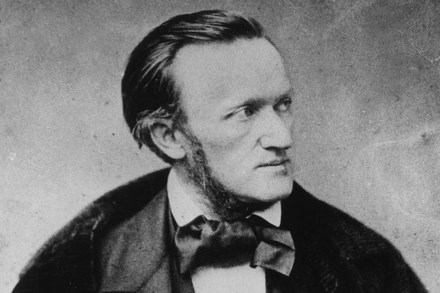
wagner

Is any song more lucrative than ‘Happy Birthday’?

Last orders The new tier restrictions have made life difficult for pubs. How many are closed? — According to the British Beer and Pub Association, 16,500 of England’s 37,000 pubs have had to close for everything except takeaway owing to their being in Tier 3 areas. — Of the 21,000 pubs in Tier 2 areas, 14,000 have had to remain closed because they are unviable if they can’t serve drinkers without also serving a substantial meal. — That leaves 732 pubs in Tier 1 areas which can open more or less as normal. — The number of pubs has fallen by 22 per cent this century. However, 2019 saw the first year-on-year rise, with a net gain of 320 pubs across the country.

You won’t be able to look away: Shirley reviewed

This week, two electrifying performances in two excellent films rather than two mediocre performances in the one mediocre film — see: Rebecca — so things are looking up. Firstly, Mogul Mowgli, starring Riz Ahmed, directed by Bassam Tariq and co-written by the pair. Ahmed plays Zed, a British-Pakistani rapper who has lived in New York for two years and is on the brink of stardom when he returns home to his family in London. It’s intended as a brief visit but then he is struck down by an autoimmune disease that is never named but is something like multiple sclerosis. The point is, I think, even his body doesn’t recognise him any more.

Back to my Toots

From our US edition

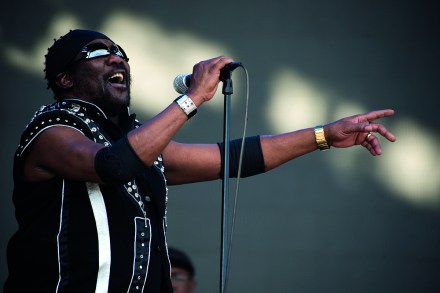
Pop music is tribalist by nature and divisive by desire. It was always the Beatles or the Stones, mods or rockers, burn the Beatles’ records or ‘hang the DJ’ and, most important of all, Bob Marley or Big Youth? (The answer is Big Youth.) Only one man transcended this nonsense: Frederick Nathaniel ‘Toots’ Hibbert. Anyone who has heard Toots but doesn’t dig his mighty soul skank should be cast into the wilderness for 40 days and 40 nights of good, hard thinking. Toots died on September 11 in his native Jamaica. He was 77, allegedly the victim of complications from COVID-19. The man may have gone, but his vibrations will live on as long as mankind has ears to listen and feet to dance.

toots

Booker prized

From our US edition

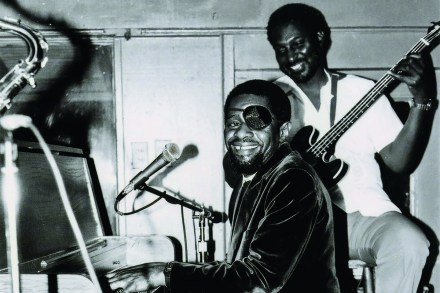
Dr John called James Booker ‘the best black, gay, one-eyed pianist New Orleans has ever produced’. Booker died in 1983, aged 43, ruined by drugs, drink and madness, and attended by legends of delinquency lurid even for a New Orleans piano ‘professor’. Though he had appeared on plenty of other people’s records and stages, Booker had recorded only three studio albums in his lifetime. Classified, recorded in October 1982 and now re-released on vinyl, was the last of them. It might not be the best of them, but it shows why Booker was one of the greats. The studio was booked for three days, but Booker had a breakdown the week before and couldn’t get a good take down in the first two days.

booker

Morals and mortality

From our US edition

There is a moment in the first episode of Dolly Parton’s America when you think the sainted songstress may have made the worst mistake of her career. ‘Do you think of yourself as a feminist?’ asks host Jad Abumrad. ‘No, I do not,’ Dolly says. There is a pause as wide as the gap between those who have four-year degrees and those who don’t. After Dolly says she thinks feminism means hating men, Abumrad cuts to an interview with feminist, Heartland author and Dolly superfan Sarah Smarsh. They grasp for a reason why Dolly would think so non- progressively. The interview starts to feel like a wake.

dolly parton

The dazzling, devious, doomed sound of James Booker

Dr John called James Booker ‘the best black, gay, one-eyed junkie piano genius New Orleans has ever produced’. Booker died in 1983 at 43, ruined by drugs, drink and madness. Though he appeared on plenty of other people’s records and stages — Dr John, Aretha Franklin, B.B. King — Booker recorded only three studio albums in his lifetime. Classified, recorded in October 1982 and now re-released on vinyl, was the last of them. It might not be the best of them, but it shows why Booker was one of the greats. The studio was booked for three days, but Booker had a breakdown the week before and couldn’t get a good take in the first two days. He revived on the third and recorded Classified in four hours.

The joy of an illegal rave

Every time I read that Britain’s anti-coronavirus measures are being jeopardised by a ‘small minority of senseless individuals’ holding illegal raves, my heart soars. Maybe there’s hope for the youth after all! I’d been beginning to wonder. In my experience, kids of about university age have been priggish and obedient about the government’s rules during lockdown. ‘Why can’t they just get off their faces on drink, drugs and repetitive beats, like my generation did at that age?’ I’ve often mused. Well, thank goodness that’s exactly what some of them are doing. Last month alone, the Metropolitan Police claim there were as many as 500 illegal raves across London.

The problem with livestreaming heavy metal? No moshpits

There was only so long anyone could put up with the live musical performances of the early days of lockdown: musicians in their living rooms, performing stripped-back versions of their songs in broadcasts that froze or stuttered. The time would come, inevitably, when everyone wanted more. Viewers would want something more closely approximating a full show; musicians would want to be paid. Laura Marling was early through the gates: last month, she promoted her latest album with two concerts at the Union Chapel in London, played to an empty hall but streamed for UK and US audiences.

Young people have never paid attention to the BBC

In January, the director-general of the BBC, Lord Hall of Birkenhead, announced that the corporation intended to shift away from making programmes enjoyed by older members of the public to concentrate on the ‘lives and passions’ of young people, in particular 16- to 30-year-olds. Of course Hall was not the first BBC employee to take an obsessive interest in young people, and nor was his mantra anything other than the norm in a country where older people, who are comparatively well off, pay their taxes, commit little crime, consume like crazy and indeed pay the licence fee, are held in a certain contempt. A month before Hall made his statement, the BBC had devoted considerable airtime to yoof and its wants, needs and aspirations regarding the general election.

SOS: Save our singers

‘Musician’ is how I described myself to the nice Latvian lady interviewing me the other week for an ONS survey connected with the coronavirus, but that didn’t tell the government much. In economic terms, our profession embraces everyone from Sir Paul McCartney to the struggling garage band that may or may not be allowed back into your newly reopened pub. In terms of what we do, we divide into three overlapping categories — writers, administrators and performers, and our experience of pandemic and lockdown has been sharply different. I’m mainly a writer, and I guiltily admit that I have welcomed my first chance for years to work with minimal interruption on what I probably do best.

The festivalisation of TV

The Glastonbury festival has undergone a series of metamorphoses in the 31 years since I first attended as a 15-year-old fence hopper (as, indeed, have I, thank heavens). One of the most significant changes, to pillage Gil Scott-Heron’s famous prophecy, is that the evolution has been televised. Back in 1989, if your boots weren’t on the ground — often a quagmire, though not that year — you missed out on all the fun. This has not been the case for aeons. Television coverage of Glastonbury began on Channel 4 in 1994, switching to the BBC three years later.

The power of cheap music: pop podcast round-up

Noël Coward was so right that his words have become a cliché: it is indeed extraordinary how potent cheap music can be. Its potency, however, is not innate. Amanda Prynne, from Coward’s Private Lives, would not have been especially struck by ‘Some day I’ll Find You’ had it been playing on a wireless in a shop; its impact came from hearing it as she again encountered her ex-husband. For cheap music to be potent, context is everything. Without a wider meaning, a cheap little pop song is just notes and chords. With meaning, the most throwaway frippery can become an object of fascination. That’s often true of the best known of songs.