Music

Why do bankers love techno?

Bankers and other assorted finance bros are an inescapable presence on the London nightlife scene. Industry, the British-made TV drama that follows a group of graduates on (and off) a City trading floor, begins its second series on BBC1 tonight and spares no detail of the drug-fuelled hedonism of its young bankers. One plot arc in the first series starts when the protagonist, exhausted after a long night on the powder, executes a trade in the wrong currency. Some in the field have protested that the on-screen excess is unrealistic. But much of it is apparently inspired by real-world experience. Mickey Down, one of Industry’s creators, spent just over a year working at Rothschild at the beginning of the 2010s.

Is Britney Spears really ready for a comeback?

For the finale of the #FreeBritney franchise, it seems that the 2000s Queen of Pop is to return to music. Recent reports have claimed that Britney Spears will be collaborating with Elton John on a song titled 'Hold Me Closer'. As exciting as this is, I can’t help but think that – seeing as her conservatorship was ended less than a year ago by a court ruling – she may be biting off more than she can chew. I question if she is truly ready to return to the inevitable pressure that comes with being in the public eye. I’m no therapist, but the treatment that Britney has endured over the past 14 years surely has to have lasting mental effects on the star’s health.

Recollections of a Queen’s piper

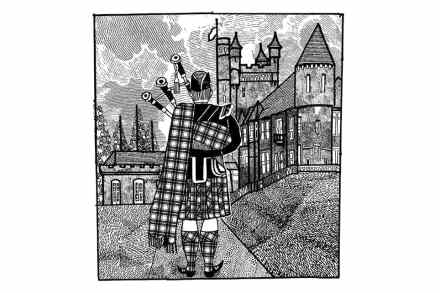
In 2015 I was lucky enough to become the Queen’s Piper. I played the bagpipes every morning for about 15 minutes under the window of Her Majesty, normally while she was eating breakfast. The Piper to the Sovereign is part of the household so I travelled with Her Majesty to her royal residencies, including Buckingham Palace, Windsor Castle, Balmoral Castle and the Palace of Holyrood house. The appointment also involved welcoming guests and visitors to the households for audiences with foreign and domestic dignitaries such as ambassadors and heads of state – and also British citizens receiving OBEs or CBEs and so on. For these occasions my role consisted mainly of informing them of the general etiquette and expectations while in Her Majesty’s presence.

Country music finds its independent streak

From our US edition

Have you tuned in to a country radio station the past few years? You might have been surprised at some of the sounds coming through your speakers. A famous old-school Webb Pierce tune is chopped and screwed into an up-tempo hip-hop beat. Lyrics about an Applebee’s milkshake are accompanied by a booming bass. P!nk and Justin Bieber croon alongside Country Music Award winners. You’d be forgiven for thinking that all mainstream country really has to offer is saccharine, trope-filled pop music with a Southern accent. Nashville’s stranglehold on country radio has given the genre a bad rap (sometimes literally — here’s looking at you, Lil Nas X).

country

Harpo Marx – genius, idiot savant or lovable overgrown child?

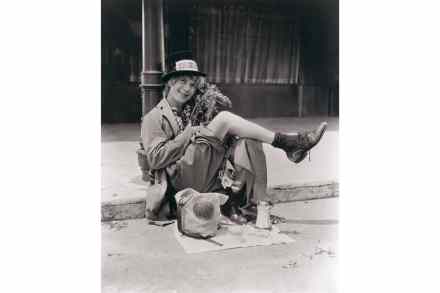
It’s hard (if not impossible) to imagine a world worth living in that doesn’t include the Marx Brothers; and equally impossible to imagine the Marx Brothers without their forever silent, animal-loving, hilariously unpredictable Harpo, he of the moppet wig, trampish overcoat packed with stolen silverware and blow torches, and recurringly grotesque facial expressions. For while the greatest comic performers of the silent film era (such as Chaplin and Keaton) couldn’t speak to the camera, Harpo was the only comic of the talkie era who simply wouldn’t, as if human conversation were somehow beneath him.

Beyoncé and the pornification of pop

Beyoncé Knowles has always been sexy: naturally and consciously so. But her sexiness – those astonishing bottom-swooshing dance moves; the gleaming, undulating chest; the ever-changing, lustrous locks – sat alongside a moral substance that grew as her career progressed. She weighed in on politics, raising $4 million for Barack Obama and singing at his first inaugural ball. She weighed in on sexual morality, telling women in one of her most iconic songs that their man ought to, if he was to be taken seriously, ‘put a ring on it’. She is a committed Christian, having grown up in a Methodist household and frequently spoken of her faith.

Arcade Fire: the last of the art-rockers?

From our US edition

After I saw the Canadian band Arcade Fire on tour in London in late 2010, I began my review of the gig by quoting Psalm 98: “Make a joyful noise unto the Lord, all the earth: make a loud noise, and rejoice, and sing praise.” My abiding memory of the evening was that it was fun. Despite the apparent solemnity of many of the act’s songs — several of which had been taken from their debut album, Funeral, and revolved around death and despair — the concert had a celebratory and upbeat aspect. It concluded (as virtually all of their shows had done) with a euphoric singalong of what has become their signature song, the cathartic “Wake Up.” A decade later, matters have changed. The world is in a considerably more anxious state than it was.

arcade fire
Durham

The underrated Kenny Dorham

From our US edition

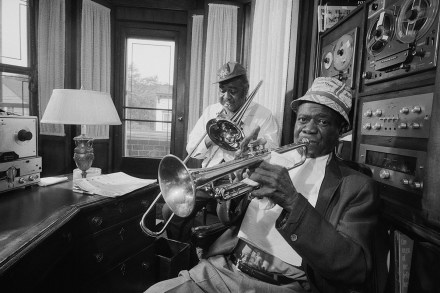
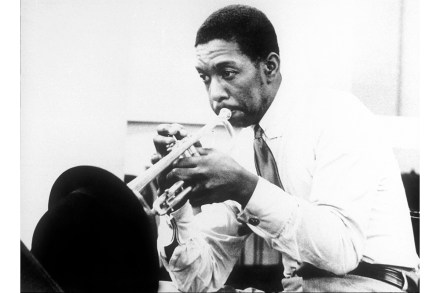
Kenny Dorham was one of the jazz greats. The closest player in modern times to his intimate sound is probably Roy Hargrove, who, like Dorham, hailed from the Lone Star State. But despite all the accolades from the jazz cognoscenti, there is something plaintive about his career, down to the liner notes for his own albums. Indeed, right from the first sentence. Take the 1956 album Kenny Dorham and the Jazz Prophets on the ABC-Paramount label: “Kenny Dorham is one of those artists who have not as yet been accorded their deserved share of recognition.

‘Jerusalem’ is a rousing anthem – but who knows what the words mean?

The spontaneous mass adoption of deep feeling is always interesting. Jason Whittaker has a very good subject, in the journey of the cryptic lyric section of the preface to William Blake’s incomprehensible epic Milton, written and illustrated between 1804 and 1810, to its becoming the de facto national anthem of England. ‘And did those feet...’ only took on its familiar title ‘Jerusalem’ (which has nothing to do with Blake’s poem entitled ‘Jerusalem’) after it was set to music by Hubert Parry on 10 March 1916. The following day, Parry handed over his composition to his colleague Walford Davies, saying insouciantly: ‘Here’s a tune for you, old chap. Do what you like with it.

Jarvis Cocker measures out his life in attic junk

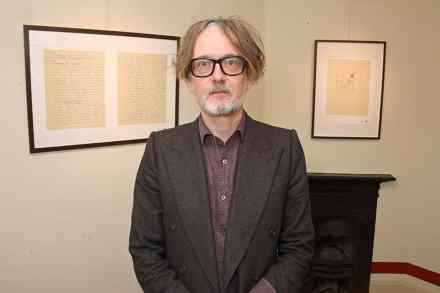
If you were hoping for an autobiography this isn’t it. Jarvis Cocker calls it ‘an inventory’ and insists: ‘This is not a life story. It’s a loft story.’ But anyway it’s as quirky and engaging as you would expect from Cocker and also the most beautifully produced book I’ve seen in years, designed by Julian House. And it does, in its circuitous way, tell us quite a lot about Cocker’s formative years in Sheffield. The MacGuffin is that Cocker is meant to be clearing out a loft where he’s been storing stuff for years and deciding what to ‘cob’ (chuck) and what to keep. Of course he has trouble cobbing anything, which is why he’s accumulated so much junk in the first place. He is a hoarder.

The tricky business of music biopics

Along with films about real life authors, poets, comedians and artists, biographies of musicians are notoriously difficult to translate successfully to the cinema screen. Why? Writing and painting aren’t inherently cinematic; live music has more visual potential (hence the greater number of motion pictures). But the challenges of lip-synching and the existence in most cases of plenty of original concert footage raise the stakes for any actor prepared to take on such a role. There's a real danger of performances falling into pastiche and mimicry. Directors face an even greater predicament when music rights are refused, as was the case with the recent Stardust (2021) where actor/musician Johnny Flynn had to come up with songs in the style of David Bowie.

Letters: Who’s responsible for Putin’s rise if not Russians?

Russian misrule Sir: Your editorial (‘Sanction Schroder’, 21 May) laments that western sanctions may be harming ordinary Russians, given that they too ‘are victims of Vladimir Putin’s corruption and misrule’. Yet who if not the Russian people themselves are more culpable for the rise of Putin? The unpalatable fact that both he and his assault on Ukraine still enjoy such considerable popular domestic support cannot be put down merely to his iron grip on the levers of coercion and propaganda. For most of the last century the Russian people have allowed themselves to be misruled and oppressed by a succession of malevolent tyrants and despots. There comes a point when the people of a country have to take responsibility for their leaders.

I’m a tourist in my own town

‘Just when I thought I was out, they pull me back in,’ groans a weary Al Pacino in The Godfather III. This is what it feels like being in/out (I’m not sure which) of the Sex Pistols. Oscar-winning director Danny Boyle has filmed a six-part drama about the life and crimes of my childhood buddy and Pistols guitar hero Steve Jones, based on his autobiography Lonely Boy. So, here we go again with endless rounds of interviews, with such profound questions as, what was Sid/Malcolm really like? Why is Johnny so angry? Will you ever play again? No! First off, it’s New York for the drama’s US premiere, courtesy of Vanity Fair. Not very punk I know.

How I fell in love with the blues

I was never into the blues that much. I listened to a bit of Roy Buchanan and Rory Gallagher but only as accidental overspill from rock. I knew the Rolling Stones’s sound came out of their love of the blues but what they added was more important (to me) than what they took. And then there was Eric Clapton. In common with a discerning portion of the British population, I loathed Clapton after his drunken endorsement of Enoch Powell’s rivers-of-blood speech. Even if I’d somehow let that slide, I could never forgive him for ‘Tears in Heaven’ which was like having a bucket of oversweetened bilge water poured over one’s head.

What we learnt from Eurovision

Twice during the Eurovision Song Contest our television lost the signal and the set went blank – once, mercifully, during the performance of a hirsute, gurning, cod-operatic bellend from that patently European country Azerbaijan. ‘Putin’, my wife and I both reckoned, seeing as Russian hacker groups favourably disposed towards their country’s leader had promised that they would do what they could to disrupt the broadcast and indeed the voting. If this really is the third world war, then I suppose it is a suitably banal and modernist take on universal annihilation – this yearly celebration of joyous gayness and very bad music suddenly part of the same war as the bloodshed, carnage and misery of Mariupol.

Charles Mingus at 100

From our US edition

"All the Things You Are” is an essential jazz standard, but in 1960 the bassist Charles Mingus gave it an update: “All the Things You Could Be by Now If Sigmund Freud’s Wife Was Your Mother.” It doesn’t take a psychoanalyst to peek under the hood of this composition. Like many Mingus tunes, the loose adaptation is fairly bipolar, picking up and dropping off in fits and starts, alternating between vacuum-tight swinging sections and meandering, tempo-less squabbles between members of the four-piece band. Mingus isn’t for the faint of heart, but on the centenary of his birth it’s worth confronting his life’s work, which surely places him among America’s most important composers.

Mingus

Ed Sheeran is right about British courts

As they say in the music business, where there’s a hit, there’s a writ. It is something that no one knows better than Ed Sheeran, who yesterday won a legal battle over claims that his song Shape of You plagiarised an earlier song, Oh Why by Sami Chokri and Ross O’Donoghue. The judge ruled that Sheeran had neither copied the song deliberately nor subconsciously. After his victory, Sheeran said: Claims like this are way too common now and have become a culture where a claim is made with the idea that a settlement will be cheaper than taking it to court, even if there is no basis for the claim, and it’s really damaging to the songwriting industry.

What I learnt from Ludovico Einaudi

Last week I went to The Hammersmith Apollo to see Ludovico Einaudi perform his new album Underwater. I hadn’t been to a concert since before the pandemic and had forgotten the thrill of live music. Recordings can never match the sensual and social experience of live performance. When listened to collectively,  music unmasks the soul – solitary emotions are suddenly shared – and it connects us to something greater than ourselves. Music is the medium I go to for comfort when life is not quite making sense Underwater is Einaudi’s first solo piano album in two decades, becoming the fastest streamed classical music album in history. High minded critics turn their noses up, calling his music ‘elementary’.

Messenger service

From our US edition

When Art Blakey’s Jazz Messengers visited Japan for a two-week tour in 1961, they were among the first Western groups to tour the country. It didn’t take much for the locals to get the message. The legendary drummer’s band contained what might be his strongest lineup ever — Lee Morgan on trumpet, Wayne Shorter on tenor saxophone, Bobby Timmons on piano and Jymie Merritt on bass — and they were greeted by elated fans upon landing at Haneda Airport on New Year’s Day. “It was like a florist’s shop,” Blakey recalled. “They wanted me to make a speech but I couldn’t. I just cried.” For the band members, this maiden voyage was a deeply moving experience. Back home, they had been relegated to playing, more often than not, in smoky jazz clubs.

messengers
Jackson

Michael Jackson on Broadway

From our US edition

Michael Jackson has a claim to being the most famous man in history. He is certainly the most widely seen and heard. His career straddled five decades and the heydays of radio and television. His Thriller is the best-selling album of all time. He went from playing nightclubs and The Ed Sullivan Show with the Jackson 5 to solo tours that each attracted more than four million fans. For musical celebrity, there is no comparison. The Beatles? MJ owned them, literally: he bought their entire catalogue in 1985. Elvis Presley? Lisa Marie was the King of Rock and Roll’s only daughter, but it took marrying the King of Pop to make her a star.