Museums

Paris’s glittering new museums

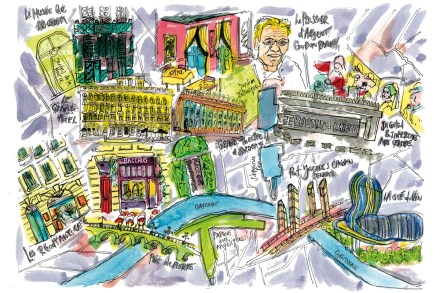
How do you manage a dictatorship? By producing ‘a succession of miracles’, according to Louis-Napoléon, that ‘dazzle and astonish’. In 1852 he inaugurated his Second Empire regime with a strategy of soft power predicated on the assumption that the loyalty of politically volatile Paris was to be won not by violent repression but by visible magnificence and grand designs. This wasn’t an original idea: it followed the policies of le Roi Soleil and Bonaparte, not to mention the Roman emperors. It worked again for Louis-Napoléon because, as well as such jaw-dropping follies as Charles Garnier’s extravagant opera house, it extended to Haussmann’s lavish investment in socially useful boulevards, sewers, housing and parks.

Why I’ve spent £68,500 on a tank

Buying a tank is not as easy as you might think. When we started looking for one, people delighted in telling us: ‘Oh, you should have bought one in the 1990s. There were hundreds available for practically nothing!’ Well, not anymore. Especially not if you are picky about what sort of tank you want. I’m collecting artefacts for a new museum of totalitarianism and wanted a T-54 or T-55, two models which are pretty much the same as each other with just a few alterations and which are the most-produced tanks in history.

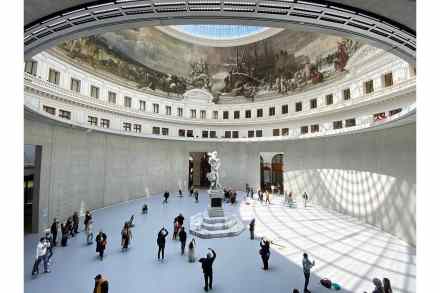
The supreme pictures of the Courtauld finally have a home of equal magnificence

When the Courtauld Gallery’s impressionist pictures were shown at the Fondation Louis Vuitton in Paris in 2019, the Parisian public was so bowled over by the exhibition that some were inclined to claim Samuel Courtauld as an honorary Frenchman. This was not completely unreasonable; after all Courtauld (1876–1947) was a Francophile from an old Huguenot family. But it was even more of a compliment to the magnificent array of French art he had put together. In this city of impressionism, home to the Musée d’Orsay and the Orangerie, half a million visitors came to see it.

Small but perfectly formed: the Royal College of Music Museum reopening reviewed

Haydn is looking well — in fact, he’s positively glowing. The dignified pose; the modest, intelligent smile: it’s only when you squint closely at the portrait that Thomas Hardy painted in London in 1791 that you clock the full peachy-pink smoothness of his complexion. It’s curious, because Haydn suffered disfiguring smallpox as a child, and a contemporary waxwork bust in Vienna is cratered like a moon in a periwig. Hardy’s portrait is a promotional image, commissioned by the music publisher John Bland. This is the Georgian equivalent of a celebrity headshot: a photoshopped, endlessly-reproduceable selling tool, so potent that it’s still being used to shift recordings 230 years later. Well, of course it is.

At last, a dose of up-close culture in London

In London for the first time in 18 months, I was as excited as a child on a birthday outing. We were desperate for a dose of up-close culture after months of Zoom, so we crammed in three exhibitions, two plays and a couple of first-class meals that I didn’t have to cook. Glorious. It helped that we had two of the few blue-sky days of this otherwise wretched summer and that I’d deliberately fallen off the wagon. My husband John says that I’m much nicer when I’m drinking. Apparently, when giving my kidneys a holiday, I’m altogether less joyful. We stayed at the Chelsea Arts Club in Old Church Street. It took ten years to persuade the club that cooking and writing are arts so it should accept me as a member — it prefers painters and sculptors.

The West’s moralising over climate change will cost India

On Tuesday, I chaired a session at Policy Exchange addressed by Tony Abbott, the eloquent former prime minister of Australia, now an adviser to the British Board of Trade. Although he acknowledged severe recent difficulties, he declared himself optimistic that free-trading democracies, such as his country and ours, can combine to strengthen rules-based, transparent trade (i.e. the sort of trade China dislikes) across the world. I truly hope he is right. One problem, though, which we barely touched on, is climate change. In the West, this is considered the great global challenge of our time. In developing countries, however, it is often seen as the West’s way of denying them the advantages which made us rich.

The misguided plan to ‘retain and explain’ statues

When Mao’s Red Guards first got to work in China, they defaced statues before they tore them down. It was common to find a statue of Buddha, for example, with new signs saying: ‘Destroy the old world! Establish a new world!’ Boris Johnson’s government isn’t keen on statue removal, but it is offering a compromise. Oliver Dowden, the Culture Secretary, has adopted a policy of ‘retain and explain’, whereby the statue remains but with a plaque giving more historical context. Explanation, it is assumed, can only be good. Yet you only have to look at the single case where ‘retain and explain’ has been deployed to see what we could be in for.

Our love affair with the Anglo-Saxons

On 5 July 2009, an unemployed 54-year-old metal detectorist called Terry Herbert was walking through a Staffordshire field when his detector started to beep and didn’t stop. Herbert guessed almost immediately that he’d found gold. What he didn’t realise was that he had made Britain’s greatest archaeological discovery since the second world war. Three hundred sword-hilt fittings, many of them spectacular examples of Anglo-Saxon metalwork; a mysterious gold-and-garnet headdress, apparently for a priest; miniature sculptures of horses, fish, snakes, eagles and boars.

After three centuries, we need a museum of British premiership

Thursday 3 April 1721 was an unremarkable day in political London. No fanfare or ceremony surrounded King George I’s appointment of Robert Walpole as First Lord of the Treasury (Prime Minister), merely a paragraph buried in the press: ‘We are informed that a Commiffion is preparing appointing Mr Walpole Firft Lord…’ Yet here was the start of what has become the longest-lasting head of government job in the democratic world — and its 300th anniversary falls on 3 April this year. Expect no fanfare or drone pyrotechnics in political London to mark the occasion. Our leaders will, inevitably, be attending to the pandemic and other pressing concerns. But that does not mean that we should let the moment pass.

Ignore the activists – Humboldt’s Enlightenment project deserves celebrating

‘What a loss is the excellent Humboldt. You and Berlin will both miss him greatly,’ Prince Albert wrote to his much-beloved daughter Vicky, Crown Princess of Prussia, on news of the death of the author, explorer and celebrity Alexander von Humboldt in 1859. ‘People of this kind do not grow upon every bush [‘an den Blumen’] and they are the grace and glory of a country and a century.’ After some delays and bad luck, the grace and glory of the Humboldt name flourishes once again with the opening of the Humboldt Forum.

Are our churches safe from Justin Welby?

‘Frost & Lewis’. It sounds like a programme amalgamating two of the most famous TV detectives. The former diplomat, Lord (David) Frost, is our chief Brexit negotiator and Oliver Lewis, an expert on the Irish aspects, is his right-hand man. Until recently, they were simply considered the two best men for the job. Since the departure of Dominic Cummings, they have acquired a political role too. Close colleagues of Cummings who did not walk out with him, they stayed to Get Brexit Done, so they act as reassurance to anxious Brexiteers that the government will not throw in the sponge. Their staying also implies a threat. Dom has said he doesn’t want anyone else to leave No. 10 — yet. Tristram Hunt, director of the V&A, is a former Labour MP.

Museums need wonder, not wokery

The British Museum’s aim is to use its collection ‘for the benefit and education of humanity’. If that manifests itself in jerking the knee to Black Lives Matter’s anti-colonial agenda, the Museum might do well to learn from the ancients. Near Eastern conquerors used to dedicate their loot in temples, and so exhibit it. It was Nebuchadnezzar II of Babylon (6th C bc) who gathered reliefs, weapons, inscriptions (one going back to 2,400 bc) etc. and placed them in a ‘Wonder Cabinet of Mankind’ for the public to enjoy. Greeks and Romans took up the idea, filling their temples with collections of relics, statuary and art. The temple of Lindos on Rhodes contained a bracelet of Helen of Troy, Orpheus’s lyre and the weapons of Heracles.

The joy of short stories in these taxing times

From time to time, usually when things are quiet, the government brings on the dancing girls. David Cameron made Carol Vorderman the celebrity Head of Maths, Prue Leith was wheeled out to revolutionise hospital catering (again), and Mary Portas was to breathe life, excitement and renewed prosperity into our dying high streets. Nothing ever happens, of course, but perhaps Covid-19 does present a real opportunity. In the past 20 years I have watched several small towns change radically. Shops selling things people actually needed — meat, fish, fruit and veg, bread and butter, ironmongery, postal and banking services — have closed.

The online museums you’ll never want to leave

‘We don’t talk about the war.’ Yet those of my generation and older reference it daily. The coronavirus is an unseen enemy but for every-one not in military service, so were our past enemies — Germany, Italy, Japan, Russia — invisible mainly because the mainland was never physically invaded by any of them, so the only sightings were on the newsreels. All we can see of the virus is that horrible furry ball with round-ended spikes sticking out of it, which is what it looks like under a microscope, but this is still a war, the same as any other. We were not actually quarantined then but travel was both difficult and discouraged, and fierce men on posters asked: ‘Is your journey really necessary?

Letters: How to make a cup of tea

No defence Sir: Jon Stone (Letters, 15 February) recalls the horrors and miseries of being subjected to bombing from the air. How right he is to do so. The deliberate burning and crushing of civilians in their homes is a revolting and indefensible form of warfare. It is no surprise that Hitler used it. What is surprising is that people in this country continue to make excuses for our own use of this method, which was actually far more extensive and deadly than the German bombing of the United Kingdom. There are no such excuses. Those who fall back on utilitarian justifications will also find that these do not work. The bombing of Germany failed on its own terms.

What’s in a name? | 8 August 2019

Perhaps we should blame Vasari. Ever since the publication of his Lives of the Artists, and to an ever-increasing extent, the world of art has been governed by the star system. In other words, the first question likely to be asked about a painting or sculpture is whodunit? And if the answer turns out to be, not Leonardo da Vinci — as has been suggested in the case of the controversial ‘Salvator Mundi’ — then the price tag becomes enormously smaller. Does this matter? Artist Unknown, a little exhibition at Kettle’s Yard, Cambridge, investigates the case of the anonymous work.

The wonder of Whitby

The 199 steps up to the ruins of Whitby Abbey are a pilgrimage; they always have been. And any good pilgrimage takes effort. Count Dracula (also acquainted with the north Yorkshire town) cheated — he climbed the steps in the guise of a black hound. These days, with its new £1.6 million museum and visitor centre, our vampire friend would find a ground-floor café and gift shop. Knowing English Heritage, there is probably a bowl of water for dogs, which would have kept the Count happy. Whitby is a surprise, with a history that puts it at the heart of Britain’s spiritual and literary life. It’s also a vibrant fishing port, somewhere you can pick up a Whitby smoky — smoked herrings — made in a backstreet smokehouse.

The empress of art

Somewhere in the bowels of the Tehran Museum of Contemporary Art is a portrait from a lost world. Its subject is a beautiful young woman: Her Imperial Majesty, Empress Farah Pahlavi of Iran. The condition of the work, however, a luminous print by Andy Warhol from 1977, is so bad that it could be a metaphor for Iran itself. Fundamentalist vandals have slashed at it with knives. The Empress — forced into exile when the Iranian Revolution overthrew her husband, the Shah, two years after the portrait was completed — discovered this upsetting news while watching French TV in her Paris apartment. ‘Seeing that, I said, “They are stupid”,’ she tells me. ‘Instead of tearing it they could have sold it!’ One day, she hopes to see it on display again.

Spelling it out | 25 October 2018

Just in front of me, visiting Spellbound at the Ashmolean last week, was a very rational boy of about seven and his proud mother. ‘I don’t believe in magic, witches or Father Christmas,’ he announced to the girl presiding over Room One. ‘Perhaps you’re spiritual but not religious,’ said the girl. The rational boy gave her the look she deserved. In that first room pride of place is given to a squat little silvered bottle with a hand-written label: ‘Obtained in 1915 from an old lady living in Hove, Sussex. She remarked: “and they do say there be a witch in it, and if you let un out there’ll be a peck o’ trouble”.

The real Tolkien

To no one’s surprise, the Tolkien: Maker of Middle-earth exhibition at the Bodleian in Oxford, where J.R.R. spent so much of his time, has been a huge success. Were tickets on sale, it would be a sell-out, but the Bodleian has made it free. The visitors book is peppered with observations such as: ‘It made me cry with joy… sensationally splendid’.There’s also a less hyperbolic view, in a childish hand: ‘It was interesting to see how he made The Hobbit and Lord of the Rings.’ It is rather a small show, a remarkable feat of compression on the part of the curator, Catherine McIlwaine, who had to pare down 500 boxes of Tolkien holdings to produce it, and was instructed by advisers that her captions mustn’t exceed 70 words each.