Museums

Napoleon dynamite | 14 June 2018

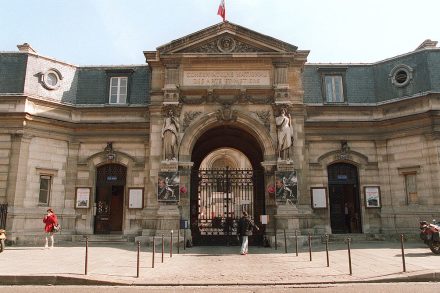
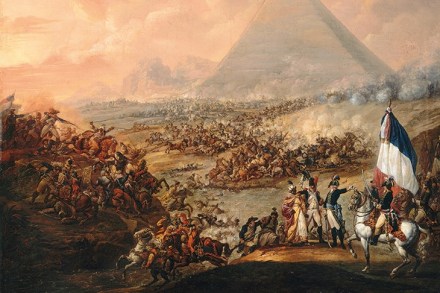
The Musée de l’Armée at Les Invalides in Paris has a new exhibition that I believe to be the best and most extensive on the Emperor in three decades. Anyone interested in Napoleon Bonaparte, early 19th-century military history and strategy, the Grande Armée’s campaigns from 1796 to 1815, monumental battle paintings, First Empire beaux-arts, uniforms, weaponry or cartography, has only until 22 July to visit the truly breathtaking Napoleon: Strategist. On entering, you walk past the large busts of six of the seven great captains of history that Napoleon said he admired and wished to emulate: Alexander, Hannibal, Julius Caesar, Henri de la Tour d’Auvergne, Marshal de Saxe and Frederick the Great.

Buried treasure | 17 May 2018

Imagine a French museum that’s second only to the Louvre when it comes to paintings, with an eye-watering collection of manuscripts. Add to that a grand château with a turbulent history going back to the 16th century. Plus period kitchens (one tragic chef committed suicide when it seemed that the delivery of fish for the court’s Friday dinner would not arrive in time. It did arrive but only after he’d thrown himself on his kitchen knife). Imagine, too, that it’s in splendid grounds, with formal gardens and naturalistic landscape beyond.

The Bilbao effect

Twenty years ago I wrote of the otherwise slaveringly praised Guggenheim Museum in Bilbao: I’m in a minority of, apparently, one. It strikes me as a consummate gimmick… a fantastically elaborate and rather wearisome joke. Has mankind spent all these centuries perfecting Euclidean geometry and orthogonal engineering in order to have it overthrown by massively expensive crazy cottages clad in titanium? Apparently mankind has. So much for the building. What of the ‘Bilbao effect’, an epithet that I am accused of having coined (I can’t remember, but it’s inappropriate because there is, typically, no effect).

The icemen cometh

You wouldn’t want to stumble upon the Scythians. Armed with battle-axes, bows and daggers, and covered in fearsome tattoos, the horse-mad nomads ranged the Russian steppe from around 900 to 200 BC, turning squirrels into fur coats and human teeth into earrings. At their mightiest, they controlled territory from the Black Sea to the north border of China. They left behind no written record, only enormous burial mounds, chiefly in the Altai mountains and plains of southern Siberia. Chambers that weren’t looted in antiquity were preserved in the permafrost only to be discovered millennia later. It is thanks to Peter the Great and the expeditions he launched that so many objects have now been retrieved from the ice.

Cathedral of creation

Sometimes, it pays to rediscover what’s already under your nose. I’ve been umpteen times to the Natural History Museum but I don’t think I’ve ever seen it properly, not even at the evening parties I’ve been to under Dippy-the-Dinosaur, until now. I visited the new and refurbished Hintze Hall and it was a revelation. The thing that strikes most visitors is that there isn’t a dinosaur any more — Dippy is on tour — and he’s been replaced by Hope, who is a) a blue whale, b) female and c) genuine (the dinosaur was fake). Swings and roundabouts. We have lost a dinosaur, but we’ve gained an entirely new perspective on an astonishing building, what a Times leader in 1881 called a ‘Temple of Nature’.

Making history | 15 June 2017

‘History is not the past,’ says the writer Hilary Mantel in the first of her Reith Lectures on Radio 4 (produced by Jim Frank, Tuesday). ‘It’s the method we’ve evolved of organising our ignorance of the past.’ In Resurrection: The Art and Craft, her series of five talks, Mantel shows her mettle as a novelist (most notably of the award-winning Wolf Hall and its sequel) and as a historian, too, arguing the case for historical fiction, once much-maligned as a literary genre precisely because it twists the facts to create a narrative, usually of a highly romanticised flavour. But facts are not truths, Mantel asserts provocatively. ‘The moment we are deceased we become the subject of stories.

A woman of genius

‘Your favourite virtue?’ ‘I don’t have any: they are all boring,’ wrote the 21-year-old Camille Claudel in a Victorian album belonging to an English friend in 1886. The remark perfectly matches the photograph of the aspiring sculptor taken two years earlier by César: childlike, sullen, attitudinous, beautiful. Claudel was in England on a break from working in Auguste Rodin’s studio, where she had been taken on as an assistant in 1884. She had met Rodin through her mentor Alfred Boucher, who discovered her precocious teenage talent on a visit to his hometown of Nogent-sur-Seine in the 1870s, and continued to supervise her subsequent studies in Paris.

Rodin at 100

The girl who posed for Auguste Rodin’s figure of Eve on the ‘Gates of Hell’ was, the sculptor said, a ‘panther’. She was a young Italian, pregnant, but barely showing. Not a professional artist’s model. He found the girls who modelled for the Academy painters too affected. He liked stretchers, yawners, fidgeters, jitterbug girls who couldn’t sit still. His figures in plaster, bronze and marble have a pretzel suppleness. They do the splits, lie curled and foetal, fold at the waist, and crouch doubled like Atlas. His sibyls hold yoga poses. His prodigal son has a six-pack. A sketch might take only three, four, five charcoal or gouache strokes. Then: new pose, new page.

Where the wild things are

‘What is man, that thou art mindful of him?’ asks the Psalmist. It’s a good question. God Himself doesn’t give a very satisfactory answer. In one breath he insists that humans are a little lower than the angels, made in His own image, but also (in a formulation as bleak and more terse than any modern reductionist’s) that they are made of dust, and to dust they will return. Darwin tells us a similar story. We don’t have to flip back too many pages in our family albums, he says, before we see furry, feathered and scaly faces. But then he draws an exuberantly branching tree of life, rooted in stardust, and tells us that we’re perched on the topmost bough. It’s not surprising that we’re confused.

Muslim magic

In 1402, when the Turkic conqueror Temur, better known in the West as Tamerlane, was poised to do battle with the mighty Ottoman Sultan Bayazid I, the greatest power in the Muslim world, he called in the astrologers. Knowing which side their bread was buttered on, the court officials duly pronounced that the planets were auspiciously positioned and gave a green light to attack. Temur was victorious. Not for nothing was he known as lord of the ‘Fortunate Conjunction of the Planets’. Half a century later, in 1453, Bayazid’s great-grandson Mehmet II stood at the gates of Constantinople. Anxious to galvanise his siege-weary troops, he summoned court astrologers, diviners and holy men to do their business.

The Victoria and Albert

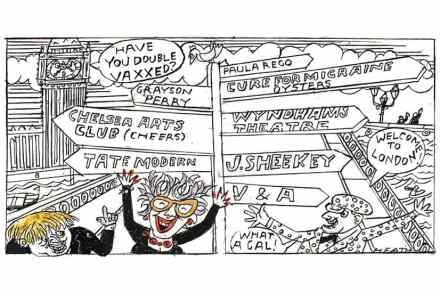
Thomas Hardy, while still married to his first wife Emma, but arranging assignations in London with Florence, his second-wife-to-be, used to ask her to meet him at the Victoria and Albert Museum by the great, towering plaster cast of Trajan’s column. Really, Thomas? Trajan’s column? How obvious can a man be? Knowing what I know about Hardy’s column, and with the added burlesque of the modesty fig leaf that was cast for Michelangelo’s plaster David, I cannot now keep a straight face in the Cast Courts at the V&A and have to take myself off upstairs to look at silver salt-shakers the minute I get the sniggers. What a lot of things the Victorians had.

Making history | 22 September 2016

‘A fool’s errand’. That is how Lonnie Bunch, founding director of the Smithsonian’s National Museum of African American History and Culture, wryly characterises the decade’s work it took him to get the museum built. It opens in Washington DC this weekend. A talented fundraiser, he and his team matched the $270 million from the federal government (Oprah Winfrey donated $21 million, Michael Jordan $5 million), and travelled the country sourcing artefacts. Most difficult of all has been convincing critics that such an institution — devoted as it is to the history of black America — is necessary and not divisive, that it will tell a story, not of one culture for that culture, but of America.

Requiem for a designer dream

Threnody. Dirge. Lament. Epitaph. Elegy. Wake. There are so many English terms to describe the passing of people and things that you wonder if introspection about demise might be a national characteristic. All these words are on my (doggedly cheerful) mind as staff have moved out of London’s Design Museum, securing the last open door with a padlock on 30 June and leaving inside cavernous spaces with rusting memories of designer people and designer things. So what was the old Design Museum? It arose from a conversation between Terence Conran and me in 1978. He was the proprietor of Habitat, whose decent, modern merchandise revolutionised popular taste, and I was the author of a book about design he had just discovered.

What lies beneath | 2 June 2016

It was not so unusual for someone to turn into a god in Egypt. It happened to the Emperor Hadrian’s lover, a beautiful young man named Antinous, who was drowned in the Nile in the autumn of 130 AD. It was also the fate of Queen Arsinoë II, who had a complicated life. At the age of 15 she became wife to the 60-year-old ruler of Thrace. When he died in battle, she married her half-sibling, who murdered two of her sons. Her next husband was her full brother. A headless sculpture of Arsinoë stands about halfway around Sunken cities at the British Museum. It is, as a label rightly points out, an almost perfect fusion of Greek and Egyptian art. Arsinoë was represented as an incarnation of Aphrodite.

A trip down Mammary Lane

The V&A is selling £35 Agent Provocateur pants. This is, of course, a business deal because Agent Provocateur — along with Revlon — is sponsoring the museum’s new exhibition Undressed or, as I would have called it, if I were a curator with a gun to my head: Important Artefacts from the Ancient Kingdom of Boob; or A Trip Down Mammary Lane. The atmosphere is vague and vapid, for this is fashion-land, where anger, if it even exists, is buried deep. But no matter; this is what I am here for. I can now tell you that, in the 19th century, women wore cages on their legs (a metaphor?), and that most women in history panicked as to what to do with their boobs because they were the most interesting thing about them, and still are.

Sound and fury | 7 April 2016

There was a genteel brouhaha last year — leaders in the Times, letters to the Telegraph, tutting in the galleries — about the British Museum’s decision to play Pan-pipe music into its exhibition Celts: Art and Identity. Did the gold torcs and coin hoards sparkle the more for the looped song of Pan-pipes? Not really, and it didn’t half annoy visitors. Not put off by the British Museum’s Pan-pipe complaints, Compton Verney in Warwickshire has been at the jukebox for its Shakespeare in Art: Tempests, Tyrants and Tragedy.

The rise and fall of Sicily

A few weeks ago, I looked out on the Cathedral of Monreale from the platform on which once stood the throne of William II, King of Sicily. From there nearly two acres of richly coloured mosaics were visible, glittering with gold. In the apse behind was the majestic figure of Christ Pantocrator — that is, almighty. The walls of the aisles and nave were lined with scenes from the Bible. In another panel, just above, Christ himself crowned King William. It was a prospect of the greatest opulence and sophistication stretching in every direction from this regal vantage point. The mosaics are in the manner of Byzantium, and probably executed by Greek artists, but the architectural plan and inlaid floors are derived from medieval Italy.

Old masters

The Fitzwilliam Museum is marking its bicentenary with an exhibition that takes its title from Agatha Christie: Death on the Nile. But it turns out it was another writer of a different type of fiction who was directly involved. M.R. James, author of Ghost Stories of an Antiquary, amassed some of the exhibits in his capacity as director of the Fitzwilliam from 1893 to 1908. And almost any object on display would have made a perfect prop for one of his tales, because the subject is ancient Egyptian coffins. Generally, the main character in a story by James is a retiring gentleman scholar who comes across a venerable item which then brings upon him some diabolic haunting or curse.

Finders keepers

Isis’s blowing up of the Roman theatre at Palmyra should concentrate our minds: our world heritage is vulnerable. Not that we should need any such reminder after the depredations of the Taleban in Afghanistan, or Isis’s earlier rampage through the museum in Mosul and its attacks on sites at Hatra and Nimrud. A former director at the Institute of Ideas and a visiting fellow at the LSE, Tiffany Jenkins applies her considerable experience of cultural policy to construct an excellent survey that rehearses the issues. Who is responsible for the great examples of our shared heritage? Where should they be located: where they originated; where they have ended up; or where they can best be looked after, seen and understood?

Bangkok

Last time I went to Thailand, there’d been something of a misunderstanding about accommodation, and my friend and I ended up in a dive on Khao San Road. In a grim room with stained mattresses and peeling paint, the thud of beats from the disco made everything vibrate gently. Stalls outside offered fake IDs, tatty souvenirs and novelty edible insects. I’m not averse to eating crickets, but these ones needed embalming fluid, not cooking oil. So we took a tuk-tuk across town to the Grand Palace, just seeking a break from sunburned students in short shorts drawling about full-moon parties. Instead, what happened next was one of the highlights of the trip.