Museums

Eurovision

Before cheap flights, trains were the economical way to discover Europe and its foibles. Personally, I enjoyed the old fuss at border crossings. By the time I was 18, I had memorised those warning notices in the carriages: Nicht hinauslehnen; Defense de se pencher au-dehors; E pericoloso sporgersi. Those three different ways of saying ‘don’t stick your head out the window’, one bossy, the other pedantic, another gently pleading, summarised the nice subtleties of national borders that were philosophical as well as political. Europe is a marvel.

Melting pot

‘Celtic’ is a word heavily charged with meanings. It refers, among other phenomena, to a football club, a group of languages, a temperament, a style of art and a fringe, once the stronghold of the Liberal Democrats. But who are — and were — the Celts? The curators of the new British Museum exhibition are not at all sure, and that’s one of the reasons why the result is so enthralling. There is a familiar answer to this question: the Celts were an ancient people who moved into Europe from the east in prehistoric times and occupied most areas north and east of the Alps, together with northern Italy and much of the Balkans. They spoke a kindred group of languages and created a style of art that continued to evolve from the 5th century BC into the Middle Ages.

Glasgow

A wet walk in a Glaswegian graveyard might not be your idea of fun, but then you might not have spent the past two hours in the Glasgow Science Centre. Endure that, and see the sodden Necropolis stroll swell in allure. The Science Centre is one of the emblems of the new Glasgow. Rising from the old docklands on the south side of the Clyde, beside the BBC at Pacific Quay, it is one of the shouty new buildings leading the regeneration of the old shipbuilding areas. These buildings and their outlying friends still look like awkward blow-ins here, isolated blobs of glitter studding the wasteland. There’s not yet much sense of any connection with Govan Road, 200 yards to the west, but people are certainly coming here from somewhere for something, and in their multitudes.

Moving pictures | 21 May 2015

About six years ago the first section of the now celebrated High Line was opened in New York and made a palpable hit both locally and internationally. Locally it revealed what one might have guessed, that the inhabitants of Manhattan’s downtown suffered a severe lack of amenity. Every place to walk or run or ride a bike, every place to exercise the dog, is valuable and well used. This new and unusual park, restoring and converting the tracks of a disused overhead railway, was reserved neither for running nor biking nor walking the dog, but rather for strolling, sitting and sunbathing, and for the novelty of looking in on buildings old and new, from unusual angles and with an unusual degree of impertinence.

Rise early to see the Vatican at its best

The sun has only just risen in Rome and we are standing bleary-eyed in a short queue outside the Vatican. Our guide, Tonia, takes us through security, and within minutes we are in a nearly empty Sistine Chapel. In an hour it will be crammed with tourists — sweating, gawping, getting in each other’s way. Vatican officials will be shushing and clapping to quieten the chatter. Now, though, we are free to contemplate Michelangelo’s swirl of naked bodies in peace. Michelangelo claimed that he painted the ceiling entirely on his own. In fact, Tonia explains, he started off with 15 helpers, though he got rid of them all along the way. He ‘fought everyone’, she says. ‘On the one hand he was amazing but in human relationships, no.

Spectator letters: A history of Stepford Students; Brendan Behan and Joan Littlewood; and the Army’s tour of Pakistan

Silencing students Sir: The Stepford Students (22 November) are nothing new. The NUS-inspired ‘No Platform’ policy has been used to ban anything that student radicals don’t like since at least the 1970s — usually Christians, pro-life groups or Israel sympathisers. It should not be in the power of the narrow-minded activists of the student union to prevent individual students or groups from exercising their right to free speech and freedom of association. All students should have equal access to university-funded facilities, regardless of their beliefs.

The reopened V&A Cast Courts are a fabulous spectacle of Victorian theft and reverence

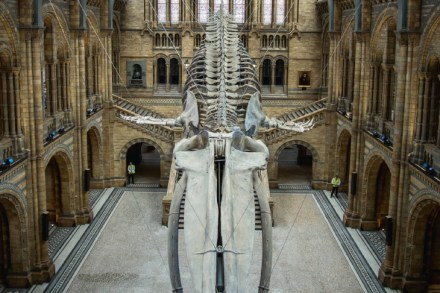
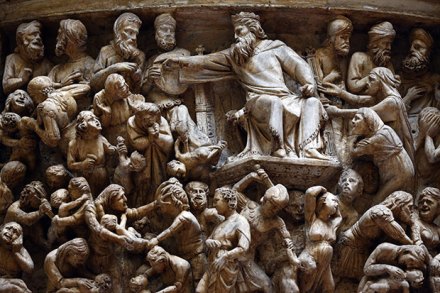
The great municipal museums are products of the 19th-century imagination, evidence of lofty ambitions and cringe-making limitations. They are exact contemporaries of department stores: the whole world acquired, catalogued, labelled, displayed and inspected. Only at the moment of consumer interaction do they differ. In a department store, everything is for sale. In a museum, everything is for edification. The V&A is the most complete example. From the beginning it had populist and didactic intentions: collecting photographs began in the 1850s. There was a campaigning instinct: its exhibitions worked as Victorian social media, encouraging the public and rebuking manufacturers on questions of ‘taste’.

A fitting exit for the self-publicising Lady Warsi

[audioplayer src="http://traffic.libsyn.com/spectator/TheViewFrom22_07_August_2014_v4.mp3" title="Douglas Murray and Tim Stanley discuss Baroness Warsi's resignation" startat=462] Listen [/audioplayer]At the impressive Westminster Abbey vigil to mark the centenary of the first world war on Monday night, there was one big candle for each quarter of the Abbey, and one dignitary assigned to each candle. At different points in the service, each dignitary would extinguish his or her candle. Then the rest of us in the relevant area, all equipped with candles, would follow suit. The lamps went out, as it were, all over Europe. One thing niggled. I was in the South Transept, and our big-candle snuffer was Lady Warsi, Minister of State at the Foreign Office.

Fifties domestic harmony

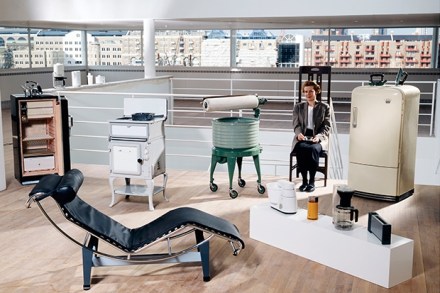
Our love affair with the 1950s has been going on for years and shows no sign of abating. Pangolin London, the city arm of the Gloucestershire foundry, has cleverly used the visceral appeal of Fifties design — if ever a period merited the term gay in its original sense, this one does — to show how sculpture can be incorporated into a domestic setting (until 17 May). All too often works of sculpture, whatever their size, are put on pedestals or instinctively relegated outdoors or to public spaces.

The boom in private museums

In the past ten years museums of modern and contemporary art have proliferated around the world. New institutions have appeared in Los Angeles, Venice, Doha and Beijing. Even Camden has seen a burst of activity — the Dairy Art Centre opened in April of this year, spread over the 12,500 sq ft of a former milk depot, with an exhibition of the Swiss artist John Armleder. A similar size space, The David Roberts Art Foundation (Draf), opened last year in a mews near the Mornington Crescent end of Camden High Street. They joined the Zabludowicz Collection, which has been housed in a former Methodist chapel on Prince of Wales Road since 2007.

Museums in dire straits forced to sell treasure to raise funds

It is a desperate state of affairs when museums and art galleries sell outstanding works of art in order to raise funds. It is even worse, perhaps, when they do so because they no longer want them. Next month, on 5 June, Sotheby’s New York is offering some 25 classical carpets on behalf of the Corcoran Gallery of Art in Washington DC, which includes what the auction house describes as ‘one of the most important and revered carpets in the world’. No one taking the trouble to contemplate the 17th-century Isfahan ‘Clark Sickle-Leaf Carpet’ (right) for more than a minute could fail to be entranced by it, or to recognise that this most beautiful and astonishingly complex of textiles is a remarkable work of art. That is, in one sense, precisely why it is being sold.

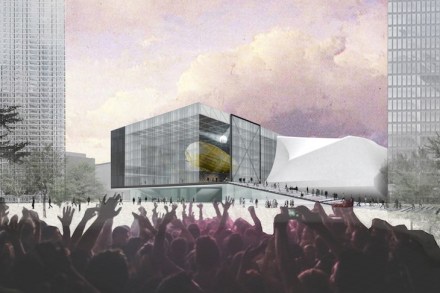
The new Design Museum: Prince Charles will prefer it. But should we?

Twenty-five years ago I went to St James’s Palace to ask the Prince of Wales if he would open the new Design Museum. Before us was the model of the building, an elegant, austere, uncompromised white box that was very much along Bauhaus lines. We knew that ‘modern’ no longer meant ‘of-the-moment’ but had become a period style label. Even at the time we acknowledged the layers of irony in this historicist gesture. The Prince, sounding pained, I recall, asked, ‘Mr Bayley, why has it got a flat roof?’ And that was the end of that. Next time it will be different. The Design Museum is moving from a creatively reused banana warehouse near Tower Bridge to a creatively reused Commonwealth Institute on the edge of Holland Park.

Wedgwood Museum: At risk

We are fairly certain that the late Robert Maxwell never met the even later Josiah Wedgwood, but Cap’n Bob’s nefarious legacy is now being keenly felt by Wedgwood’s descendants. For it was in the aftermath of Maxwell’s plundering of the Mirror Group that the Pension Protection Fund was established to compensate pensioners in the wake of insolvency. And now this legislation is being used to asset-strip one of the great museums of England. On the southern edge of Stoke-on-Trent stands the Wedgwood Museum, dedicated to ‘The People Who Have Made Objects of Great Beauty from the Soils of Staffordshire’.