Museums

The weakness of the V&A East Museum

I’d just emerged from Stratford station when I realised it had been almost a decade to the day since I’d last been here. I thought back to a dismal morning press call in early 2016 to the mangy park landscaped as a visible legacy of the London Olympics. The collected hacks shivered as Mayor Johnson unveiled the latest of the development’s showpiece public sculptures, devoting much of his speech to boosterish predictions of the area’s imminent renaissance. ‘Really?’ I thought as I surveyed the spectral, vaguely Soviet townscape emerging from the mist. ‘In this shithole?’ Years hence, it appears that Boris, for once, wasn’t bluffing. The new-look Stratford resembles an idiot’s doodle of the Chicago skyline, novelty towers sprouting far into the distance.

In defence of museum charges

It occurs to me only now that I might have spent far too much time in France. Indeed, so familiar with Paris did I claim to be that, in 2023, I was contacted by an agency in need of someone who could conduct specialised ‘art tours’ for small groups of foreigners. Most of these clients were Americans, largely from the Midwest, but there was also a number of well-to-do Chinese and the odd Indian. They wanted much the same thing: they’d seen the Eiffel Tower and been ripped off on the Left Bank; they’d eaten at Lipp and some had even bussed out to grottier banlieues to get a real-life taste of La Haine. What they really wanted, however, was someone to hold their hand around the museums.

Cadavers will always captivate. Museums need to chill out

Is it right to put human remains on show? It’s a question that museum curators and the public have been asking themselves ever since European institutions began displaying bodies of the dead – notably Egyptian mummies – in the early 19th century. It’s the same question that continues to be posed today in Canterbury. Here, an exhibition at the Beaney House of Art & Knowledge chronicles and collates the significant archaeological discoveries in and around the city over recent decades. Finds that have unearthed skeletons of the city’s previous occupants – mostly Anglo-Saxon nobility and Roman soldiers and civilians from the 2nd and 3rd century AD. The question remains the same: what to do with these remains?

Why now is the time to (re)visit Chartwell

There has always been something really rather magnificent about Chartwell, Winston Churchill’s beloved country home in the Weald of Kent. Sure, it’s no Blenheim or Chatsworth; in fact – say it quietly – from certain vantage points this redbrick Tudor house is verging on unremarkable. It’s even, at a pinch, conceivably the sort of place that Kirsty or Phil might claim lacks kerb appeal. But they, just as any visitor does, would immediately recognise that the true appeal of Chartwell is not in its architecture (although all those walls Churchill built when he modernised it are handsome). No, it’s in the property’s connection to its former owner, and the view – over a seemingly unspoiled Kent arcadia which stretches for as far as the eye can see for some 40 miles.

This museum is a lesson for all curators

The National Railway Museum is 50 years old, and it’s come over all literary. A quote from Howards End stands at the entrance to the newly refurbished Station Hall: railway termini, proclaims Forster, ‘are our gates to the glorious and the unknown’. T.S. Eliot salutes you on the way out: ‘You are not the same people who left that station.’ Big claims, but as it turns out, largely to the point. The changes to the Station Hall are subtle but numerous, making the argument that as well as being the foundational technology of modern civilisation, railways are a culture in their own right. The aim, say the curators, is to reintroduce the human dimension to a museum that (fairly, and unfairly) is more generally associated with huge, gleaming machines.

V&A’s new museum is a defiant stand against the vandals

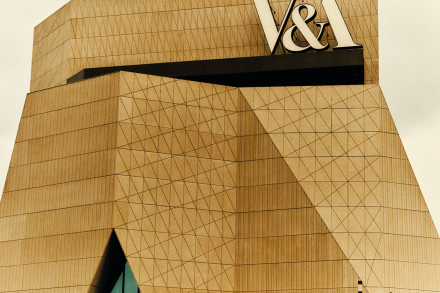
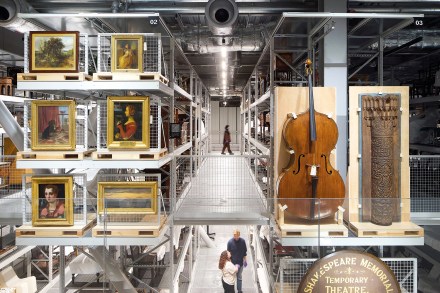
In last week’s Spectator, Richard Morris lamented museum collections languishing in storage, pleading to ‘get these works out’. There’s an alternative solution: bring the public in. V&A East Storehouse, which opened last weekend, was designed by New York architects Diller Scofidio + Renfro to do just that. The museum’s collections were previously holed up in the creaking, late-Victorian Blythe House. The government decided to sell it in 2015, leading the V&A to find a new home in the Olympics’s former Broadcasting Centre in Hackney Wick, a big box since rebadged as Here East, an ‘innovation campus’. The Storehouse’s entrance indeed blends in with the startups and students sharing the building.

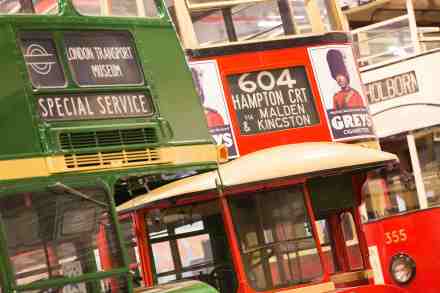
Inside London’s transport time warp

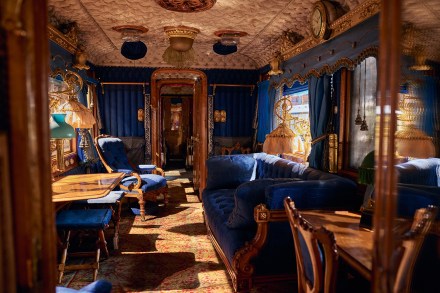
The illustration shows a smiling couple on a yacht, the wind ruffling their hair and the coastline receding into the distance behind them. Above it are the words: ‘Work out of London – get more out of life.’ Something from the post-Covid work-from-home era, perhaps, or Boris Johnson’s 2019 ‘levelling up’ election campaign? No – this is the work of ‘The Location of Offices Bureau’, set up by the Tory government in 1963 and abolished by Margaret Thatcher. The advert appears on the wall of a decommissioned Tube carriage that’s one of many frozen in time in a warehouse in west London. In the latest issue of The Spectator, Richard Morris writes that museums often have a ‘wealth of treasures… hidden away in storage’ and argues that more should open their vaults.

Museums: open up your vaults!

At any one time eighty per cent of the art owned by Britain’s many museums and public art galleries will find itself hidden away in storage. And once it is, it can stay there for years. Yet in these vaults are a wealth of treasures. It’s why I recently launched ‘Everyone’s Art’, which has a simple premise: to get these works out of the storeroom and into community centres, libraries, churches, village halls and schools, so their makers, and what they made, can finally be celebrated. Consider Henry Bright, a friend of the critic, writer and painter John Ruskin. Ruskin paid for Bright to accompany Turner on many of his sketching expeditions, where he was encouraged to paint what he saw.

Help! I’m trapped in a hi-tech hotel

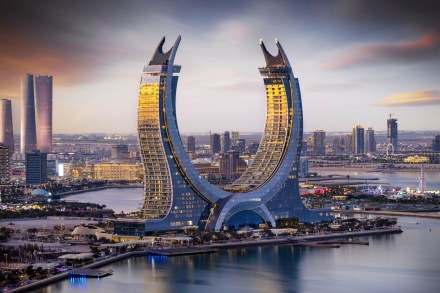
Raffles Doha is one of the world’s weirdest, most improbable buildings. That’s it in the picture – a five-star hotel incorporated in one prong of the incomplete circle that is the 40-storey Katara Towers in Lusail City (the Fairmont Doha is in the other prong), on land reclaimed from both desert and sea. It’s an architect’s/despot’s fantasy turned reality. The bonkers design is meant to echo Qatar’s national emblem of crossed scimitars, and I’d love to see the back of the envelope upon which it was first sketched. It’s far, far beyond my miserable hack’s pay grade, but invited as a guest I’m ashamed to say that I couldn’t resist.

The Imperial War Museum’s betrayal of history

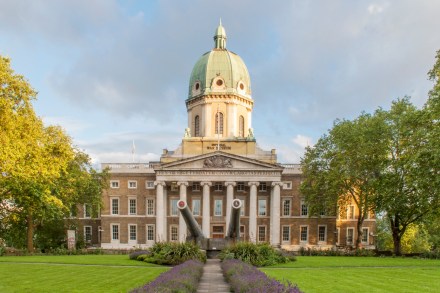
The news that the Imperial War Museum is closing Lord Ashcroft’s Victoria Cross and George Cross gallery is sadly not a great surprise. It’s the latest act in the ‘wokeification’ of this once outstanding museum. Writing in the Daily Telegraph last week, Lord Ashcroft said that the IWM didn’t even have the ‘courtesy to inform’ him of the closure. Rather, it issued a statement in which it thanked him for his generous 15-year loan but said the exhibition will shut permanently on 1 June. The reason, explained the IWM, is to create new space ‘to allow us to share more stories of conflicts that are within many of our visitors’ living memory’.

In defence of deaccessioning

There’s more than a grain of truth in the popular caricature of a curator as a mother hen clucking frantically if anyone gets too near her nest – not that her eggs are about to hatch, let alone run. The recent threat of the British Council to ‘deaccession’ – to put it more bluntly, sell – its 9,000-strong collection of British art has caused a predictable flurry in the curatorial world. Doesn’t the British Council know that public art collections are sacrosanct and must be preserved for all time? When I was director of Glasgow’s museums and art galleries, I remember talking to my committee about my long-term plans for the city’s great permanent collection when the leader of the council, Pat Lally, commented drily that there was no such thing as ‘permanent’.

Is the tide turning on restitution? 

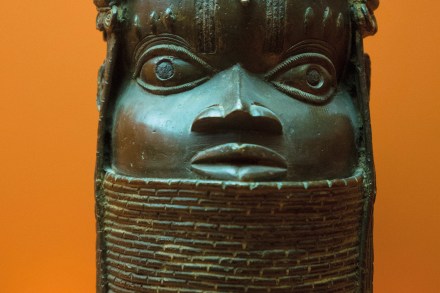
When passions are aroused, all of us are liable to overstate our case. Dan Hicks, a curator at Oxford’s extraordinary Aladdin’s Cave of anthropology, the Pitt-Rivers Museum, is perhaps a case in point. A Swedish academic, Staffan Lunden, has convincingly argued that Hicks is guilty of ‘distortion’ when writing about the British raid on Benin in 1897, which brought several thousand objects, including finely wrought brass statuettes, to museums across the world. Hicks published his uncompromising views in 2020 in a prize-winning book, The Brutish Museums: The Benin Bronzes, Colonial Violence and Cultural Restitution.

How French absolutism powered a techno-progressive revolution

The Enlightenment is back. Despite the best efforts of the past decade of handwringing about cultural imperialism and wailing over machismo, money and majesty, the future keeps crashing in. The Science Museum has now laid its cards on the table with Versailles: Science and Splendour. Think gilt, not guilt. Is there anything in our lives that could compare to witnessing the first successfully grown pineapple? It’s marvellous, and unusual these days, to visit an exhibition and feel the colossal force of history without anyone bashing you over the head with infantile morality tales. Expanding on a 2010 display at the Palace itself, lead curator Anna Ferrari ought to be saluted for this unabashed celebration of genius – perhaps with a three-hour firework display.

Which are our most popular museums?

Volt-face Luton’s Vauxhall plant is to close, partly because of the zero emission vehicle (ZEV) mandate which obliges manufacturers to sell increasing proportions of electric vehicles. Remarkably, the history of the electric car can be traced back half a century earlier than the combustion engine. There are several possible claims as to who built the first road-going electric-powered vehicle, but one is a Scottish inventor, Robert Davidson, who produced one in the 1830s, about the same time as Thomas Davenport in Vermont. By the end of the 19th century electric cars were competing with petrol cars, but died out for the reasons the industry is struggling today: it was hard to recharge them and they couldn’t travel far on a charge.

Tate’s finances are on the skids and I think I know why

Among the many destructive after-effects of the pandemic, the impact of two years of lockdowns has had serious consequences for public museums and galleries, particularly so for our national museums and galleries. More than two-and-a-half years since the last restrictions were lifted, visitor numbers to many of the big London institutions have yet to return to the levels seen pre-pandemic, according to the latest figures released by the DCMS. Although the British Museum and Natural History Museum have come roaring back, surpassing their 2019/20 figures (the NHM attracting some half a million more visitors alone), the picture varies wildly, mostly between the more ‘scientific’ museums and those whose remit is visual art.

How did we ever come to accept the inhumane excesses of capitalism?

What was neoliberalism? In its most recent iteration, we think of the market seeping into every minute corner of human existence. We think of privatisation, off-shoring and the parcelling out of services to the highest bidder. Neoliberalism takes the proud liberal individual – in pursuit of his or her happiness, rather keen on freedom – and shreds them through a mean-spirited calculator to come up with some sort of shrunken market midget, an efficient risk-evaluating robot. Neoliberalism takes the proud individual and shreds him or her through a mean-spirited calculator Yet even though the market is supposed to be the arbiter of everything, repeated state intervention appears to be necessary to sustain this otherwise perfect economic vision.

An extraordinary woman: The Art of Lucy Kemp-Welch, at Russell-Cotes Art Gallery, reviewed

In March 1913 two horse painters met at the Lyceum Club to discuss the establishment of a Society of Animal Painters to raise the profile of their genre. Of the two, it was Alfred Munnings whose profile needed raising. Lucy Kemp-Welch had been a celebrity since her twenties when her 5x10ft canvas ‘Colt Hunting in the New Forest’ caused a sensation at the 1897 RA Summer Exhibition and was purchased by the Chantrey Bequest for the new National Gallery of British Art on Millbank. She threw herself into every activity she depicted, whether rounding up colts or hauling timber The daughter of a Bournemouth solicitor, Kemp-Welch had been riding and sketching horses since the age of five and had developed a photographic memory for catching them in action.

Are surgical museums such as the Hunterian doomed?

I have a soft spot for specimen jars and skeletal remains. Museums of natural history, surgical pioneering or anthropological oddities have always struck me as equally suitable for lunch breaks and first dates as for serious study and research. As far as public and casually accessible encounters with mortality go, these kinds of museums are the most straightforward way of confronting the realities of human nature. But whether we should have this kind of casual access is now increasingly being questioned. Telling history through displays of human remains presents a challenge for curators.

Why war museums matter

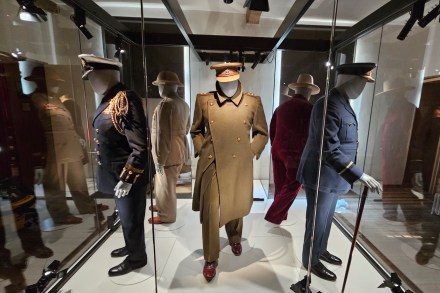
On Christmas Day 1942, the German battlecruiser Scharnhorst, along with five destroyers, left its Norwegian base and headed for a series of Arctic convoys, the British fleets transporting material and support to the Soviets. The townclass cruiser HMS Belfast, used to escort the convoys through some of the most dangerous seas in the world, played a vital role in the Royal Navy’s clever game of bait-and-blast that resulted in the destruction of the Scharnhorst, a monster that had already sunk a British carrier and two destroyers. Belfast, the most powerful cruiser in the Navy at her relaunch in 1942 (she hit a mine in 1939 and needed three years of repairs), now sits in the Thames by City Hall, a visitor attraction operated by Imperial War Museums.

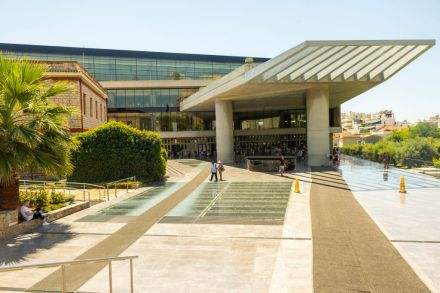
Will The Parthenon Project seize the Elgin Marbles?

Thirty-five years ago, the late Christopher Hitchens published a book about the Elgin Marbles. Unsurprisingly, it was a polemical work; he was passionately campaigning for the return of the sculptures to Athens. But that was not the reason why I wrote a scathing review of it for The Spectator. Parts of it were plagiarised, as I showed, from the classic book by William St Clair; and in some places Hitchens dealt with the awkward fact that the evidence did not fit his claims by abbreviating the quotations, filtering out the unwanted bits. Hitchens replied with a thunderously disdainful attack on me in the letters page. I said to the then editor, Charles Moore, that I feared that if I met Hitchens at a Spectator party he would punch me on the nose.