Margaret thatcher

Liz Truss is no Margaret Thatcher

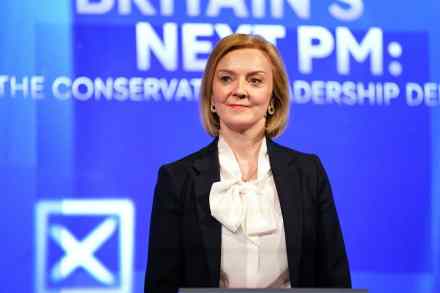
The late Senator Lloyd Bentsen was 26 years older than the young Senator Dan Quayle when in 1988 they crossed swords in a debate in Omaha, Nebraska. Their exchange became famous. Quayle had been comparing himself with the late John F. Kennedy. Old Bentsen hit back: ‘Senator, I served with Jack Kennedy. I knew Jack Kennedy. Jack Kennedy was a friend of mine. Senator, you’re no Jack Kennedy.’ As it happens, I’m 26 years older than Liz Truss. So it’s a temptation to which I yield to quote that exchange, now that Ms Truss, explicitly, both in her wardrobe and the photo opportunities she contrives, is inviting comparison with the late Baroness Thatcher. I can’t quite mimic Bentsen’s claim.

Inflation is a social evil, so why don’t our leaders care?

It was a ‘destroyer of society’, a ‘tax on ordinary people’s savings’ and a threat to social order. You don’t have to spend very long browsing the history books to find thumping quotes from Ronald Reagan or Margaret Thatcher denouncing rising prices as an evil that had to be defeated. And today? Even with prices in the UK now rising at 9.1 per cent, the fastest for 40 years, there are just a few mumbled apologies, coupled with some evasive excuses. That is not good enough. If we are going to defeat inflation all over again, it will take some leadership. We learned today that inflation has nudged up again, this time well past the 9 per cent barrier.

Has liberalism destroyed itself?

According to Vladimir Putin, liberalism is an ‘obsolete’ doctrine, a worn-out political philosophy no longer fit for purpose. In this well-timed, rather urgent book, Francis Fukuyama attacks that view and puts a vigorous case for the defence. Despite its faults, liberalism is a force for good, he says, and it remains the only political philosophy capable of taking on the authoritarians of Moscow and Beijing. But the despots are not the central focus of his argument. The biggest threats to the liberal society, he writes, come from within. In Fukuyama’s crisp retelling, the liberal ideal emerged in the aftermath of Europe’s wars of religion. The notion that people could only exist as part of a rigid group had led to division, antagonism and slaughter.

How Britain was misled over Europe for 60 years

Just as one is inclined to believe Carlyle’s point that the history of the world is but the biography of great men, so Christopher Tugendhat, in this level-headed account, is right to conclude that the history of the Conservative party in the past 60 or 70 years has been deeply affected by the biography of the movement for the European Union. And it would have shocked Carlyle that a great woman – Margaret Thatcher – played a central part and, according to Tugendhat, altered the course of the party’s relationship with Europe. She was certainly central to the debate, not least because rather too many Conservatives felt she had died a martyr’s political death in 1990 when she was forced from Downing Street by people they regarded as treacherous pro-Europeans.

Spies shouldn’t be political

Now that events in Ukraine are restoring a sense of proportion about the difference between aggressive autocracies and free countries, it seems almost incredible that, only last year, sporting teams etc were all but compelled to ‘take the knee’ in deference to Black Lives Matter. One official prominent in this obeisance (metaphorical not literal in his case) was Sir Stephen Lovegrove. As Permanent Secretary at the Ministry of Defence, he emailed staff in the wake of George Floyd’s murder in May 2020, using the BLM hashtag, and castigating the racism of his own department.

Thatcher wanted to privatise Channel 4

It is always amusing to hear the left selectively invoking Margaret Thatcher. This week, they are doing so to prevent the privatisation of Channel 4, citing the fact that she brought the channel into being. She did, in 1982; but in her memoirs, she explains that by 1988, when she was striving for the phasing out of the BBC television licence fee, she decided that Channel 4 would be better off privatised. On both subjects, she was defeated by what she calls ‘the monopolistic grip of the broadcasting establishment’. That grip is scarcely looser today.

What would have happened in the Falklands if Thatcher had been a man?

Argentina invaded the Falkland Islands 40 years ago. I had joined the Daily Telegraph as a reporter in 1979 and was by then a leader writer. The Falklands was the first really seismic story I had encountered. What made it so exciting was that it was both genuinely absurd and genuinely important. The absurdity lay in Argentina’s vainglory. It violently claimed a right to the islands which not one single Falklands resident accepted. Its caudillo, General Galtieri, was from the comic-opera school of Latin American dictators, covered with gold braid and frequently drunk. In his invasion broadcast, he invoked the Virgin Mary. But Our Lady wisely ducked the contest, leaving the Iron Lady to sort it out.

What would Thatcher have said about Putin?

When Sir Tony Brenton writes a letter to the Times, as he frequently does, it always says at the bottom that he was British ambassador to Moscow. The uninformed reader could be forgiven for thinking the sub-editors have got it back to front and he was actually the Russian ambassador to London. Sir Tony’s message in every letter is ‘It’s all Britain’s fault’. In his latest, his particular target was the Foreign Secretary, Liz Truss, after her visit to Moscow. He said she ‘might usefully recall Margaret Thatcher’s wise message to Mikhail Gorbachev sent in 1985 as perestroika began to take off: “We know that you have as much right to feel secure as we do.

What I really said to Gordon Brown: Field Marshal Lord Guthrie sets the record straight

A headline in the Mail on Sunday, taken up eagerly by the BBC’s Today programme, claimed recently: ‘The SAS is getting worried that not enough posh officers are applying for jobs.’ Having hooked those shocked by the thought that the SAS should draw such distinctions, as well as those appalled that oiks are applying at all, the piece actually went on to explain that one officer failed the selection because he ‘lacked the sophistication’ to be able to brief cabinet ministers on operations. No lack of sophistication ever attached to Charles Guthrie.

Wrapped up in satire, a serious lesson about the fine line between success and scandal

Have you heard of champing? Neither had I. Turns out it’s camping in a field beside a deserted church. When it rains, you abandon your flimsy tent and instead bed down in the hushed aisles. At the beginning of Ferdinand Mount’s new novel, Making Nice, Dickie Pentecost and his wife Jane, together with their daughters Flo and Lucy, are doing just that. In the morning they meet fellow champer Ethel, short for Ethelbert, a bewitching man with stony eyes and sticking-up hair. ‘Ethel,’ says Dickie. ‘I suppose they could have shortened it to Bert instead.

A dutiful exercise carried out in a rush

Like department stores, empires and encyclopaedias, the multi-volume narrative national history is an invention of the later 18th century. It reaches its apogee, promising to bring everything important within a single enclosure, in the 19th and early 20th century. After that, ambitious examples appear to be fighting against a general lack of enthusiasm. Most of these works are little read now, from David Hume’s 1750s The History of England all the way through to Winston Churchill’s idiosyncratic A History of the English-Speaking Peoples in the 1950s. The grand sweep has a tendency to define the significant in advance.

Margaret Thatcher vs everyone else: the making of the 1985 Anglo-Irish Agreement

Diplomatic negotiations are rarely fully described by their participants in books, for two reasons. They are usually secret until much later, and their intricacies can be boring. Politicians often include brief accounts in their memoirs, but these seldom reveal much about the process as a whole because, as I discovered by interviewing scores of them for my biography of Margaret Thatcher, they cannot avoid focussing almost exclusivelyon what they did and said (or think they did and said). This book, however, overcomes the secrecy rule, because it is published nearly 40 years after the events described; and it overcomes the boredom problem because of the literary skill and intellectual grasp of its author. It is clear, precise, readable, sometimes drily funny.

This play is a wonder: Bach & Sons at the Bridge Theatre reviewed

Bach & Sons opens with the great composer tinkling away on a harpsichord while a toddler screeches his head off in the nursery. The script becomes a broader portrait of a richly creative and competitive family where everyone is bright, loud, witty, inventive, good-natured and affectionate. Bach teaches the elements of composition to his gifted sons. ‘Rules provoke expression. They challenge your ingenuity.’ And the audience is unobtrusively schooled in the elements of counterpoint by four actors singing ‘Frère Jacques’. Bach considers Carl’s work good but workmanlike. Wilhelm is better, a wayward, inspired and anarchic talent. When Carl hears this verdict he falls into a jealous rage but it doesn’t last.

My voyage back through the landmarks of my life

I was looking forward to my dinner at Daquise in South Kensington, a Polish restaurant that’s been there for ever yet feels curiously up-to-date; but that wasn’t until 7.30. I’d finished my afternoon’s work, I’d brought in the washing and written two thank-you cards, and it was still only five o’clock. I hate hanging around. By Tube to South Ken is only half an hour — so what to do? ‘Why not go the long way, on foot and by river?’ I thought. My flat is by the Thames in east London, so I could walk along the river to the Canary Wharf jetty and hope for a river bus to Chelsea.

Confessions of a lifelong bitch

As I watched the Duchess of Sussex give her extended acceptance speech for Best Performance As A Victim — played as a cross between Bambi and Beth from Little Women — my overwhelming feeling was of disappointment. Readers may recall that I once wrote long and loopy love letters to her in this very magazine, embarrassing in their unctuousness — ‘Meghan Markle has rescued her prince!’ — but I went off her when her bid for secular sainthood started. The allegations of tiara tantrums brought me fresh hope. Could it be that behind that innocent face, all damp eyes and trembling lips, lurked a superannuated Mean Girl? She’d have made such a good one. And we bitches could use the recruits.

The greatest threat to Boris’s legacy

The government is starting to have an opinion poll problem, but it has nothing to do with any great threat from Keir Starmer or the Labour party. While the Tory ratings have gone from high to low 40s and Boris Johnson is not as extraordinarily popular as he was in January last year before the advent of the first dry cough of coronavirus, that’s not the issue of concern at all. On the contrary, the problem is that the Prime Minister may be getting addicted to favourable ratings and increasingly unwilling to put them in jeopardy by taking difficult or unpopular decisions.

Social mobility has become a meaningless mantra

‘Whatever your background,’ Margaret Thatcher told the Sun’s readers in 1983, she was determined that ‘you have a chance to climb to the top’. So, too, Tony Blair in 2004 (‘I want to see social mobility a dominant factor of British life’), David Cameron in 2015 (‘Britain has the lowest social mobility in the developed world — we cannot accept that’) and Theresa May in 2016 (‘I want Britain to be a place where advantage is based on merit not privilege’).

My memories of Sir David Barclay

Even with its 27 amendments, the US Constitution is only 7,591 words. I keep it beside me, and find in it — as Sir Walter Elliot found in the Baronetage — ‘occupation for an idle hour, and consolation in a distressed one’. The final part of Section 3 of Article 1 is relevant in this distressed week: ‘Judgment in Cases of Impeachment shall not extend further than to Removal from Office, and disqualification to hold and enjoy any Office of Honor, Trust or Profit under the United States.’ To use, after Donald Trump’s departure, a device designed to remove a president seems strange.

The politics of handbags

‘Of course, I am obstinate in defending our liberties and our law — that is why I carry a big handbag,’ Margaret Thatcher once told an interviewer. That handbag was part of the Iron Lady’s suit of armour; a fashion accoutrement turned into a political prop. But an accessory that became instantly recognisable on the outside held secrets on the inside. Thatcher referred to it as the only ‘leak-proof’ place in Downing Street, and it was a bag of tricks from which she might conjure pertinent quotes from Abraham Lincoln or Friedrich Hayek, or a crumpled brief from a mysterious source.

What if Thatcher won the 1990 leadership challenge?

Thirty years ago today, Margaret Thatcher was in 10 Downing Street. For almost eleven and a half years, it had been her home and her headquarters. There, she had planned the campaigns which transformed her country, and earned her the right to be ranked with Churchill. He, the greatest war leader: she, the greatest domestic one. But on 23 November 1990, everything was different. The previous day, she had resigned the Leadership of her party. Although she would still be Prime Minister for a few days, until the Tories had chosen a replacement, her principal task in that vestigial interlude was to pack up her possessions and prepare to move out. To paraphrase Shakespeare's Wolsey, it was: 'A short farewell to all her greatness.